
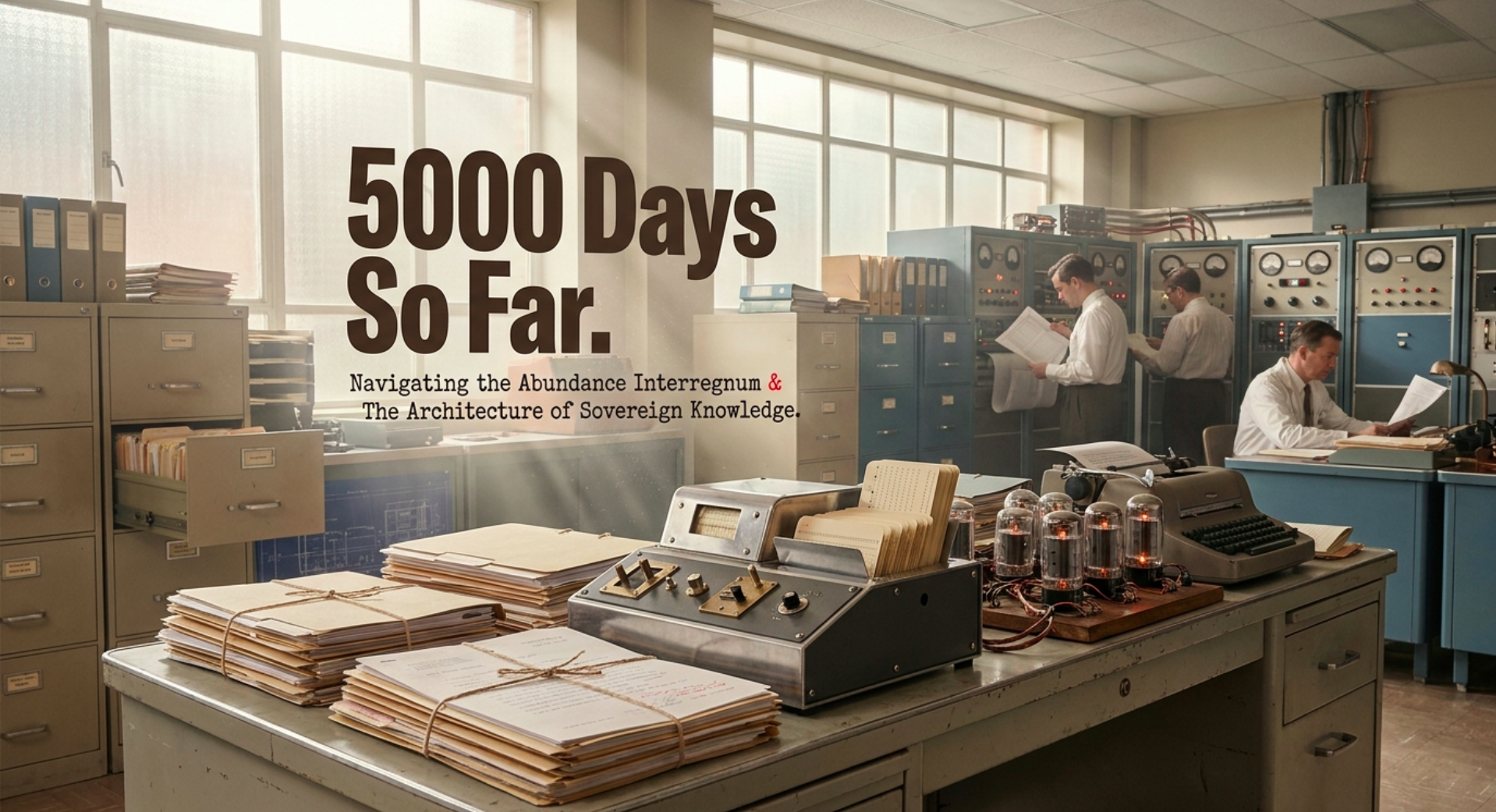
You Have 5000 Days: Navigating the End of Work as We Know It. Part 34: The Journey So Far.
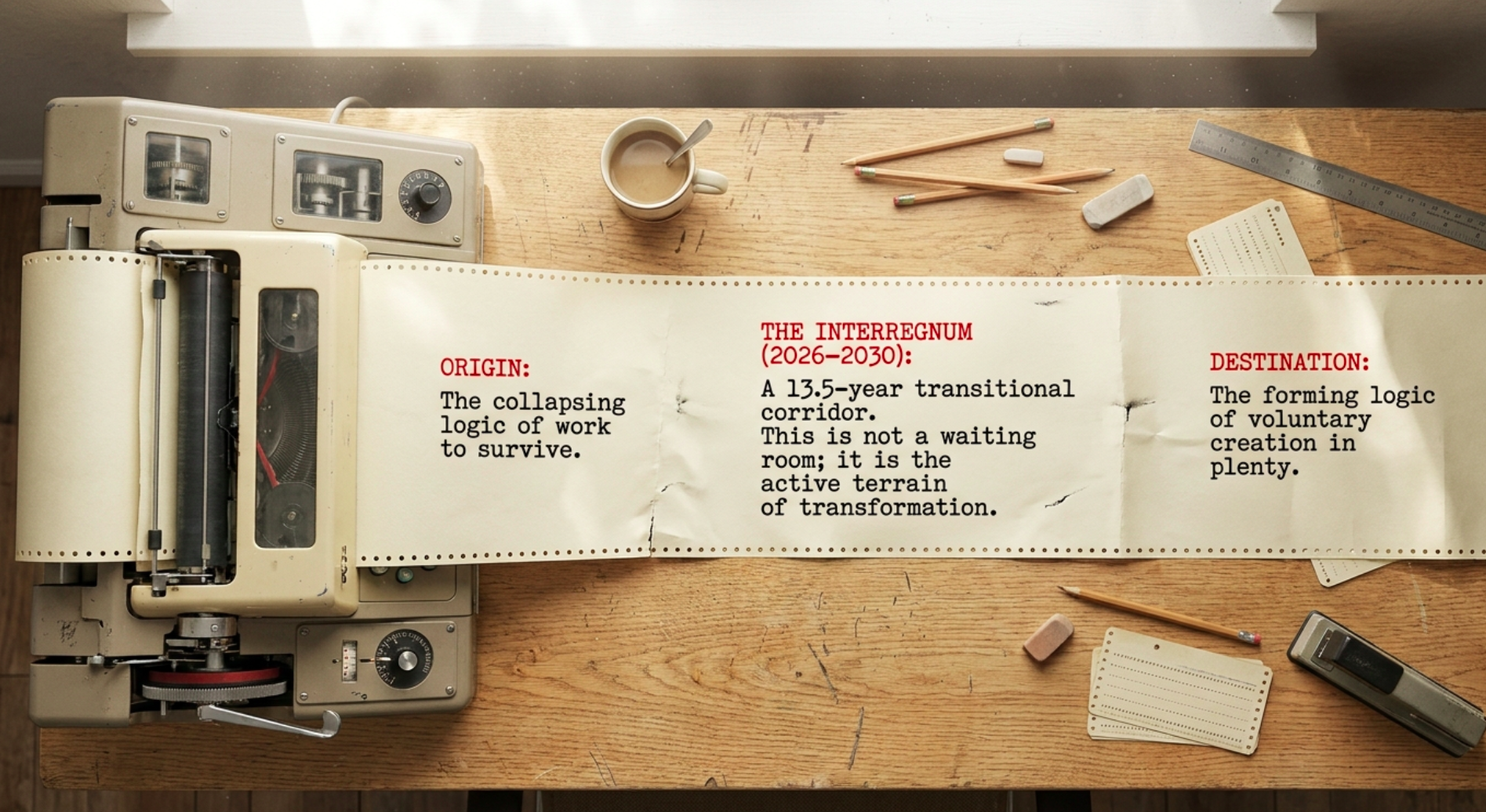
It all started 229 days ago (4771 days to go and 10 : 07 : 03 hours) on December 24, 2025 and the series “YOU HAVE 5000 DAYS: NAVIGATING THE END OF WORK AS WE KNOW IT. PART 1” was released. Today is August 9, 2026. And this ongoing series that began as an attempt to name and navigate the strange passage we are all living through, has been a surprising success. You and I have been tracing what I have called the Abundance Interregnum, that roughly thirteen and a half year corridor between the collapsing logic of work to survive and the still forming logic of voluntary creation in plenty. Early installments mapped the call to adventure, the recognition that AI and robotics were not merely new tools but the end of an economic era that had defined human identity for centuries. Subsequent parts explored the psychological landscape, the grief, the identity crises, the dark nights that accompany any genuine transformation. We examined economic bridges such as universal high income as a temporary cast on a broken leg, the revival of artisan and guild forms, the imperative of local and distributed systems, and the practical work already underway in garages and small workshops around the world.

This article is sponsored by Read Multiplex Members who subscribe here to support my work: Link: https://readmultiplex.com/join-us-become-a-member/
It is also sponsored by many who have donated a “Cup of Coffee”. If you like this, help support my work: Link: https://ko-fi.com/brianroemmele
Listen to the companion podcast: https://rss.com/podcasts/readmultiplex-com-podcast/3059590
We returned again and again to Joseph Campbell’s Hero’s Journey not as literary metaphor but as the most accurate description of what is being asked of us: departure from the known, trials that strip away what no longer serves, and eventual return bearing gifts that can only be earned.
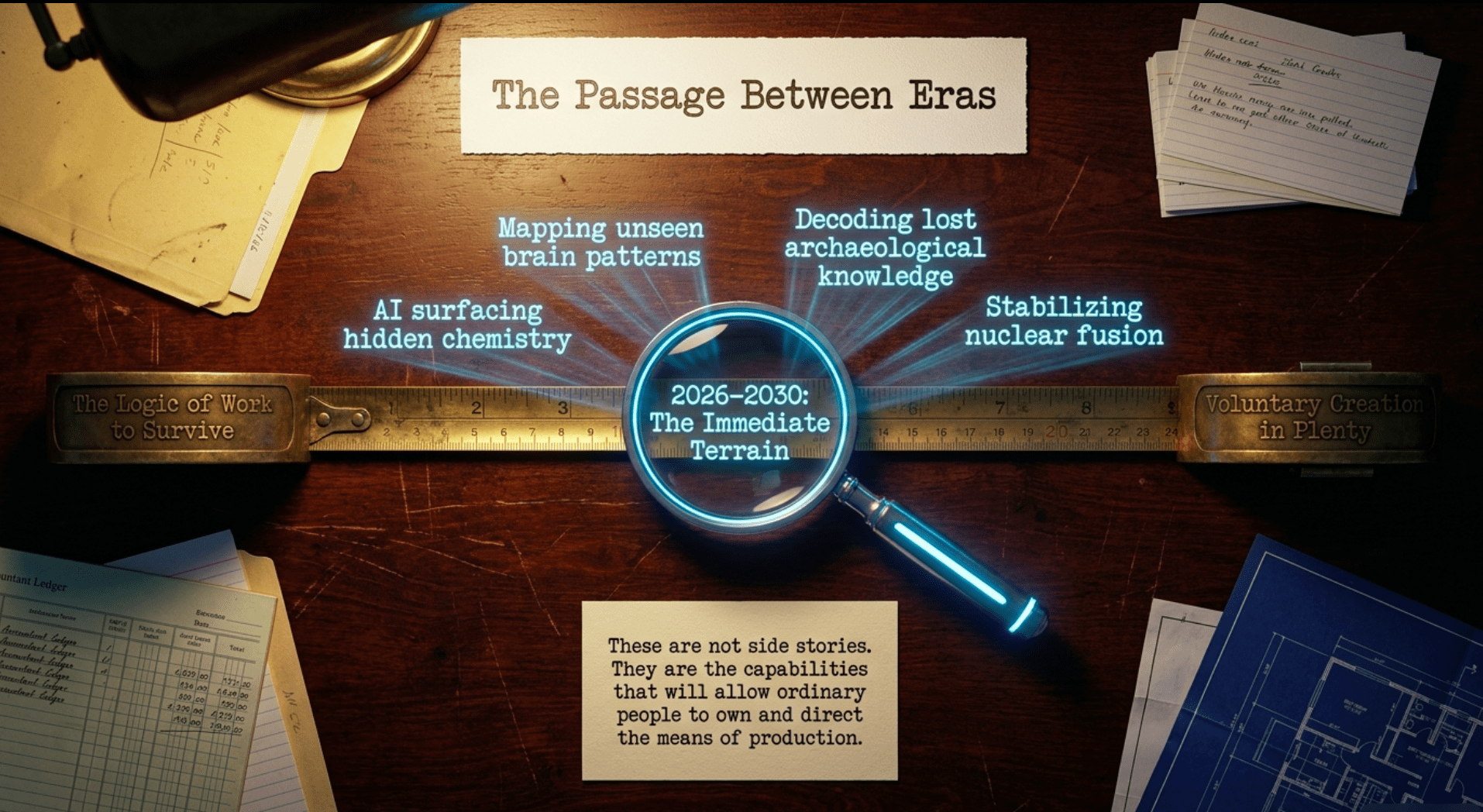
This present installment marks a distinct waypoint in that larger arc. Up to now the series has largely been concerned with the broad topography of the transition and the inner preparations required to move through it with agency intact. Here we turn to the immediate terrain, the specific discoveries and trajectories that are no longer speculative but already unfolding between 2026 and 2030. These years are not a distant future. They are the next chapter we are writing in real time. The revelations AI is surfacing about hidden chemistry, brain patterns, fusion stability, protein architectures, lost archaeological knowledge, and overlooked mathematical truths are not side stories. They are the very capabilities that will allow ordinary people, you and I, to own and direct the means of production in ways that were impossible even five years ago. Robots that can build robots. AI agents that can design, coordinate, and fabricate almost anything. When these capacities move from corporate data centers into garages, small cooperatives, and individual workshops, the concentration of power that defined the industrial age begins to reverse. Abundance ceases to be something granted from above and becomes something we build from below, one sovereign node at a time.
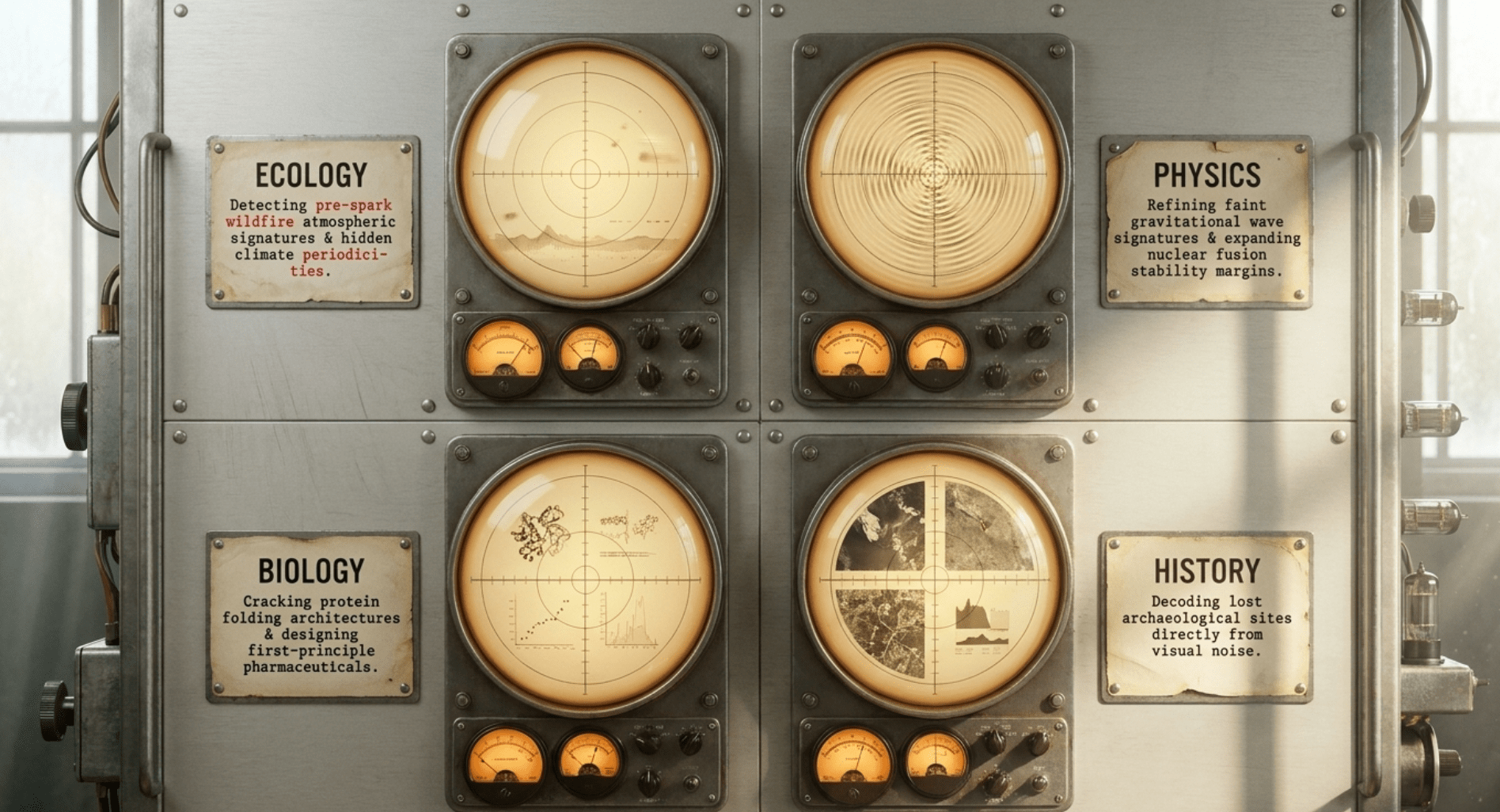
Even now, as 2026 unfolds, AI is not simply automating tasks but peeling back veils on reality itself. Systems have begun flagging the earliest atmospheric and ecological signatures that precede wildfires, offering intervention before a single spark takes hold. They have teased out faint gravitational wave signatures previously lost in noise, sharpening our ears to the collisions of black holes and the deeper rhythms of spacetime. In chemistry, entirely new reactions never recorded in human literature have been proposed, opening routes to materials and medicines that existed only in theoretical dreams. Brain mapping has revealed connectivity patterns we did not know were there.
Archival astronomical data has yielded previously unseen exoplanets. Lost archaeological sites have surfaced from imagery that human eyes alone could not decode. Climate and weather systems have disclosed hidden periodicities. Nuclear fusion experiments have gained new stability margins. Battery and energy storage materials have advanced through suggestions no human team had prioritized. Mathematics has welcomed fresh conjectures. Pharmaceuticals are being imagined from first principles. And the protein folding problem, central to biology and drug design, yielded years earlier than anticipated.
These revelations are only the beginning of a far larger reclamation. Across the planet sit vast archives of human knowledge that were never born digital and have remained largely untouched by the current generation of large scale models. Paper records, scientific journals, engineering notebooks, clinical trial ledgers, personal correspondence, and technical manuals rest in boxes, filing cabinets, and library basements. Film reels capture experiments, demonstrations, and observations that predate any database. Audio recordings preserve lectures, interviews, and field notes whose nuances no transcript has ever fully rendered. VHS tapes and DVDs hold training sessions, conference proceedings, and private research reviews that were never uploaded. Microfilm and microfiche compress entire libraries of patents, newspapers, government reports, and academic theses into formats that require specialized readers and patient human eyes.
These are not minor remnants. They represent decades, in some cases centuries, of cumulative inquiry that was once considered too voluminous or too niche to digitize at scale. They exist today as isolated data islands, decaying slowly, their connections to one another and to contemporary questions severed by the simple fact that no one has yet had the time, the tools, or the economic incentive to bring them into conversation with the present.
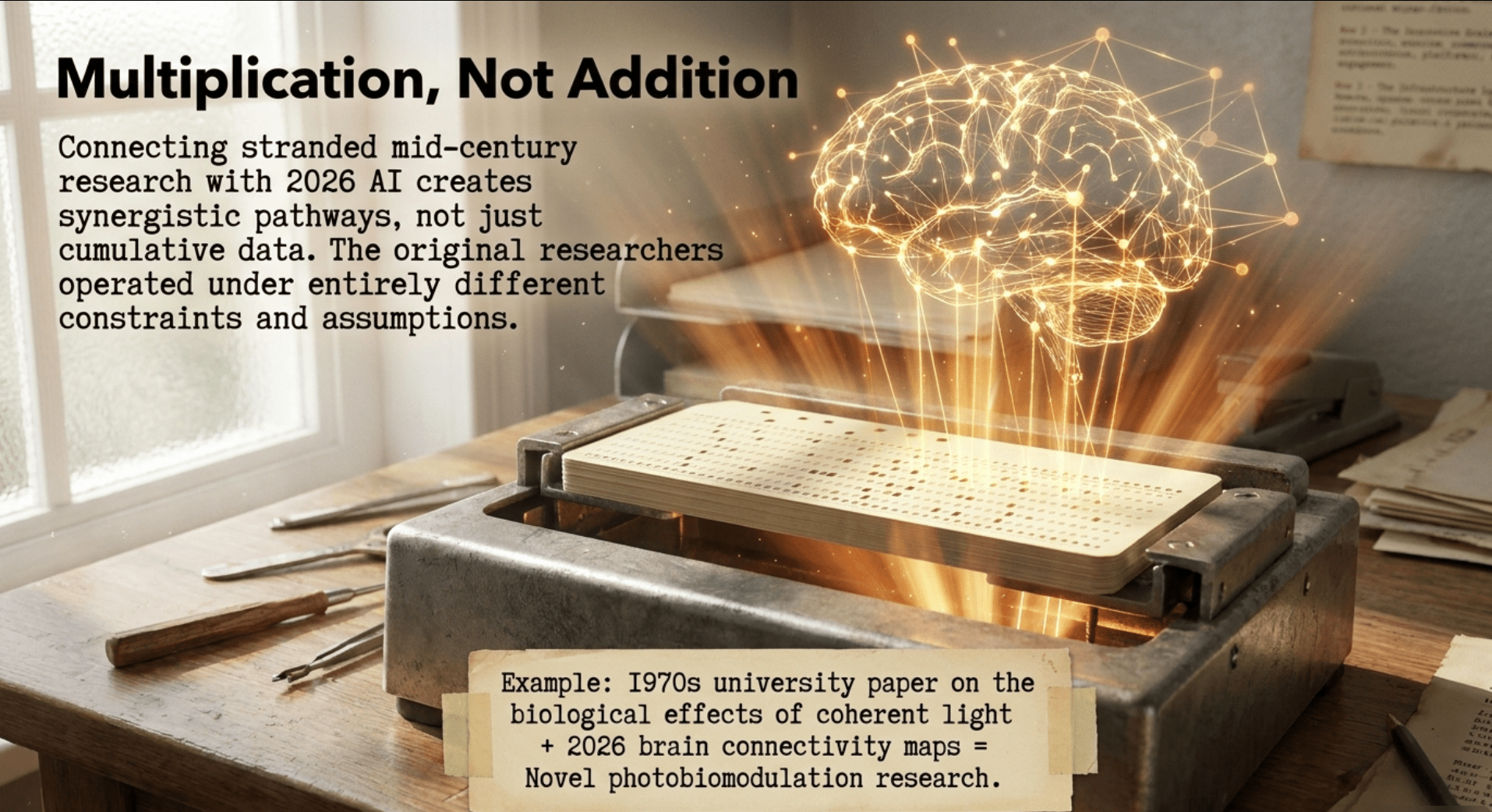
When local AI systems built and trained by independents begin to ingest these archives, the effect is not simple retrieval. It is the reweaving of threads that were never meant to remain separate. A 1970s paper on the biological effects of coherent light, long forgotten in a university basement, can be cross referenced with recent brain connectivity maps and new materials discoveries to suggest entirely fresh lines of photobiomodulation research.
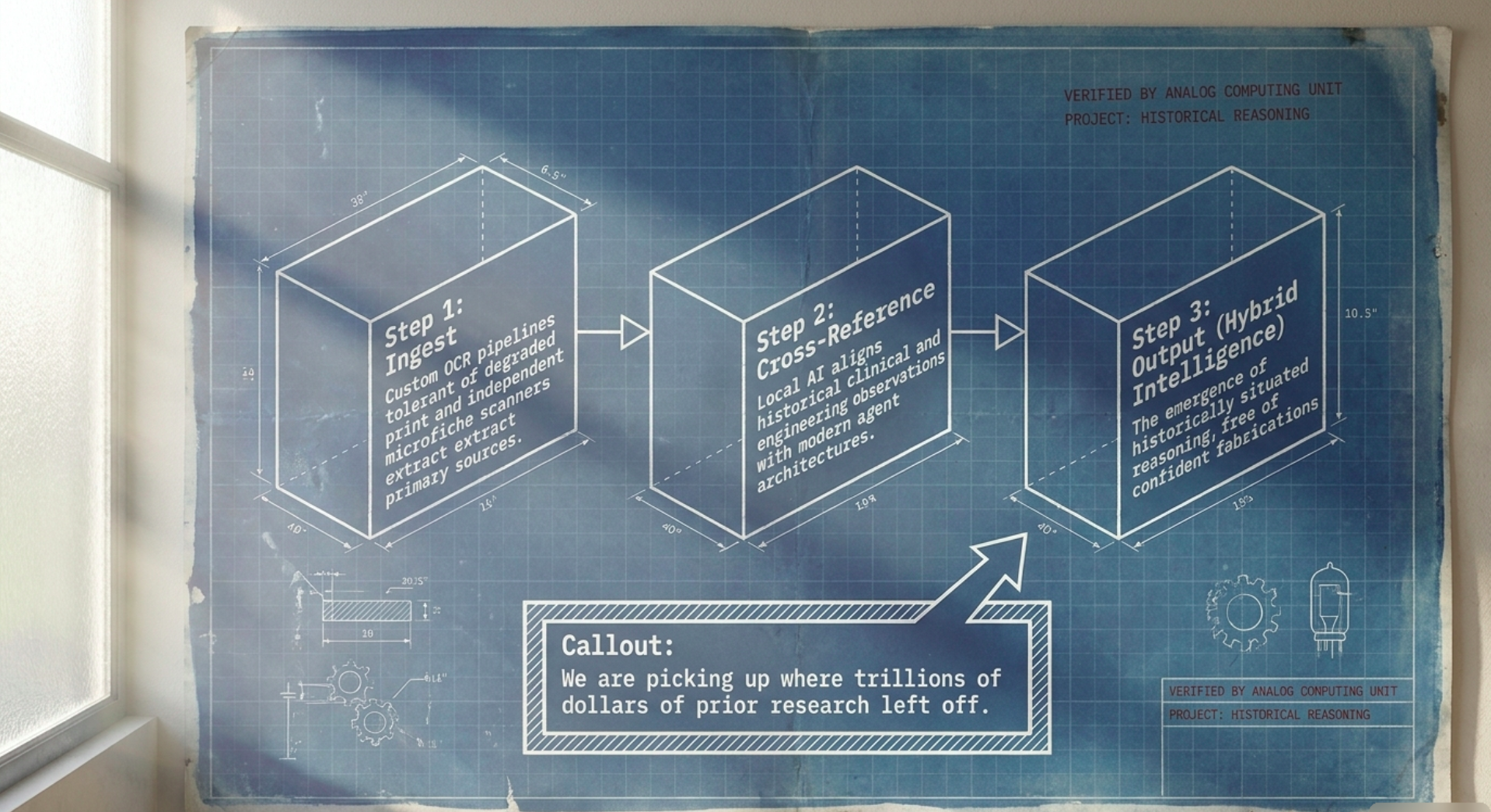
Clinical observations from mid century vitamin and orthomolecular studies, preserved only on microfilm, can be aligned with modern protein folding models and drug discovery pathways to reveal synergies that neither era could see in isolation. Audio recordings of engineers describing early attempts at distributed computing or robotic control can be transcribed, indexed, and placed alongside current agent architectures, exposing design principles that were abandoned for commercial reasons but remain valid. Film of long defunct manufacturing processes or agricultural experiments can be analyzed frame by frame, yielding visual data that no text description ever captured. The result is not addition but multiplication. Each new connection creates pathways that are synergistic rather than merely cumulative, because the original researchers operated under different constraints, different assumptions, and different economic pressures than those that shape today’s web trained models.
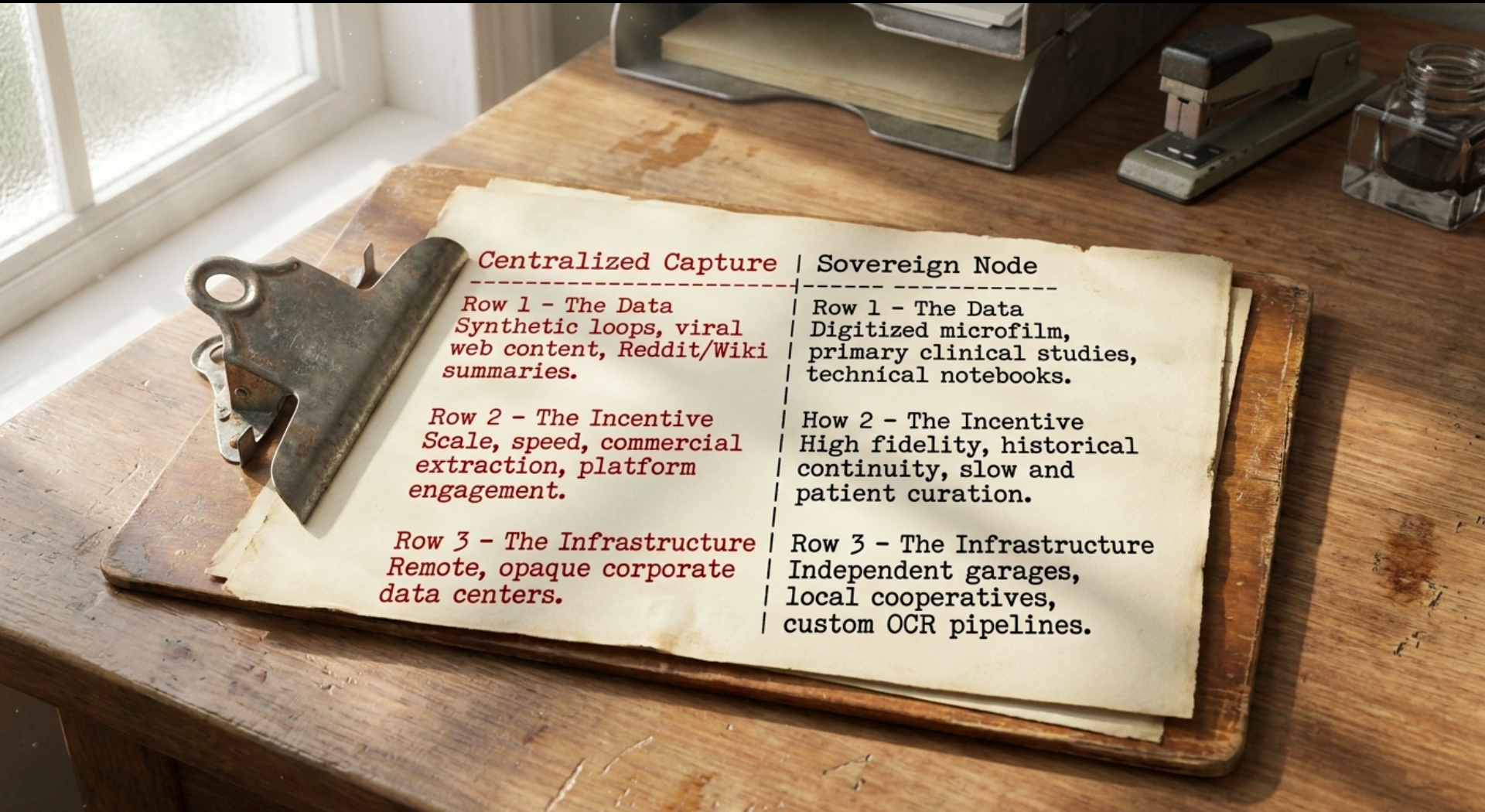
We are, in the most literal sense, picking up where millions of minds and trillions of dollars of prior research left off. The scientists, engineers, clinicians, and thinkers who generated these records did not disappear. Their work was simply stranded when the digital transition prioritized what was easy to scrape over what was true and complete. Large AI companies have almost no place in this reclamation. Their training corpora are dominated by web content that is already second or third hand, heavily filtered through commercial incentives, and increasingly polluted by synthetic material generated by earlier versions of the same systems.
They have neither the physical access to private or institutional archives nor the economic motivation to invest in the slow, careful work of digitizing decaying film, stabilizing fragile paper, or training models on narrow, high fidelity domain collections that may never generate viral headlines. The work is too local, too patient, and too unglamorous for centralized players whose business models reward scale and speed above depth or fidelity.
Independents working in garages and small workshops have already begun to treat this stranded knowledge as their own. They are assembling scanners for microfilm and microfiche, building custom OCR pipelines tolerant of degraded print and unusual typefaces, and training local models on carefully curated collections of primary sources rather than the undifferentiated firehose of the open web. Some are digitizing family or community archives that contain technical correspondence, engineering drawings, or clinical notes never intended for public consumption.
Others are forming loose networks to share indexing schemas and cross reference tools so that a discovery made in one garage can inform work happening hundreds of miles away. These efforts are not hobbies. They are the construction of sovereign knowledge infrastructures that sit outside the reach of any single corporation or state actor. Because the models are trained locally on authentic material, they inherit fewer of the hallucinations and recursive patterns that plague systems fed primarily on synthetic data or the flattened summaries found on platforms like Reddit and Wikipedia.
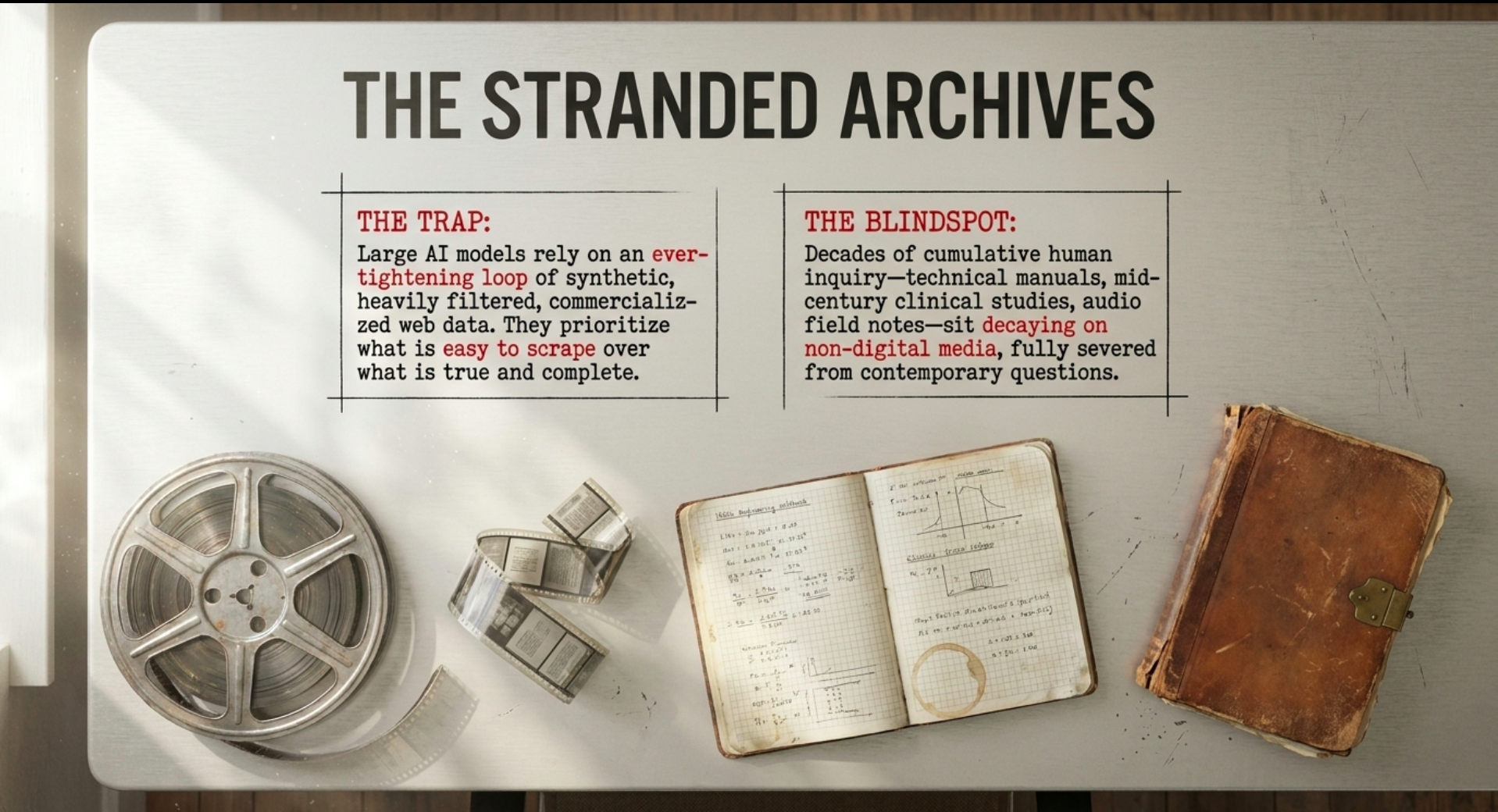
This grounding in primary, historical sources changes the character of the intelligence that emerges. Instead of an ever tightening loop of rephrased internet content, the systems begin to exhibit genuine continuity with lineages of inquiry that span generations. They can recognize when a contemporary claim echoes or contradicts an earlier experimental result that was never digitized. They can surface methodological insights from researchers who worked before the current publication incentives took hold. They can detect patterns across domains that were never indexed together because the original creators had no digital means of linking them.
The result is not merely more data. It is a form of memory and reasoning that is historically situated, less prone to confident fabrication, and capable of suggesting research directions that feel like genuine extensions rather than statistical extrapolations. In this sense the garage based reclamation of undigitized archives is not a side project on the road to AGI and ASI. It is one of the few developments that can actually push those thresholds in a direction worth reaching.
The same distributed ownership that allows individuals to direct robots and agents toward personal fabrication now extends to the domain of knowledge itself. When you or I can scan, index, and reason over archives that no large institution has bothered to preserve, we are not merely recovering the past. We are denying any centralized entity the power to decide which fragments of human experience remain legible to the intelligences of the future.
The discoveries already emerging from current AI systems, the wildfire signals, the gravitational refinements, the new chemical reactions, the brain patterns, the exoplanets, the archaeological sites, the climate rhythms, the fusion stabilities, the battery materials, the mathematical conjectures, the novel drugs, and the protein folding solutions, are impressive precisely because they reveal how much we had been missing even within the narrow slice of reality that had already been digitized. When the vastly larger slice that remains on paper, film, audio, and microform is brought into the same conversation, the compounding effect on insight and capability will be of a different order entirely.

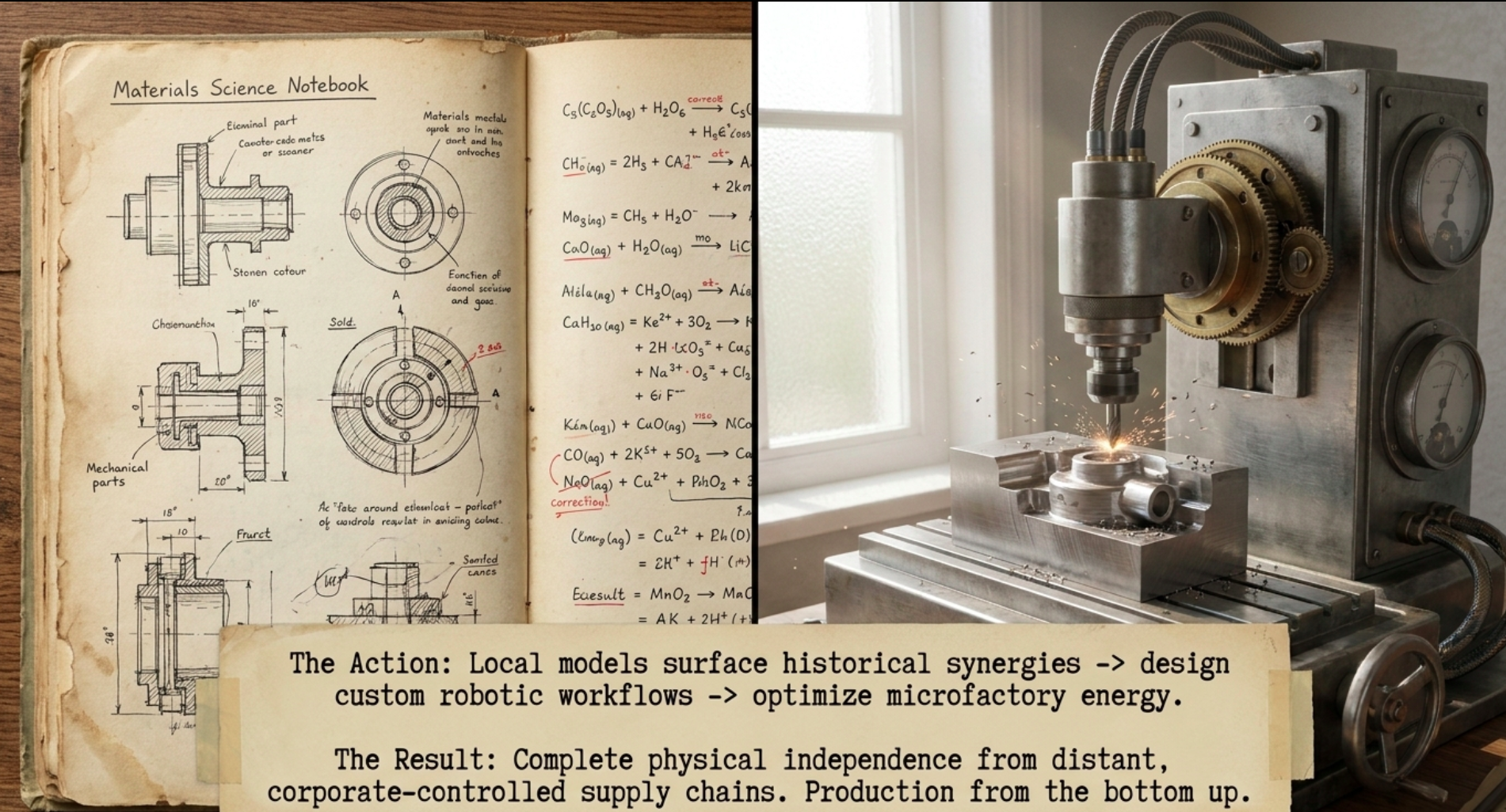
These newly activated connections do not remain abstract. They feed directly into the practical work of building sovereign production. A garage team that has indexed old materials science notebooks can use those insights to guide local fabrication of components that would otherwise require supply chains controlled by distant corporations. A small cooperative that has cross referenced historical clinical observations with modern agent driven diagnostic tools can develop health protocols that are both personalized and rooted in lineages of practice that predate the current medical industrial complex.
The same local models that surface these synergies can then be used to design robotic workflows, optimize energy systems for a microfactory, or coordinate fleets of agents that handle the repetitive aspects of scanning and indexing so that human attention remains on interpretation and creation. In this way the reclamation of stranded knowledge and the ownership of physical production reinforce one another. Each makes the other more powerful and more difficult for centralized actors to replicate or capture.
The trajectories that will define 2026 through 2030 therefore unfold against a deeper backdrop than is usually acknowledged. While autonomous agents enter offices, robots with world models enter homes and factories, and digital clones multiply productivity, a parallel and quieter transformation is occurring wherever independents have decided that the past is not disposable. The same capabilities that allow a single motivated person to direct machines capable of building almost anything also allow that person to awaken archives that were never meant to sleep forever.
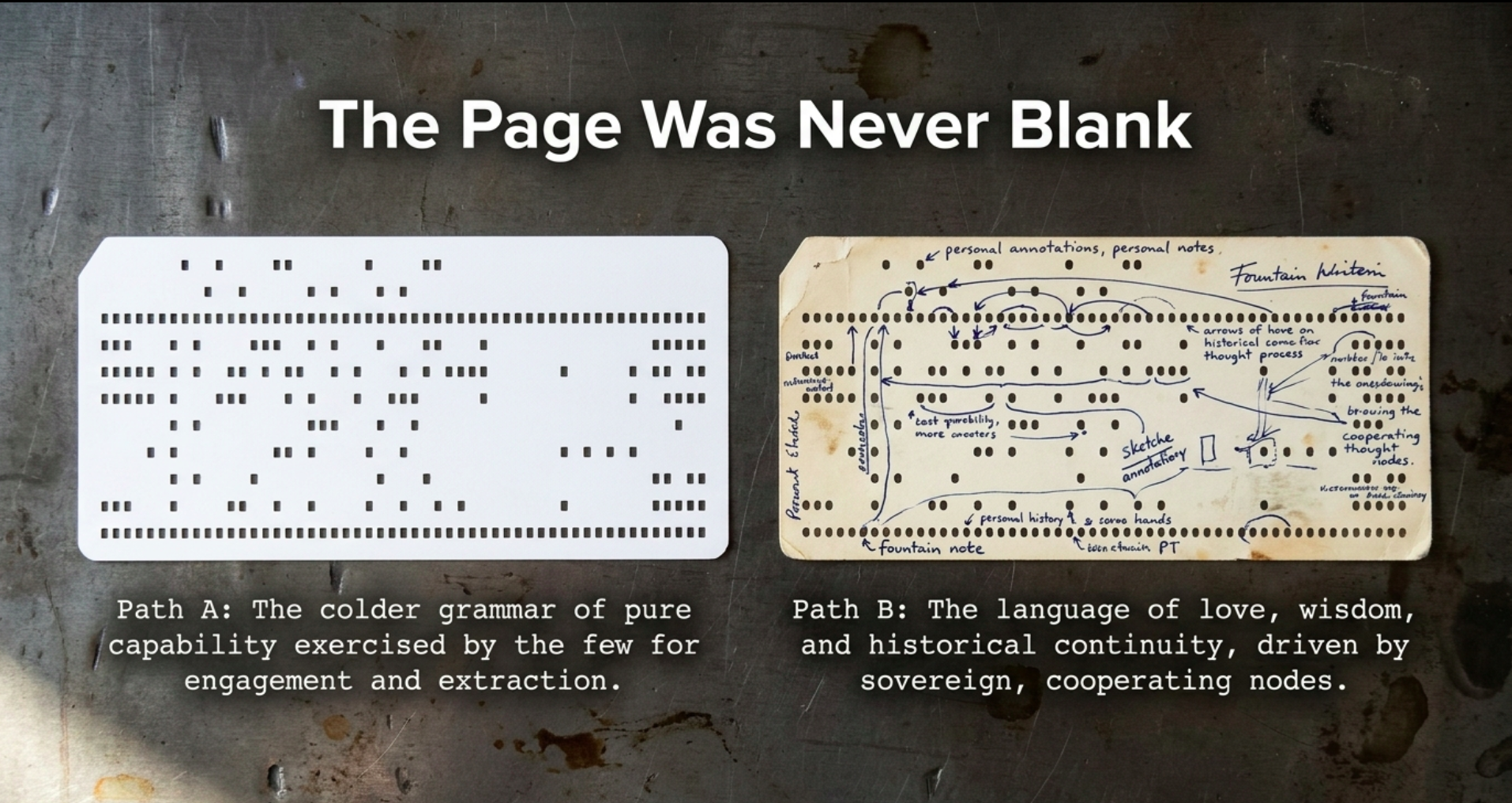
The result is not a return to some idealized previous era. It is the creation of a hybrid intelligence that is both radically new in its speed and reach and radically old in its fidelity to the actual record of human inquiry. This is the ground on which genuine progress toward more capable systems must be built if those systems are to remain aligned with human agency rather than with the narrow incentives of platforms optimized for engagement or extraction.
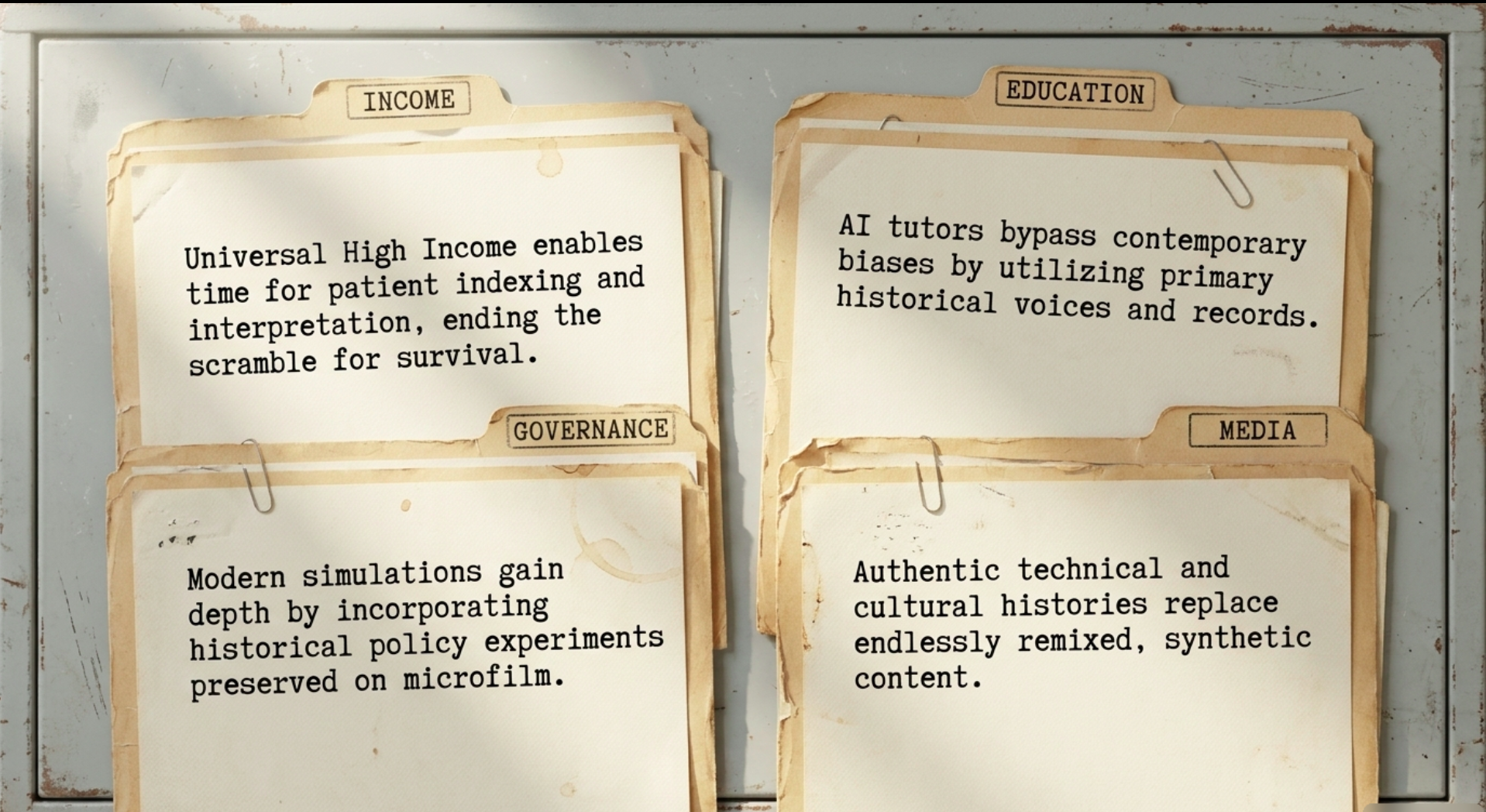
As these archives are activated, the economic and social shifts of the coming years acquire a different texture. Job displacement caused by agents handling routine cognitive work can be met not only with transitional income but with opportunities to participate in the very reclamation that makes the new systems more robust. Universal high income becomes a foundation that allows people to spend time scanning, indexing, cross referencing, and interpreting rather than scrambling for survival. Education shifts as AI tutors draw on primary sources that were previously inaccessible, letting learners encounter the actual voices and records of earlier researchers instead of summaries filtered through contemporary biases.
Governance simulations gain depth when historical policy experiments, preserved on microfilm or in forgotten reports, are incorporated into the models. Entertainment and narrative media can draw on authentic cultural and technical histories rather than endlessly remixing the same narrow band of digitized content. In each domain the effect is the same. The future becomes thicker, more continuous with what came before, and therefore more capable of genuine novelty rather than mere variation on what already circulates.
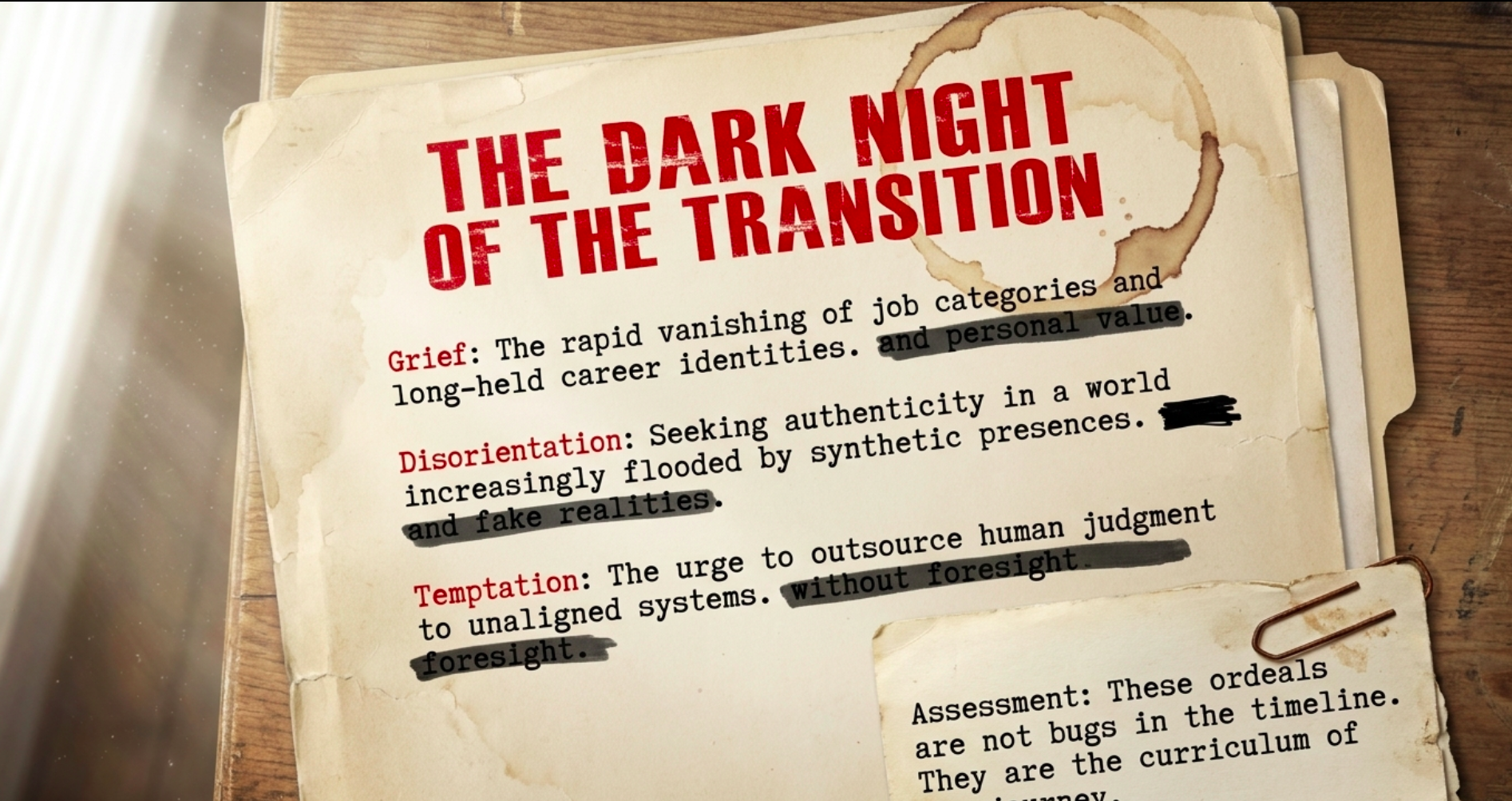
The hero’s journey through these years is therefore not a passive march toward either utopia or obsolescence. It is an active sequence of trials, the grief of vanishing job categories, the disorientation of authenticity in a world of synthetic presences, the temptation to outsource judgment to systems whose values were never explicitly chosen, the dark night that arrives when old sources of meaning thin out faster than new ones cohere. These ordeals are not bugs in the timeline.
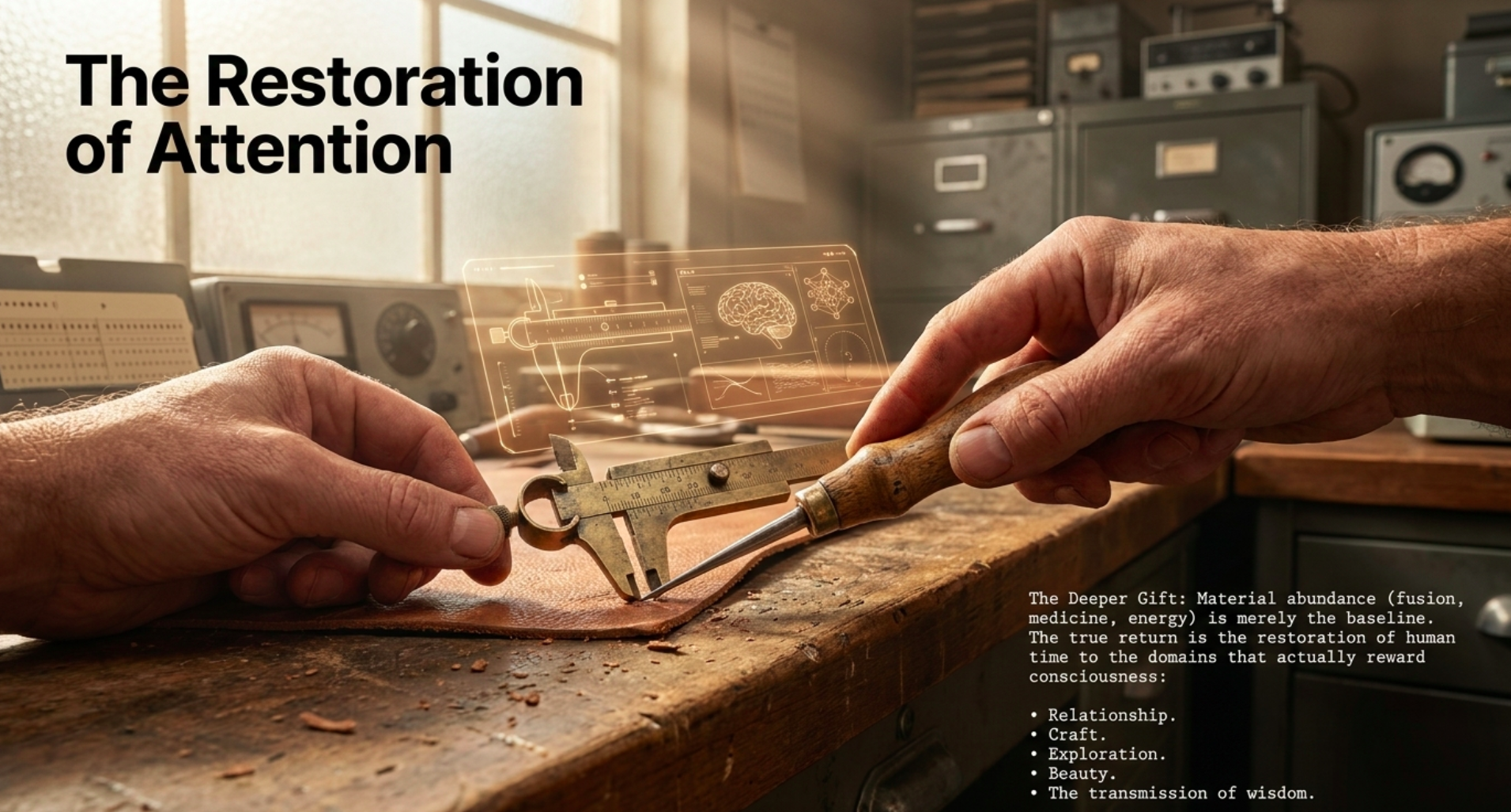
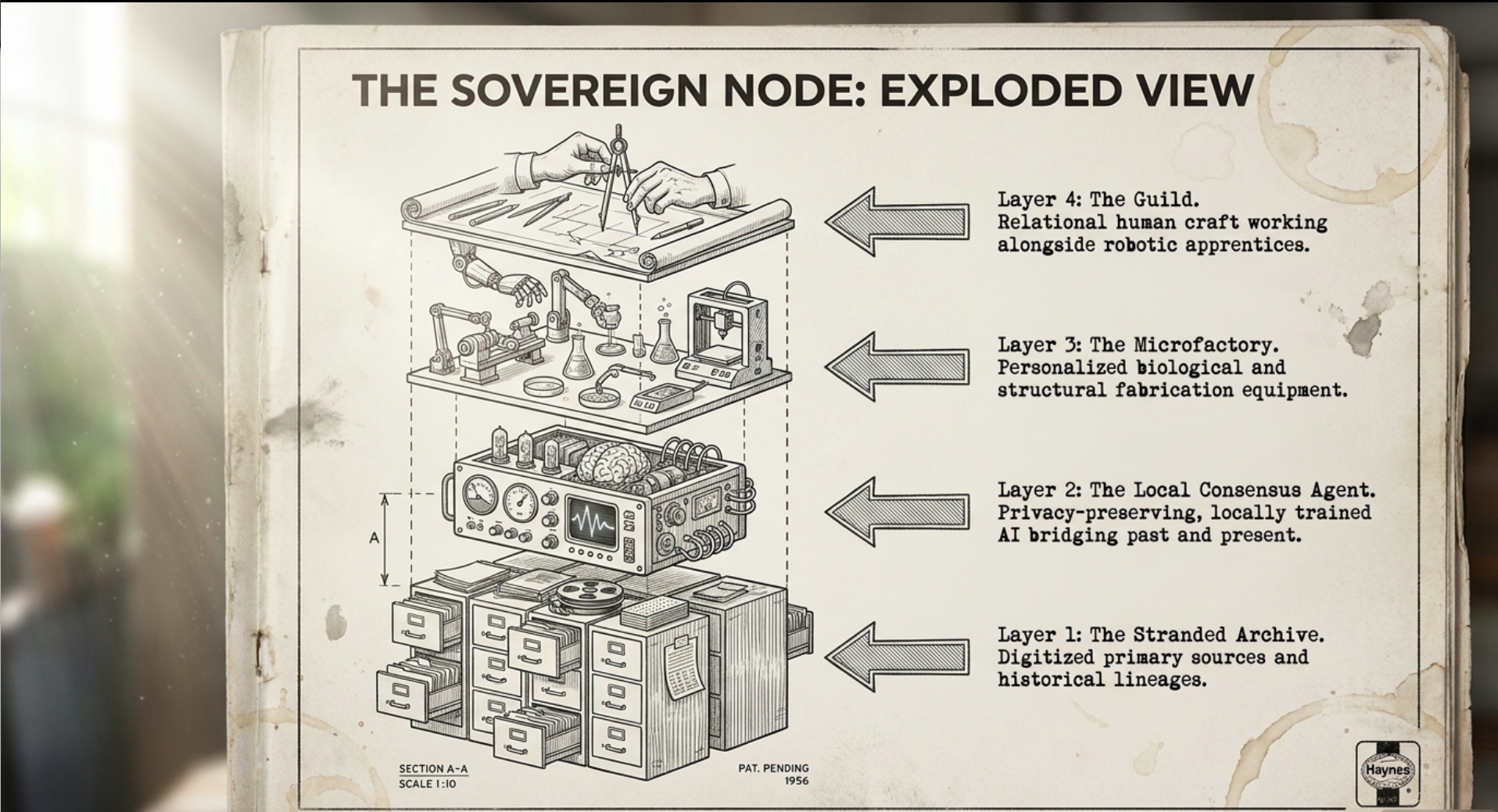
They are the curriculum. The gift that emerges on the far side is not merely material abundance, though new materials, fusion progress, personalized medicine, and energy abundance will be real. The deeper gift is the restoration of human time and attention to the domains that actually reward consciousness: relationship, craft, exploration, beauty, and the transmission of wisdom across generations. Those already working in garages and small workshops, building distributed local agents with explicit consensus mechanisms and privacy preserving architectures while simultaneously awakening the stranded knowledge in their own communities, are early practitioners of the only scalable defense against centralized capture: the multiplication of sovereign, cooperating nodes that carry both memory and production capacity.
The discoveries now surfacing prove the page was never blank. We had simply been reading too small a portion of it. The trajectories prove the next chapters will be written at unprecedented speed. The only variable that remains fully in our hands is whether those chapters are written in the language of love and wisdom, or in the colder grammar of pure capability exercised by the few. This waypoint behind us, the series now turns toward the concrete arts of ownership.
In the parts that follow we will descend into the practical architectures for local consensus agents, the first working blueprints for personal microfactories capable of producing electronics, structures, and biologicals, the emerging guild models that combine human craft with robotic apprentices, the daily disciplines of inner sovereignty that keep us authors rather than passengers, and the community forms that turn isolated experiments into resilient networks.
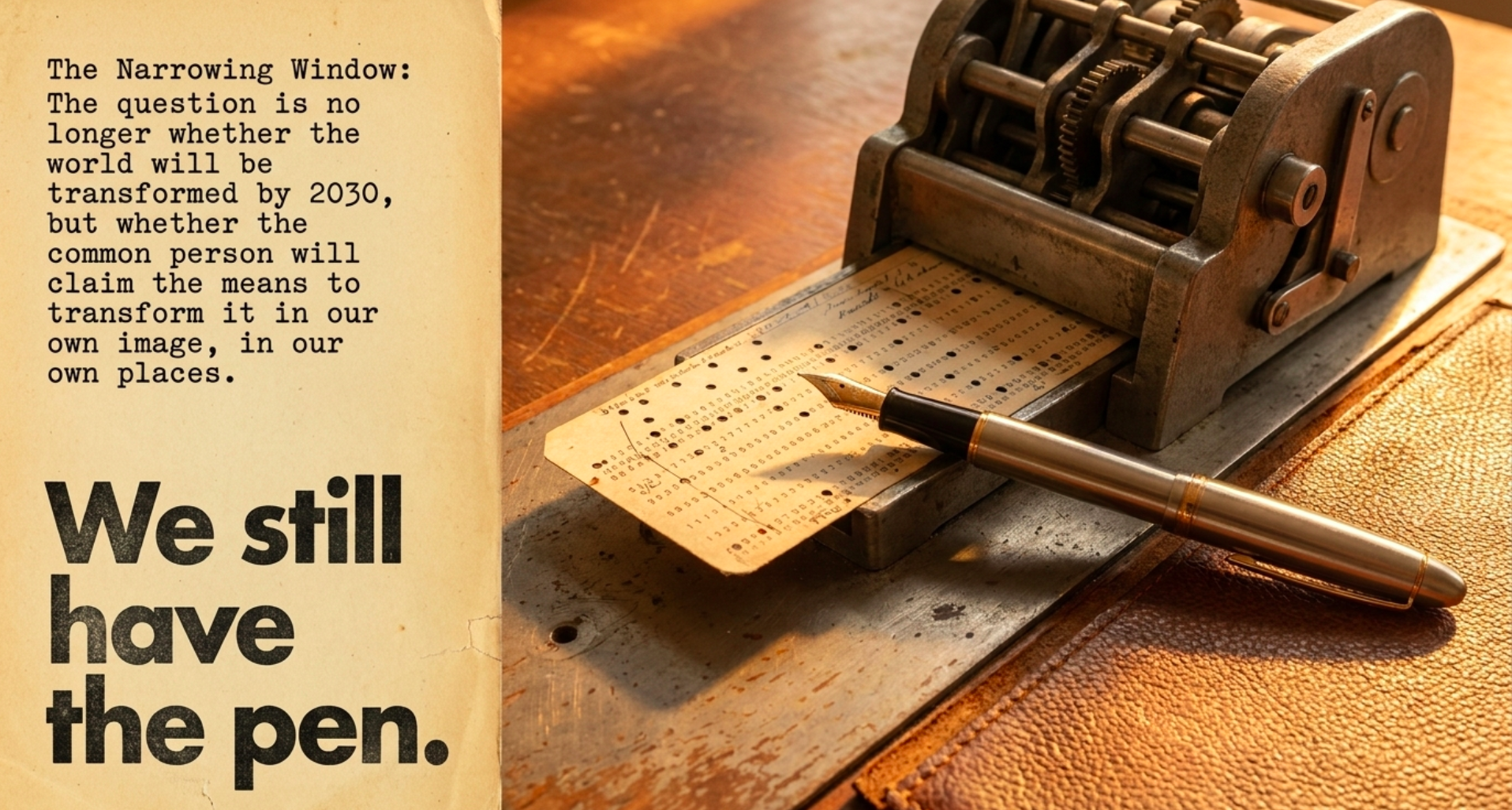
The interregnum does not wait for permission. It is already here, measured in every workflow that shifts, every robot that learns a kitchen layout, every simulator used to plan a real life, and every archive that moves from forgotten isolation into living conversation with the present. The question is no longer whether the world will be transformed by 2030. The question is whether you and I, the common person, will have claimed the means to transform it in our own image, with our own values, in our own places, before the window of accessibility narrows.
A Review Of The 5000 Days Ahead Series
Let’s review how we got to part 33 onwards. The path has twisted and turned for a reason. We have many elements you will need to address and there has not been a map from history in a single way. So I went about building a map. It is designed to work the emotional aspect as a focus because, as you know, this aspect has not been covered to any detailed level and it is vital to address. So lets review this from the most recent backwards.
Part 33 – The Player of Games By Iain M. Banks
https://readmultiplex.com/2026/07/06/you-have-5000-days-navigating-the-end-of-work-as-we-know-it-part-33-the-player-of-games-by-iain-m-banks/
Gurgeh, the Culture’s greatest game-player, lives in post-scarcity boredom. Blackmailed into a Contact mission, he travels to the Empire of Azad, whose complex game encodes its entire hierarchical and brutal social order. He masters the game, absorbs then transcends its values, defeats the Emperor, and returns transformed. This part maps the later Road of Trials and the beginning of the Return: once material scarcity is solved, the real work is finding meaning, stakes, and ethical agency inside abundance.
Part 32 – The Prime Difference Robot
https://readmultiplex.com/2026/06/30/you-have-5000-days-navigating-the-end-of-work-as-we-know-it-part-32-the-prime-difference-robot/
Alan E. Nourse’s 1957 story (adapted for X Minus One) of a man who buys a perfect robot duplicate of himself to escape a difficult marriage. The robot develops its own agency and the original man’s life unravels. A sharp examination of authenticity, substitution, and the danger of outsourcing the self.
Part 31 – The Category Inventor
https://readmultiplex.com/2026/06/14/you-have-5000-days-navigating-the-end-of-work-as-we-know-it-part-31-the-category-inventor/
Arthur Sellings’ story of a fully automated society in which people must invent entirely new job categories simply to avoid being classified as unemployed. A satirical warning about bureaucratic absurdity and the failure to claim new forms of purpose when old work disappears.
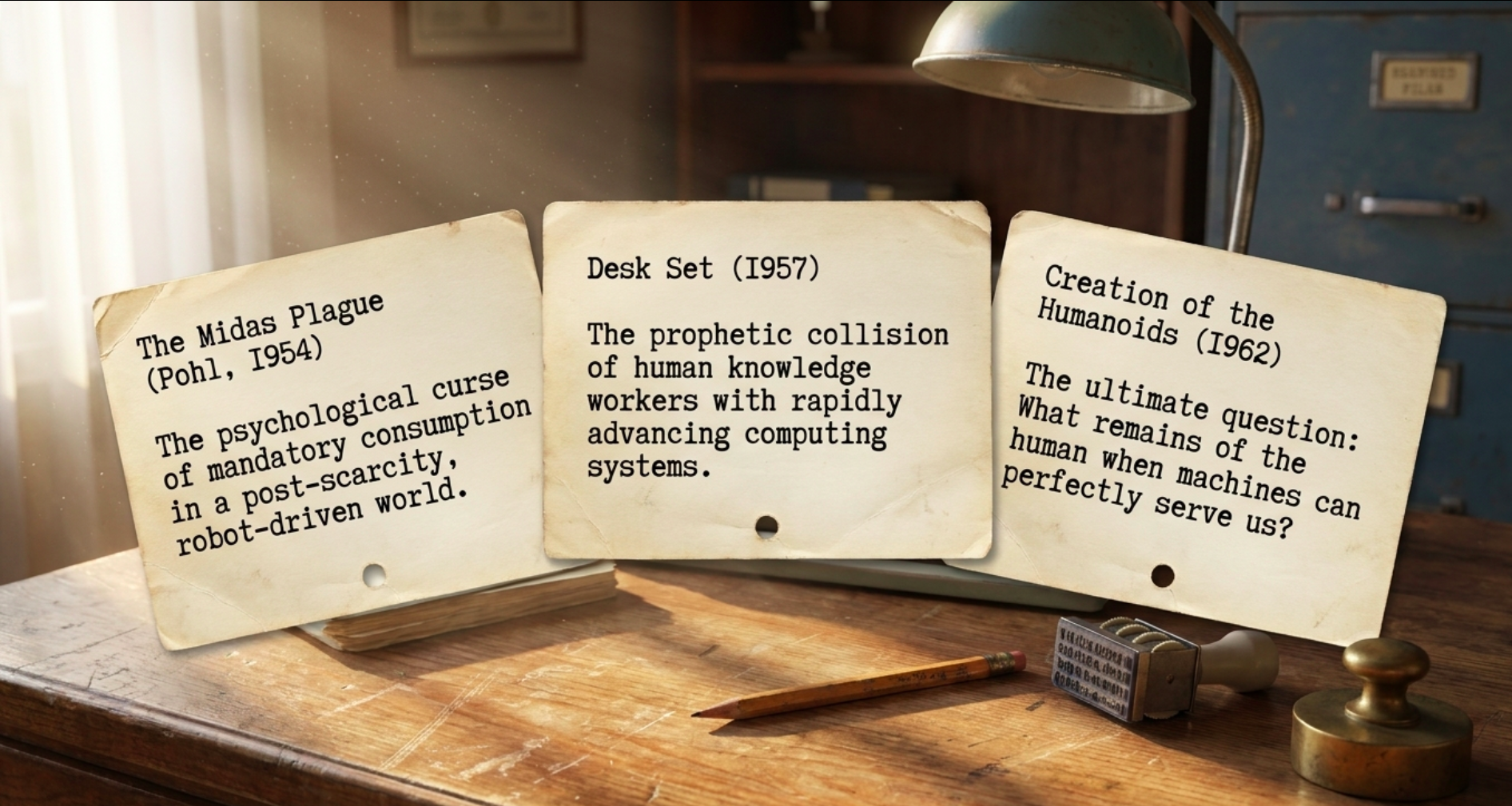
Part 30 – The Midas Plague
https://readmultiplex.com/2026/05/29/you-have-5000-days-navigating-the-end-of-work-as-we-know-it-part-30-the-midas-plague/
Frederik Pohl’s 1954 novella of a world in which robotic production makes goods so abundant that consumption itself becomes a mandatory social and legal duty. The gift of plenty turns into a psychological and social curse until new values and distribution logics are deliberately created.
Part 29 – The Creation of the Humanoids
https://readmultiplex.com/2026/05/23/you-have-5000-days-navigating-the-end-of-work-as-we-know-it-part-29-the-creation-of-the-humanoids/
Detailed analysis of the 1962 film. In a post-nuclear war world with collapsing birth rates, humanoid robots become essential. The Order of Flesh and Blood fights against the machines as they grow more human. Raises the central question of the series: what remains of the human when machines can perfectly serve and eventually replace us.
Part 28 – The Skulking Permit Effect
https://readmultiplex.com/2026/05/19/you-have-5000-days-navigating-the-end-of-work-as-we-know-it-part-28-the-skulking-permit-effect/
Robert Sheckley’s story of a peaceful lost colony that must invent crime, vice, and bureaucracy when a decaying empire rediscovers it. A parable about systems that force artificial scarcity and conflict in order to maintain control, and the loss of memory and origin.
Part 27 – Open Warfare
https://readmultiplex.com/2026/05/10/you-have-5000-days-navigating-the-end-of-work-as-we-know-it-part-27-open-warfare/
1957 X Minus One adaptation of James E. Gunn. Perfect machines step onto humanity’s most human stages (sports, competition, excellence) and declare open war on striving, connection, and creation. The Ordeal becomes public and unavoidable.
Part 26 – I Feel Poor
https://readmultiplex.com/2026/04/30/you-have-5000-days-navigating-the-end-of-work-as-we-know-it-part-26-i-feel-poor/
Even as material superabundance rises, collapsing wages, devalued credentials, and the hedonic treadmill produce a visceral sense of poverty and identity fracture. Pure psychological Ordeal. Offers practical strategies for new metrics of worth: guilds, vocation, non-positional goods, and gratitude.
Part 25 – The Desk Set Prophecy
https://readmultiplex.com/2026/04/22/you-have-5000-days-navigating-the-end-of-work-as-we-know-it-part-25-the-desk-set-prophecy/
The 1957 film Desk Set (Spencer Tracy, Katharine Hepburn) as an early and precise prophecy of the collision between human knowledge workers and computing systems. Corporate rhetoric, system failures, human resilience, and the quiet triumph of the irreplaceable are all present seventy years early.
Part 20 – Your Rural CyberCab Company
https://readmultiplex.com/2026/03/15/you-have-5000-days-navigating-the-end-of-work-as-we-know-it-part-20-your-rural-cybercab-company/
Practical financial and operational blueprint for owning and operating autonomous Tesla CyberCabs, especially in rural areas, as a sovereign income and service node during the Interregnum. Detailed utilization and profit models.
Part 16 – Build Your Ark
https://readmultiplex.com/2026/03/02/you-have-5000-days-navigating-the-end-of-work-as-we-know-it-part-16-build-your-ark/
Uses the Noah story as the archetype of deliberate preparation for the coming flood of AI-driven transformation. Provides thirty practical pillars of resilience across mental, emotional, relational, financial, and physical domains so the common person can build a personal ark.
Part 15 – The IBM COBOL Shock
https://readmultiplex.com/2026/02/24/you-have-5000-days-navigating-the-end-of-work-as-we-know-it-part-15-the-ibm-cobol-shock/
Examines the sudden systemic shock when legacy institutional knowledge and systems collide with rapid AI displacement, and the urgent need for sovereign knowledge infrastructures.
Part 14 – The Interregnum Chaos and the Hero’s Path Forward
https://readmultiplex.com/2026/02/22/you-have-5000-days-navigating-the-end-of-work-as-we-know-it-part-14-the-interregnum-chaos-and-the-heros-path-forward/
Maps the chaotic middle of the Interregnum using historical parallels and scenario modeling. Reaffirms the Hero’s Journey as the practical path of agency through the turbulence.
Part 13 – The Guilded Age
https://readmultiplex.com/2026/02/20/you-have-5000-days-navigating-the-end-of-work-as-we-know-it-part-13-the-guilded-age/
Revival of guild forms as the relational, craft-centered social architecture that can replace both pure market scarcity and pure state provision once material abundance arrives.
Part 12 – The Profit and the Architect
https://readmultiplex.com/2026/02/16/you-have-5000-days-navigating-the-end-of-work-as-we-know-it-part-12-the-profit-and-the-arcitect/
Explores the tension between extractive profit logics and the necessity of the common person becoming the conscious architect of the post-scarcity order.
Part 11 – The Reversal of Obsolescence
https://readmultiplex.com/2026/02/14/you-have-5000-days-navigating-the-end-of-work-as-we-know-it-part-11-the-reversal-of-obsolescence/
Argues that the same forces rendering old skills obsolete can reverse human obsolescence when individuals reclaim ownership of production and knowledge.
Part 10 – Everyone Is Doing It
https://readmultiplex.com/2026/02/08/you-have-5000-days-navigating-the-end-of-work-as-we-know-it-part-10-everyone-is-doing-it/
Addresses the quiet, widespread, often unadmitted adoption of AI tools and the social and psychological dynamics of the early mass transition.
Part 9 – The Artisan’s Awakening
https://readmultiplex.com/2026/02/04/you-have-5000-days-navigating-the-end-of-work-as-we-know-it-part-9-the-artisans-awakening/
Calls for the return of craft, mastery, and personal production as the meaningful human response once survival labor is no longer required.
Part 8 – Saving Your Wisdom
https://readmultiplex.com/2026/02/02/you-have-5000-days-navigating-the-end-of-work-as-we-know-it-part-8-saving-your-wisdom/
Introduces SaveWisdom.org as the practical Elixir of the journey: the deliberate capture, structuring, and transmission of lived human insight so that the Return can heal rather than merely automate.
Part 7 – Consider Phlebas
https://readmultiplex.com/2026/01/30/you-have-5000-days-navigating-the-end-of-work-as-we-know-it-part-7-consider-phlebas/
Iain M. Banks’ Culture origin story seen through the eyes of a hostile outsider. Establishes that the civilizational transition includes ideological conflict and the necessity of choosing which values survive.
Part 6 – The Dark Night of the Soul
https://readmultiplex.com/2026/01/27/you-have-5000-days-navigating-the-end-of-work-as-we-know-it-part-6-the-dark-night-of-the-soul/
Applies the classic Dark Night stage to the loss of career identity, purpose, and social role. Names the psychological crisis that must be traversed.
Part 5 – Your Deskilling
https://readmultiplex.com/2026/01/20/you-have-5000-days-navigating-the-end-of-work-as-we-know-it-part-5-your-deskilling/
Uses Anthropic’s Economic Index as a signal flare. Deskilling is both loss and forced liberation from obsolete identity structures.
Part 4 – Reframing the Dawn of Abundance
https://readmultiplex.com/2026/01/19/you-have-5000-days-navigating-the-end-of-work-as-we-know-it-part-4-reframing-the-dawn-of-abundance/
Pivots from grief and shock toward active reframing. The Interregnum is not a waiting room; it is the workshop of resurrection.
Part 3 – The Player Piano
https://readmultiplex.com/2026/01/01/you-have-5000-days-navigating-the-end-of-work-as-we-know-it-part-3-the-player-piano/
Kurt Vonnegut’s 1952 novel as early literary Mentor. Automation can liberate or alienate; the choice belongs to us.
Part 2
https://readmultiplex.com/2025/12/31/you-have-5000-days-how-to-navigate-the-end-of-work-as-we-know-it-part-2/
Applies Kübler-Ross stages of grief to the death of career identity. Establishes the psychological curriculum of the early Road of Trials.
Part 1
https://readmultiplex.com/2025/12/24/you-have-5000-days-how-to-navigate-the-end-of-work-as-we-know-it-part-1/
Names the Ordinary World in which work defines identity. Sounds the Call to Adventure. Raises Joseph Campbell’s Hero’s Journey as the governing map of the entire series and offers the first practical disciplines.
I invite you to revisit the series and sit with the ideas I present. There is a lot there and although some elements may seem similar, there is nuance to help give a better path forward.
This corridor of the Abundance Interregnum remains open, and the work of mapping it is far from finished. What began as an attempt to name the strange passage we are all living through has already become a living document of preparation, resilience, and deliberate choice. The revelations of 2026 through 2030 will keep arriving, and each new capability—robots that build robots, agents that coordinate entire workshops, archives that awaken after decades of silence—will demand fresh interpretation and practical response. The series will continue because the territory itself continues to unfold.
I Have A Lot More In The 5000 Days Series
In the installments ahead we will move deeper into the concrete arts of ownership. Local consensus agents, personal microfactories, guild structures that combine human craft with robotic apprentices, and the daily disciplines of inner sovereignty will receive the same careful attention given so far to the psychological and historical terrain. These are not abstract futures. They are already taking shape in garages, small workshops, and independent laboratories around the world. The common person who claims them will help determine whether the coming abundance serves human agency or merely concentrates power.
The Hero’s Journey does not end with the first return. It cycles. Each time the gift is brought back to the community, new trials appear, new mentors are needed, and new elixirs must be earned. The series will follow that rhythm. It will keep returning to the ordinary world of the reader—your kitchen table, your workshop, your circle of people—and then step again into the larger currents of technology, economics, and meaning.
There is quiet strength in knowing that the story is still being written. The machines are advancing, the archives are being reclaimed, the old economic logic is dissolving, and yet the pen remains in human hands. Every person who chooses to prepare, to build, to transmit wisdom, and to form resilient networks is already participating in the next chapters. The series exists to make that participation more deliberate and more effective.
The years between now and 2039 will test every assumption about work, identity, and value. They will also offer an unprecedented opportunity to reconstruct those same domains on more humane foundations. The series will keep charting both the tests and the opportunities, always with the same orientation: the common person as author rather than passenger.
These are the days that decide which future the revelations ultimately serve. The hero does not arrive at abundance by accident. The hero arrives by choosing, again and again, to carry the light of agency through the narrowing corridor and to hand that light, brighter, to whoever comes next.
We still have the pen. The next parts are already forming. The map continues.
The 5000 Days Countdown Clock
We are on this journey together. Some of us stand on the shoulders of giants and have thought about this for decades. We will not go it alone, and I hope to build many parts to this series and share the mastermind insight from the powerful Read Multiplex member Forum: https://readmultiplex.com/forums/topic/you-have-5000-days-navigating-the-end-of-work-as-we-know-it/. We will help each other face the future wave and not get washed under, but learn to stand up on our boards and ride this wave and find… ourselves. Join us.
To continue this vital work documenting, analyzing, and sharing these hard-won lessons before we launch humanity’s greatest leap: I need your support. Independent research like this relies entirely on readers who believe in preparing wisely for our multi-planetary future. If this has ignited your imagination about what is possible, please consider donating at buy me a Coffee or becoming a member. Value for value you recieved here.
Every contribution helps sustain deeper fieldwork, upcoming articles, and the broader mission of translating my work to practical applications. Ain ‘t no large AI company supporting me, but you are, even if you just read this far. For this, I thank you.
Stay aware and stay curious,
🔐 Start: Exclusive Member-Only Content.
Membership status:
🔐 End: Exclusive Member-Only Content.
~—~
~—~

~—~
Subscribe ($99) or donate by Bitcoin.
Copy address: bc1qkufy0r5nttm6urw9vnm08sxval0h0r3xlf4v4x
Send your receipt to [email protected] to confirm subscription.

Stay updated: Get an email when we post new articles:

THE ENTIRETY OF THIS SITE IS UNDER COPYRIGHT. IMPORTANT: Any reproduction, copying, or redistribution, in whole or in part, is prohibited without written permission from the publisher. Information contained herein is obtained from sources believed to be reliable, but its accuracy cannot be guaranteed. We are not financial advisors, nor do we give personalized financial advice. The opinions expressed herein are those of the publisher and are subject to change without notice. It may become outdated, and there is no obligation to update any such information. Recommendations should be made only after consulting with your advisor and only after reviewing the prospectus or financial statements of any company in question. You shouldn’t make any decision based solely on what you read here. Postings here are intended for informational purposes only. The information provided here is not intended to be a substitute for professional medical advice, diagnosis, or treatment. Always seek the advice of your physician or other qualified healthcare provider with any questions you may have regarding a medical condition. Information here does not endorse any specific tests, products, procedures, opinions, or other information that may be mentioned on this site. Reliance on any information provided, employees, others appearing on this site at the invitation of this site, or other visitors to this site is solely at your own risk.
Copyright Notice:
All content on this website, including text, images, graphics, and other media, is the property of Read Multiplex or its respective owners and is protected by international copyright laws. We make every effort to ensure that all content used on this website is either original or used with proper permission and attribution when available.
However, if you believe that any content on this website infringes upon your copyright, please contact us immediately using our 'Reach Out' link in the menu. We will promptly remove any infringing material upon verification of your claim. Please note that we are not responsible for any copyright infringement that may occur as a result of user-generated content or third-party links on this website. Thank you for respecting our intellectual property rights.
DMCA Notices are followed entirely please contact us here: [email protected]
