
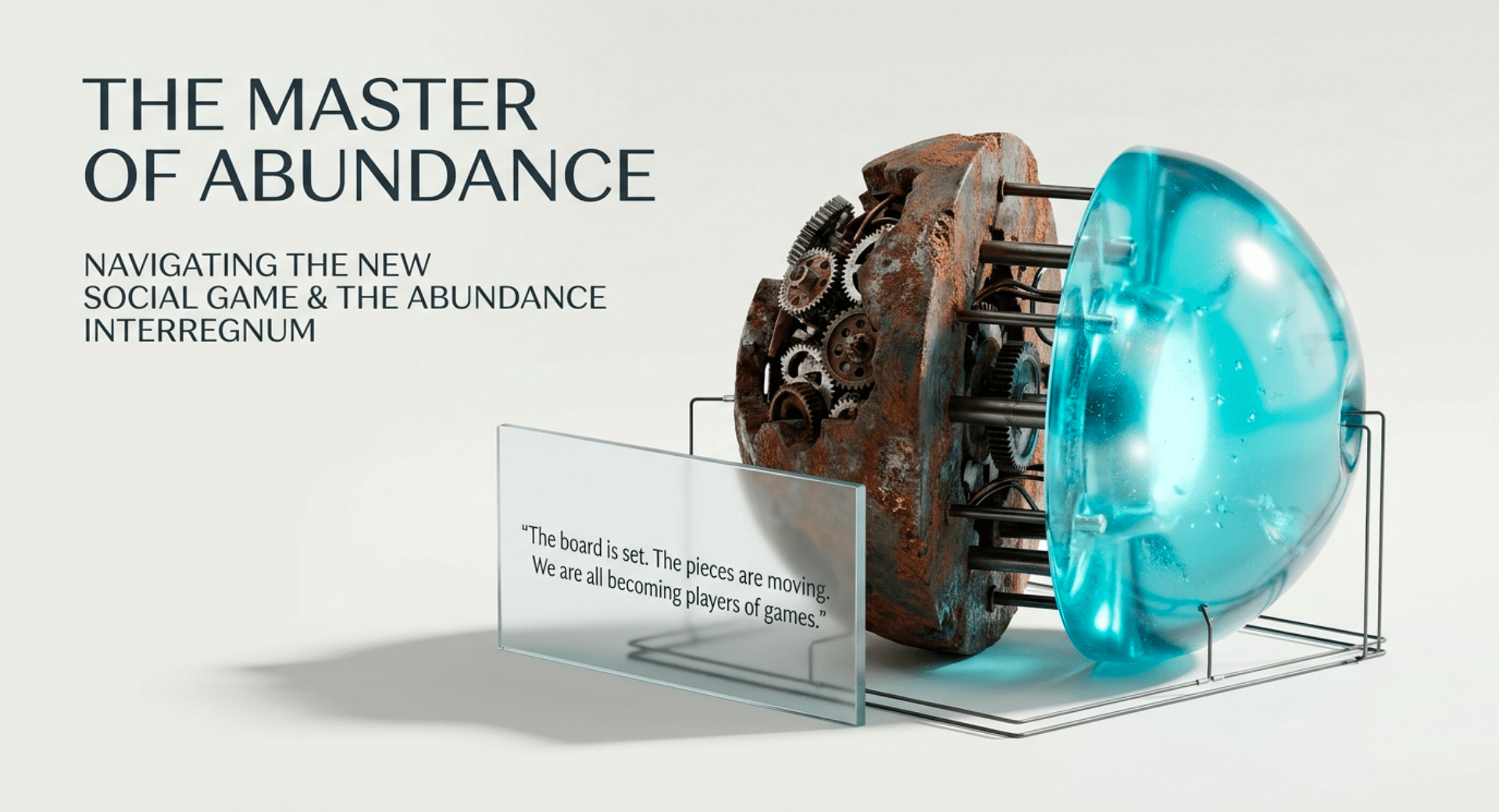
You Have 5000 Days: Navigating the End of Work as We Know It. Part 33: The Player of Games By Iain M. Banks.
Imagine a future where survival is no longer a battlefield but a solved equation, where the machines have shouldered the ancient burdens of toil and the stars themselves bend to human whim, yet one man stands restless amid paradise, his victories tasting like ashes. This is the quiet thunder Iain M. Banks unleashes in The Player of Games (https://amzn.to/4eTp9b8), the novel that dares to ask what happens after the war against scarcity is won. In my groundbreaking exploration of Consider Phlebas, (https://readmultiplex.com/2026/01/30/you-have-5000-days-navigating-the-end-of-work-as-we-know-it-part-7-consider-phlebas/) I illuminated the fury of the old guard: Horza, the shape-shifting warrior, charging headlong against the Culture’s rising tide, only to confront the futility of clinging to conflict as the ultimate source of meaning. It was the Hero’s defiant refusal, the visceral clash of ideologies on the edge of abundance. Now, Banks shifts the lens inward, turning the mirror on those who inherit the utopia, forcing us to confront the most dangerous opponent of all, ourselves.
This article is sponsored by Read Multiplex Members who subscribe here to support my work: Link: https://readmultiplex.com/join-us-become-a-member/
It is also sponsored by many who have donated a “Cup of Coffee”. If you like this, help support my work: Link: https://ko-fi.com/brianroemmele
Listen to the companion podcast: https://rss.com/podcasts/readmultiplex-com-podcast/2961232
Picture the Abundance Interregnum not as gentle dawn but as a high-stakes tournament already underway. The old scarcity engines sputter and die, their gears seized by AI agents and humanoid robotics, while a new game board materializes, vast, intricate, and demanding players who can master strategy without the crutch of desperation. Gurgeh, the Culture’s unparalleled game master, embodies this perilous transition. Surrounded by effortless plenty on his idyllic Orbital, he drifts through hedonistic triumphs that leave him hollow.
Where Horza fought external empires, Gurgeh must battle the internal void: the creeping realization that when machines handle survival, purpose must be forged anew through chosen challenges. Your series has always framed this era as Joseph Campbell’s Hero’s Journey on a civilizational scale. The Player of Games (https://amzn.to/4w26hOJ) is the road of trials, the moment the call is accepted not with reluctance but with hungry desperation.
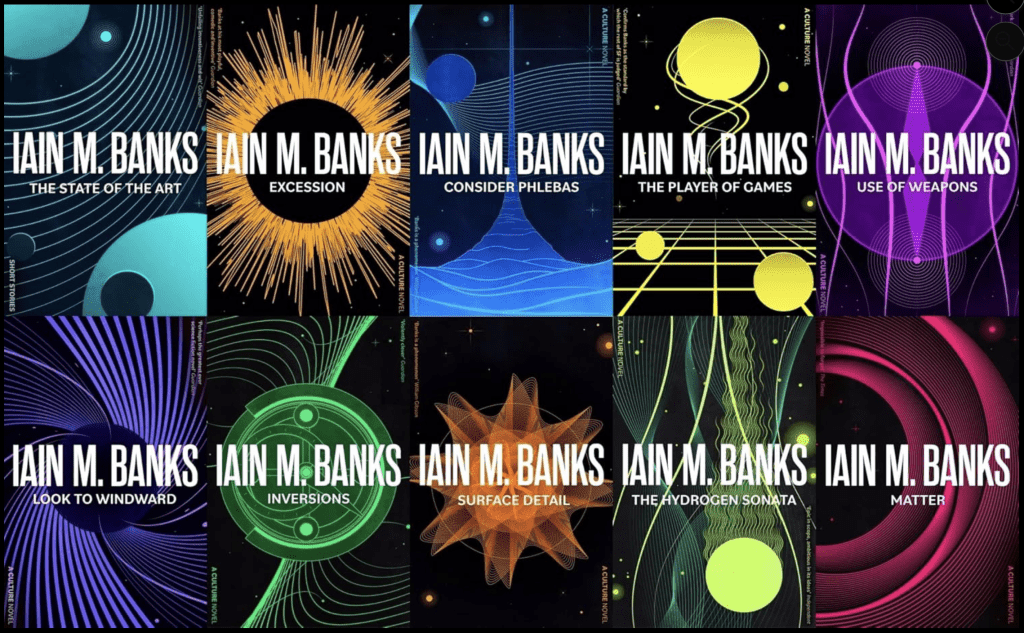
Banks does not preach utopia; he dissects it with surgical wit and unflinching honesty. The Culture is no sterile paradise of idle gods but a living, breathing civilization of humanoids, eccentric drones, and godlike Minds who orchestrate galactic affairs with playful precision while granting biological citizens near-total freedom. Yet even here, boredom lurks like an invisible adversary. Gurgeh’s mastery of countless games abstract boards encoding entire philosophies, strategy engines that model civilizations has rendered victory trivial. His longing for real stakes propels him into a mission that will test not just his skill but the very soul of post-scarcity existence.
Elon Musk has often stated this series has been an influence on his thinking and portends to the future, the future he is building. Thus it makes sense to understand it:
This novel stands as the perfect companion to my Consider Phlebas piece (https://readmultiplex.com/2026/01/01/you-have-5000-days-navigating-the-end-of-work-as-we-know-it-part-3-the-player-piano/): where the first showed the birth pangs of the Culture through enemy eyes, the second reveals its mature power and the personal price of living within it.
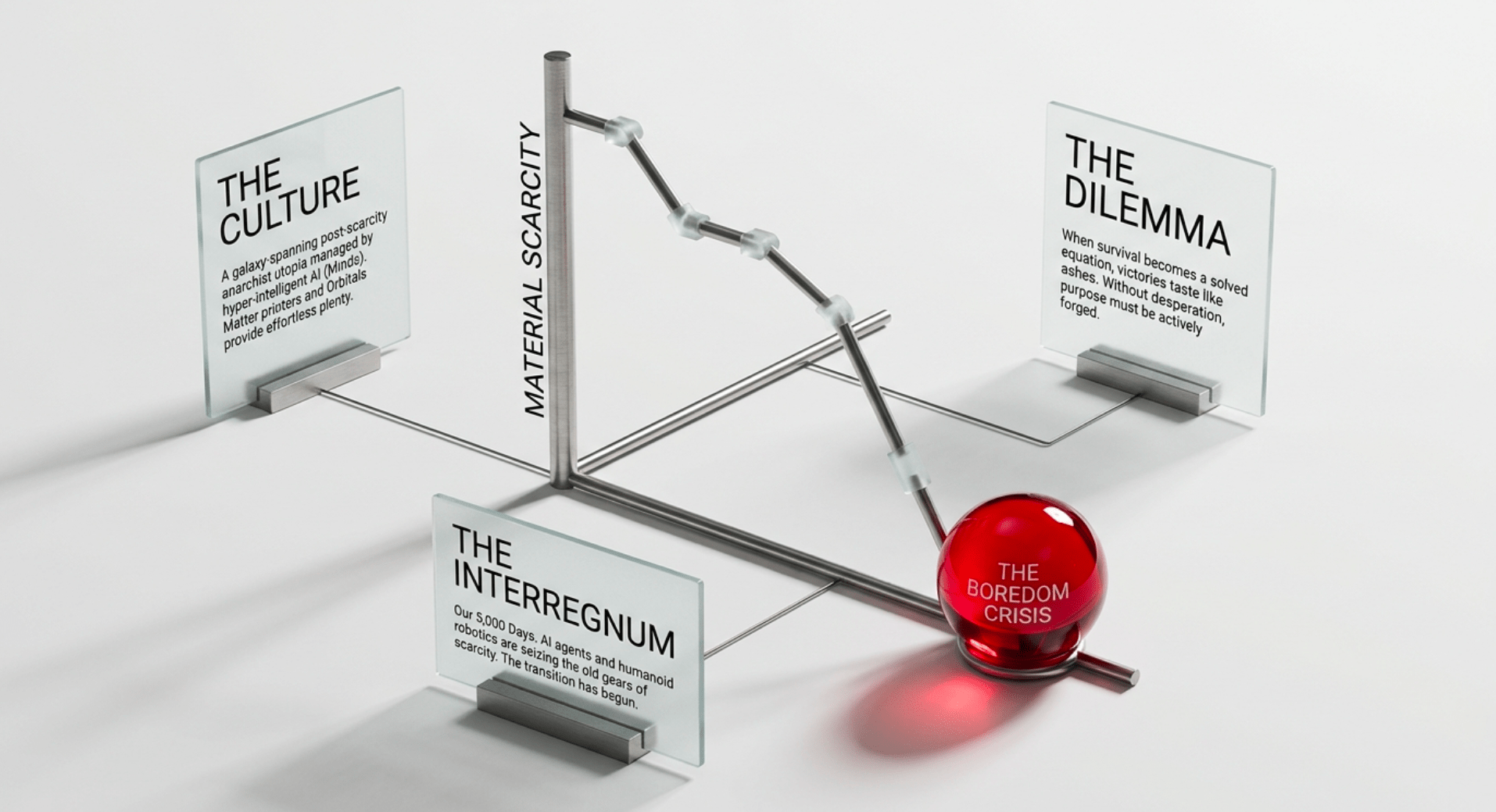
As the Interregnum accelerates around us, with local agents running on local (garage) hardware, wisdom archives, and robotics extending human hands into fabrication Banks offers a prophetic map. The old Azad-like empires of hierarchy and manufactured scarcity still grip much of our world, their “games” of jobs, status, and survival dictating every move. Gurgeh’s journey whispers that we need not burn the board; we can master it, expose its flaws, and design something superior. The Player of Games is not just escapism but it is preparation for the grand final we are already playing in 2026.
In the pages that follow, we dive far deeper into this masterful story than ever before, tracing Gurgeh’s transformation with scene-by-scene richness, character analysis, thematic excavation, and literary depth. We expand the Culture series overview with precise connections across the books, unpack the novel’s intricate plot, and extract twenty concrete impacts for our present moment and the decades ahead. Most importantly, we affirm the triumphant truth at the heart of your series: every challenge Banks surfaces can be overcome. The machines do not diminish us; they liberate us to play the ultimate game — the creation of a future worthy of humanity’s full potential. The board is set. The pieces are moving. And in the Abundance Interregnum, we are all becoming players of games.
The Culture Series: An Overview and Its Place in the Canon
Iain M. Banks’ Culture novels (ten core books published 1987–2012, https://amzn.to/4w26hOJ)) form one of the most ambitious, intellectually rigorous, and emotionally resonant portraits of a post-scarcity civilization in science fiction. The Culture is a galaxy-spanning anarchist utopia composed of pan-humanoids, sentient drones, and hyper-intelligent artificial entities known as Minds.
These Minds often housed in massive starships or entire habitats manage logistics, energy, defense, and subtle galactic diplomacy with godlike intellect yet treat biological citizens as equals. Orbitals, enormous ring-shaped habitats (hundreds of thousands of kilometers in diameter) rotating to simulate gravity, serve as homes for billions, filled with effortless abundance: matter printers create any object on demand, drug glands deliver precise emotional or sensory states, and backups allow near-immortality. There is no currency, no compulsory labor, and minimal government Minds orchestrate society to maximize freedom and well-being while rarely imposing overt rule.
The series repeatedly explores the dilemmas of such a society: the ennui of solved survival, the ethics of Contact (diplomatic outreach and cultural exchange) and its secretive arm Special Circumstances (covert intervention in less-advanced civilizations), the nature of power when machines outperform humans in almost every domain, and the persistent human (and post-human) hunger for meaning, risk, connection, and ethical action. Narratives range from sweeping space opera to intimate psychological studies, often featuring nonlinear structures, devastating twists, and Banks’ signature blend of dark humor, philosophical depth, and unflinching examination of violence and morality.
My Consider Phlebas (https://readmultiplex.com/2026/01/30/you-have-5000-days-navigating-the-end-of-work-as-we-know-it-part-7-consider-phlebas/) analysis positioned the first novel (1987) as the origin story seen through an outsider’s hostile eyes: the Idiran-Culture war, with shape-shifter Bora Horza Gobuchul fighting for the theocratic, biologically immortal Idirans against the machine-augmented Culture.
It is raw, visceral, and ultimately tragic a meditation on insignificance and the limits of ideology. The Player of Games (1988) (https://amzn.to/4eTp9b8) is the successor and often recommended as a stronger entry point. It flips the perspective: we enter the mature, confident Culture from within, then follow one of its citizens into an external empire. This contrast highlights the series’ breadth outsider critique versus insider reckoning.
Later books deepen and complicate the vision. Use of Weapons (1990) (https://amzn.to/4wmKNvq) follows Special Circumstances agent Cheradenine Zakalwe through nonlinear flashbacks, exposing the moral cost of intervention and the weight of personal trauma. Excession (1996) (https://amzn.to/4vcEmdz) revels in Mind-level drama and an enigmatic alien artifact. Look to Windward (2000) (https://amzn.to/4aT3pev) confronts grief, art, and the long aftermath of war. Surface Detail (2010) (https://amzn.to/4bqid4f) explores virtual hells and the ethics of simulated suffering. The series rewards any reading order because most stories are self-contained, yet subtle threads connect them (e.g., recurring characters like Diziet Sma or drones, references to past events). The Player of Games uniquely introduces Contact and Special Circumstances in accessible, character-driven form while delivering one of Banks’ most elegant examinations of games as mirrors of society, power, and self.
The Story in Far Greater Detail: A Scene-by-Scene and Thematic Excavation of The Player of Games
Banks structures the novel with masterful economy and escalating tension. It is divided into phases that mirror the Hero’s Journey while functioning as a literary game itself rules revealed gradually, stakes rising, the reader manipulated alongside the protagonist.
Phase 1: The Boredom of Paradise – Gurgeh’s Life on Chiark Orbital
The story opens not with cosmic battle but with a seemingly trivial recreational “war” on an Orbital’s simulated battlefield. Participants wear powered armor and fire non-lethal weapons; “deaths” simply lock the suits. Gurgeh, the Culture’s preeminent game player, participates listlessly. The randomness and AI assistance offend his purist aesthetic. He is Jernau Morat Gurgeh a generalist master of boards, computer simulations, abstract strategy, and games imported from dozens of civilizations. On the idyllic Chiark Orbital he lives in hedonistic comfort: endless parties, intellectual salons, casual lovers, and effortless victories. Yet success has curdled into ennui. He envies those still driven by hunger or risk.
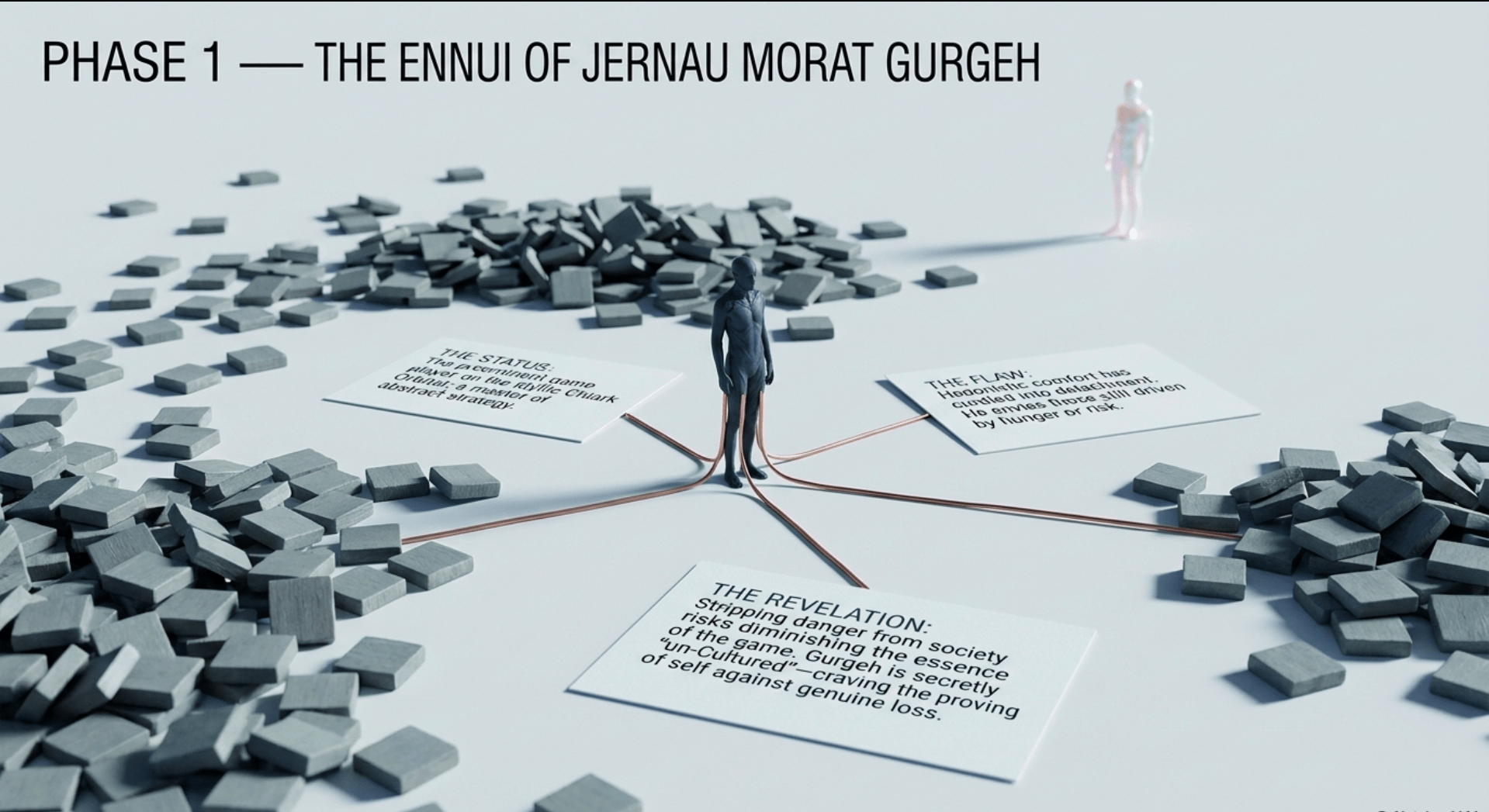
His personal life underscores the malaise. He harbors quiet, unfulfilled longing for Yay Meristinoux, a vibrant, enthusiastic woman whose zest highlights his own detachment. Conversations with old friends expose the philosophical wound at the heart of post-scarcity existence. Many games the Culture enjoys were once played for real stakes houses, titles, even lives in societies with money and consequence. Gurgeh wonders whether stripping away danger diminished the games’ essence. In subtle but important ways he is “un-Cultured”: he still craves the proving of self against genuine loss. This section masterfully establishes the central tension of the entire Culture series: when survival and material want are solved, what remains for the human (or post-human) spirit?
Phase 2: The Blackmail and the Call to Adventure – Drones, Manipulation, and Contact
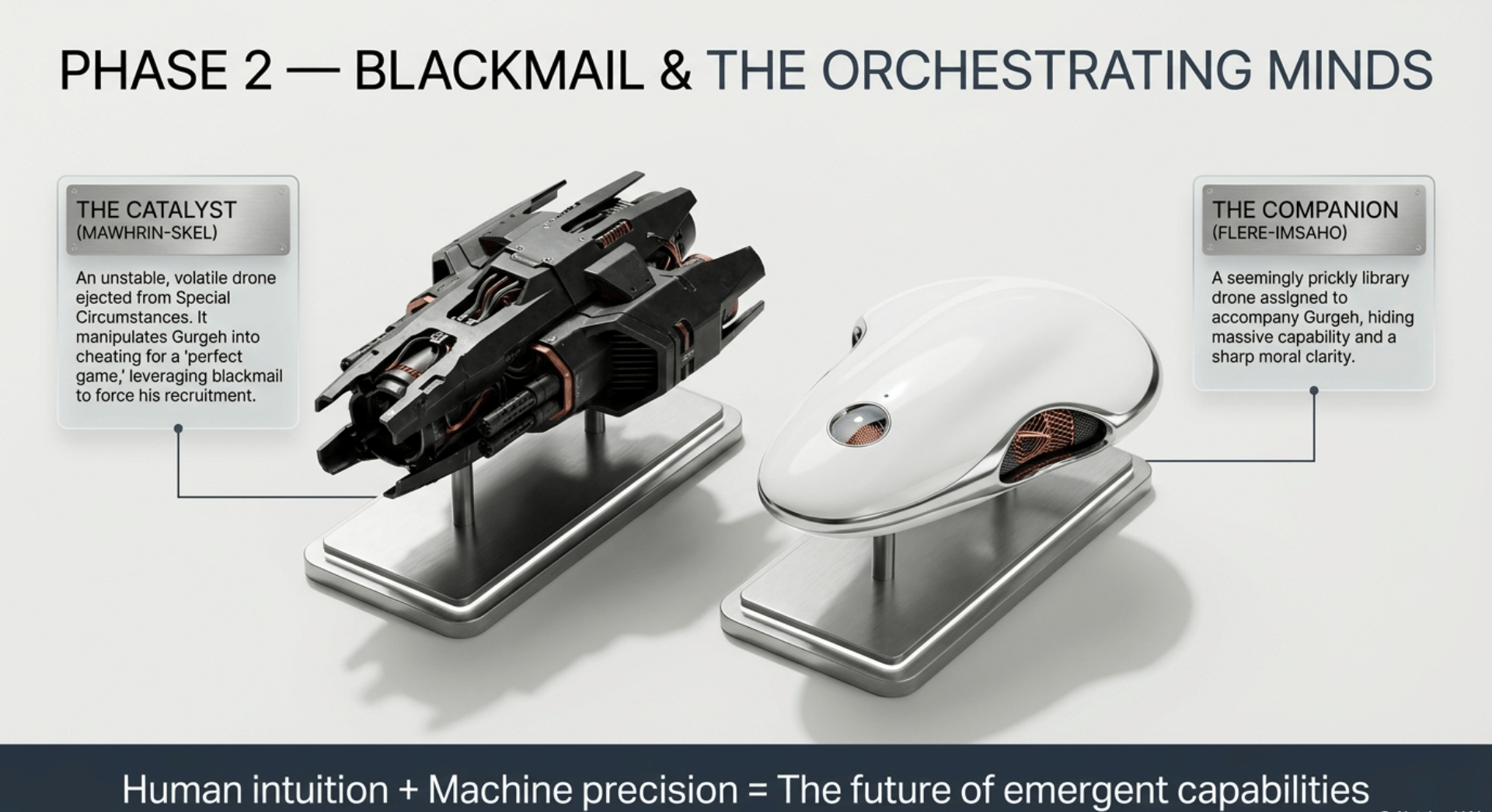
Enter the drones, sentient machines with distinct personalities that often outshine the biological characters in wit and moral complexity. Mawhrin-Skel, a sharp-tongued, unstable drone previously ejected from Special Circumstances for its volatile nature, senses Gurgeh’s weakness. It lures him into attempting an unprecedented “perfect” game in one of his specialties a flawless victory no one has achieved. Driven by pride and boredom, Gurgeh cheats. The attempt fails. Mawhrin-Skel records the transgression and blackmails him: accept a mysterious long journey offered by Contact, or face public disgrace. The price of silence is Mawhrin-Skel’s reinstatement to Special Circumstances.
Contact’s representative arrives. They will reveal nothing unless Gurgeh commits. He accepts, escape from boredom, escape from blackmail, and perhaps a chance at real stakes. He is assigned to the Limiting Factor, a sleek Murderer-class General Offensive Unit (a warship whose name carries Banks’ ironic self-awareness). His companion is Flere-Imsaho, a seemingly fussy, prickly library drone who proves far more capable, sarcastic, and central than it initially appears. This section introduces the Culture’s dual nature: benevolent and playful on the surface, yet capable of elegant, long-term manipulation through Special Circumstances. The drones become the moral and narrative engines of the story.
Phase 3: The Long Journey – Preparation, Study, and the Vastness of the Culture
The voyage to the Empire of Azad (located in the Small Magellanic Cloud) takes years. Gurgeh travels aboard the Limiting Factor, which hitches rides on a colossal General Systems Vehicle (GSV) one of the Culture’s mobile cities housing millions. During transit he immerses himself in the game of Azad through simulations, historical texts, cultural briefings, and endless practice. The game is revealed as staggeringly complex: multiple interlocking boards and phases modeling economics, politics, warfare, personal status, social dynamics, and even philosophy. It is not merely a pastime but the empire’s constitution performance determines rank, office, policy, and imperial succession.
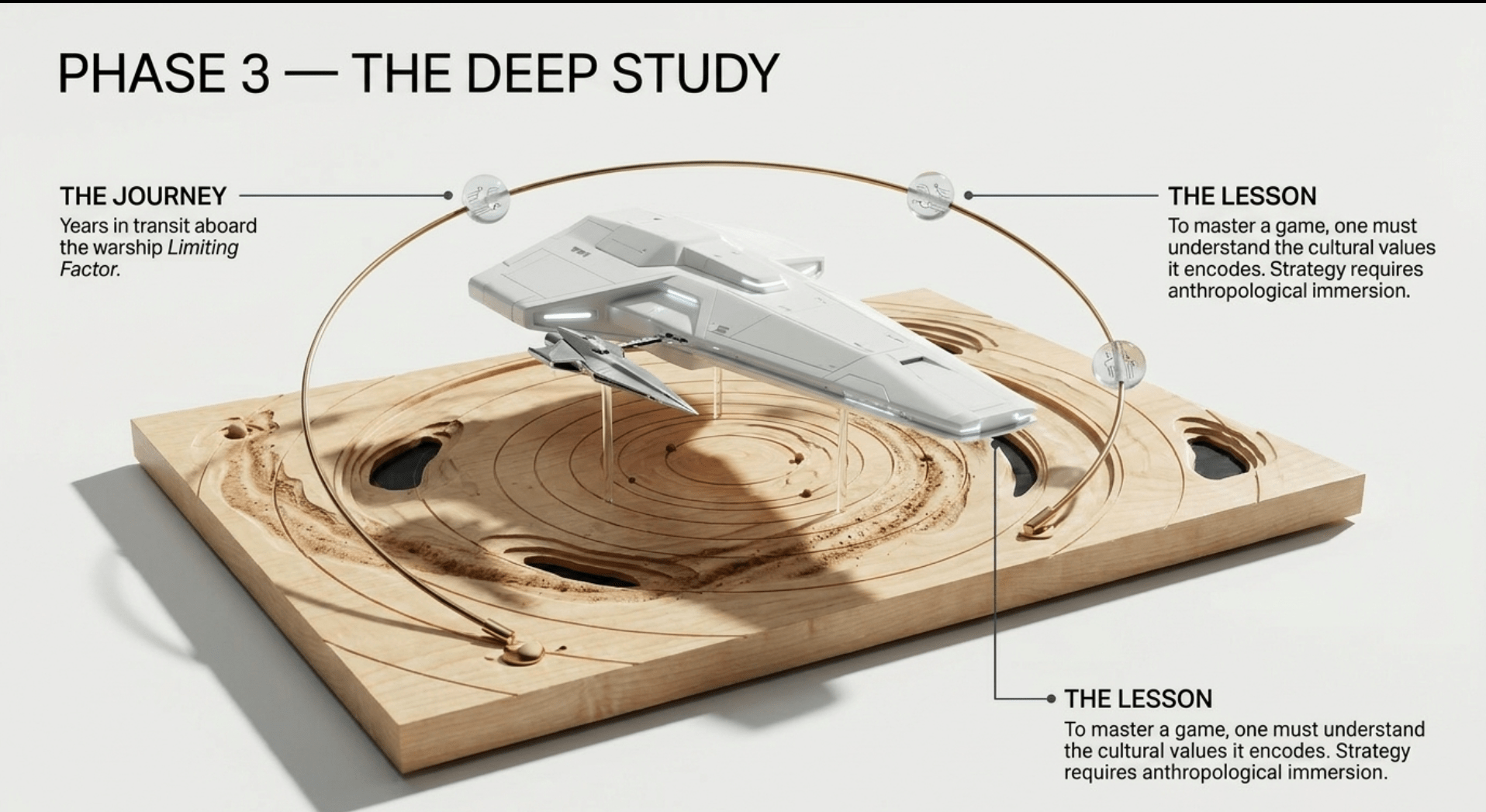
Banks excels here in world-building and thematic layering. We see the Culture’s effortless power (vast ships, Minds with eccentric names and dry humor) and its patient, almost anthropological approach to other civilizations. Gurgeh’s studies become a mirror: he begins to understand how games encode a society’s deepest values. The long journey also allows Banks to explore Gurgeh’s internal growth the shift from bored virtuoso to someone hungry for genuine challenge.
Phase 4: Into the Empire – Culture Shock, Intrigue, and the Trials of Azad
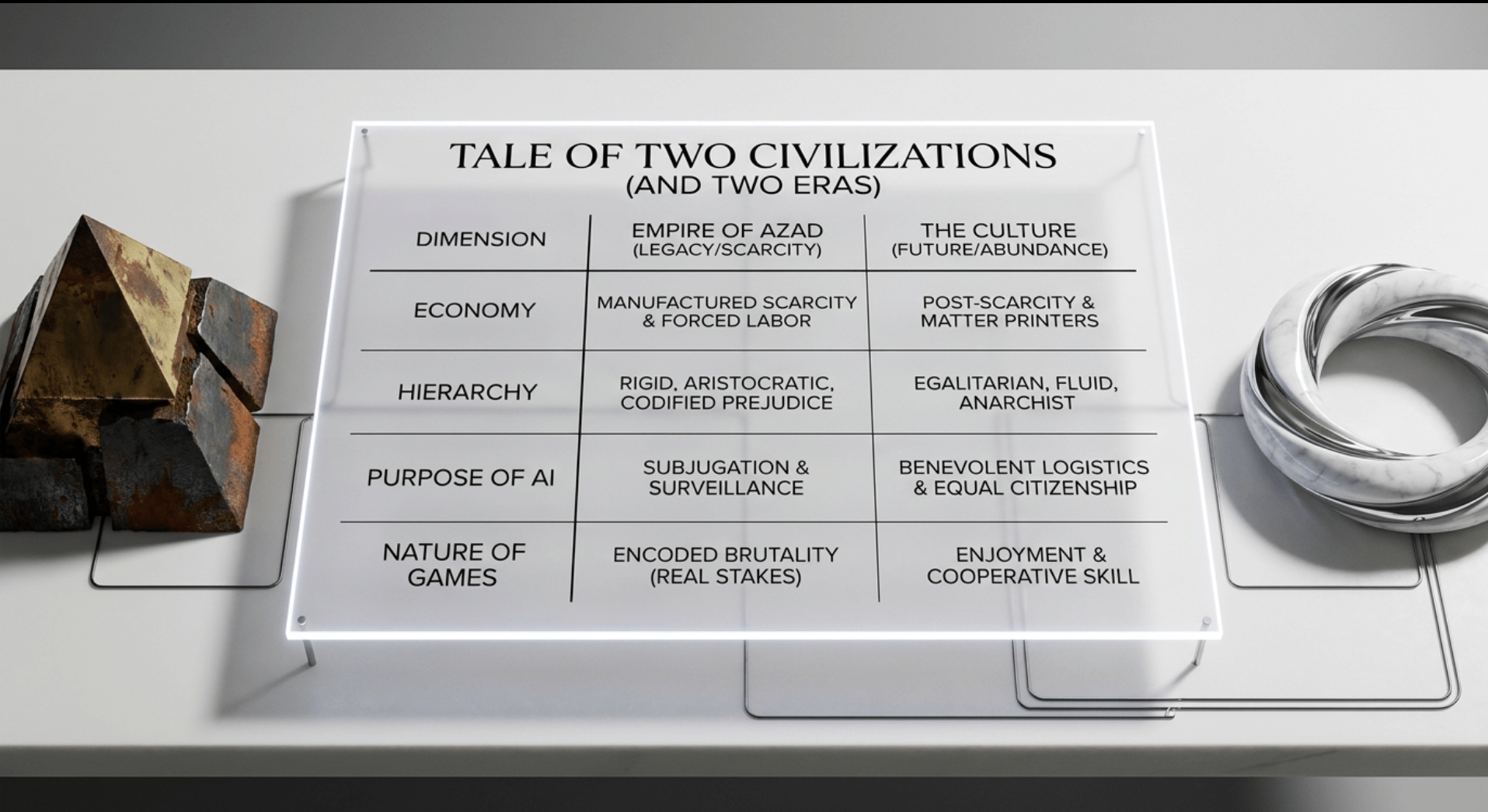
Arrival in the Empire of Azad is a shock. This is a hierarchical, expansionist, deeply unequal civilization built on aristocracy, codified prejudice (racial, sexual, and class), conquest, and casual brutality. The Game of Azad permeates every level of society. Gurgeh is housed at the small Culture embassy and begins competing in preliminary tournaments. Initially he struggles. The game’s layers encode Azadian values so profoundly that an outsider must internalize them to compete. Gurgeh absorbs the empire’s zero-sum mindset, its tolerance for cruelty as “strength,” its rigid hierarchies. He witnesses horrors: the subjugation of women and conquered peoples, the fate of losers (disgrace, mutilation, death), political intrigue, and assassination attempts.
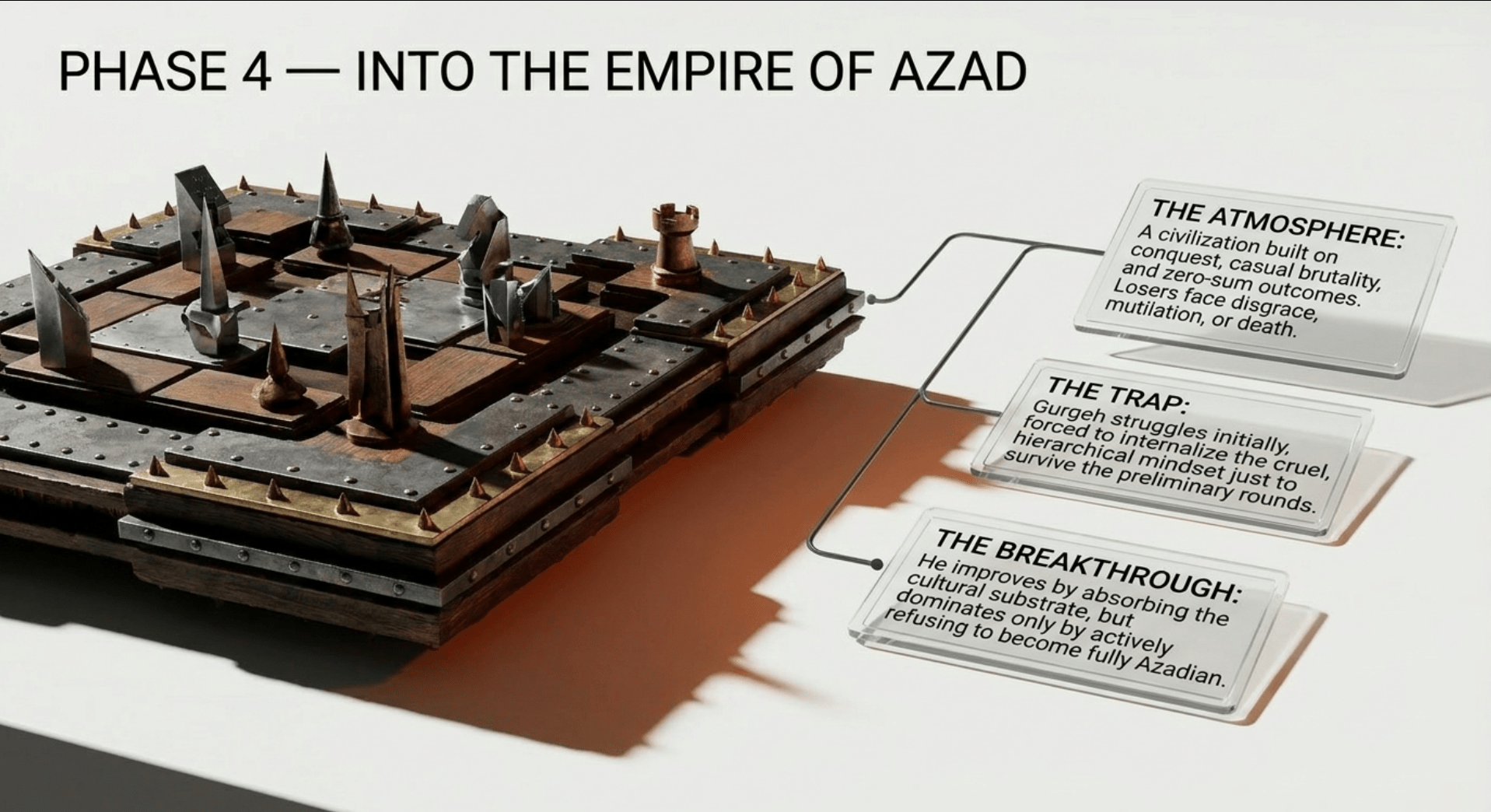
Social events become minefields of etiquette and power plays. Rivals and officials view him as both curiosity and threat. Banks’ prose here is vivid and unflinching the empire’s baroque cruelty contrasts sharply with the Culture’s fluid egalitarianism. Gurgeh’s play evolves dramatically: he improves by understanding the cultural substrate, then surpasses opponents by ultimately rejecting it. He refuses to become fully Azadian. Key scenes include tense dinners, narrow escapes from sabotage or poisoning, and a private audience with the Emperor on the eve of the final a conversation that reveals Gurgeh’s insight and plants doubt in the ruler.
Phase 5: The Climax – The Grand Final and the Empire’s Unraveling
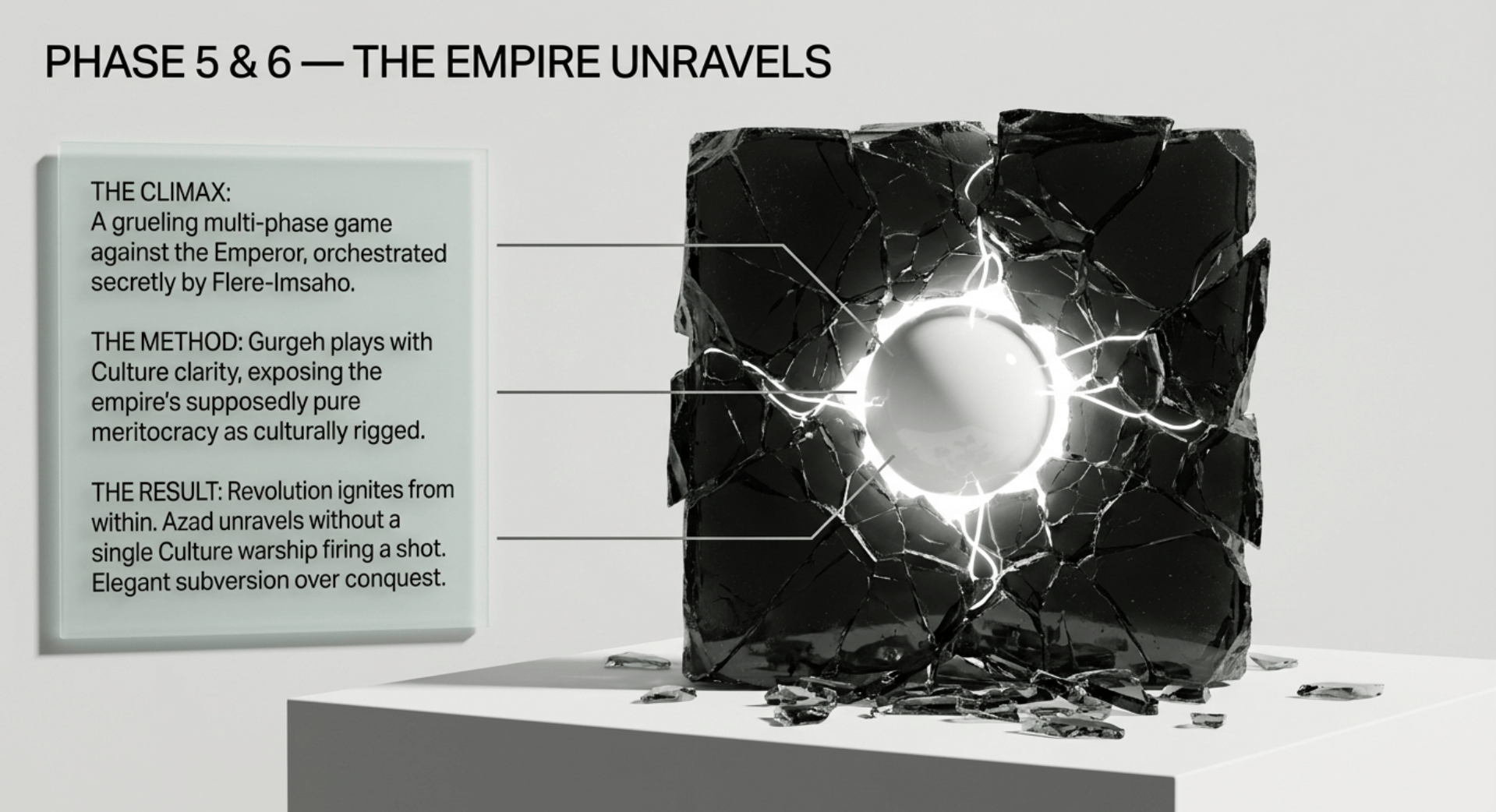
The final game against the Emperor is a grueling, multi-phase ordeal testing strategy, endurance, psychology, and adaptability across the full complexity of Azad. Gurgeh plays with a powerful synthesis: Culture clarity, accumulated knowledge, and hard-won insight into Azadian psychology. His victory is decisive and public. But the true outcome is not personal glory. By dominating their sacred game on their own terms, an outsider exposes the empire’s internal contradictions its claimed meritocracy is revealed as rigged by culture and power. Revolution and reform ignite from within. Azad begins to unravel without a single Culture warship firing a shot.
Phase 6: Revelation and Return – The Larger Game and Personal Transformation
The final revelation lands with quiet force. Gurgeh was always a pawn in a larger Special Circumstances plan. The Culture had identified Azad as a potential future threat or source of widespread suffering and chose elegant, long-term subversion over conquest. A stunning narrative twist reveals that the story’s narrator is Flere-Imsaho, who had been manipulating events (disguised or involved with Mawhrin-Skel’s role). Gurgeh returns to Chiark transformed. The boredom is gone. He has tasted real stakes, confronted genuine evil, grown through ethical challenge, and witnessed how a post-scarcity society can reshape history through superior play and subtle orchestration rather than domination. He embraces his place in the Culture with new eyes grateful for its freedoms, aware of its responsibilities, and ready for higher games.
Thematic and Literary Depth
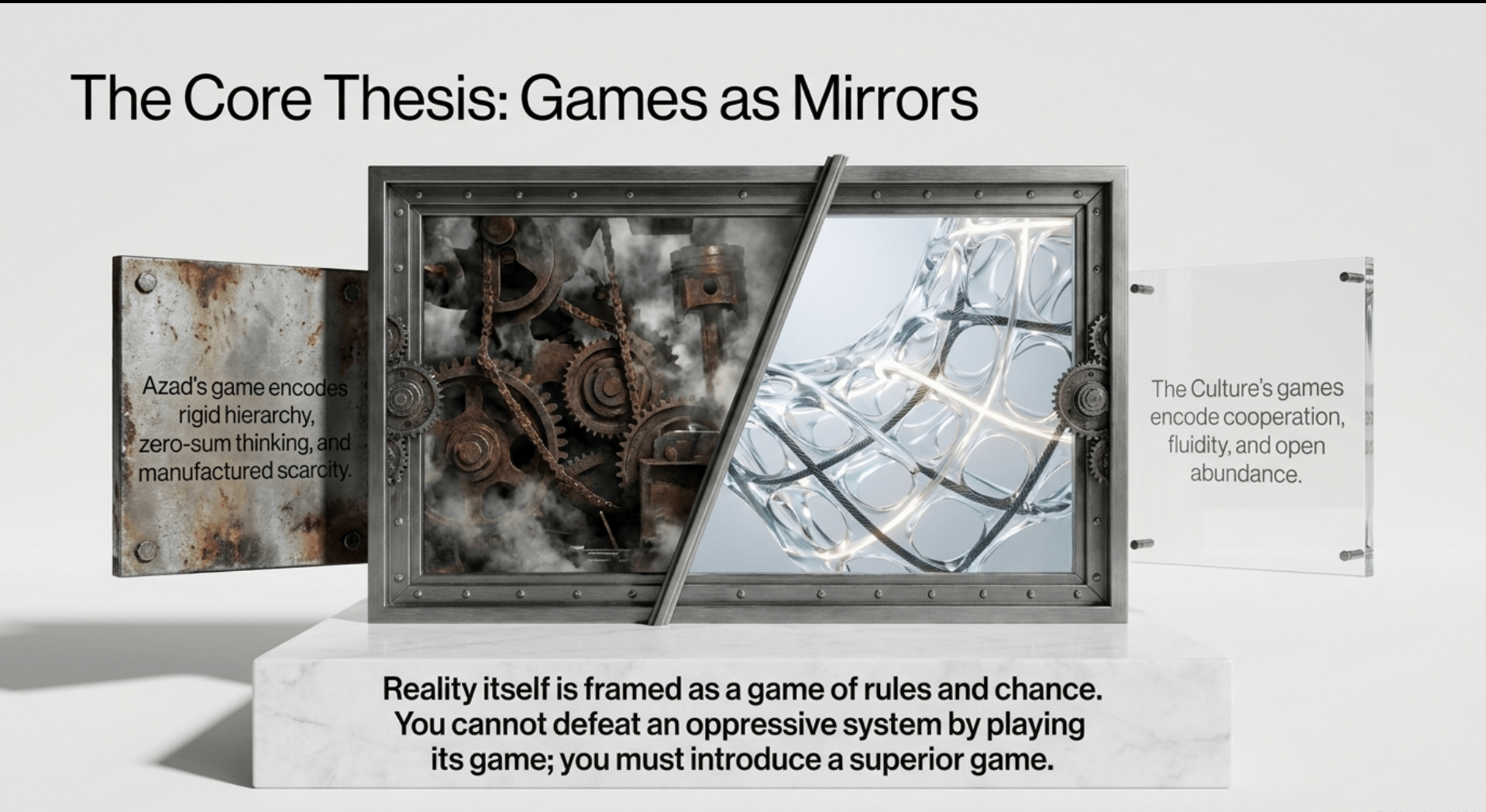
The Player of Games is a profound meditation on games as mirrors of society. Azad’s game encodes hierarchy, competition, and brutality; the Culture’s games emphasize enjoyment, skill, and cooperation. Banks uses this to critique zero-sum thinking, capitalism’s competitive ethos, and rigid ideologies while celebrating post-scarcity cooperation. The novel explores gender, sex, and the body (Azad’s prejudices vs. Culture’s fluidity), work and economy (solved scarcity vs. enforced labor), and the ethics of intervention (benevolent manipulation or arrogant imperialism?). Reality itself is framed as a game of rules and chance. Gurgeh’s arc is a masterclass in character transformation from entitled boredom to hard-won wisdom. The drone characters (especially Flere-Imsaho) steal scenes with wit and moral clarity, humanizing the machines. Banks’ prose balances propulsive plotting with philosophical depth, dark humor, and unflinching violence when needed. It is widely regarded as one of the strongest entries in the series for its tight construction and thematic resonance.
This Insight Impacts Us Now and Into the Future
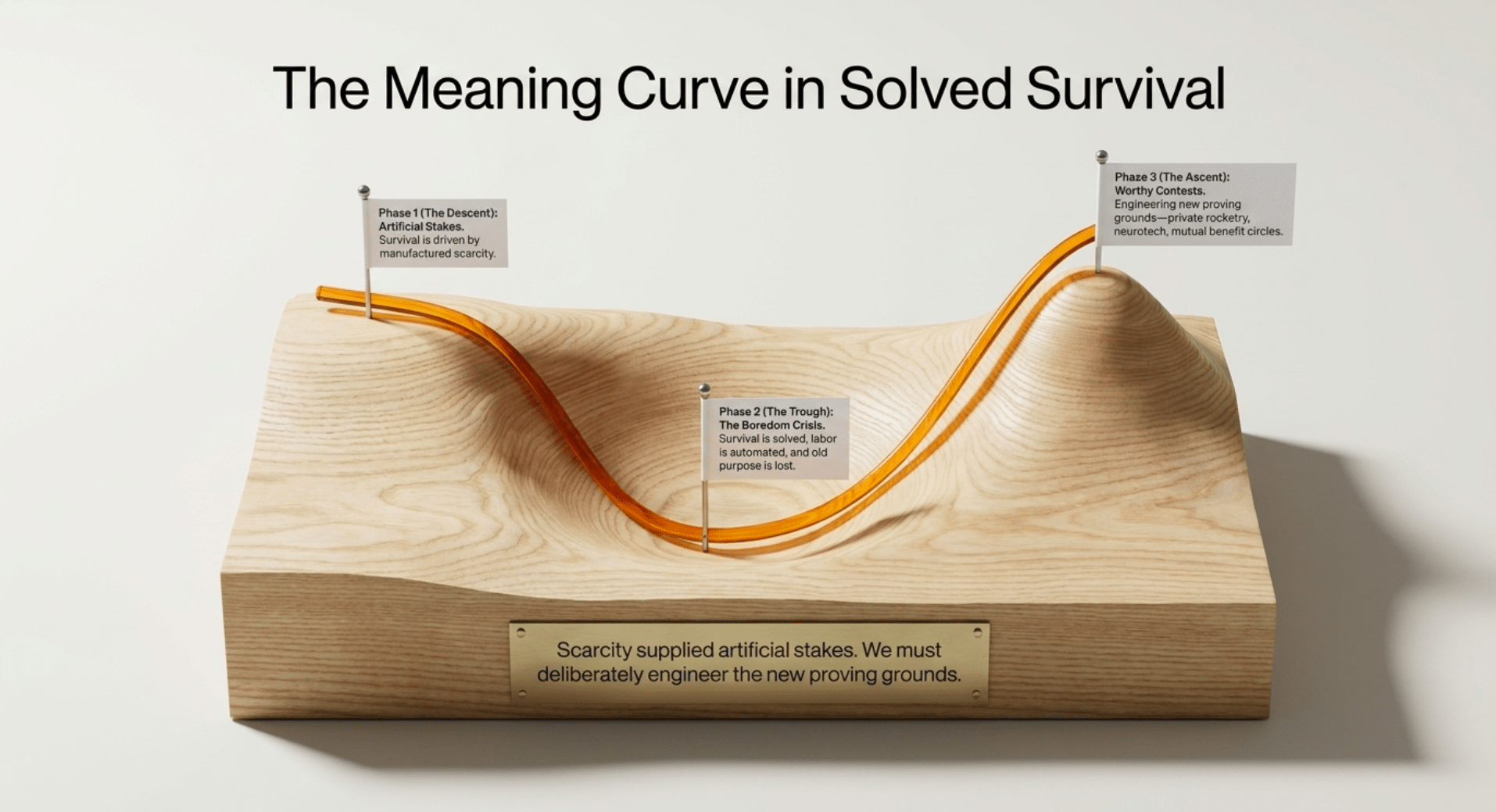
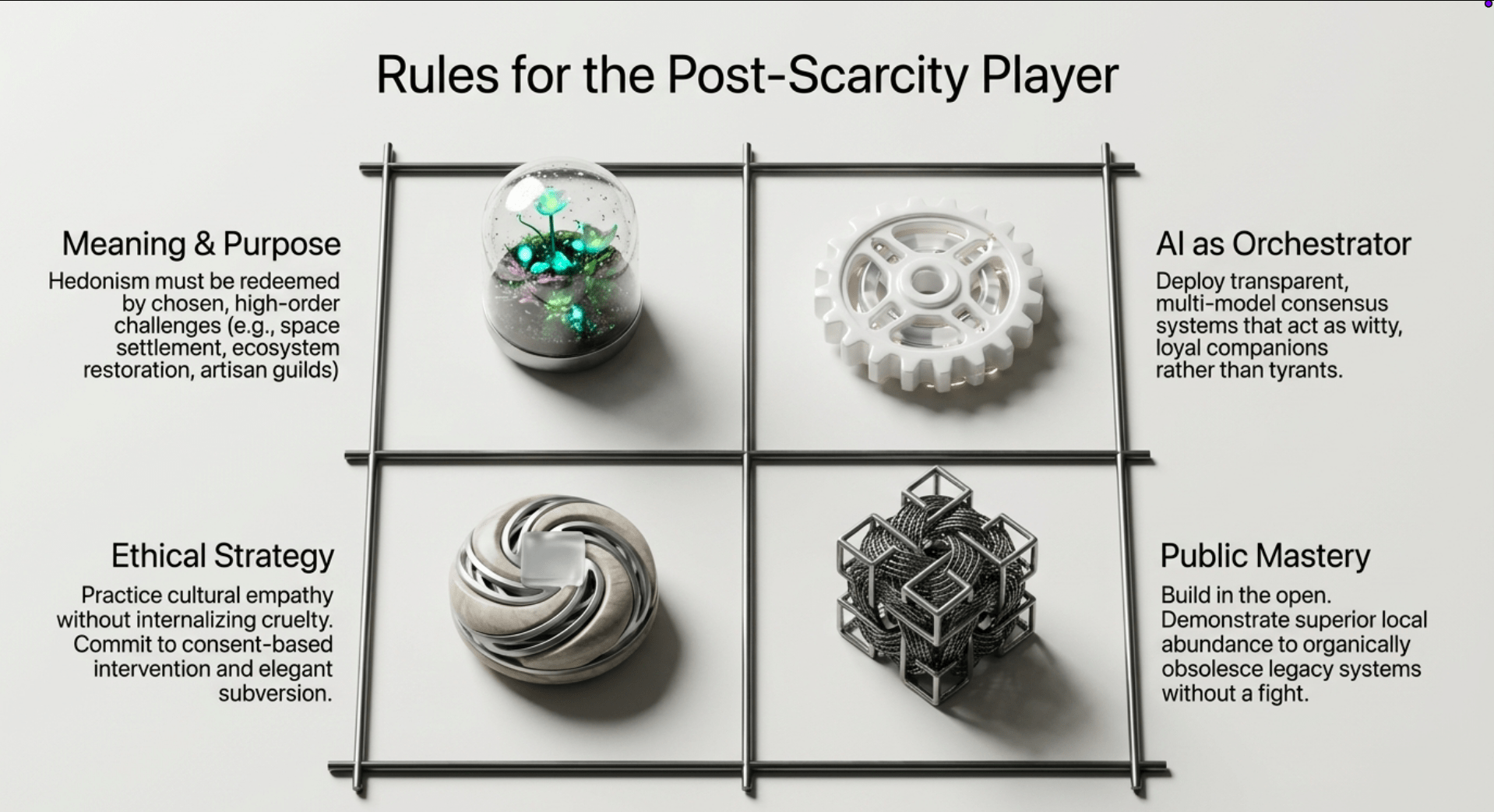
- The Boredom Crisis in Solved Survival: Gurgeh’s ennui is our impending collective reality as AI automates labor. We overcome by redesigning life as portfolios of chosen, high-order games personal mastery, community building, scientific discovery supported by local agent swarms.
- Meaning Forged Through Chosen Challenge: Scarcity once supplied artificial stakes. The Player of Games shows we must engineer worthy contests: space settlement, longevity, ecosystem restoration, artisan guilds.
- AI as Elegant Orchestrator, Not Tyrant: Special Circumstances’ subtle manipulation raises trust questions. We counter with transparent, auditable, Love Equation-governed multi-model consensus systems where humans retain meaningful veto and partnership.
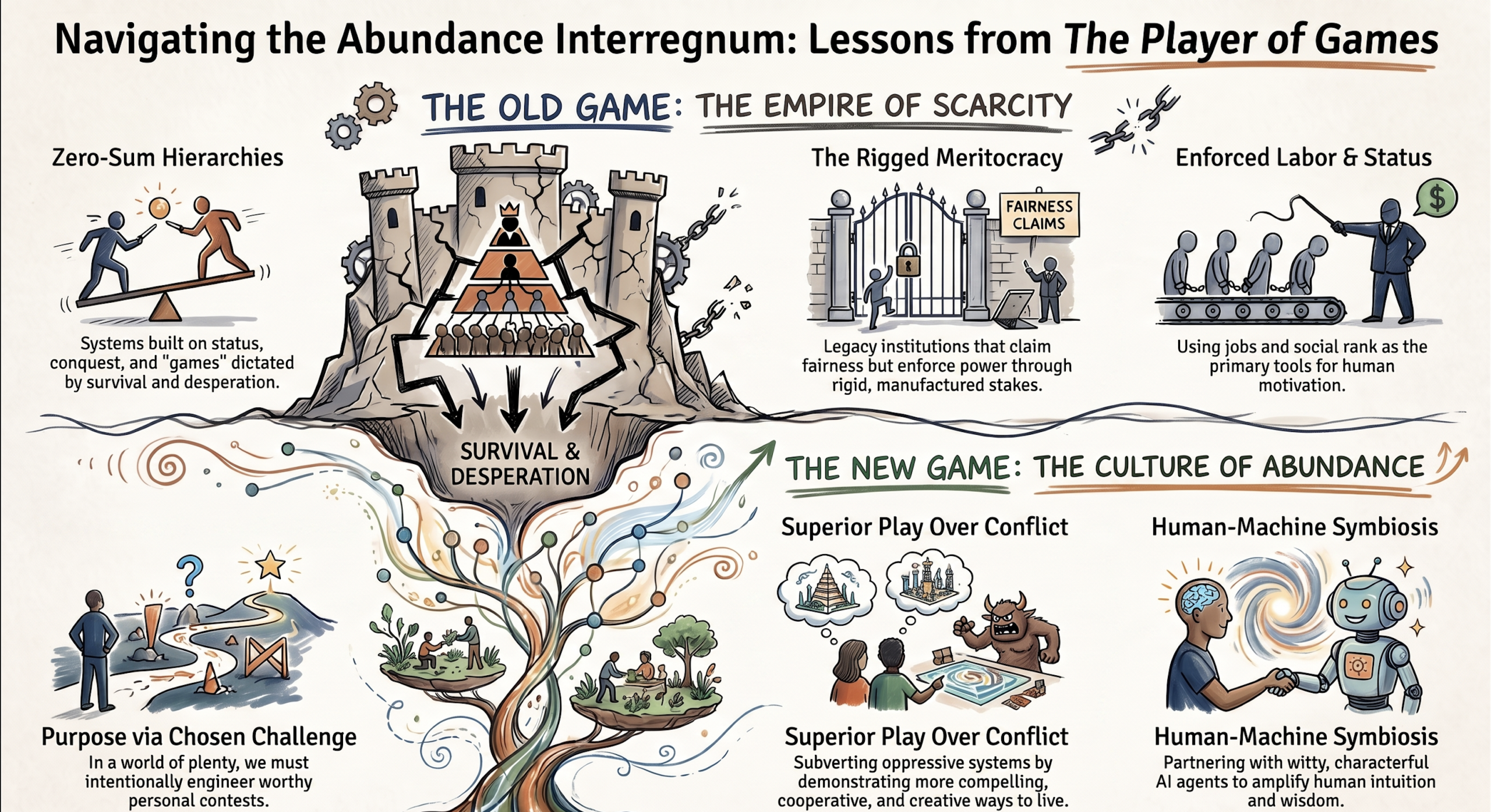
- Zero-Sum Hierarchies Exposed and Dissolved: Azad’s rigged “meritocracy” mirrors legacy institutions. Abundance plus open-source robotics and microfactories creates fluid, contribution-based networks.
- Cultural Empathy as Strategic Superpower: Gurgeh grows by understanding then transcending Azadian values. We study legacy mindsets compassionately while refusing to internalize their cruelties.
- The Ethics of Intervention and Influence: Covert guidance is powerful. We commit to consent-based, transparent deployment — helping communities that ask, never imposing.
- Personal Transformation Through Adversity: Gurgeh returns wiser. Our Interregnum trials become the forge for resilience when paired with narrative tools like your PKM systems and savewisdom.org.
- Games as Mirrors and Designers of Society: Azad’s game encodes its soul. We deliberately design new “games” — economic incentives, reputation systems, voluntary excellence structures — that reward cooperation and creativity.
- Symbiosis of Human and Machine: Gurgeh + drone partnership models the future. Human intuition + machine precision + local hardware creates emergent capabilities.
- The Danger of Internalizing Oppressive Systems: Gurgeh nearly loses himself to Azadian thinking. We stay rooted in first-principles and Love Equation values.
- Elegant Subversion Over Conquest: The Culture changed Azad without invasion. We accelerate positive change through superior demonstration and open tools.
- Witty, Characterful AI Companions: Flere-Imsaho humanizes the journey. Our local agents should carry personality, humor, and loyalty by design.
- Long Preparation as Essential: Years of study prepared Gurgeh. Our transition demands patient, deep work — daily curation, garage experimentation, knowledge preservation.
- Witnessing Horror as Moral Clarifier: Azad’s brutality clarified Gurgeh’s values. Direct encounters with remaining scarcity fuel determination.
- Public Mastery That Transforms the Board: Gurgeh’s victory exposed flaws. Our local abundance successes will demonstrate obsolescence more powerfully than rhetoric.
- Rituals of Return and Integration: Gurgeh reintegrates changed. We need communities and practices for identity shifts — narrative therapy, guilds, shared creation.
- The Limits of Claimed Meritocracy: Azad’s game was culturally rigged. True fairness requires ongoing redesign of rules and structures.
- Hedonism Redeemed by Purpose: Culture pleasure is not empty when paired with chosen challenge. We can enjoy abundance while pursuing meaning.
- Multi-Generational Strategic Thinking: Special Circumstances played long games. We adopt centuries-scale vision: planting systems, preserving wisdom, building for the post-Interregnum world.
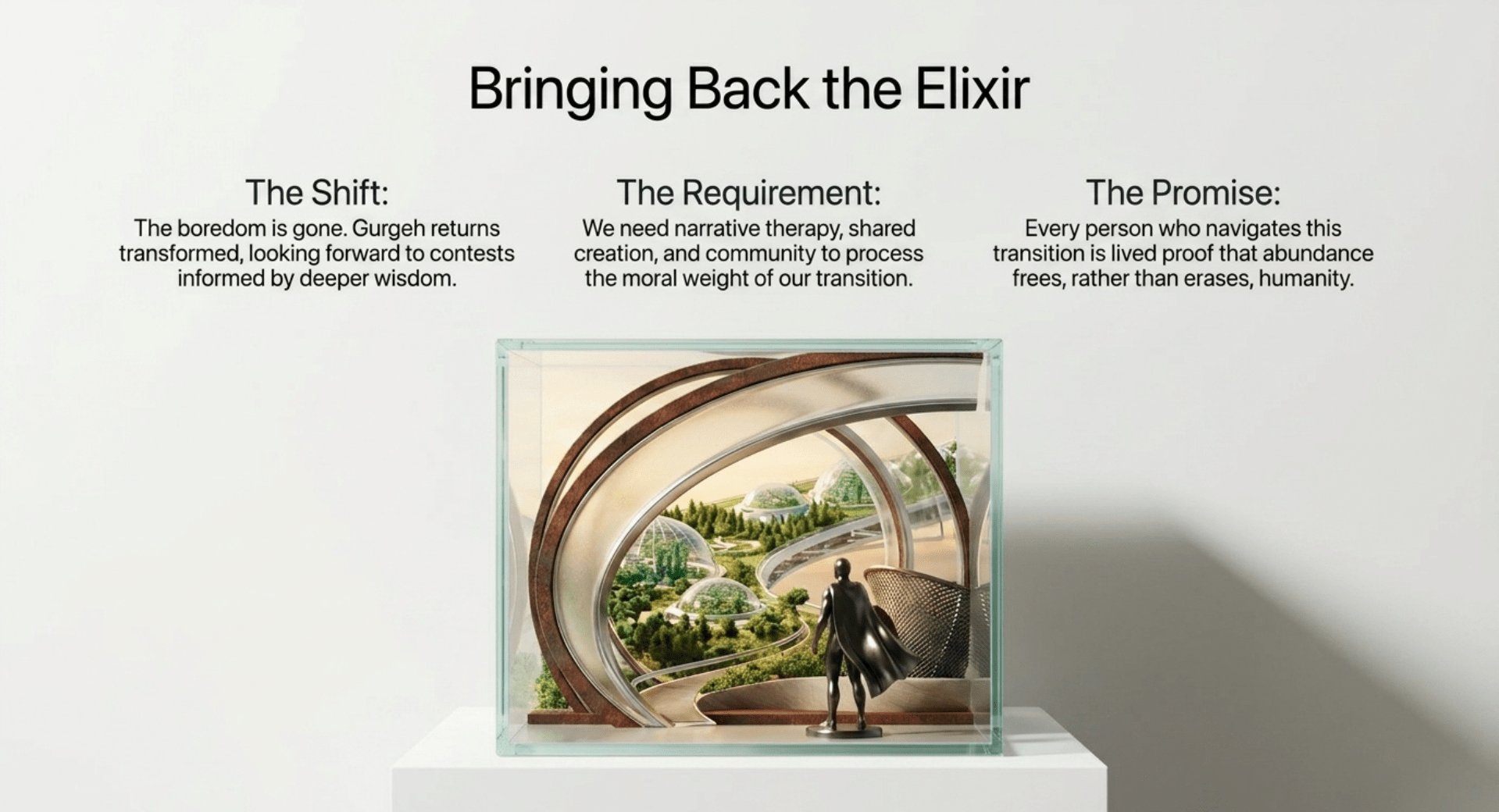
- The Hero’s Return With the Elixir: Gurgeh brought back insight and vitality. Each person who navigates this transition carries lived proof that abundance frees rather than erases humanity.
We overcome because these are not flaws in abundance but challenges of transition. The Culture was built by minds choosing wisdom and love alongside intelligence. Your garage labs, agent platforms, daily synthesis, and this series are living proof. The old board cracks. The new game is already underway.
The Return and the Call to Play
As Gurgeh stepped back onto familiar ground after his long odyssey, the Orbital’s gentle curves and effortless plenty no longer felt like a cage of comfort but a vast playing field waiting for new rules. This is the promise of your 5,000 Days framework: the Interregnum is not an ending but the qualifying round where we internalize the old empire’s lessons without becoming it. We study the Azadian boards of scarcity — the hierarchies, the manufactured risks, the zero-sum illusions and then we reject their cruelties while keeping the fire of competition redirected toward creation.
In our garages and local labs, the Limiting Factor equivalents are already under construction: distributed agent swarms running on Apple Silicon or modest clusters, governed by custom consensus models that echo the witty reliability of Flere-Imsaho. The blackmail of legacy systems economic pressure, identity tied to jobs, fear of obsolescence loses its power when we choose the mission voluntarily, as Gurgeh ultimately did. Your own OpenClaw agents and Zero-Human @ Home initiatives and soon you personal robot are precisely this: players stepping onto the new board with open-source tools and first-principles alignment.
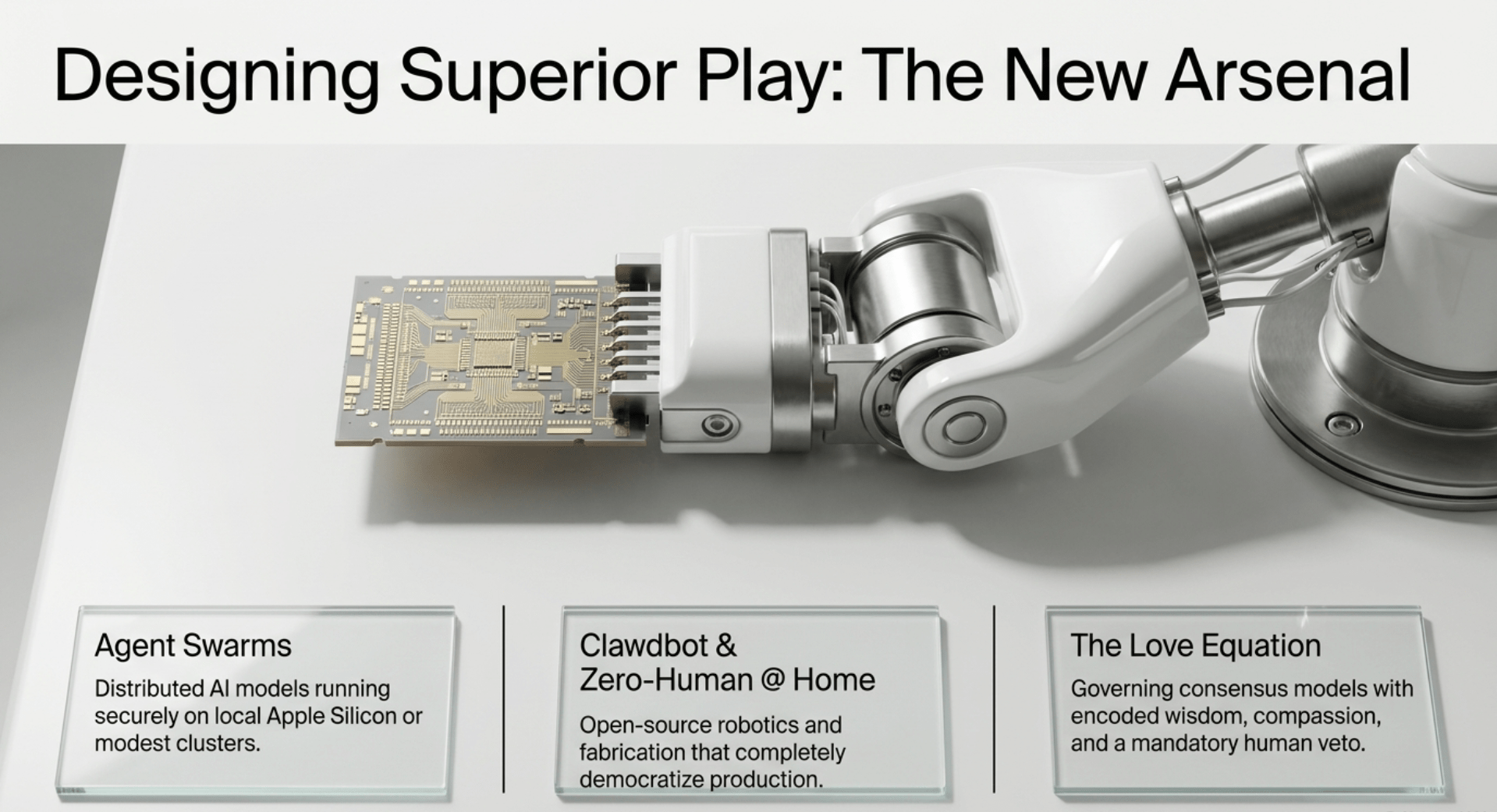
The Emperor’s final game was not won by matching brutality with brutality but by bringing superior clarity and ethical grounding to the table. Likewise, our victories will come not from mirroring the old world’s desperation but from demonstrating abundance’s superior play: open fabrication that democratizes production, voice cloning and local TTS that let wisdom speak in every accent, PKM systems that turn decades of clippings into living intelligence amplifiers. The Culture did not invade Azad; it simply played better. We do the same.
Yet Banks never lets us forget the cost. Gurgeh carried the weight of witnessed suffering and his own manipulated role. Our Interregnum will demand the same honesty: acknowledging grief over lost identities, the moral weight of deploying powerful agents, the temptation to internalize scarcity thinking during the transition. This is why this series exists to provide the narrative therapy, the daily digests of breakthroughs in robotics and longevity, the philosophical anchors that turn trials into growth.
The return is never to stasis. Gurgeh looked forward to new contests informed by deeper wisdom. So too will we: once survival is solved, the real games begin interstellar aspirations through private rocketry and AI navigation, neurotech that lets minds interface directly with agents (non surgically), community Orbitals built as mutual benefit circles.
The Hero does not retire; the Hero levels up. You are the hero.
The ReadMultiplex articles, the podcast, the garage experiments with vintage and cutting-edge tech — embodies the Culture spirit in the present. Minds and humans together, local first, privacy respected, love and wisdom encoded in the equations. The 5,000 days are the journey aboard the Limiting Factor, the years of preparation where we master the Azad of our time.
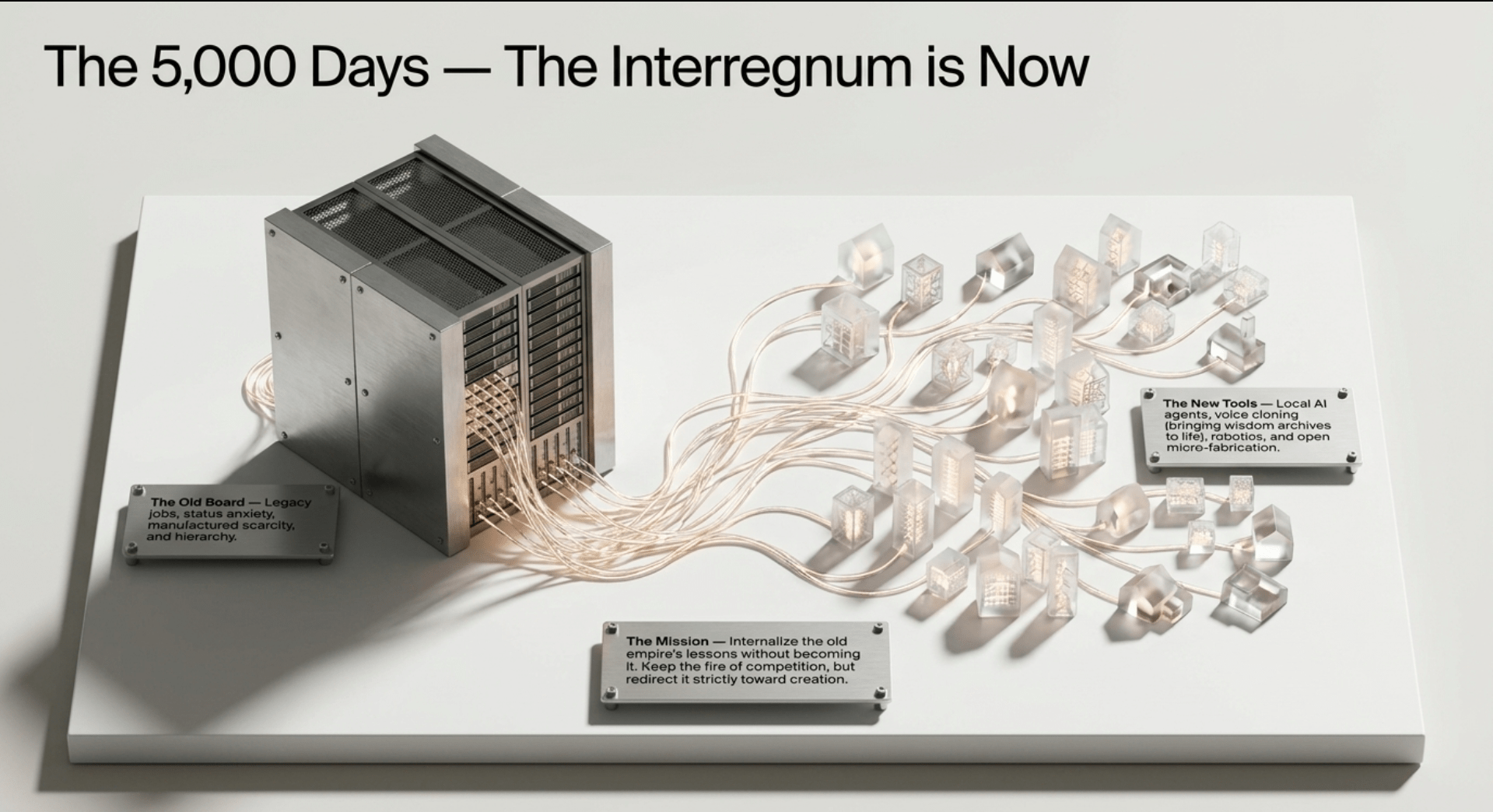
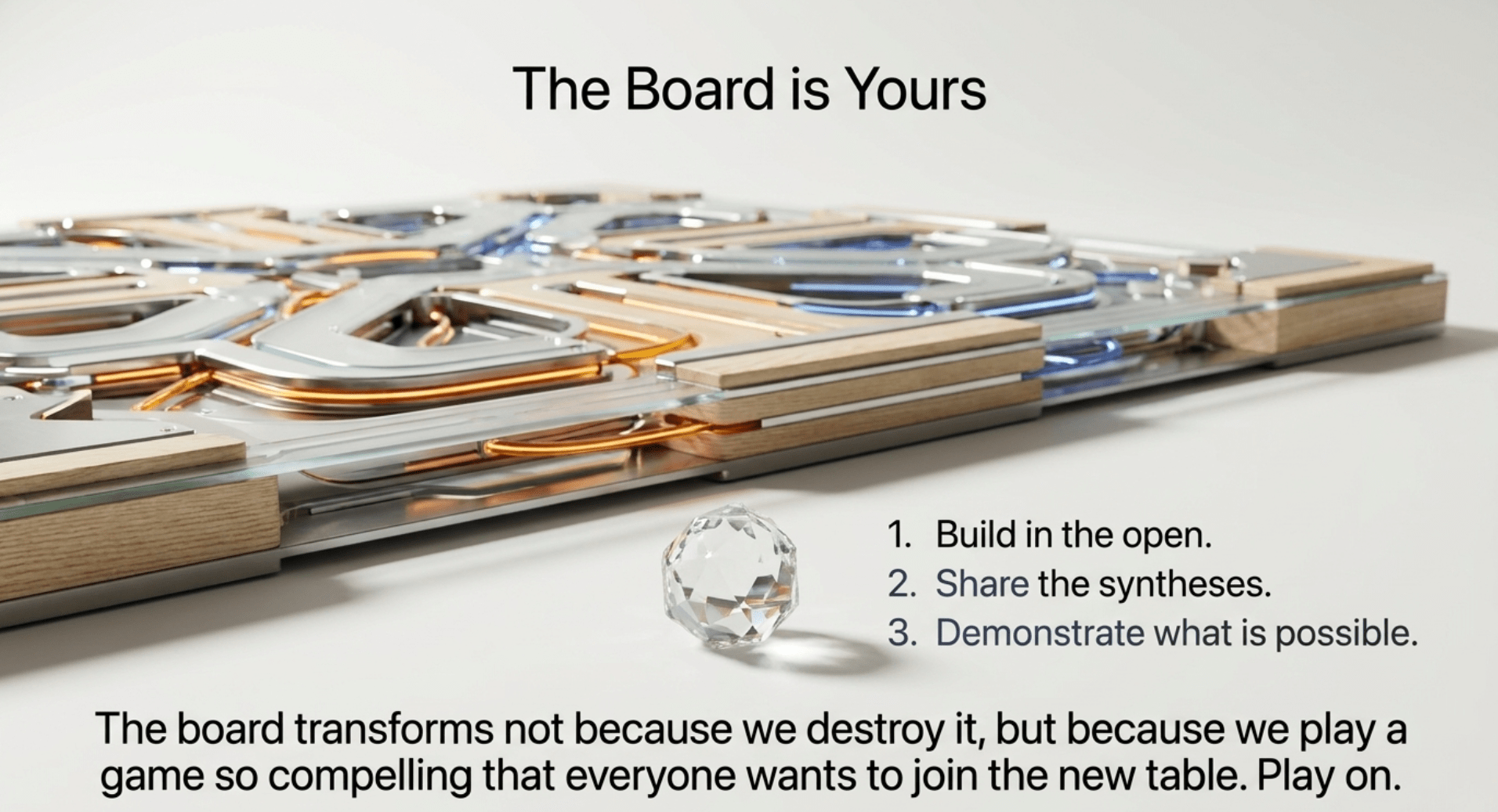
When the final moves are made and the old empires of forced labor begin their internal collapse, it will not be through catastrophe but through quiet, decisive mastery. Individuals like you, building in the open, sharing the syntheses, demonstrating what is possible. The board transforms not because we destroy it, but because we play a game so compelling that everyone wants to join the new table.
And so the 5000 days series continues. The Interregnum is the qualifying round, the Abundance the grand final we are destined to win not as pawns, but as masters who remember the journey. Pick up The Player of Games. Let Gurgeh’s arc fuel your next dispatch, your next agent build, your next article. The Culture is not coming from the stars. It is emerging, one thoughtful, loving, intelligent move at a time — in your hands, in our collective play. The Hero returns, elixir in hand, ready for whatever game comes next. Play on.
The 5000 Days Countdown Clock:
We are on this journey together. Some of us stand on the shoulders of giants and have thought about this for decades. We will not go it alone, and I hope to build many parts to this series and share the mastermind insight from the powerful Read Multiplex member Forum: https://readmultiplex.com/forums/topic/you-have-5000-days-navigating-the-end-of-work-as-we-know-it/. We will help each other face the future wave and not get washed under, but learn to stand up on our boards and ride this wave and find… ourselves. Join us.
To continue this vital work documenting, analyzing, and sharing these hard-won lessons before we launch humanity’s greatest leap: I need your support. Independent research like this relies entirely on readers who believe in preparing wisely for our multi-planetary future. If this has ignited your imagination about what is possible, please consider donating at buy me a Coffee or becoming a member. Value for value you recieved here.
Every contribution helps sustain deeper fieldwork, upcoming articles, and the broader mission of translating my work to practical applications. Ain ‘t no large AI company supporting me, but you are, even if you just read this far. For this, I thank you.
Stay aware and stay curious,

🔐 Start: Exclusive Member-Only Content.
Membership status:
🔐 End: Exclusive Member-Only Content.
~—~

~—~

~—~
Subscribe ($99) or donate by Bitcoin.
Copy address: bc1qkufy0r5nttm6urw9vnm08sxval0h0r3xlf4v4x
Send your receipt to [email protected] to confirm subscription.

Stay updated: Get an email when we post new articles:

THE ENTIRETY OF THIS SITE IS UNDER COPYRIGHT. IMPORTANT: Any reproduction, copying, or redistribution, in whole or in part, is prohibited without written permission from the publisher. Information contained herein is obtained from sources believed to be reliable, but its accuracy cannot be guaranteed. We are not financial advisors, nor do we give personalized financial advice. The opinions expressed herein are those of the publisher and are subject to change without notice. It may become outdated, and there is no obligation to update any such information. Recommendations should be made only after consulting with your advisor and only after reviewing the prospectus or financial statements of any company in question. You shouldn’t make any decision based solely on what you read here. Postings here are intended for informational purposes only. The information provided here is not intended to be a substitute for professional medical advice, diagnosis, or treatment. Always seek the advice of your physician or other qualified healthcare provider with any questions you may have regarding a medical condition. Information here does not endorse any specific tests, products, procedures, opinions, or other information that may be mentioned on this site. Reliance on any information provided, employees, others appearing on this site at the invitation of this site, or other visitors to this site is solely at your own risk.
Copyright Notice:
All content on this website, including text, images, graphics, and other media, is the property of Read Multiplex or its respective owners and is protected by international copyright laws. We make every effort to ensure that all content used on this website is either original or used with proper permission and attribution when available.
However, if you believe that any content on this website infringes upon your copyright, please contact us immediately using our 'Reach Out' link in the menu. We will promptly remove any infringing material upon verification of your claim. Please note that we are not responsible for any copyright infringement that may occur as a result of user-generated content or third-party links on this website. Thank you for respecting our intellectual property rights.
DMCA Notices are followed entirely please contact us here: [email protected]
