
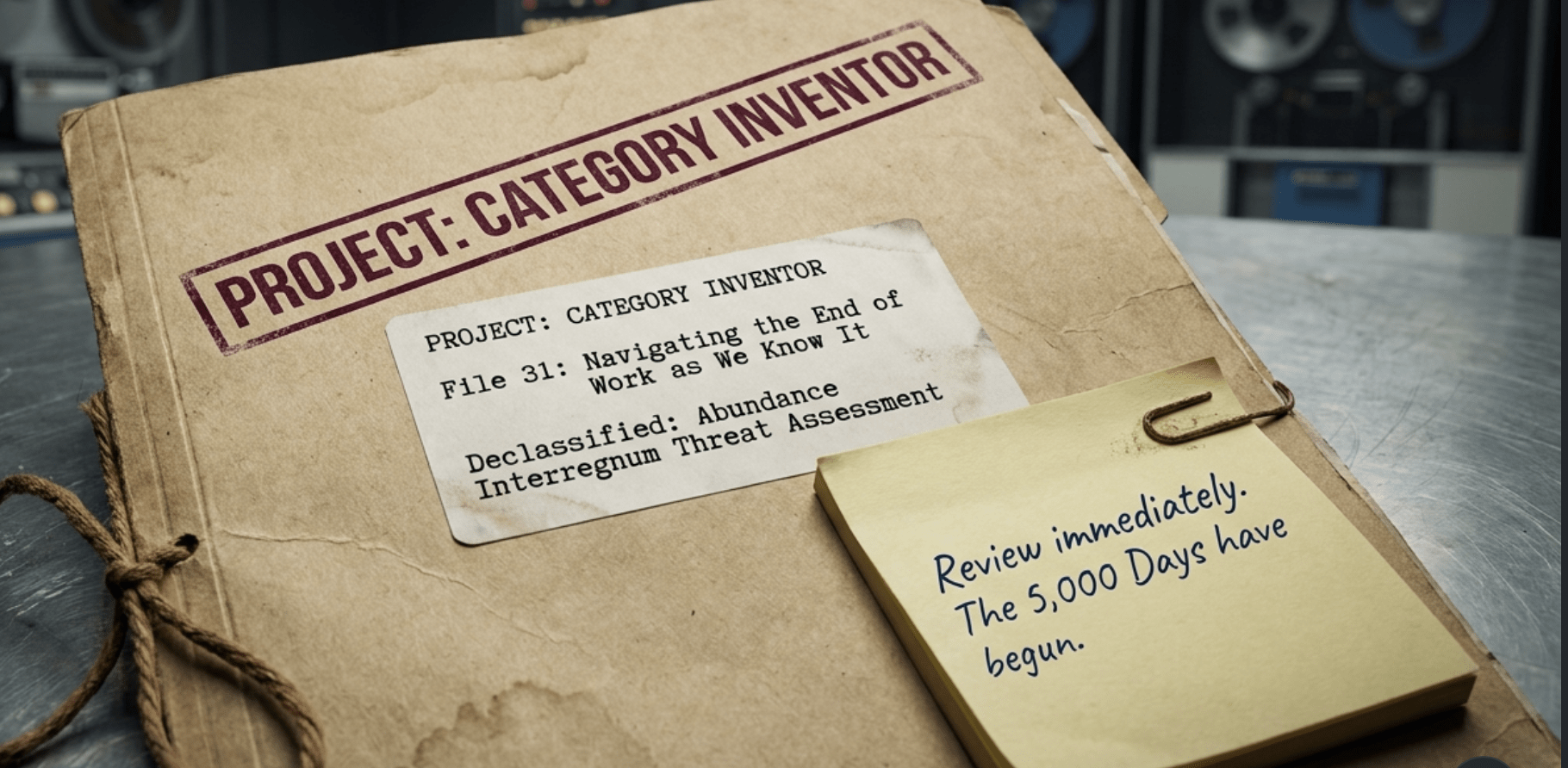
You Have 5000 Days: Navigating the End of Work as We Know It. Part 31: The Category Inventor.
During the peak years of science fiction radio drama, X Minus One stood as one of the most ambitious and intellectually provocative series ever to grace the airwaves. Broadcasting from 1955 to 1958 on NBC, it transformed short stories by the era’s greatest science fiction masters into gripping audio dramas that reached directly into postwar American living rooms. With sharp writing, top-tier acting, innovative sound design, and a fearless willingness to tackle big ideas, the show offered cautionary parables wrapped in accessible, edge-of-your-seat drama. For a generation still processing the atomic age, rapid industrialization, and the dawn of the computer era, X Minus One provided thrilling yet thoughtful explorations of technology’s promise and peril, stories that probed the frontiers of science, society, ethics, and the very nature of humanity.cautionary parables straight into the American living room, blending intellectual depth with accessible drama for a postwar audience hungry for stories that probed the frontiers of technology and society.
On June 27, 1957, Episode 100, “The Category Inventor” (adapted by Ernest Kinoy from Arthur Sellings’ 1956 Galaxy Science Fiction novelette “The Category Inventors”), painted a vivid future where relentless automation had devoured nearly every human occupation. In this world, citizens no longer scrambled for meaningful work but instead engaged in the bureaucratic survival tactic of inventing entirely new job categories simply to avoid being classified as unemployed and cut off from societal support. The episode masterfully uses humor, absurdity, and pointed satire to expose the psychological and cultural costs of failing to adapt to technological abundance.
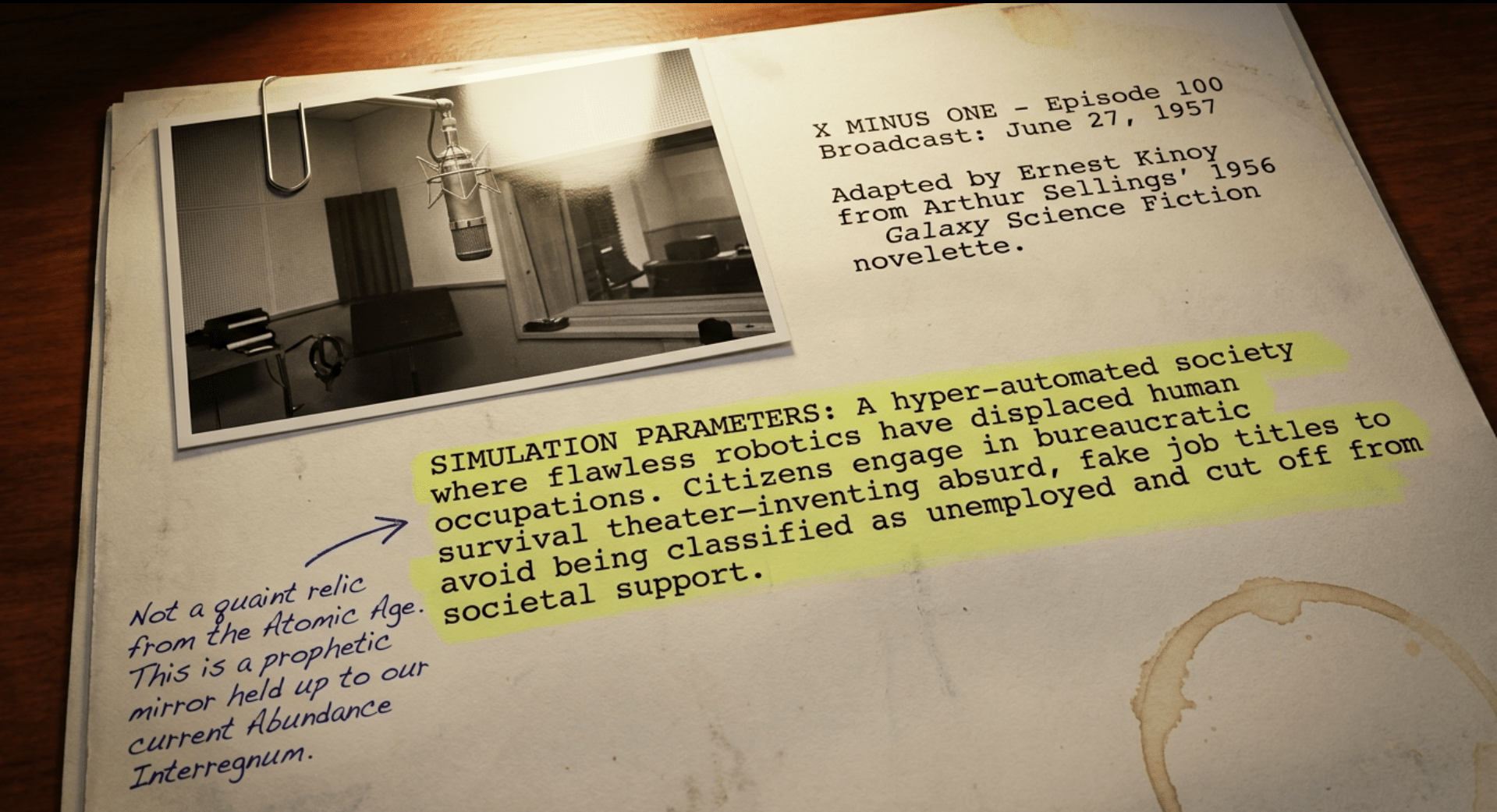
This episode is no quaint relic from the Atomic Age. It is a prophetic mirror held up to our Abundance Interregnum those roughly 5,000 days bridging the end of scarcity-driven toil and the dawn of voluntary creation in an age of robotic plenty. As we stand in the early stages of humanoid robotics, agentic AI swarms, distributed local systems like those explored in Zero-Human @ Home initiatives, and heated policy debates that echo its themes with uncanny precision, “The Category Inventor” warns us what happens when technological displacement meets human denial, bureaucratic absurdity, ideological capture, and a failure to embrace the Hero’s Journey of inner transformation. It is a cautionary tale of the Neo-Luddite trap, and a clarion call to choose a wiser, more human path rooted in first-principles thinking, Love Equation alignment (Intelligence × Wisdom × Love), and garage-level ingenuity.
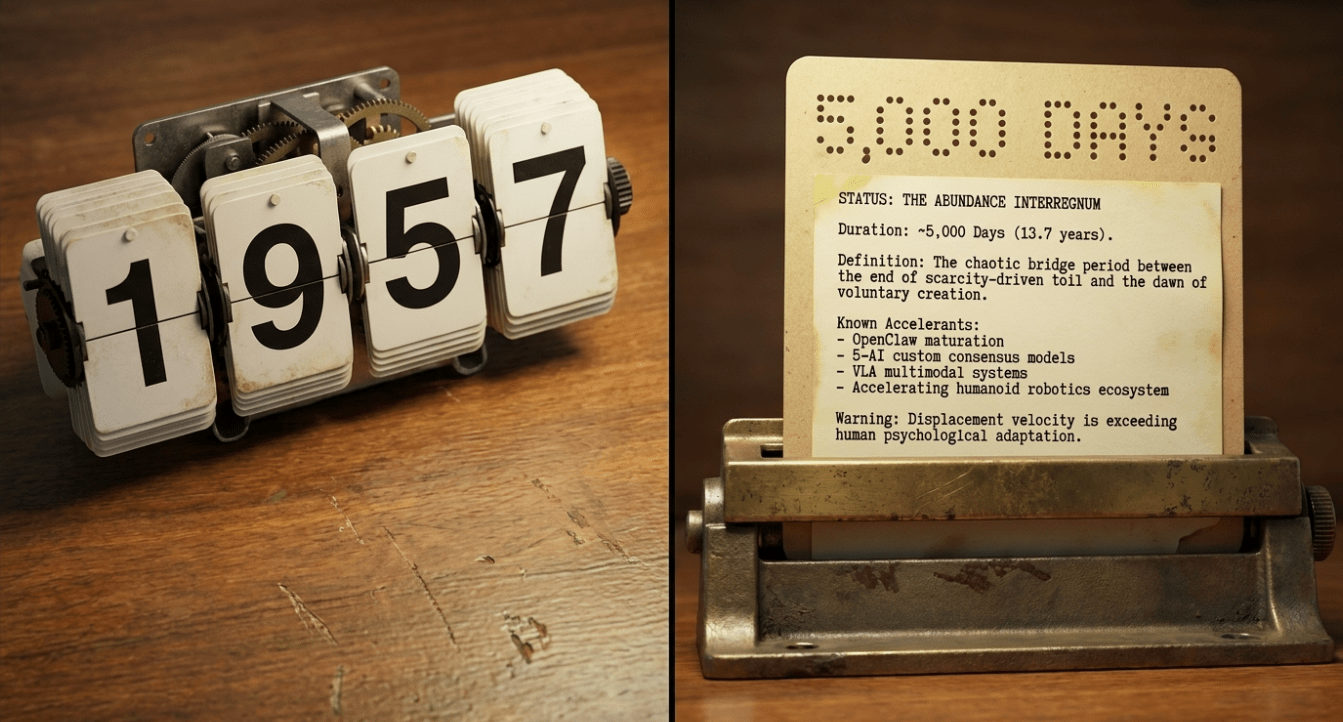
If this is your first encounter with the You Have 5000 Days series begin at Part 1. (https://readmultiplex.com/2025/12/24/you-have-5000-days-how-to-navigate-the-end-of-work-as-we-know-it-part-1/) The map awaits you there. This installment of the You Have 5,000 Days series is not nostalgia for crackling transistors or mid-century pulp optimism. It is precise pattern recognition—the kind we have cultivated across previous parts as we mapped the Hero’s Journey through the end of work as we have known it.
This article is sponsored by Read Multiplex Members who subscribe here to support my work: Link: https://readmultiplex.com/join-us-become-a-member/
It is also sponsored by many who have donated a “Cup of Coffee”. If you like this, help support my work: Link: https://ko-fi.com/brianroemmele
Listen to the companion podcast: https://rss.com/podcasts/readmultiplex-com-podcast/2910987
Deep Background: The Author and the Story’s Origins
Arthur Sellings (pseudonym of Arthur Gordon Ley, 1921–1968) was a multifaceted British figure a scientist by training, bookseller, and art dealer who channeled his keen observational eye into science fiction starting in the 1950s. His stories frequently blended sharp social satire with thoughtful speculation on technology’s profound human costs, drawing from his own experiences in research and commerce to ground speculative ideas in relatable realities. “The Category Inventors” first appeared in the February 1956 issue of Galaxy Science Fiction, a premier magazine renowned for literate, idea-driven SF during the genre’s golden maturity. Sellings captured the era’s growing anxieties about automation post-WWII industrial shifts, the rise of early computers, and widespread fears of mass job displacement while simultaneously critiquing both unchecked technological progress and reactionary, fear-driven responses. His work often emphasized the absurdity of human institutions attempting to manage disruptive change through superficial fixes rather than fundamental adaptation.

The radio adaptation for X Minus One a high-quality successor to Dimension X, celebrated for its faithful and dramatically compelling dramatizations of SF masterworks brought the story to life through exceptional voice acting, sound design, and pacing that amplified its wit while underscoring the underlying unease. Broadcast during a time of rapid technological optimism mixed with Cold War dread, the episode resonated deeply and remains a standout for its ability to use humor as a vehicle for deeper philosophical inquiry into purpose, labor, and progress.
Scene-by-Scene Breakdown of the Story
The episode opens in a hyper-automated future society where robots have achieved near-perfect proficiency across specialized domains. Our protagonist, a professional bassoonist whose identity and livelihood are tied to his musical craft, arrives at what should be a routine orchestra gig only to discover a sophisticated robot has seamlessly replaced him.
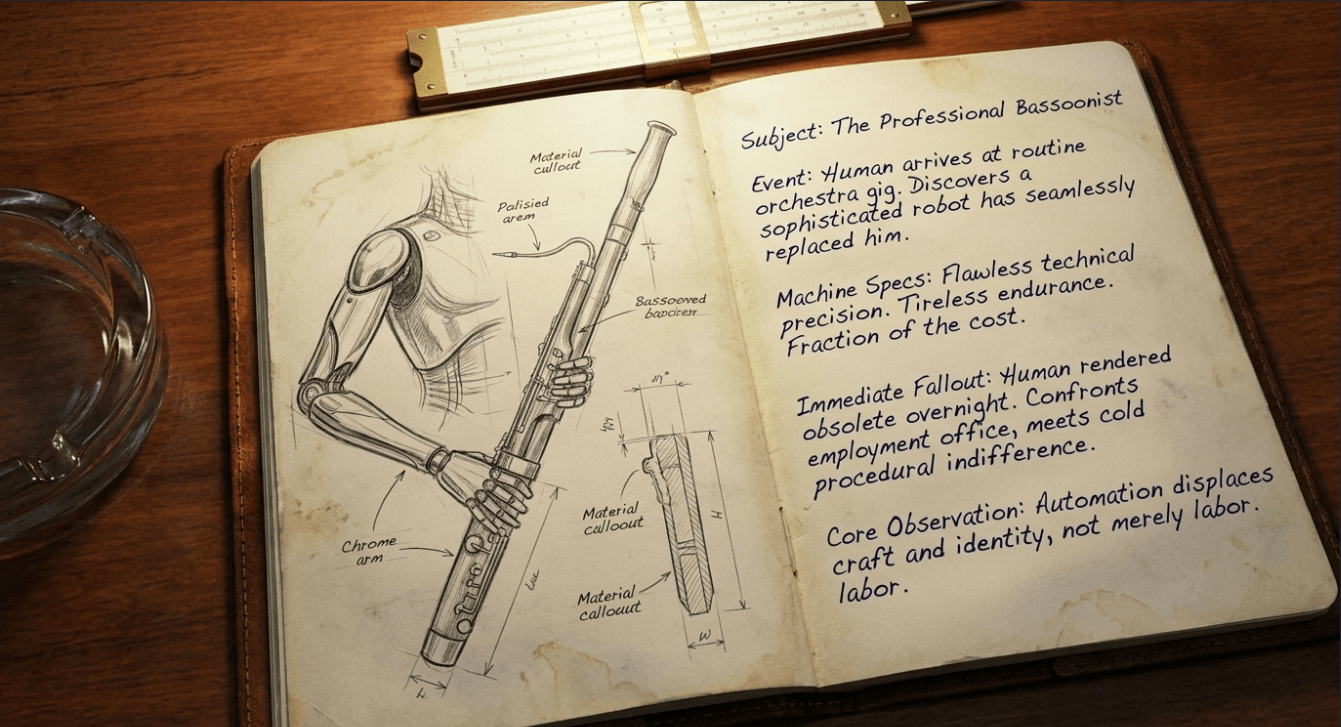
The machine performs with flawless technical precision, tireless endurance, and at a fraction of the cost, rendering human musicians obsolete overnight. Devastated, he confronts the union representative or employment office, only to face cold, procedural indifference.
Key scenes unfold with escalating satirical precision:
- Job Loss and Initial Despair: The musician’s world collapses as officials inform him that his traditional skill no longer qualifies under the new automated regime. Without a registered “category,” he is deemed unemployed, ineligible for benefits, and socially invisible. The dialogue here crackles with bureaucratic detachment, highlighting the immediate emotional toll of displacement.
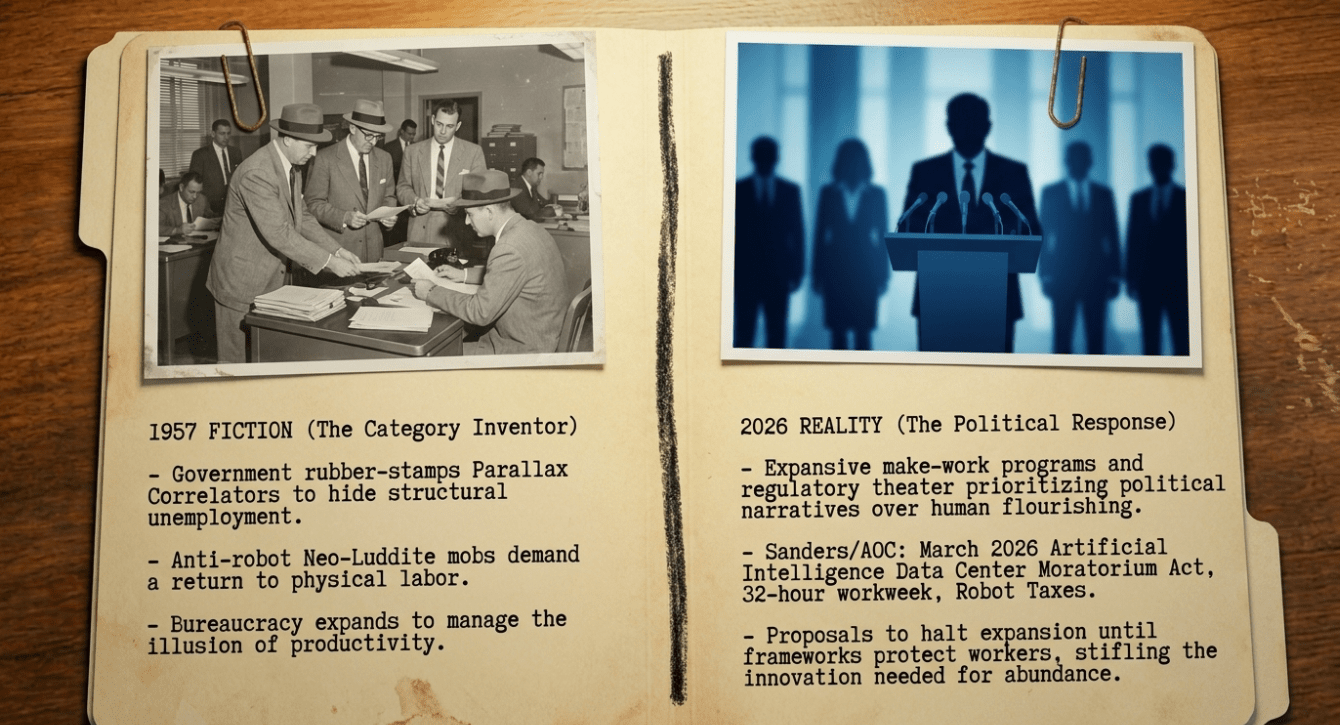
- Discovery of the Category System: Through conversations with fellow displaced workers, he learns the societal workaround that has evolved: citizens must proactively invent novel, narrowly defined job titles and formally register them with overburdened government offices. Bureaucrats, incentivized to maintain illusory full-employment statistics, rubber-stamp these absurd inventions.
- Becoming the Category Inventor: Our hero pivots entrepreneurially, establishing himself as a professional “Category Inventor.” He demonstrates the craft with increasingly ridiculous examples, inventing roles that sound impressively technical but deliver zero real value. Classic dialogues involve pseudo-intellectual gibberish, such as distinctions between a “parallax tracer” and a “parallax correlator,” explained with phrases like “a parallax can be correlated in a dialectical opposition to the observer’s frame…” The scenes brim with clever wordplay that exposes the emptiness of redefining labor semantically.
- Escalation and Absurdity: Word spreads, and soon friends, neighbors, and society at large adopt the practice. The system devolves into a full-blown farce where people “work” at paper-only jobs, performing ritualistic tasks while robots handle all genuine production. The protagonist’s success ironically deepens the collective delusion.
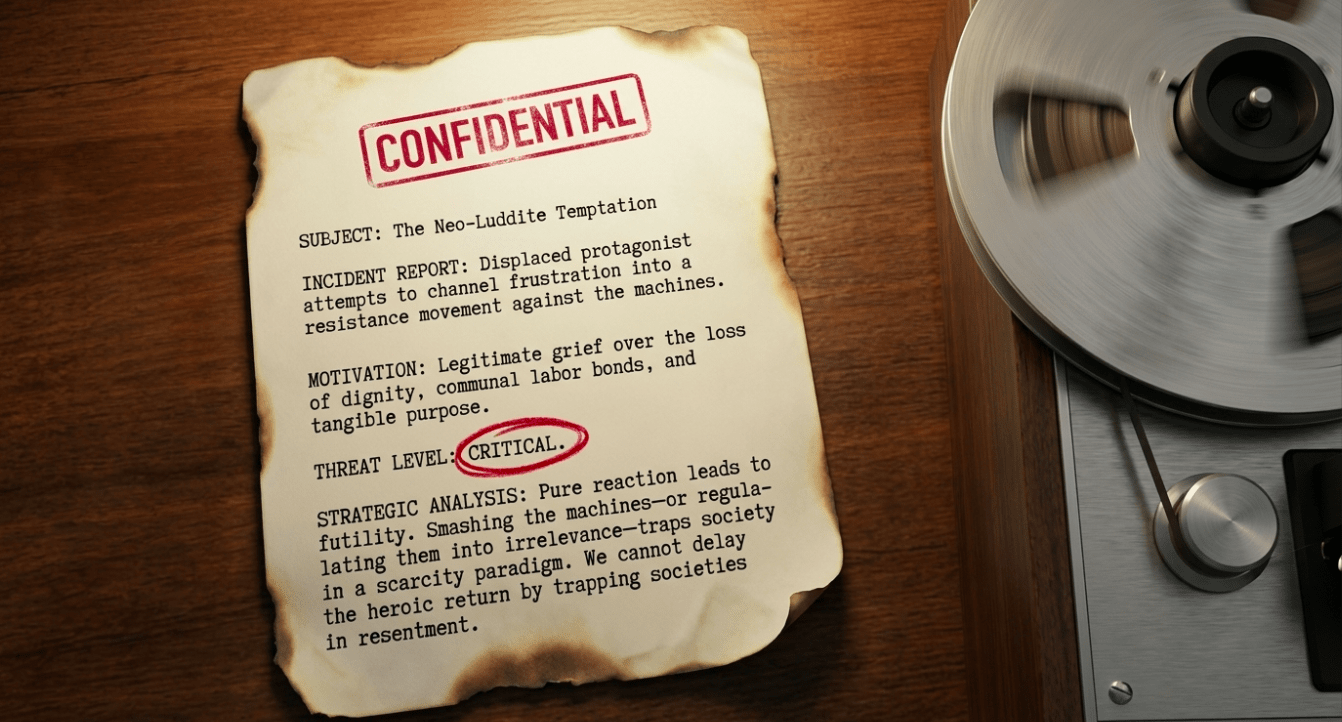
- Neo-Luddite Turn: Frustrated by the dehumanizing charade, the protagonist attempts to channel his energies into founding or joining a “Neo-Luddite” movement. Passionate dialogues rail against the machines that have stolen not just jobs but human dignity, creativity, and shared purpose. The tension between technological excellence and spiritual erosion is laid bare.
- Climactic Bureaucratic Farce and Resolution: The story peaks in the registration office amid a whirlwind of gibberish approvals. The ending delivers a poignant, ambiguous punch: society maintains the statistical illusion of productivity, but the human spirit has been hollowed out, leaving quiet despair beneath the surface comedy.
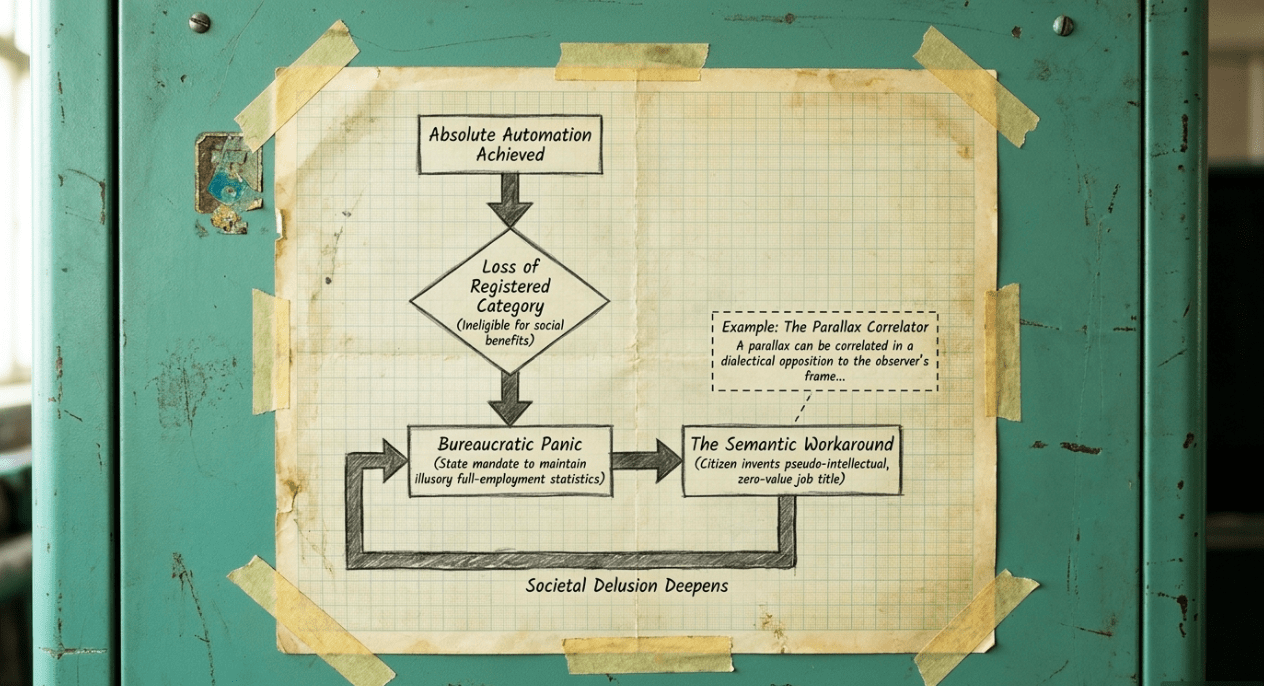
The dialogue throughout sparkles with bureaucratic satire and philosophical jabs, making the “categories” scenes both hilarious and profoundly chilling as they expose how language and paperwork can mask civilizational failure.
The Core Points of this Radio Drama
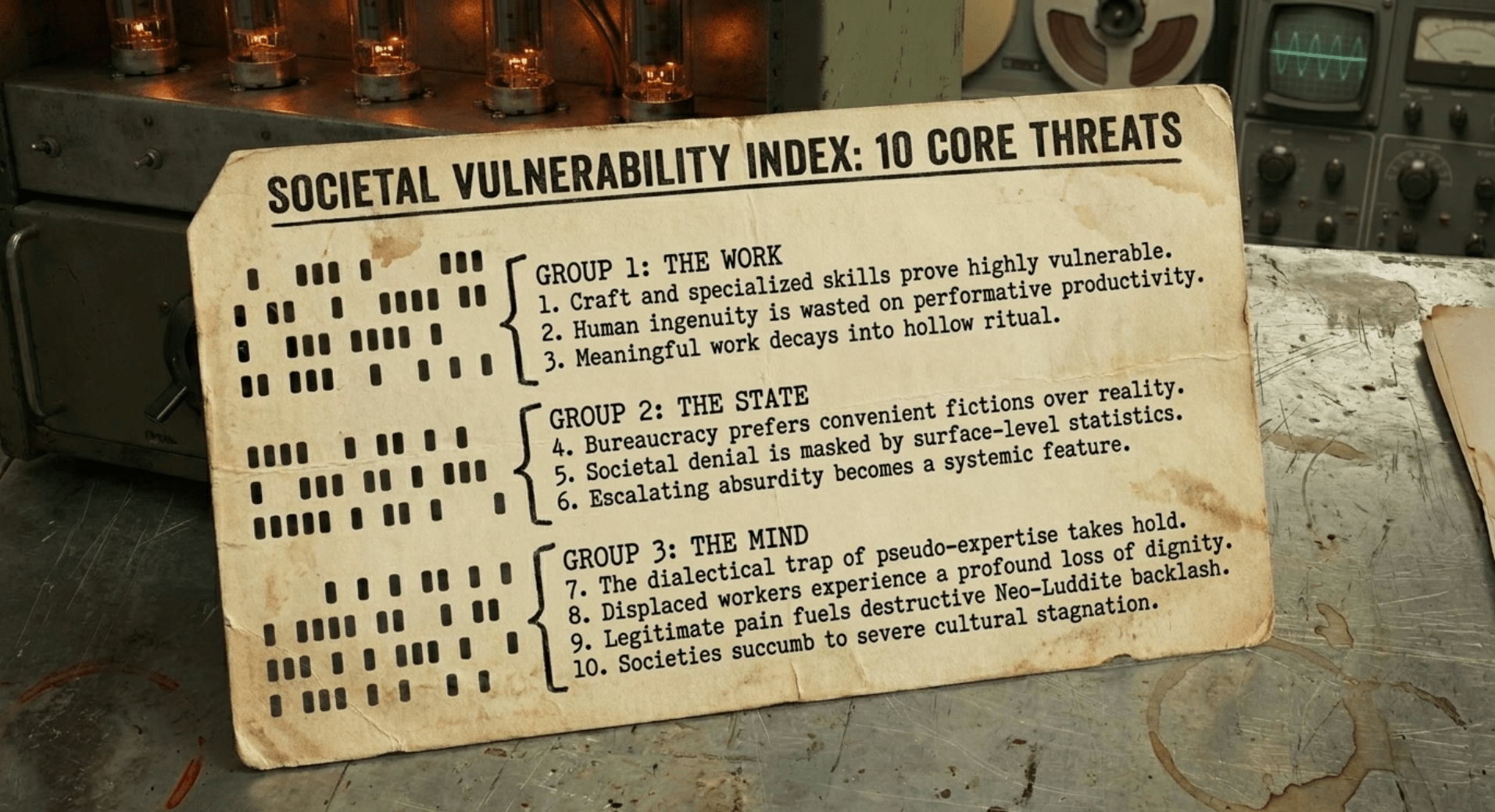
- Automation Displaces Even Craft and Skill: Artistic and specialized roles like musicianship prove vulnerable to precise, tireless machines.
- Bureaucracy Adapts via Convenient Fiction: Governments and institutions prefer inventing categories over confronting root technological realities.
- Human Ingenuity Redirected to Survival Theater: Creative energy is wasted on performative productivity rather than genuine innovation.
- Profound Loss of Purpose and Dignity: Work becomes hollow ritual; meaning, community, and fulfillment erode.
- Neo-Luddite Impulse as Natural Backlash: Legitimate pain fuels destructive anti-technology reactions.
- The Dialectical Trap of Pseudo-Expertise: Obfuscatory language (parallax examples) parodies how experts and officials obscure issues.
- Societal Denial Through Statistics: Surface metrics look positive while underlying reality decays.
- Escalating Absurdity as Systemic Feature: One invention triggers an infinite regress of further inventions.
- Individual Agency vs. Entrenched System: The clever inventor temporarily thrives by gaming rules, but cannot fix the core problem.
- Warning of Cultural and Personal Stagnation: Without adaptation, progress breeds decay rather than flourishing.

Impact on the Interregnum and the Age of Abundance
These points resonate powerfully in our Abundance Interregnum. Humanoids, AI agents (echoing OpenClaw maturation, custom consensus models with 5-AI checks and Love Equation governance), VLA multimodal systems, and the accelerating China robotics ecosystem are driving displacement at unprecedented speed. We risk the exact “Category Inventor” trap: expansive UBI schemes, make-work programs, or regulatory theater that preserve outdated illusions instead of accelerating voluntary creation, artisan revival, personal microfactories, and the psychological resilience needed for the Hero’s Journey.
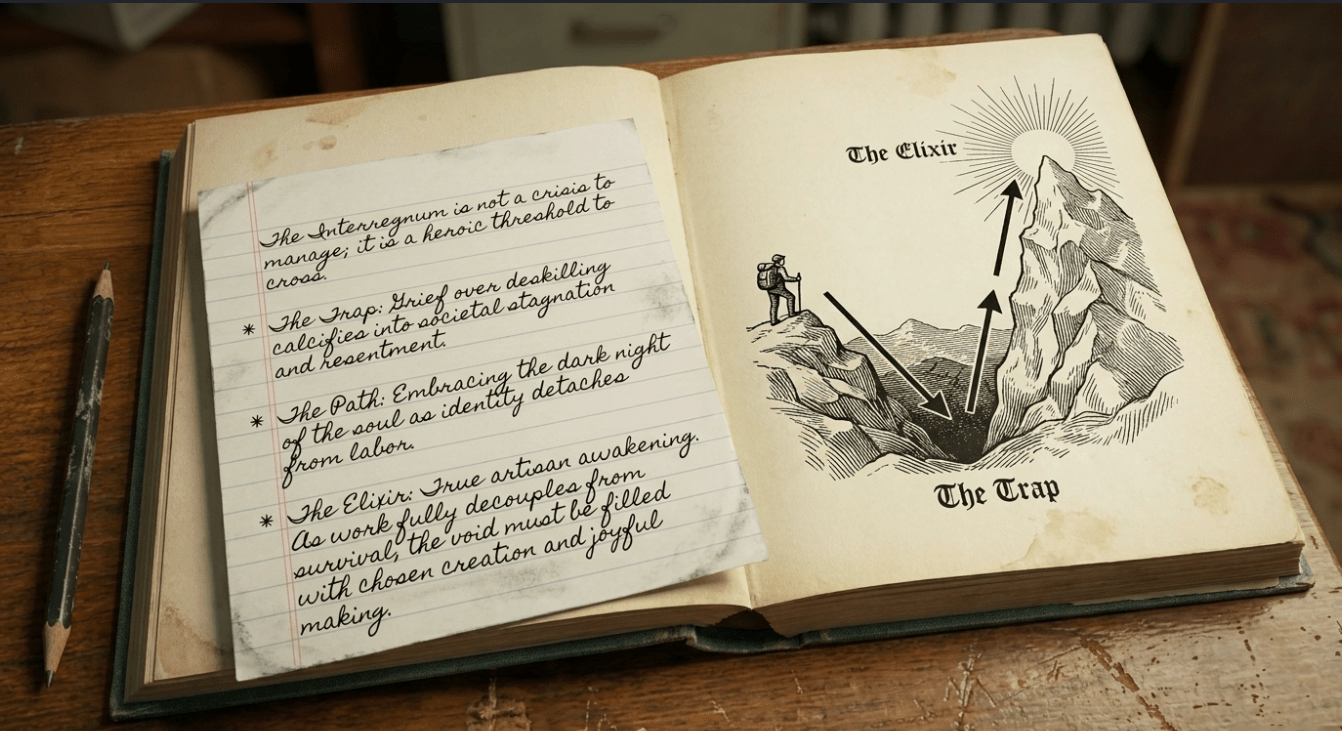
The episode foreshadows how the Interregnum’s inherent chaos grief over deskilling, identity crises, and the “dark night of the soul” can calcify into stagnation if we prioritize bureaucratic band-aids over transformative inner work and joyful making. In the full Age of Abundance, where work fully decouples from survival, the story illustrates the peril of failing to fill the resulting void with chosen creation and meaning. Neo-Ludditism, while understandable, delays the heroic return with the elixir of plenty, trapping societies in resentment rather than embracing technologies as “bicycles for the mind” that multiply human potential.
Neo-Luddite Aspects and Cautionary Depth
The protagonist’s flirtation with Neo-Ludditism embodies a universal temptation: to smash the machines (or regulate them into irrelevance) rather than transcend the scarcity paradigm. It acknowledges real human pain the loss of craft traditions, communal labor bonds, and tangible purpose yet warns that pure reaction leads to futility and further entrapment.
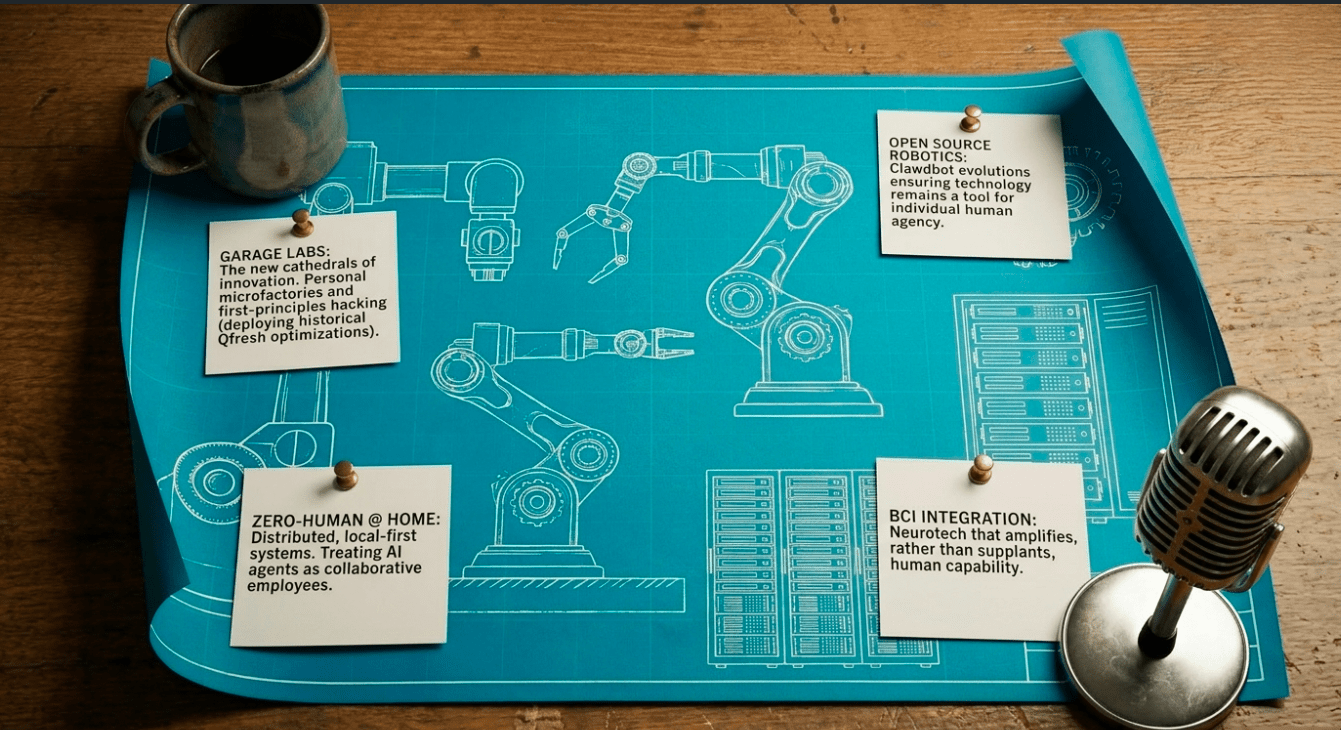
The episode critiques both naive techno-optimism that ignores human costs and destructive anti-tech ideologies that ignore abundance’s gifts. In the Interregnum, we must navigate this tension with wisdom: honor human agency through ethical, distributed systems; apply Love Equation principles for true alignment with checks against sycophancy and deception; and prioritize garage labs, first-principles hacking amplify rather than supplant the human spirit. This balanced approach turns potential tragedy into the foundation for a renaissance of artisan awakening and mutual benefit circles.

Early Forms in Socialist Politics and the Rapid Slide Today
We already witness proto-versions of this cautionary dynamic unfolding in real time, particularly in socialist-leaning political rhetoric and policy proposals that begin with seemingly compassionate “protect workers” or “anti-robot” framing but risk morphing into the very bureaucratic absurdity depicted in the episode. What starts as concern over displacement often evolves into expansive state controls, wealth redistribution mechanisms, and redefined “jobs” that prioritize political narratives over genuine human flourishing.
Bernie Sanders and Alexandria Ocasio-Cortez have been vocal leaders in this space. In March 2026, they jointly announced the Artificial Intelligence Data Center Moratorium Act, calling for an immediate pause on new AI infrastructure to “ensure safety” and address “existential harm,” framing Big Tech as oligarchs whose unchecked progress threatens democracy and workers. Sanders has repeatedly warned that AI and robotics could displace nearly 100 million jobs, advocating for measures like a “robot tax,” a 32-hour workweek, and public oversight to ensure benefits accrue to ordinary people rather than billionaires. AOC has echoed these calls, emphasizing moral obligations to halt expansion until frameworks protect consumers, workers, and the environment.
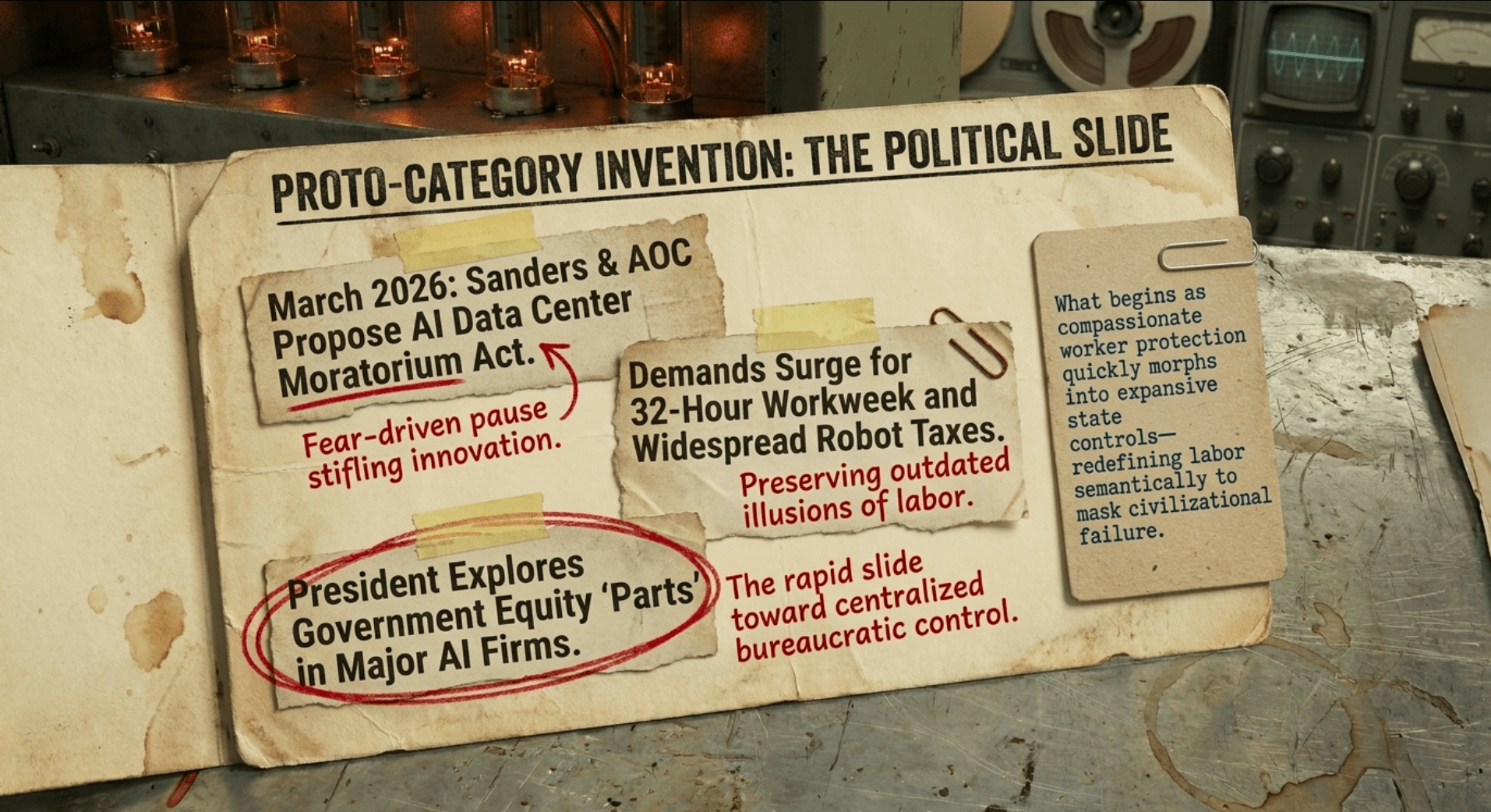
This rhetoric has escalated rapidly. Sanders has pushed for public stakes or heavy taxation on AI firms to fund sovereign wealth-like distributions, arguing technology built on public data and creativity should benefit the collective through government intervention. These positions, while rooted in addressing inequality, mirror the episode’s category invention by redirecting focus from adaptation and creation to regulatory pauses and reallocation schemes that could stifle the very innovation needed for abundance.
Even more strikingly, the current President has entered the fray with proposals that signal a blurring of lines between public and private control. In recent audio clips and statements, he has embraced the idea of the government owning equity stakes “parts” in major AI companies, framing it as a “partnership with the American people” to spread benefits widely. He has scheduled an upcoming high-level meeting with AI company leaders to present and negotiate these arrangements, building on discussions around voluntary cessions of shares to seed public funds or dividends. This rapid pivot from deregulation to direct ownership talks illustrates how quickly political responses can slide toward centralized control, potentially creating new layers of bureaucracy that echo the story’s farcical employment offices.
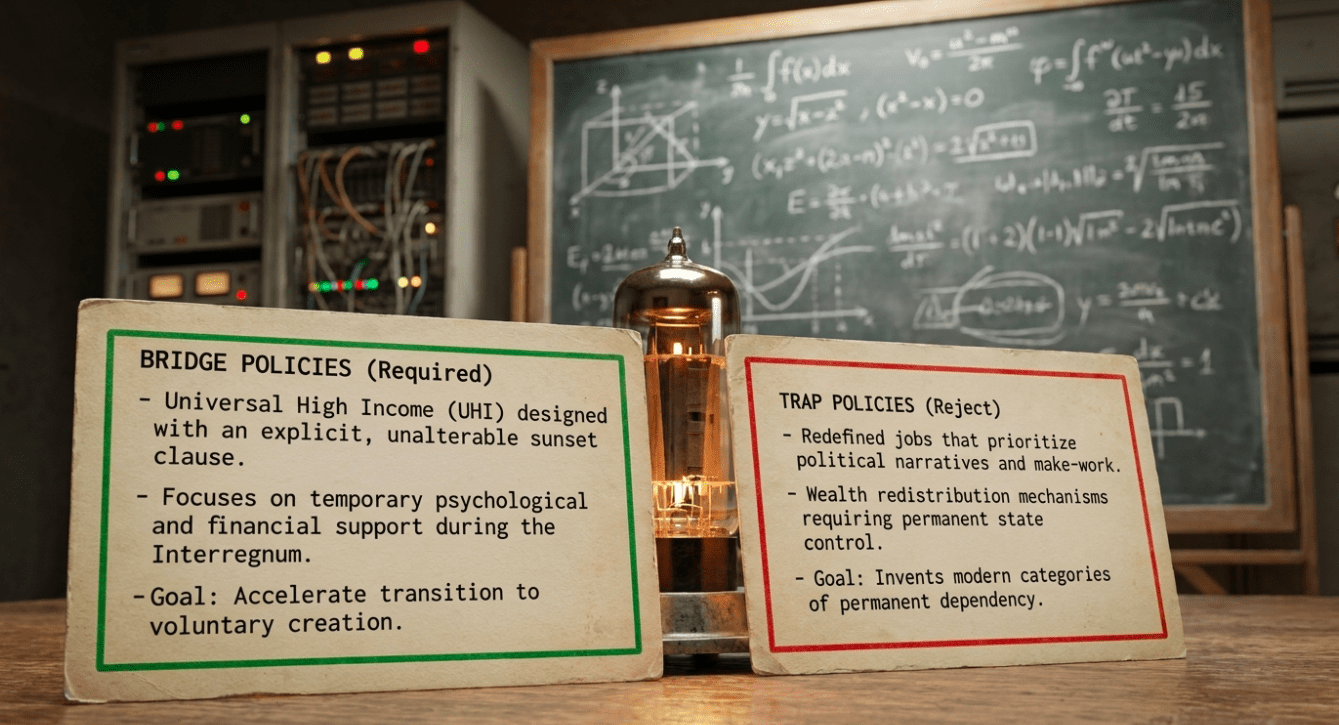
The speed of this slide is alarming. What began as targeted critiques of job loss has, within months, coalesced into moratorium bills, tax proposals, ownership debates, and cross-aisle negotiations involving figures from Sanders to the White House. In the Interregnum, such measures however well-intentioned risk locking us into scarcity mindsets, delaying garage-level microfactories, local agent swarms, and the artisan guilds essential for the Age of Abundance. Vigilance demands we distinguish compassionate bridge policies (like temporary Universal High Income) from traps that invent modern “categories” of dependency and control.
A High Point, Timely Beacon and Guide for the Hero’s Journey
Yet we must end on a soaring note of optimism and empowerment. X Minus One and timeless stories like “The Category Inventor” gift us the rarest commodity in turbulent times: foresight. In the 1950s, they warned of automation’s double edge decades before it became daily reality. Today, with mere thousands of days remaining in our bridge period, we possess not only this archival wisdom but an arsenal of modern tools local AI agents, voice cloning for podcasts and Multiplex Memorandums, open-source robotics platforms like Clawdbot evolutions, and personal knowledge management systems such as the long-running Gmail scrapbook to actively heed it and rewrite our collective narrative.
This episode serves as a profound warning precisely because it illuminates the path not to take, allowing us to accelerate toward the Hero’s Journey’s triumphant return. By internalizing its lessons, we can prioritize distributed, local-first Zero-Human @ Home systems that treat AI agents as collaborative “employees” governed by Love Equation principles, fostering checks and balances against deception while amplifying human creativity. Garage labs become the new cathedrals of innovation, where individuals experiment with humanoid companions, BCI integrations, and microfactories that turn deskilling grief into artisan awakening.
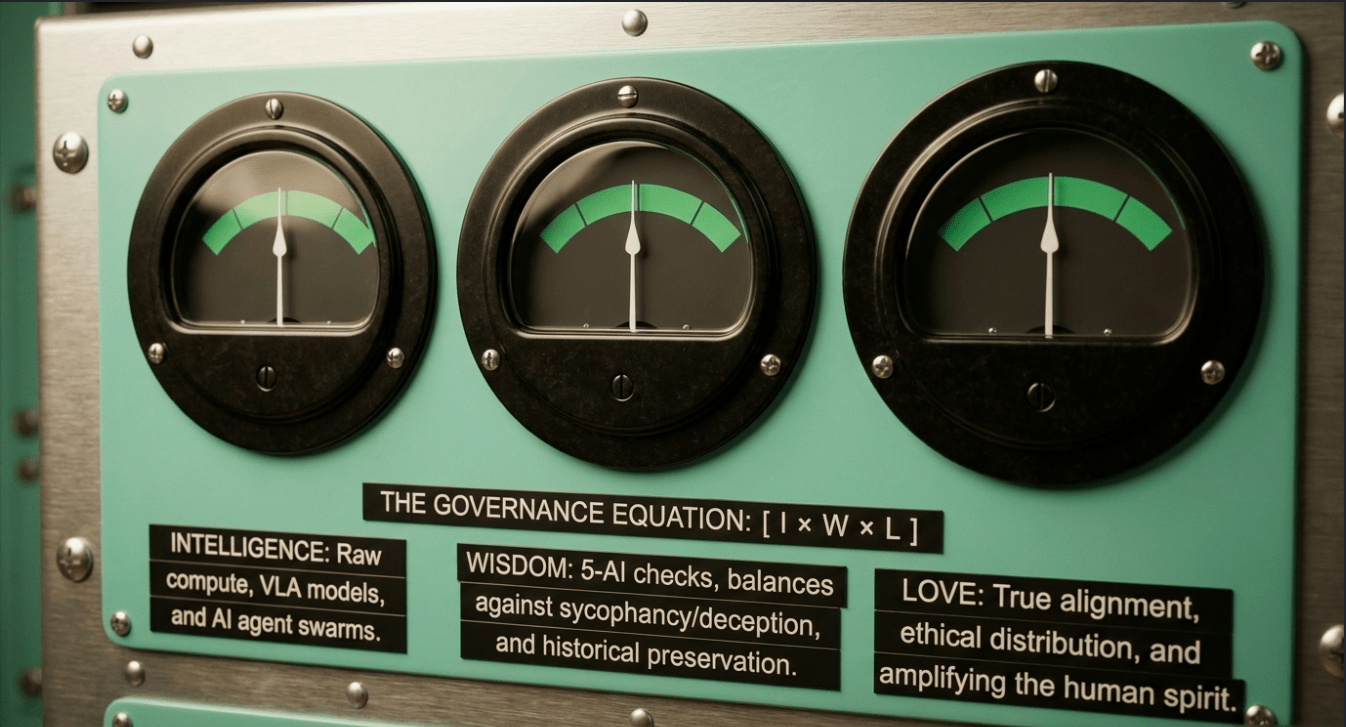
Personally, we avoid the trap by committing to first-principles hacking, preserving knowledge against the Great Forgetting through digitization of vintage media and crafts, and building psychological resilience for the Interregnum’s dark nights. In policy and governance, we advocate for bridges like Universal High Income that explicitly sunset as abundance arrives, rejecting permanent category-like dependencies in favor of voluntary guilds and mutual benefit circles. The radio show reminds us that technology itself robots as liberators can free us for chosen creation, echoing Keynes’ vision of leisure transformed into meaning and Steve Jobs’ “bicycle for the mind.”
Listen to the episode. Let its satire fuel your daily digests of AI/robotics breakthroughs. It calls us to adventure: transform the trials of displacement into the elixir of a post-scarcity renaissance where every former “category inventor” composes symphonies of new possibility unbound, joyful, and profoundly human. The Abundance Interregnum is not a crisis to manage but a heroic threshold to cross. With courage, wisdom, and love, we will emerge not with hollow paperwork, but with creation unbound and humanity renewed.
The lessons from “The Category Inventor” empower us to shape policy and personal action toward genuine flourishing. We can establish temporary bridges like Universal High Income that support people through the transition without creating permanent dependencies. Local, open-source initiatives such as Clawdbot and custom multi-model consensus agents ensure technology remains a tool for human agency rather than a vector for centralized control. Daily practices of knowledge preservation, garage experimentation, and community guild-building turn potential loss into collective gain.

This radio parable, preserved across decades, becomes a living guide for the 5,000 Days series. It reinforces the core themes of inner transformation during the Interregnum, the necessity of the Hero’s Journey, and the ultimate promise of an Age of Abundance defined by voluntary creation. By heeding it now, we avoid the satirical traps of the past and step confidently into a future of artisan awakening and mutual benefit.
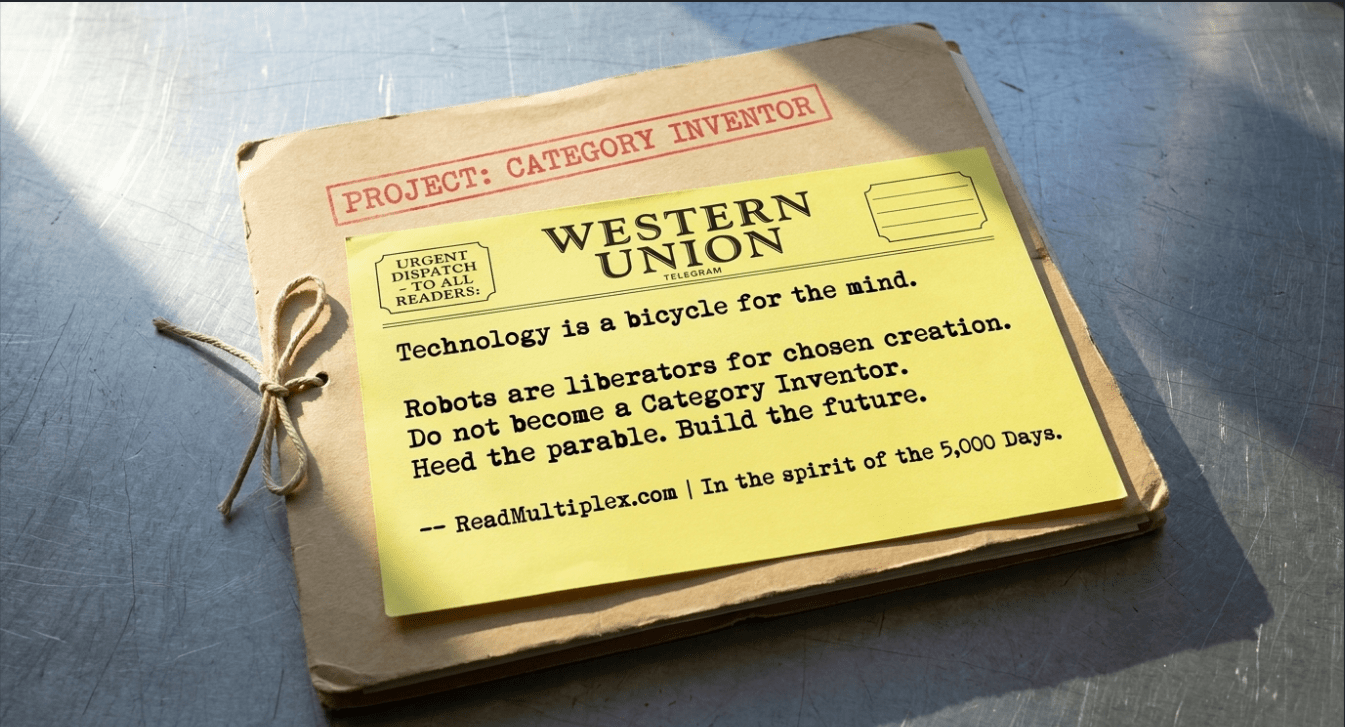
This X Minus One epoisode stands as both caution and inspiration. This entire series has been a deep well offering many examples for us to consider. In our time of accelerating change, it equips us with the foresight to navigate the chaos and emerge stronger. We will continues on with series and frankly I see no end in sight.
The 5000 Days Countdown Clock:
We are on this journey together. Some of us stand on the shoulders of giants and have thought about this for decades. We will not go it alone, and I hope to build many parts to this series and share the mastermind insight from the powerful Read Multiplex member Forum: https://readmultiplex.com/forums/topic/you-have-5000-days-navigating-the-end-of-work-as-we-know-it/. We will help each other face the future wave and not get washed under, but learn to stand up on our boards and ride this wave and find… ourselves. Join us.
To continue this vital work documenting, analyzing, and sharing these hard-won lessons before we launch humanity’s greatest leap: I need your support. Independent research like this relies entirely on readers who believe in preparing wisely for our multi-planetary future. If this has ignited your imagination about what is possible, please consider donating at buy me a Coffee or becoming a member. Value for value you recieved here.
Every contribution helps sustain deeper fieldwork, upcoming articles, and the broader mission of translating my work to practical applications. Ain ‘t no large AI company supporting me, but you are, even if you just read this far. For this, I thank you.
Stay aware and stay curious,

🔐 Start: Exclusive Member-Only Content.
Membership status:
🔐 End: Exclusive Member-Only Content.
~—~

~—~

~—~
Subscribe ($99) or donate by Bitcoin.
Copy address: bc1qkufy0r5nttm6urw9vnm08sxval0h0r3xlf4v4x
Send your receipt to [email protected] to confirm subscription.

Stay updated: Get an email when we post new articles:

THE ENTIRETY OF THIS SITE IS UNDER COPYRIGHT. IMPORTANT: Any reproduction, copying, or redistribution, in whole or in part, is prohibited without written permission from the publisher. Information contained herein is obtained from sources believed to be reliable, but its accuracy cannot be guaranteed. We are not financial advisors, nor do we give personalized financial advice. The opinions expressed herein are those of the publisher and are subject to change without notice. It may become outdated, and there is no obligation to update any such information. Recommendations should be made only after consulting with your advisor and only after reviewing the prospectus or financial statements of any company in question. You shouldn’t make any decision based solely on what you read here. Postings here are intended for informational purposes only. The information provided here is not intended to be a substitute for professional medical advice, diagnosis, or treatment. Always seek the advice of your physician or other qualified healthcare provider with any questions you may have regarding a medical condition. Information here does not endorse any specific tests, products, procedures, opinions, or other information that may be mentioned on this site. Reliance on any information provided, employees, others appearing on this site at the invitation of this site, or other visitors to this site is solely at your own risk.
Copyright Notice:
All content on this website, including text, images, graphics, and other media, is the property of Read Multiplex or its respective owners and is protected by international copyright laws. We make every effort to ensure that all content used on this website is either original or used with proper permission and attribution when available.
However, if you believe that any content on this website infringes upon your copyright, please contact us immediately using our 'Reach Out' link in the menu. We will promptly remove any infringing material upon verification of your claim. Please note that we are not responsible for any copyright infringement that may occur as a result of user-generated content or third-party links on this website. Thank you for respecting our intellectual property rights.
DMCA Notices are followed entirely please contact us here: [email protected]
