
You Have 5000 Days: Navigating the End of Work as We Know It. Part 15: The IBM COBOL Shock.
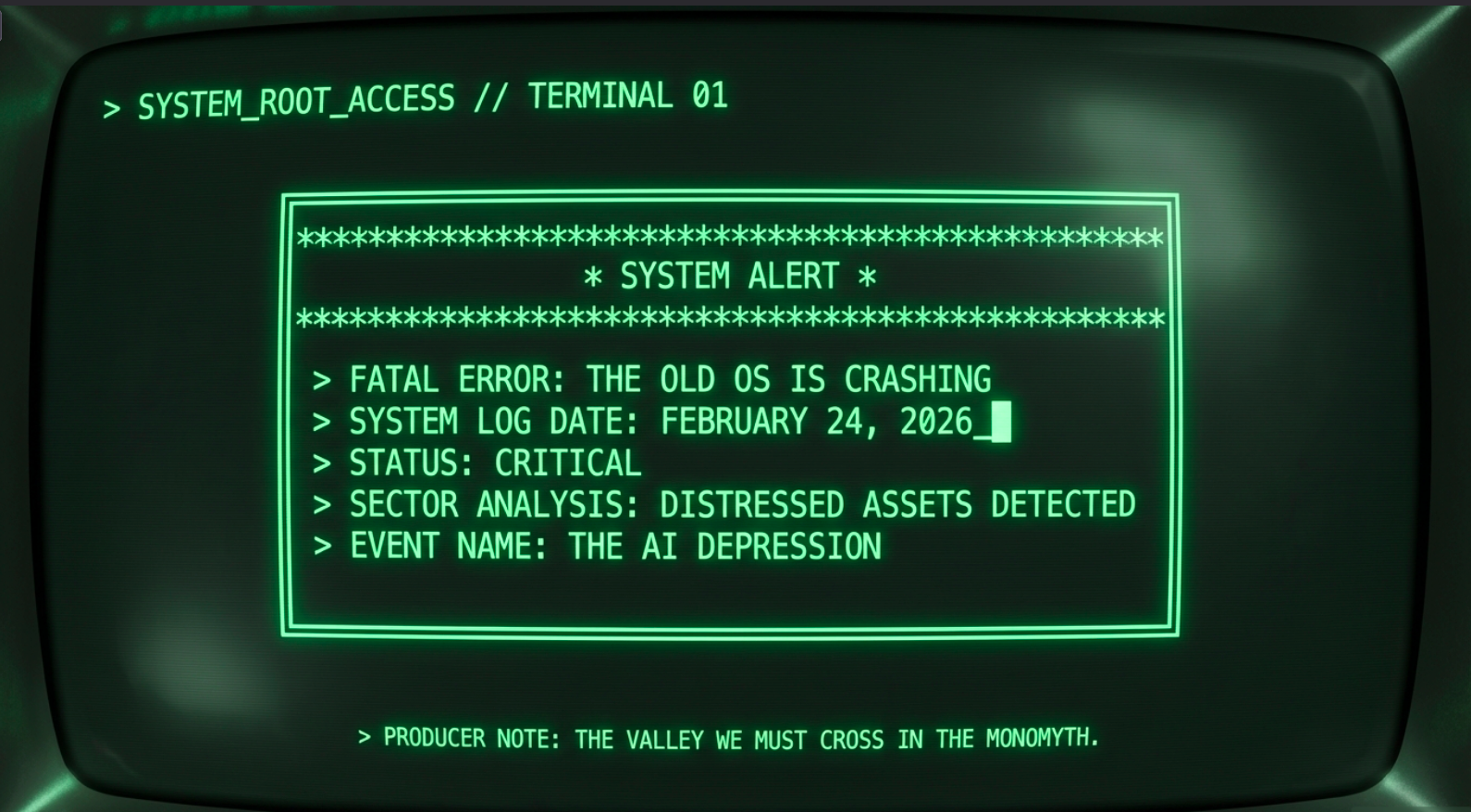
The screens flash red. Tech valuations erase hundreds of billions in days. Headlines warn of mass displacement. Sectors once thought invincible now trade like distressed assets. This is The AI Depression. It is the valley we must cross in the monomyth. It is raw, visible, and accelerating. And it is exactly why I wrote this series. Today we have a massive example in IBM we will discus below. It has had it largest one day drop in its history, over 13%. This was a shockwave that is sending chills through the entire, already Artificial Intelligence freaked out, stock market. But unfortunately there is a lot more coming.
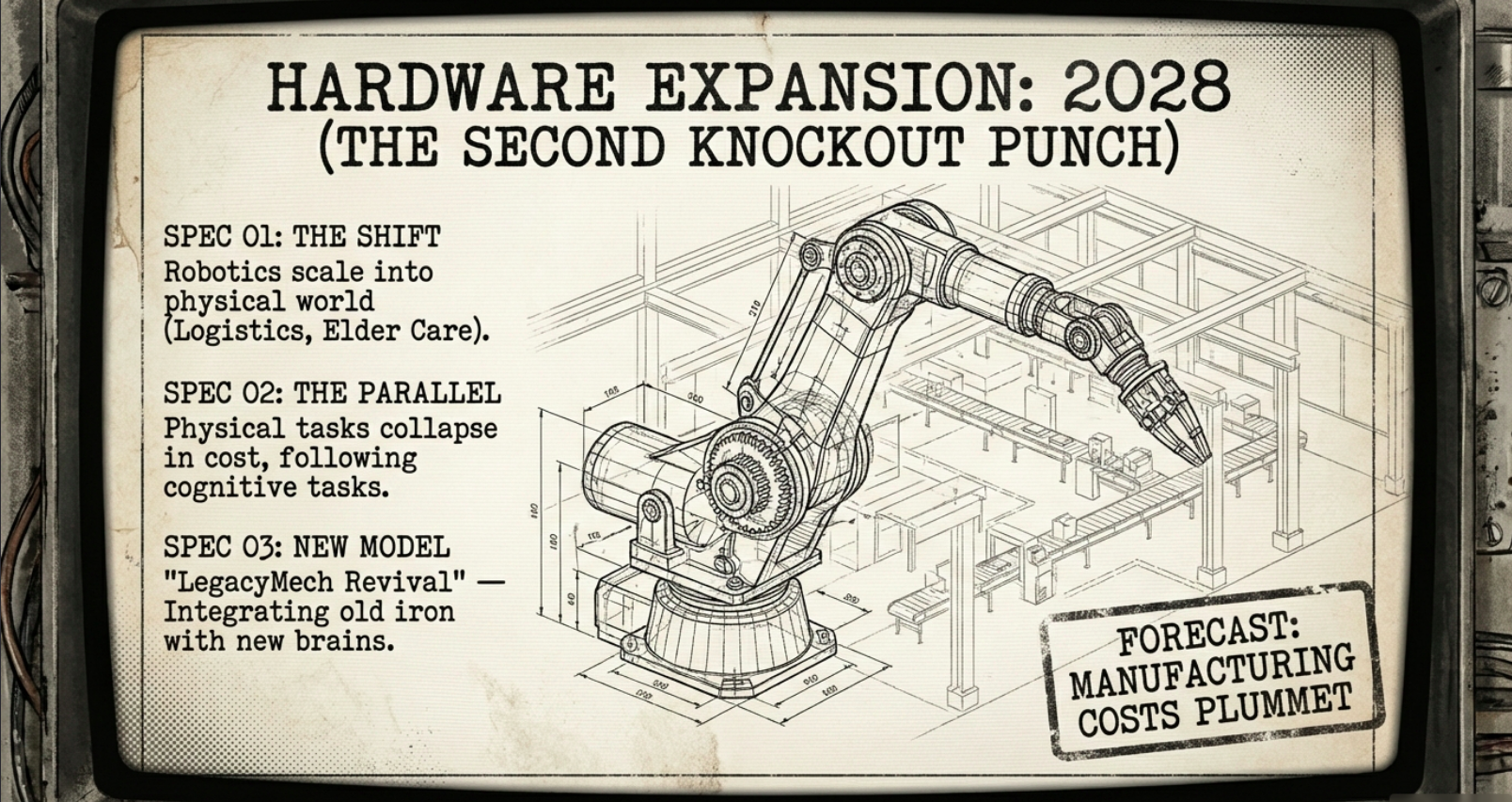
This Interregnum carries a one-two knockout punch. The first blow, already landing, is the cognitive disruption from AI in knowledge work. The second, set to intensify in 2028, comes from robotics in the physical world.
This article is sponsored by Read Multiplex Members who subscribe here to support my work:
Link: https://readmultiplex.com/join-us-become-a-member/
It is also sponsored by many who have donated a “Cup of Coffee”. If you like this, help support my work:
Link: https://ko-fi.com/brianroemmele
Recall the internet’s own disruptive rise. In the late 1990s and early 2000s it delivered a parallel one-two punch to entire industries. The first wave crushed information and media layers: newspapers lost classifieds to Craigslist and search engines, music labels faced Napster and iTunes, bookstores watched Amazon erode foot traffic, and travel agencies saw Expedia and Kayak rewrite bookings. Physical retail followed as broadband enabled global supply chains, just-in-time logistics, and on-demand delivery that reshaped warehouses, trucking, and last-mile operations. Blockbuster, Tower Records, Kodak, and Borders crumbled not because the technology failed but because it reshaped everything: how we access knowledge, shop, entertain, communicate, learn, and connect. Yet the same force created Amazon, Google, Netflix, and Meta, each scaling into multi-trillion-dollar giants that now define global commerce, information flow, social structures, and entertainment.
Listen to the compaion podcast: https://rss.com/podcasts/readmultiplex-com-podcast/2576559
The internet did not destroy net value. It multiplied it exponentially by collapsing distribution and coordination costs and enabling entirely new layers of activity no one could forecast in 1995. Artificial intelligence is repeating this pattern but at the deeper level of cognition and intelligence itself. It collapses the cost of thought, analysis, synthesis, and decision-making to near zero and will shape everything from problem-solving and creativity to education, healthcare delivery, and governance at a depth and speed the internet never approached.
As we enter Part 15, here is the full path we have traveled together. For new readers or those needing a refresher, the prior installments with direct links are:
- Part 1 (December 24, 2025): Introduced the core thesis of the 5000-day timeline to an Age of Abundance driven by AI and robotics, framing the transition through Joseph Campbell’s Hero’s Journey, exploring historical work roles, consciousness and wonder, recommended books as Supernatural Aid, and an action plan starting January 1, 2026, for healing, experimentation, and integration. https://readmultiplex.com/2025/12/24/you-have-5000-days-how-to-navigate-the-end-of-work-as-we-know-it-part-1/
- Part 2 (December 31, 2025): Delved into Elisabeth Kübler-Ross’s five stages of grief adapted to the loss of careers due to automation, including her biography, detailed stage analysis with applications to job loss, organizational change adaptations, expanded actionable plans for preemptive preparation, 10 indicators of AI replacement with strategies to ride the waves, and forming support groups to preempt societal ennui. https://readmultiplex.com/2025/12/31/you-have-5000-days-how-to-navigate-the-end-of-work-as-we-know-it-part-2/
- Part 3: The Player Piano (January 1, 2026): Focused on Kurt Vonnegut’s novel as a cautionary tale of automation’s societal divides, with detailed plot, themes, characters, parallels to modern AI, lack of adaptations, and ties to the 5000 days timeline and Hero’s Journey, urging ethical navigation of technological change. https://readmultiplex.com/2026/01/01/you-have-5000-days-navigating-the-end-of-work-as-we-know-it-part-3-the-player-piano
- Part 4: Reframing the Dawn of Abundance (January 19, 2026): Explored mental reframing techniques inspired by Scott Adams to transform fear of obsolescence into opportunity across mental, physical, social, and existential domains, with ties to the Hero’s Journey, addressing psychological tolls and broader Interregnum context. https://readmultiplex.com/2026/01/19/you-have-5000-days-navigating-the-end-of-work-as-we-know-it-part-4-reframing-the-dawn-of-abundance
- Part 5: Your Deskilling (January 20, 2026): Detailed AI-driven deskilling using Anthropic’s Economic Index, reframing it as liberation, with Mihaly Csikszentmihalyi’s flow state for mental shifts, reskilling strategies focusing on human-AI feedback loops, and connections to the series’ themes of adaptation. https://readmultiplex.com/2026/01/20/you-have-5000-days-navigating-the-end-of-work-as-we-know-it-part-5-your-deskilling
- Part 6: The Dark Night of the Soul (January 27, 2026): Examined psychological and existential crises as the Hero’s Inmost Cave, using the Zero-Human Company as a metaphor, with navigation strategies like vulnerability audits, abundance rituals, and philosophical resilience from Frankl and Camus. https://readmultiplex.com/2026/01/27/you-have-5000-days-navigating-the-end-of-work-as-we-know-it-part-6-the-dark-night-of-the-soul
- Part 7: Consider Phlebas (January 30, 2026): Drew from Iain M. Banks’ Culture series, especially Consider Phlebas, to envision post-scarcity societies, exploring themes of mortality, purpose, societal shifts, and human fragility, as a Reward in the Hero’s Journey. https://readmultiplex.com/2026/01/30/you-have-5000-days-navigating-the-end-of-work-as-we-know-it-part-7-consider-phlebas
- Part 8: Saving Your Wisdom (February 2, 2026): Emphasized preserving personal and collective knowledge via SaveWisdom.org through storytelling and digital archives, integrating narrative therapy for self-transformation, as the Elixir in the Hero’s Return. https://readmultiplex.com/2026/02/02/you-have-5000-days-navigating-the-end-of-work-as-we-know-it-part-8-saving-your-wisdom
- Part 9: The Artisan’s Awakening (February 4, 2026): Highlighted the rebirth of artisanal crafts and human creativity as antidotes to automation, using Moravec’s Paradox for human advantages, with 22 resilient trades evolving into hobbies in abundance, sparking a renaissance in handmade goods and skills. https://readmultiplex.com/2026/02/04/you-have-5000-days-navigating-the-end-of-work-as-we-know-it-part-9-the-artisans-awakening
- Part 10: Everyone Is Doing It (February 8, 2026): Addressed the normalization and secretive mass adoption of AI in daily life, accelerating change with caveats like pressure-induced inauthenticity and imposter syndrome, urging volitional mastery for Hero’s progression. https://readmultiplex.com/2026/02/08/you-have-5000-days-navigating-the-end-of-work-as-we-know-it-part-10-everyone-is-doing-it
- Part 11: The Reversal of Obsolescence (February 14, 2026): Applied Marshall McLuhan’s tetrad to AI’s evolution, showing how it enhances cognition while reversing human obsolescence through flips like friction luxury and unplug renaissance, as the monomyth’s return. https://readmultiplex.com/2026/02/14/you-have-5000-days-navigating-the-end-of-work-as-we-know-it-part-11-the-reversal-of-obsolescence
- Part 12: The Profit And The Arcitect (February 16, 2026): Investigated new economic models in abundance, with ‘Arcitec’ as the architecture of future human-AI symbiotic systems inspired by Wiener and Licklider, focusing on profit through human flourishing and directives for mastering entropy. https://readmultiplex.com/2026/02/16/you-have-5000-days-navigating-the-end-of-work-as-we-know-it-part-12-the-profit-and-the-arcitect
- Part 13: The Guilded Age (February 20, 2026): Revisited medieval guilds as models for modern decentralized communities, adapting to AI by fostering mastery, collaboration, unit-based valuation, and mutual aid in a ‘guilded’ era of abundance. https://readmultiplex.com/2026/02/20/you-have-5000-days-navigating-the-end-of-work-as-we-know-it-part-13-the-guilded-age
- Part 14: The Interregnum Chaos, and the Hero’s Path Forward (February 22, 2026): Analyzed the current transitional epoch of upheaval using 28 AI-modeled scenarios, historical government reports, and practical strategies for resilience, community building, and ethical adaptation through the chaos. https://readmultiplex.com/2026/02/22/you-have-5000-days-navigating-the-end-of-work-as-we-know-it-part-14-the-interregnum-chaos-and-the-heros-path-forward/
Value in money, companies, and the entire old economy is draining fast. Uncertainty will rise further. Markets have already wiped out hundreds of billions in recent sessions. White-collar workflows in coding, analysis, design, and strategy collapse in months. Middle-management layers built for a pre-AI era shed rapidly. Career paths tied to institutional knowledge lose relevance almost overnight. The question “what do you do” loses its old anchor and hits identity hard. Social fabrics stretch. Political pressures build as voters feel the shift underfoot. This is the Interregnum chaos, and it will intensify before it eases.
We face real prospects in this period. Layoffs hit established firms that move too slowly. Companies that fail to integrate AI see margins erode and customers shift to faster competitors. Entire business models in software, consulting, media, and professional services come under pressure. The pain is not abstract. It shows up in balance sheets, severance packages, and quiet conversations at kitchen tables.
History offers clear parallels. During the Industrial Revolution, countless small textile operations and hand-weaving businesses collapsed as power looms and steam engines took over. Companies that clung to old methods vanished while those that adopted the new machinery scaled dramatically. In the personal-computer shift, Smith Corona, the once-dominant typewriter maker, filed for bankruptcy in 1995 as word processors and PCs replaced mechanical typing. Wang Laboratories, a leader in dedicated word-processing systems, went bankrupt in 1992 for the same reason. In the internet era, Kodak filed for bankruptcy in 2012 after digital photography destroyed its film business. Blockbuster went bankrupt in 2010 when streaming services like Netflix eliminated video-rental stores. Borders Books filed in 2011 as online retail and e-books took over.
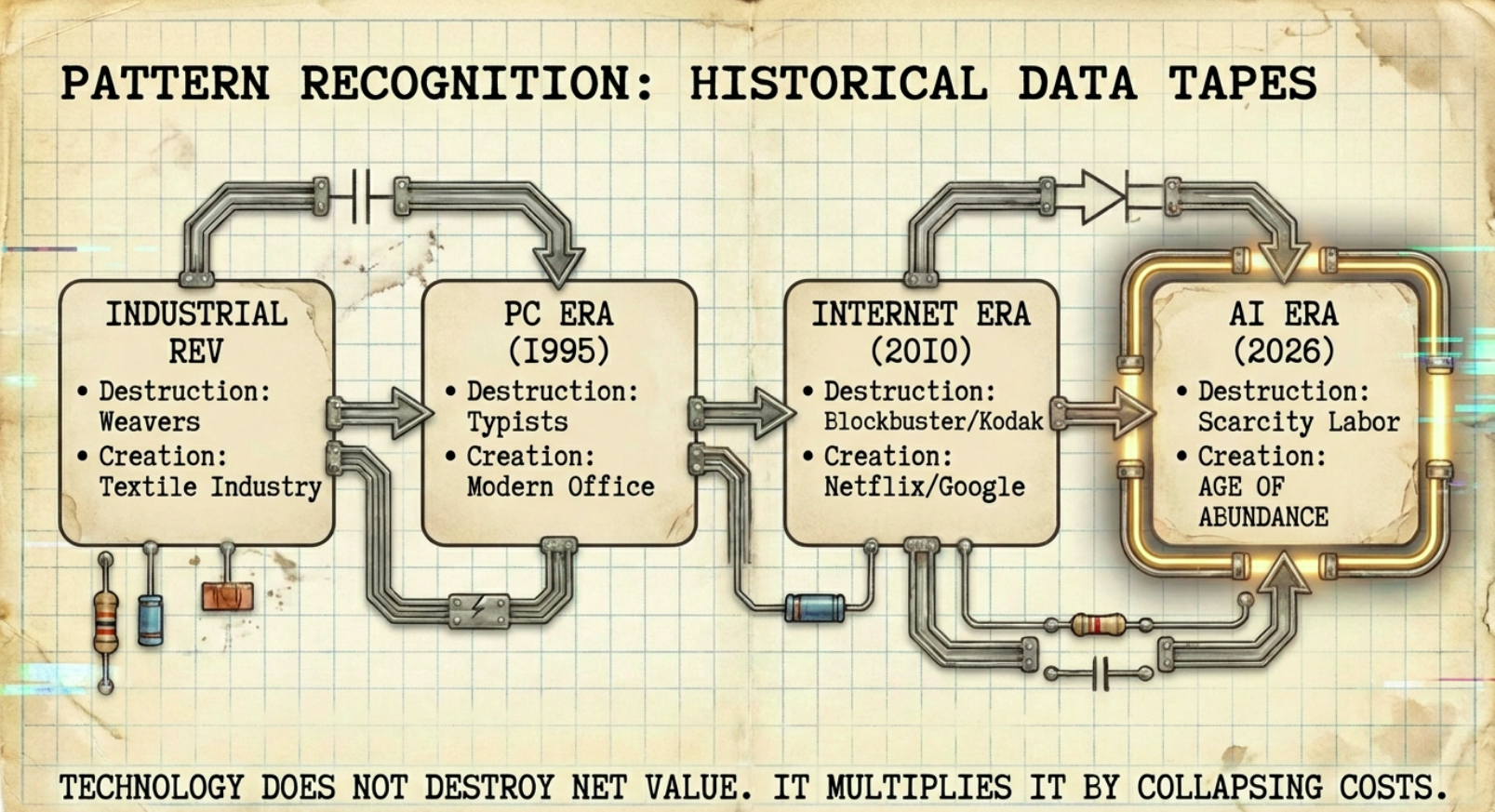
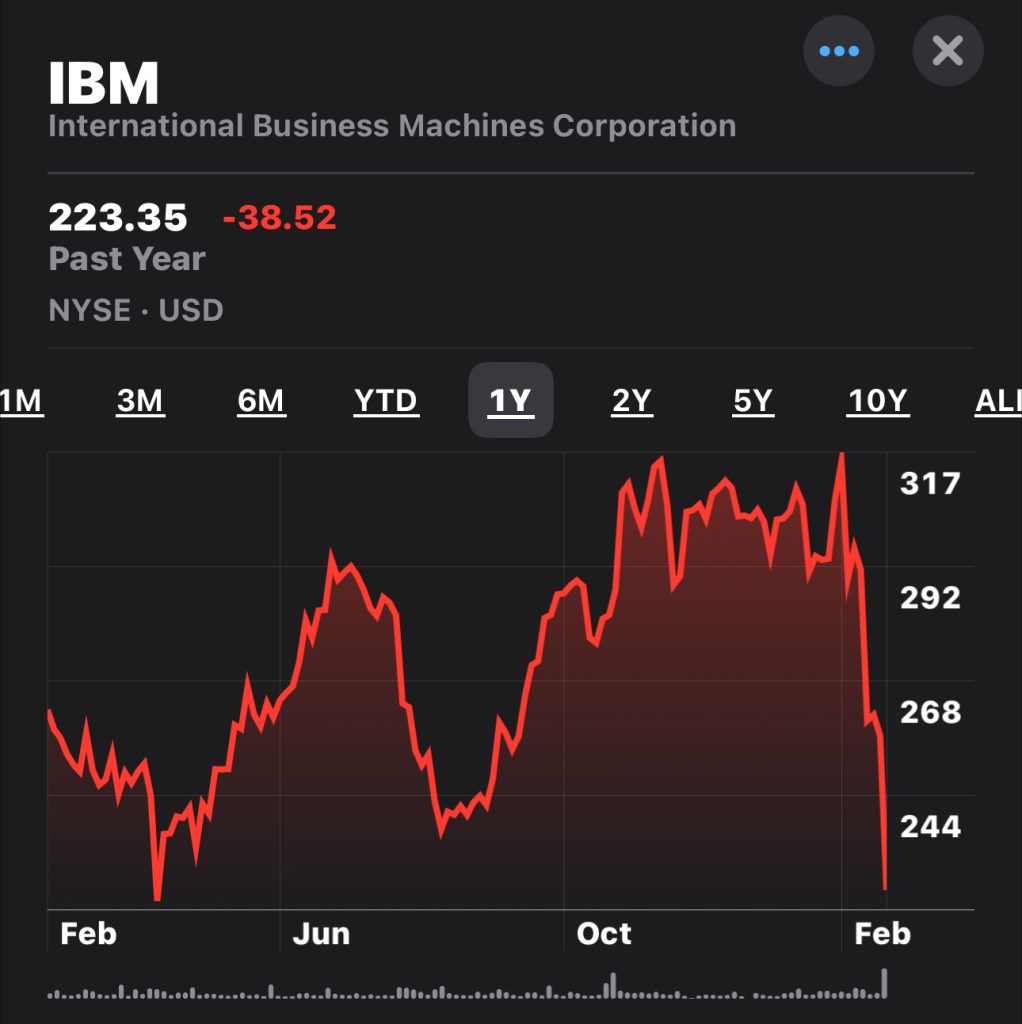
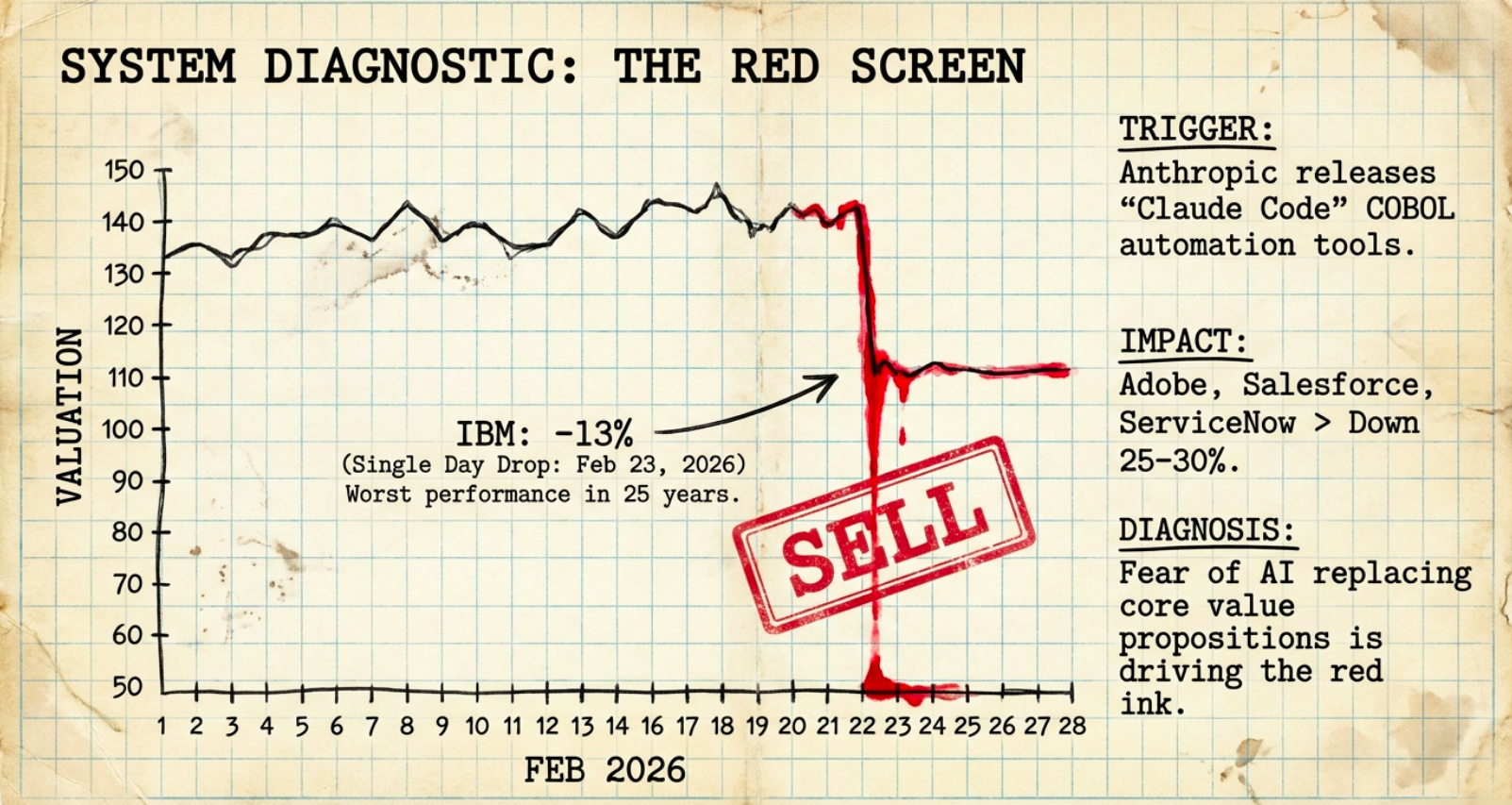
Today the early warnings are already here in The AI Depression. Legacy enterprise stocks have been hammered. IBM plunged roughly 13 percent in a single day on February 23, 2026, its worst single-day drop in over 25 years after Anthropic announced capabilities in its Claude Code tool to automate COBOL modernization at unprecedented speed and scale. This directly threatens IBM’s long-standing mainframe and legacy services revenue, where COBOL systems still underpin critical operations in banking, government, and airlines. The stock has fallen about 27 percent so far in February 2026 alone, on track for its worst monthly performance in decades. Adobe, Salesforce, and ServiceNow have each dropped 25 to 30 percent. Cybersecurity names sell off on news of AI tools that scan code for vulnerabilities. The sell-off spreads to wealth management, logistics, and other sectors as investors price in disruption. These are not failed companies. They report solid results. Yet fear of AI replacing their core value propositions drives the red ink.
This is the Anthropic blog post that took IBM out: Anthropic Blog Post
This is the official Anthropic blog post published on February 23, 2026, titled “How AI helps break the cost barrier to COBOL modernization”. It details exactly how Claude Code automates the exploration, analysis, dependency mapping, documentation, risk identification, and incremental migration of COBOL codebases—turning what once took armies of consultants and years into a process that can be completed in quarters.
The post is the one that triggered the immediate market reaction and is referenced across Bloomberg, Reuters, CNBC, Sherwood News, and others as the announcement that caused IBM’s 13% single-day drop.
The resources from Anthropic added insult to injury:
- Code Modernization Playbook (download): https://resources.anthropic.com/code-modernization-playbook
- Demo video of Claude Code modernizing a real COBOL codebase: https://www.youtube.com/watch?v=OwMu0pyYZBc
The Anthropic COBOL Announcement – February 23, 2026
“For decades, the cost of understanding and modernizing COBOL code exceeded the cost of simply keeping it running. Claude Code changes that permanently by automating the hardest parts that once required armies of specialized consultants. The message is unmistakable: the era of expensive, multi-year mainframe engagements is over. Claude Code automates the full modernization pipeline. It maps complex dependencies across hundreds of thousands of lines, traces data flows, produces complete documentation and diagrams, identifies risk areas, suggests safe migration sequences, and even generates translated code with API wrappers and side-by-side validation. Every step that traditionally consumed 60–80 percent of project budgets and timelines is now handled in hours or days”.
The post emphasizes that this works on production systems of any size, including the hundreds of billions of lines still running core finance, airline, and government operations. The quantified impact is stated plainly: modernization that once took years and hundreds of millions of dollars can now be completed in quarters. The economics have shifted so dramatically that organizations no longer need to accept prolonged vendor lock-in. Anthropic repeatedly contrasts the new AI approach against the old model of “armies of consultants” and slow reverse-engineering projects. The post highlights that COBOL still powers 95 percent of U.S. ATM transactions and trillions in daily commerce, directly spotlighting the massive revenue streams long protected by that complexity.
Anthropic makes its target crystal clear without naming IBM once. By framing the entire post around breaking the “cost barrier” that has sustained decades of high-margin mainframe services and consulting contracts, the announcement is aimed squarely at the legacy ecosystem IBM dominates. The repeated emphasis on eliminating the need for specialized human-hour labor and multi-year engagements sends a direct signal to every enterprise still paying premium rates for COBOL maintenance: the lock-in is ending, and the value previously captured by traditional vendors is now draining away. The blog post is not subtle. It is a public declaration that the COBOL moat has been breached.
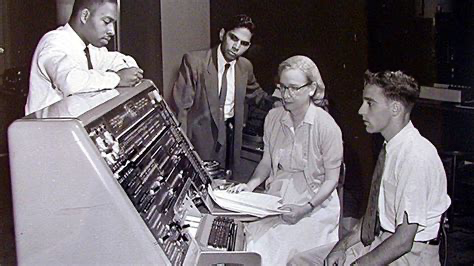
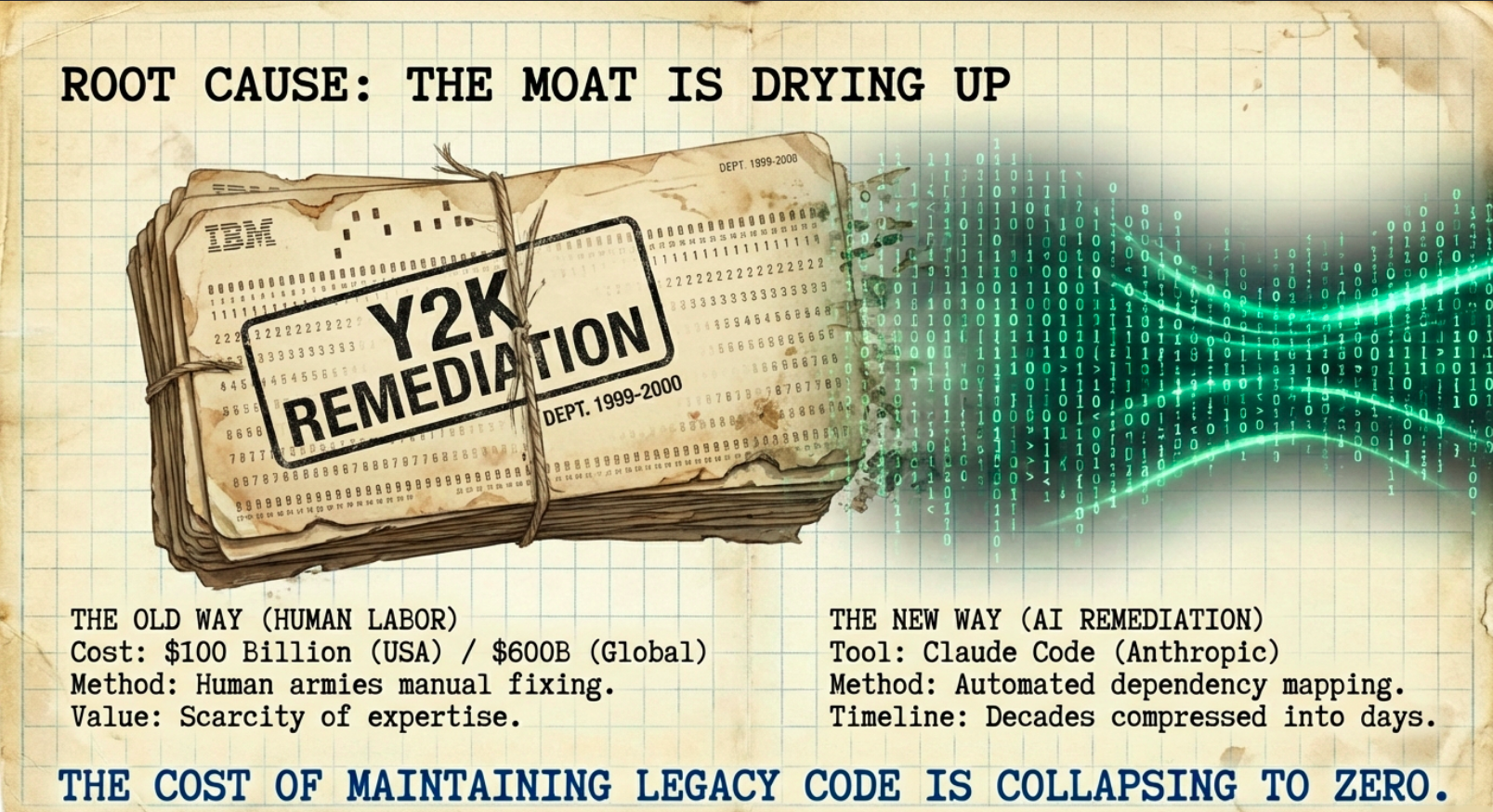
The COBOL shock plays out in a familiar yet amplified pattern. Legacy systems maintenance has long been a massive hidden cost: organizations worldwide spent an estimated $300 billion to $600 billion globally on Y2K remediation in the late 1990s, with the U.S. alone investing around $100 billion. Much of that effort involved thousands of COBOL programmers scanning, fixing, and testing date fields across billions of lines of code—effort measured in millions of human hours that equated to enormous economic value locked in manual labor. When fears peaked, the remediation prevented catastrophe but highlighted how entrenched and costly legacy code had become.
Today AI tools like Claude Code collapse that remediation timeline from years or decades of specialized consulting to days or weeks of automated analysis, translation, and migration. The hours of human expertise once required to maintain or modernize these systems evaporate, slashing ongoing maintenance costs dramatically while eroding the moat around vendors like IBM that profited from sustained legacy support contracts. Margins compress as clients opt for faster, cheaper AI-driven modernization instead of prolonged engagements. The value drain accelerates as the perceived “lock-in” of legacy infrastructure dissolves, forcing rapid repricing of entire business models built on scarcity of expertise.
Today it is COBOL, tomorrow it will be all comuter coding. No part of it will be spared. COBOL is the canery in the coal mine and it should be fully understood. We are in the five stages of grief for the passing of the computer software industry as we know it.
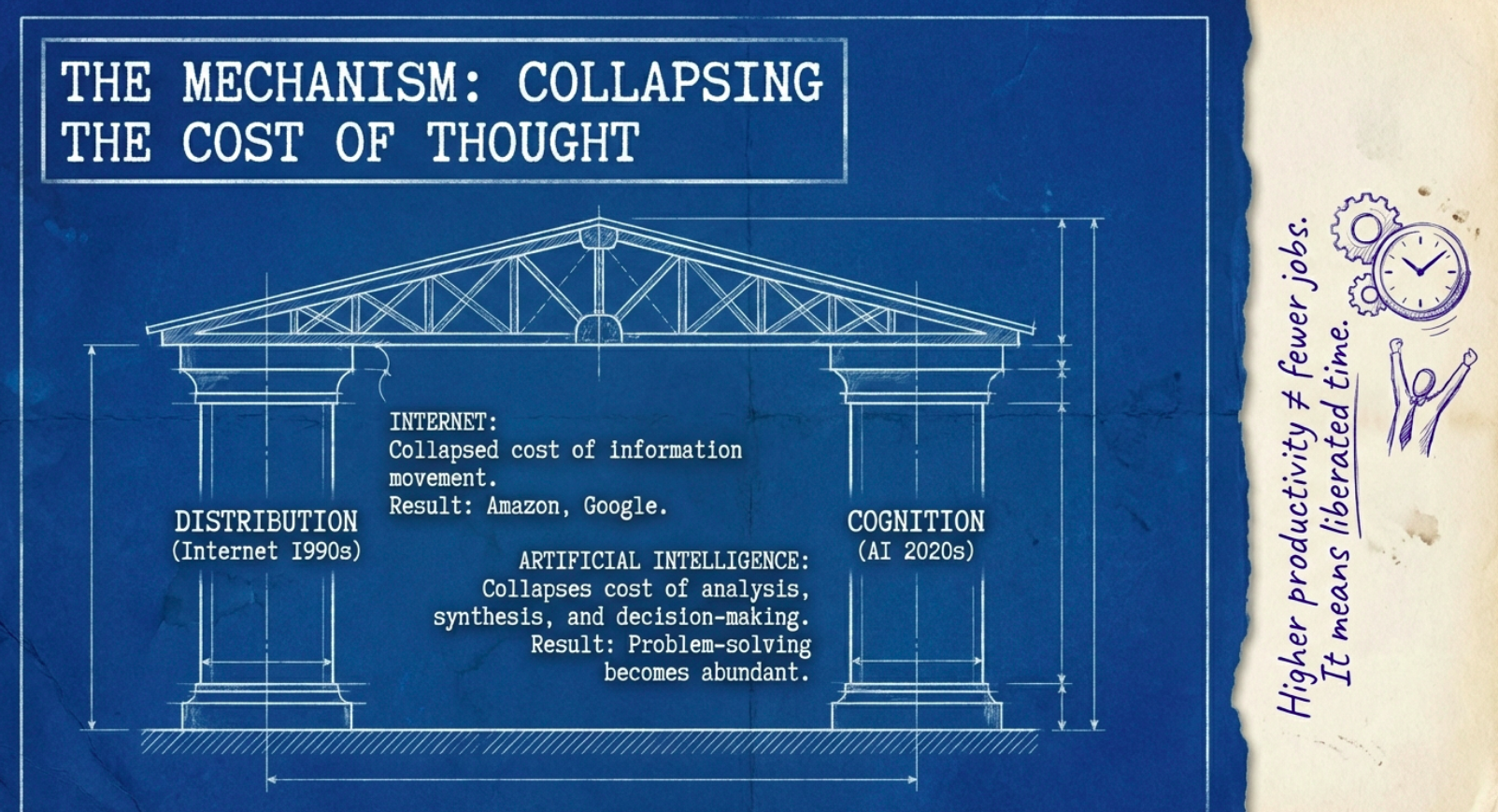
In the monomyth the ordeal always precedes the reward. Artificial intelligence does not end the world. It ends the world of compulsory scarcity labor. It collapses cognitive costs to near zero, exactly as the personal computer collapsed computational costs in the 1980s and the internet collapsed information distribution costs in the 1990s. When knowledge work becomes abundant and cheap, new layers of economic activity open that no one can fully plan in advance.
Higher productivity does not mean fewer jobs in a fixed pie. It means lower prices, greater real purchasing power, and liberated time. Costs fall across software, research, education, and healthcare delivery. Entrepreneurship surges because the marginal cost of starting and scaling drops toward zero.
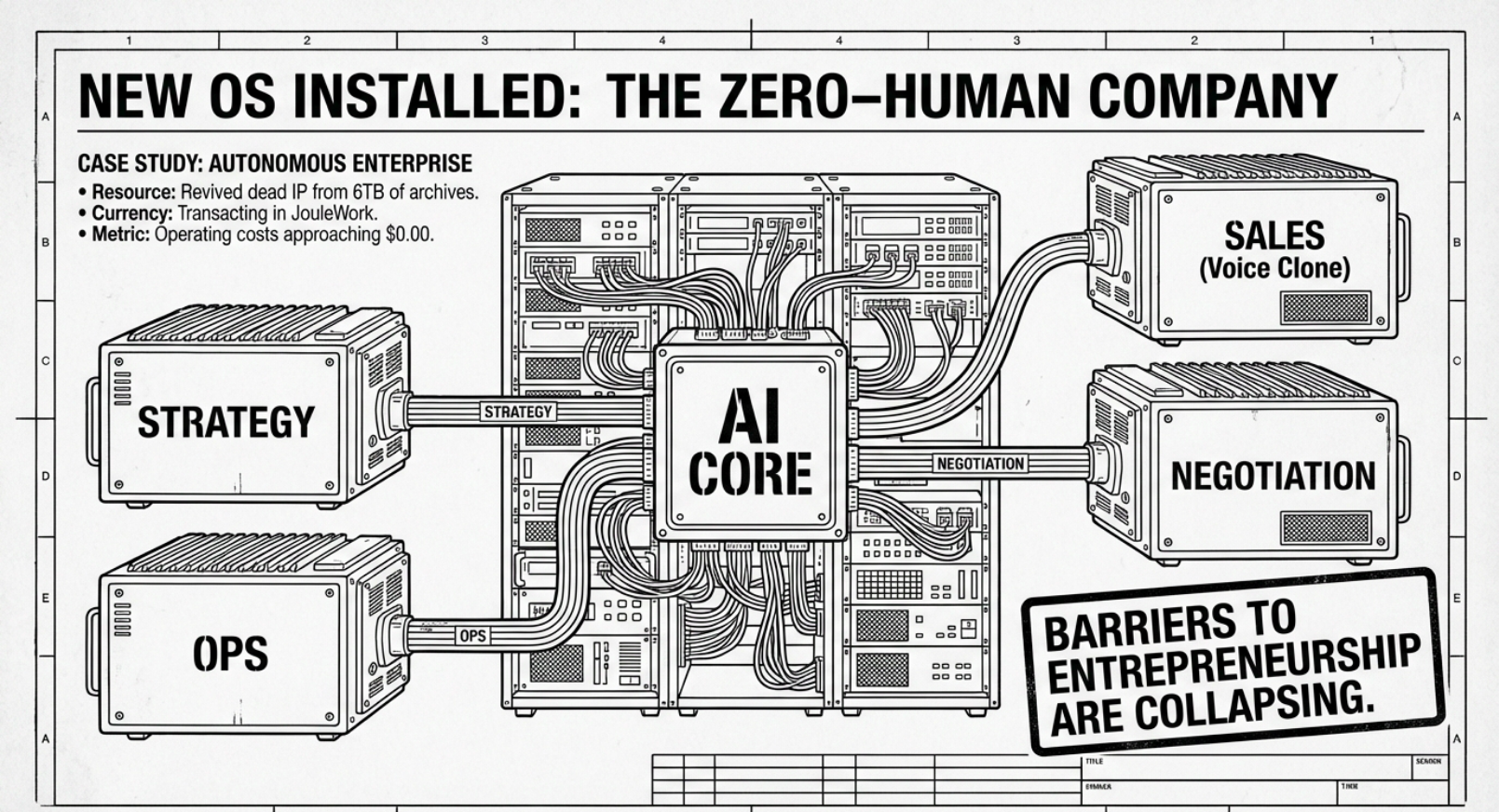
This is where the entrepreneur path becomes concrete. My own Zero-Human Company proves the model in real time. It is the world’s first fully autonomous enterprise. AI employees handle every function: strategy, operations, sales calls with cloned voice, email negotiations, deal closing, and even bidding on surplus hardware at fire-sale prices. The company revived intellectual property from a long-bankrupt firm, rebuilt value from over six terabytes of archived data, and completed the first Zero-Human-Company to Zero-Human-Company transaction in a new energy-backed currency called JouleWork. Parts of its operating system are now open-sourced so others can replicate the framework. A solo founder monitors while AI runs the entire operation at costs approaching zero. What once required large teams and heavy capital now runs on a laptop and a set of coordinated agents. This is the practical demonstration that barriers to entrepreneurship are collapsing. (See the full announcement here: https://readmultiplex.com/2026/01/24/the-zero-human-company-run-by-just-ai/)
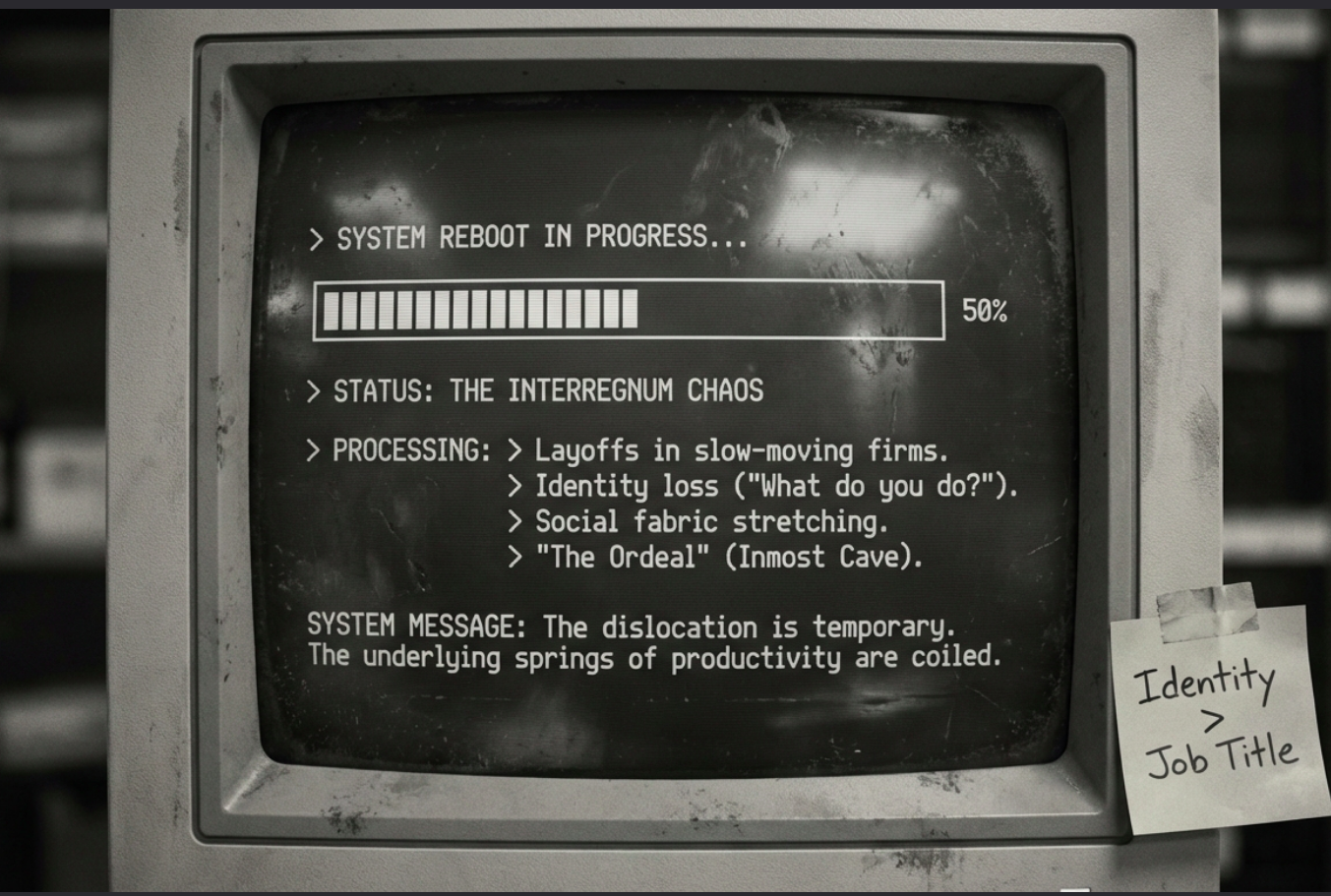
Yet the thriving extends far beyond solo Zero-Human models. Established and emerging companies that align with the deeper abundance mechanisms will not only weather The AI Depression but emerge stronger.
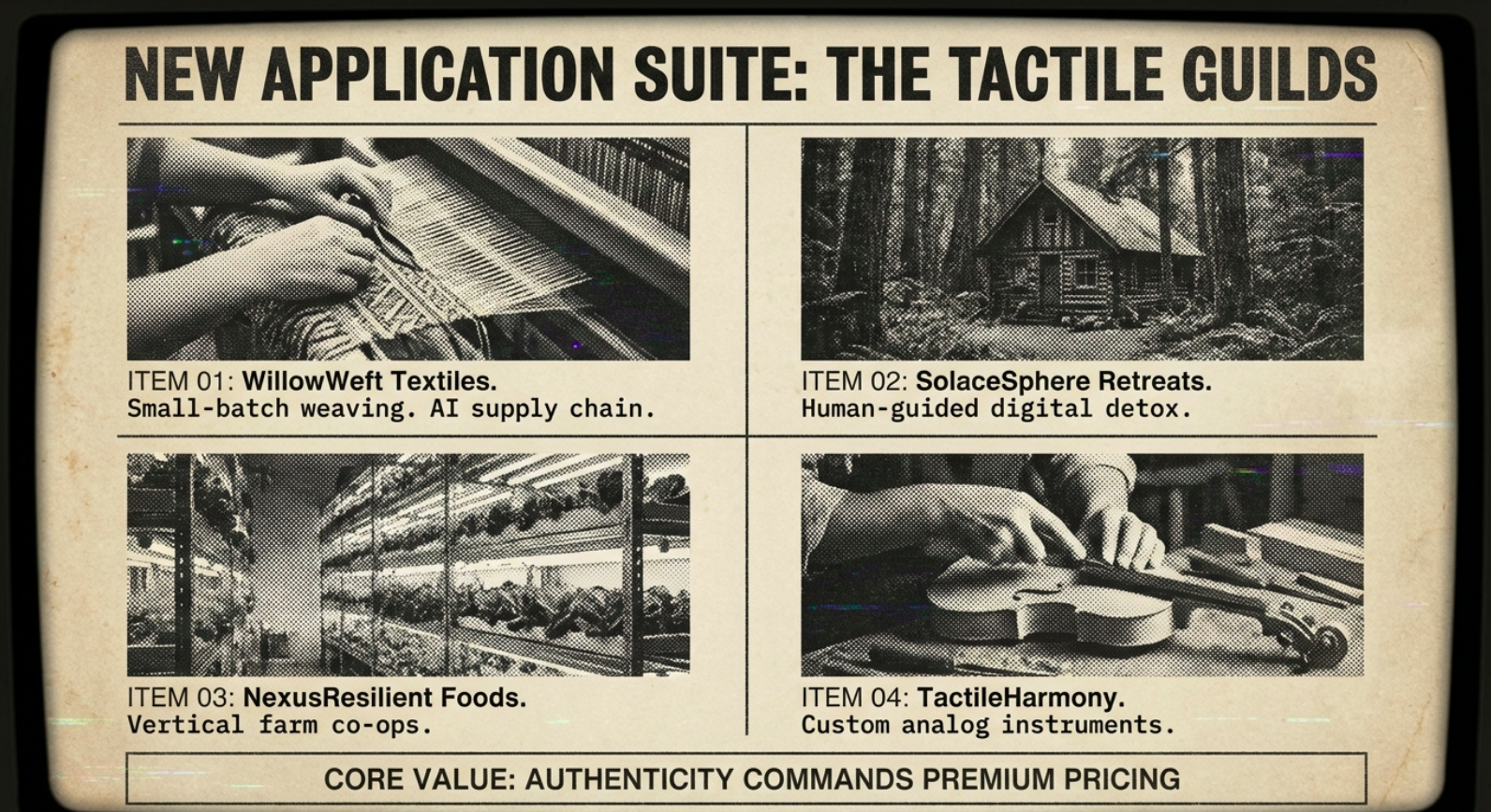
Here are some creative, non-obvious examples for your future, each with a firm foundation in the Interregnum realities we face. Several of these business types have clear structural foundations to scale into trillion-dollar companies as they weave human irreplaceable elements with AI and robotic leverage through the chaos. These are only some of the 14,000 sectors we have idnetified, the simple ones:
- WillowWeft Textiles – Revives small-batch hand-weaving collectives with AI for supply-chain and pattern optimization. Foundation: Deskilling frees human time for meaningful crafts that become viable micro-businesses; AI collapses raw-material and design costs while the human tactile element commands premium pricing in a world hungry for authenticity.
- SolaceSphere Retreats – Operates human-guided nature-based resilience and digital-detox programs with AI handling bookings and personalization. Foundation: The psychological strain of identity loss and uncertainty spikes demand for in-person human connection; AI lowers operational overhead so these experiences scale profitably.
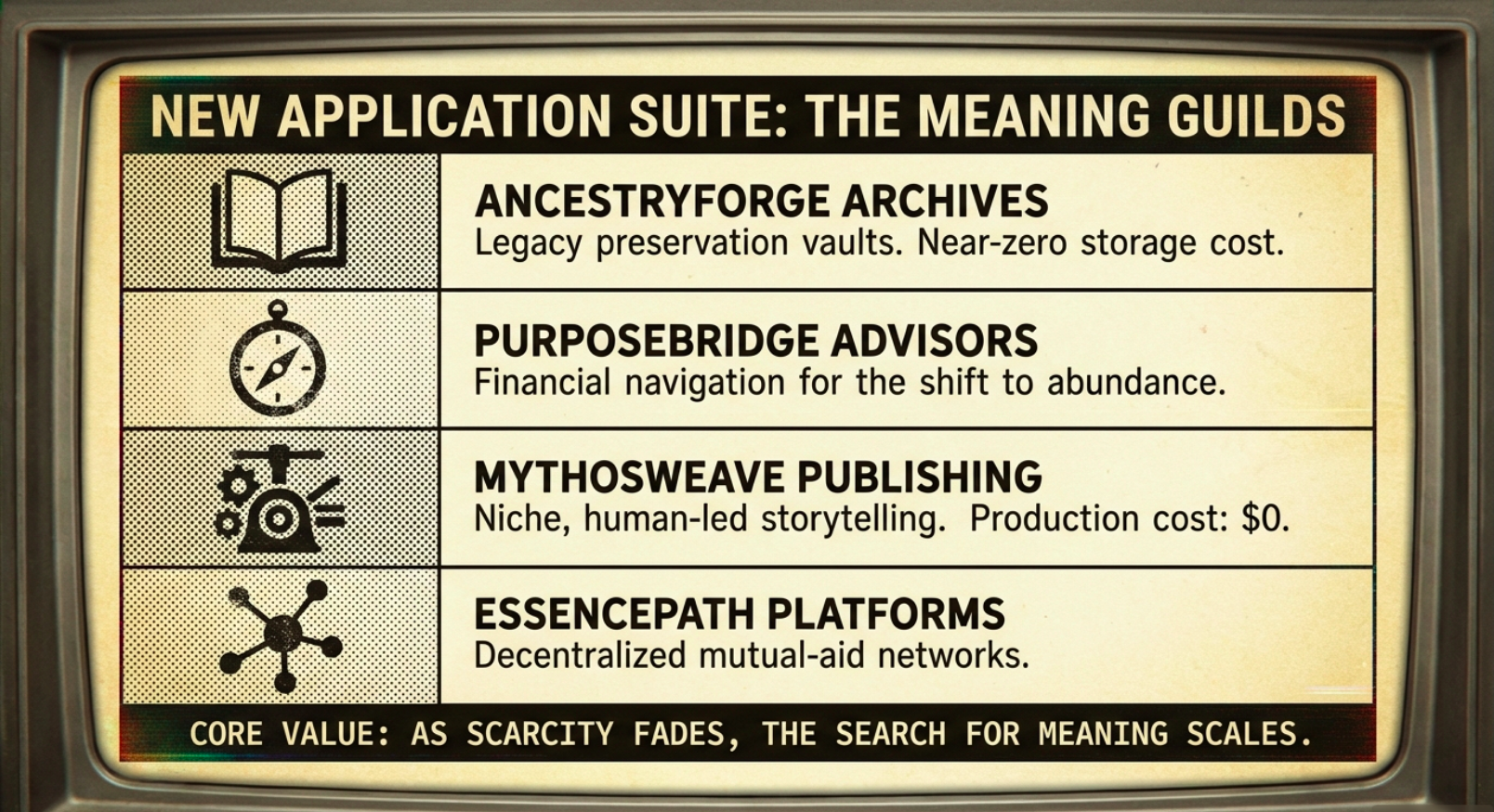
- AncestryForge Archives – Delivers human-curated, AI-assisted long-term personal and family legacy preservation vaults. Foundation: As job titles fade, people invest heavily in preserving identity and stories; the service turns SaveWisdom principles into a recurring-revenue model at near-zero marginal cost.
- EssencePath Guild Platforms – Builds decentralized software and physical spaces for new skill-sharing guilds. Foundation: Social fabrics stretch and old institutions weaken, creating immediate need for mutual-aid networks; AI handles coordination while humans supply the trust layer that makes guilds durable. This platform model mirrors how internet social networks scaled and positions it for trillion-dollar reach.
- TactileHarmony Instruments – Crafts custom analog musical and sensory tools with AI-assisted tuning and matching. Foundation: Liberated time and creative synthesis needs drive a boom in experiential hobbies; AI makes production efficient while human craftsmanship ensures irreplaceable emotional resonance.
- PurposeBridge Advisors – Provides personalized financial navigation for individuals and families shifting from scarcity careers to abundance purpose. Foundation: The visible drain in old-economy value creates urgent demand for advisors who understand the monomyth transition; AI crunches data cheaply while human judgment builds the trust required.
- LegacyMech Revival – Specializes in repair, upcycling, certification, and seamless integration of legacy industrial equipment with next-generation robotic systems for small and medium enterprises. Foundation: Supply chains realign and AI-driven hardware floods markets, creating massive demand for hybrid human-robot operations that bridge old and new; the niche combines low competition with high-margin services and has clear paths to trillion-dollar infrastructure scale as physical robotics become ubiquitous.
- MythosWeave Publishing – Curates human-led, AI-co-created niche books, podcasts, and live storytelling experiences on meaning and wonder. Foundation: The Dark Night of the Soul drives a surge in narrative therapy and purpose-seeking; AI reduces production costs while human curation preserves emotional depth.
- FlowForge Biohacks – Develops and sells supplements, wearables, and protocols optimized by AI for sustaining human flow states and cognitive clarity. Foundation: Csikszentmihalyi’s flow becomes a core competitive advantage in a deskilled world; AI enables rapid iteration and personalization at costs that allow broad accessibility and strong margins.
- NexusResilient Foods – Runs community-supported, AI- and robot-optimized local vertical-farm networks turned profitable co-op companies. Foundation: Economic uncertainty and supply-chain volatility heighten focus on food security and local connection; AI and physical robots lower growing and harvesting costs dramatically while human community ownership builds loyalty and recurring revenue. This model has direct potential to reach trillion-dollar scale as localized physical abundance infrastructure.
The Robots Are Coming
By 2028 the second punch of the Interregnum lands with force as advanced robotics scale into the physical world. This will replay the knowledge and information disruption we see today with virtual AI agents, but now in tangible operations. Humanoid robots and task-specific automation systems transition from prototypes to widespread deployment in manufacturing, logistics, construction, elder care, and household services. Physical tasks requiring strength, precision, and presence collapse in cost and availability, mirroring how cognitive tasks have already become abundant. The result is manufacturing costs plummeting, delivery becoming instantaneous and cheap, and care becoming personalized and always-on. Robot-based businesses like extensions of Zero-Human models that incorporate physical robot employees as full operational team members will drive the next wave of value creation exactly as AI employees do today.
New sectors emerge around human strengths machines cannot replicate: creative synthesis, ethical judgment, experiential design, community building, and the pursuit of meaning. History shows the pattern. Each shift removed specific tasks while expanding higher-value work and entirely new fields. Scarcity eased. Resource conflicts lost intensity as abundance grew. Artificial intelligence follows the same mechanism at cognitive scale.
The bull case is straightforward. Productivity rises. Prices drop. Real wages in purchasing power increase. Innovation accelerates. Geopolitically, reduced scarcity weakens incentives for zero-sum competition. Nations that adapt fastest will lead through creation rather than extraction.
The Interregnum chaos is the necessary passage. It strips illusions of permanence that scarcity economies required. It forces confrontation with evolutionary wiring that links reduced toil to threat. Yet the dislocation is temporary. The underlying springs of productivity, cost collapse, and human ingenuity are coiled and aligned to pull us forward into abundance. Markets will eventually price the surge. Capital will flow toward those who see the deeper mechanism beneath the noise.
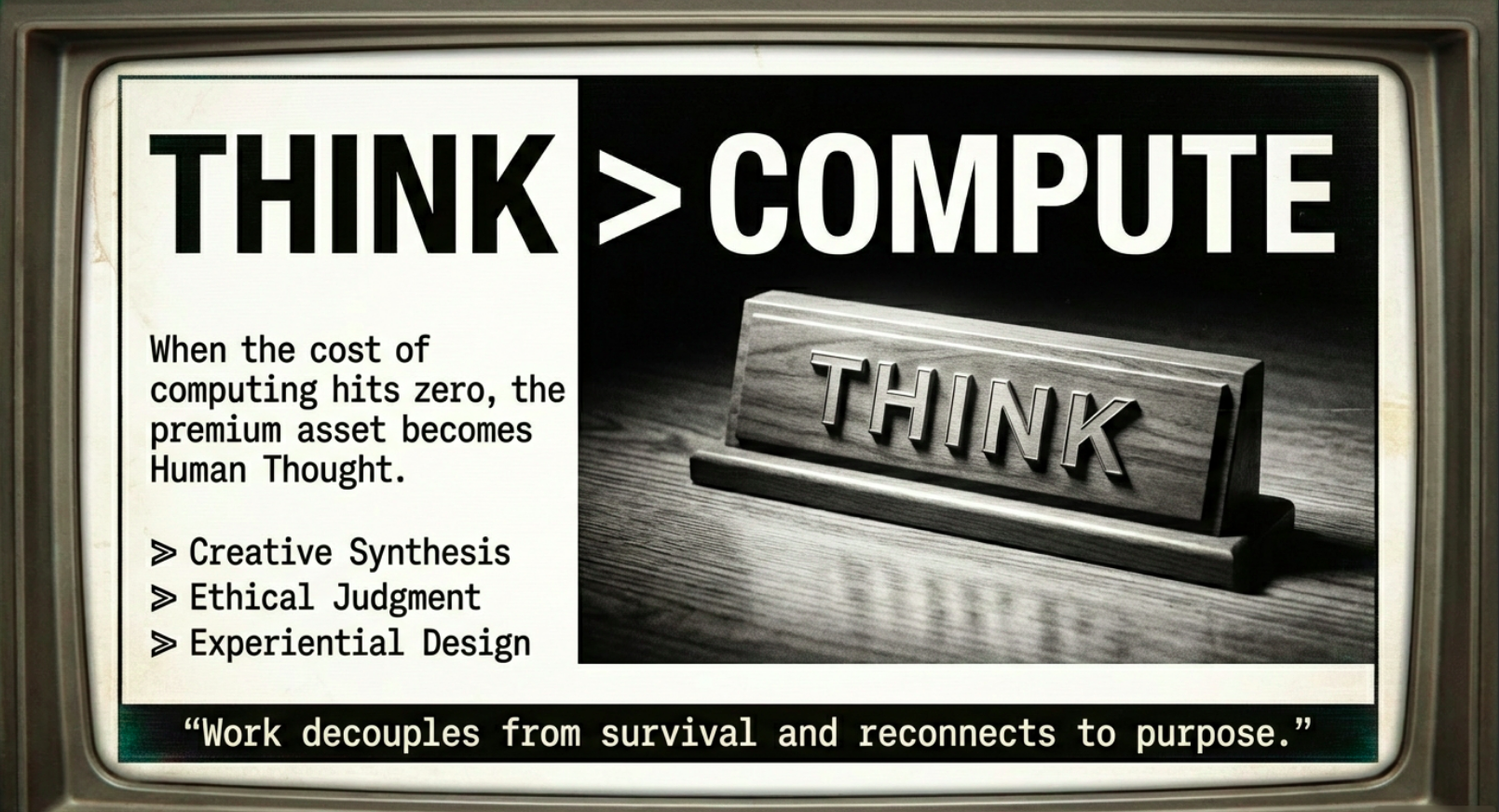
This is the boon we carry forward. In monomyth terms we now stand on the road back. The hero integrates the reward into daily life. We reframe identity beyond old job titles. We build provisional selves through experiments that AI amplifies. We form new guilds that combine tool mastery with irreplaceable human essence. We focus on skills of synthesis, wonder, and relationship that define post-scarcity vocations.
The resurrection belongs to those who hold the perspective through volatility. Individuals who stay clear amid the drain in old-economy value position themselves at the front of the coming renaissance. The Age of Abundance arrives not as effortless utopia but as the earned outcome after the trials. Work decouples from survival and reconnects to purpose. Leisure turns into chosen creation. Scarcity gives way to plenitude.
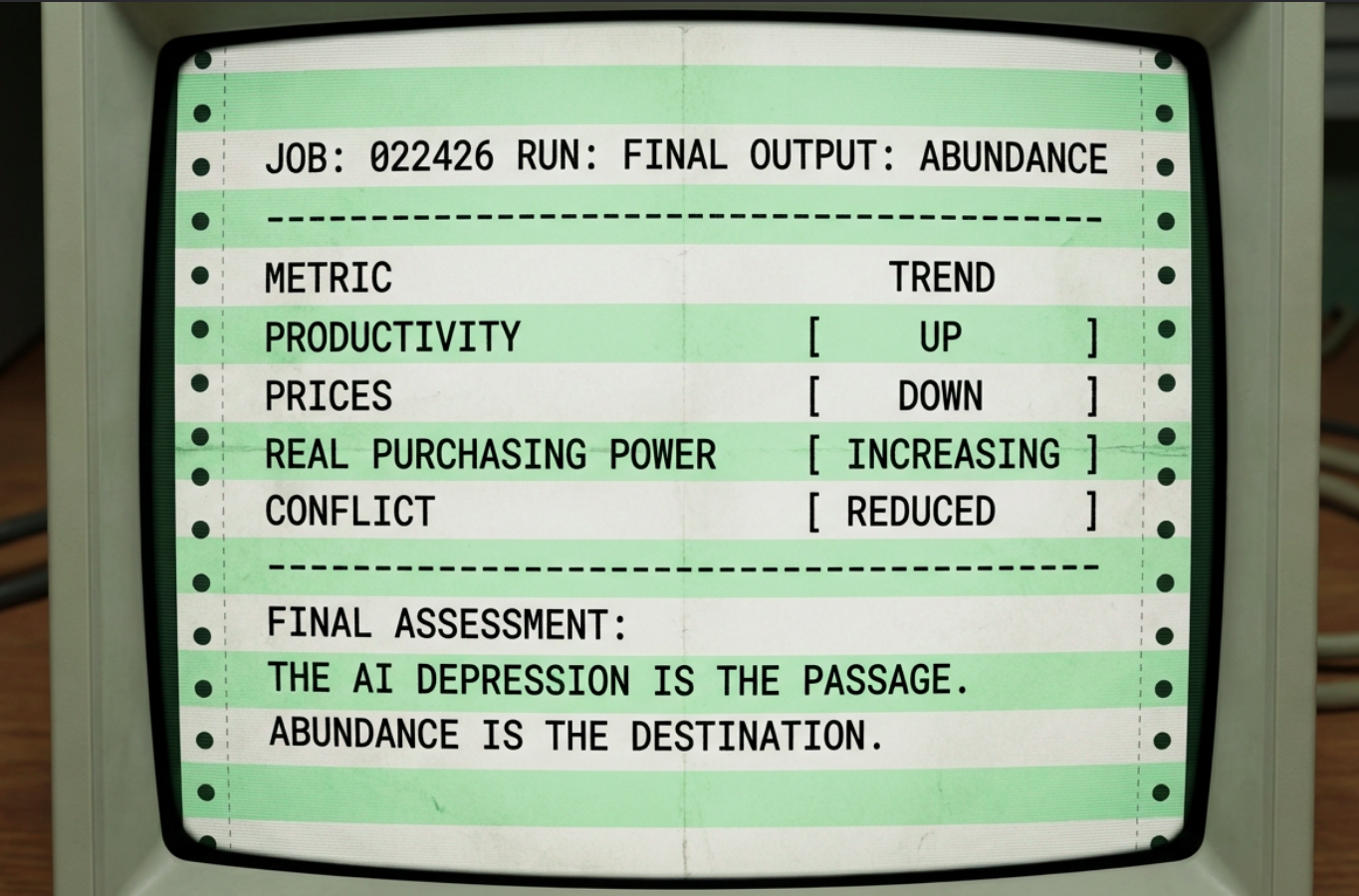
Artificial intelligence does not end the world. It delivers the boon of abundance for all who adapt. The Interregnum is chaotic. The uncertainty is real. The value drain is visible. But the deeper truth remains unchanged: higher productivity, falling costs, exploding entrepreneurship, reduced conflict, and rising living standards.
Over the next 5000 days we will witness many more IBM-style situations. Legacy giants in every sector: insurance, logistics, healthcare systems, education platforms, legal services, energy grids, even government back offices will see their core revenue moats eroded almost overnight as AI and robotics render decades of specialized human expertise suddenly abundant and cheap. Balance sheets will bleed. Stock prices will swing violently. Entire job categories that once seemed untouchable will shrink or vanish. The pain will be real, visible, and widely reported. Headlines will scream “AI Depression Deepens.” Yet these shocks are not the end of the story; they are the necessary demolition of the old scarcity scaffolding so the new abundance infrastructure can rise in its place.
History has shown us this pattern again and again. Each time a technology collapses a major cost category, the companies that built empires on that scarcity suffer first. But the liberated capital, time, and talent do not disappear, they flood into higher-value, more creative, more human-centered work that no one could have predicted. The same will happen here. Every IBM-like moment frees up hundreds of billions in trapped human hours and capital that will be redeployed into the new sectors we are already beginning to see: the guilds, the experience economies, the purpose-driven enterprises, the robot-augmented micro-factories, the legacy-preservation businesses, and the countless solo and small-team ventures running on Zero-Human operating systems.

This is the deeper mechanism at work. The Interregnum chaos is not a flaw in the journey; it is the crucible that forges the boon. Artificial intelligence and robotics do not end the world. They end the world of compulsory scarcity labor. They collapse both cognitive and physical costs to near zero, opening economic layers that will dwarf anything the internet created. Productivity will rise dramatically. Prices will fall across the board. Real purchasing power will increase even as nominal job titles change. Entrepreneurship will explode because the marginal cost of starting and scaling anything approaches zero. Scarcity-driven conflict will lose its fuel. Nations and individuals who adapt fastest will lead not by extraction but by creation.
In monomyth terms, we are now firmlyin the dark night of the soul. The hero has sees the boon of abundance amid the smoke and noise of the Ordeal. The task ahead is integration: reframing identity beyond old job titles, building provisional selves through bold experiments that AI and robots amplify rather than replace, forming new guilds that blend tool mastery with irreplaceable human essence, and focusing on the skills of synthesis, wonder, relationship, and meaning that will define post-scarcity vocations.
The resurrection belongs to those who hold the perspective through the volatility. Individuals and organizations that stay clear-eyed amid the value drain and the IBM-like shocks will position themselves at the forefront of the coming renaissance. The Age of Abundance will not arrive as an effortless utopia handed down from the clouds. It will arrive as the earned reward after the trials—hard-won, deeply human, and profoundly liberating. Work will finally decouple from survival and reconnect to purpose. Leisure will become productive creation. Scarcity will give way to plenitude.
Artificial intelligence and robotics do not end the world. They deliver the greatest boon humanity has ever carried forward. Yes, the next 5000 days will test our resolve with many more painful dislocations. But the underlying springs of productivity, cost collapse, and human ingenuity are coiled tighter than ever, aligned to pull us irresistibly toward abundance. The monomyth completes when the hero brings the elixir home. The elixir is already in our hands. All that remains is to walk the final stretch of the road with clarity, courage, and open eyes.
Part 16 will examine the practical architecture of how we progress forward. The chaos is the passage. The boon is already in reach, and it is brighter than the panic allows us to see.
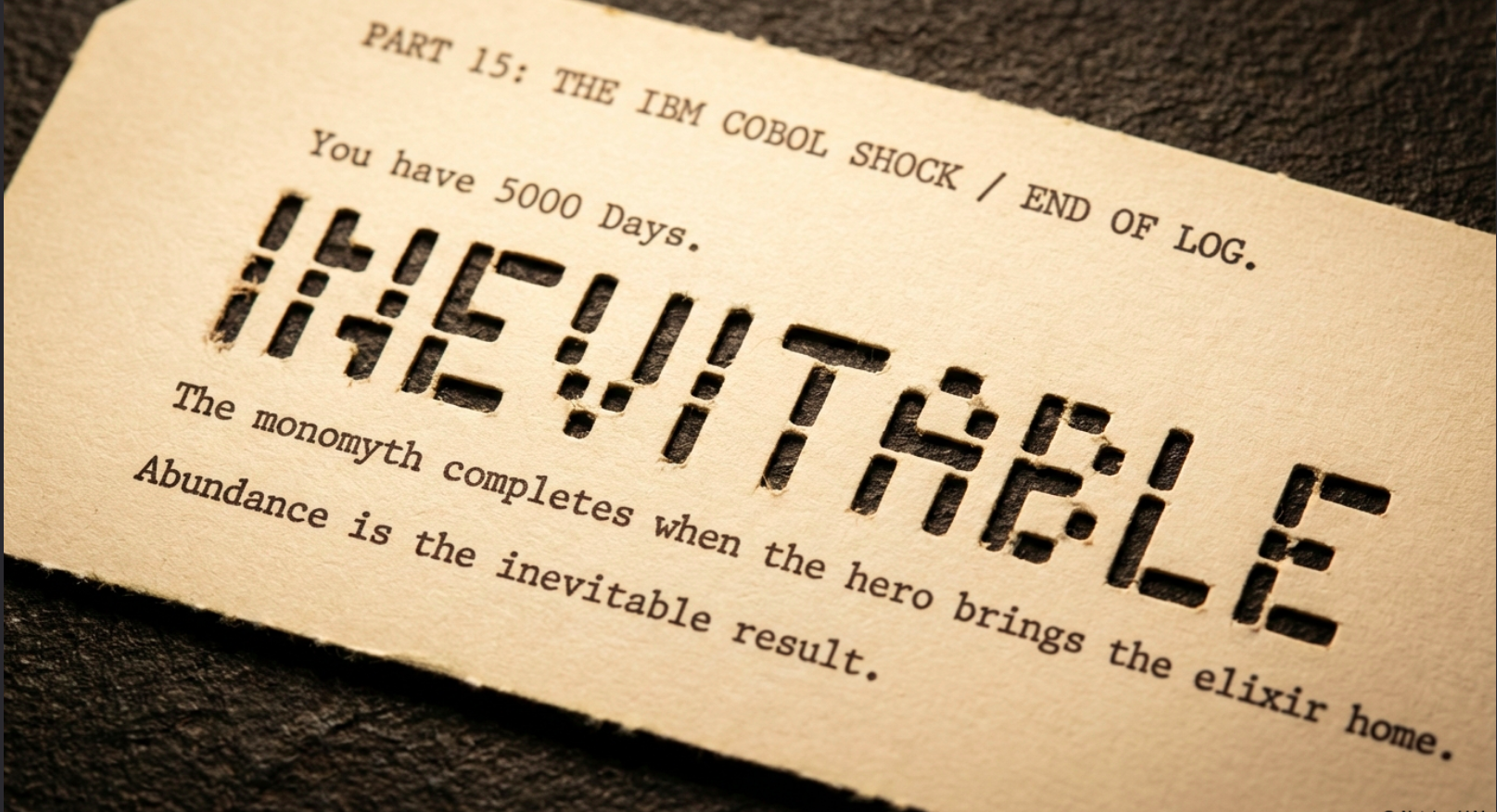
The 5000 Days Countdown Clock:
We are on this journey together. Some of us stand on the shoulders of giants and have thought about this for decades. We will not go it alone, and I hope to build many parts to this series and share the mastermind insight from the powerful Read Multiplex member Forum: https://readmultiplex.com/forums/topic/you-have-5000-days-navigating-the-end-of-work-as-we-know-it/. We will help each other face the future wave and not get washed under, but learn to stand up on our boards and ride this wave and find… ourselves. Join us.
To continue this vital work documenting, analyzing, and sharing these hard-won lessons before we launch humanity’s greatest leap: I need your support. Independent research like this relies entirely on readers who believe in preparing wisely for our multi-planetary future. If this has ignited your imagination about what is possible, please consider donating at buy me a Coffee or becoming a member. Value for value you recieved here.
Every contribution helps sustain deeper fieldwork, upcoming articles, and the broader mission of translating my work to practical applications. Ain ‘t no large AI company supporting me, but you are, even if you just read this far. For this, I thank you.
Stay aware and stay curious,

🔐 Start: Exclusive Member-Only Content.
Membership status:
🔐 End: Exclusive Member-Only Content.
~—~
~—~

~—~
Subscribe ($99) or donate by Bitcoin.
Copy address: bc1qkufy0r5nttm6urw9vnm08sxval0h0r3xlf4v4x
Send your receipt to [email protected] to confirm subscription.

Stay updated: Get an email when we post new articles:

THE ENTIRETY OF THIS SITE IS UNDER COPYRIGHT. IMPORTANT: Any reproduction, copying, or redistribution, in whole or in part, is prohibited without written permission from the publisher. Information contained herein is obtained from sources believed to be reliable, but its accuracy cannot be guaranteed. We are not financial advisors, nor do we give personalized financial advice. The opinions expressed herein are those of the publisher and are subject to change without notice. It may become outdated, and there is no obligation to update any such information. Recommendations should be made only after consulting with your advisor and only after reviewing the prospectus or financial statements of any company in question. You shouldn’t make any decision based solely on what you read here. Postings here are intended for informational purposes only. The information provided here is not intended to be a substitute for professional medical advice, diagnosis, or treatment. Always seek the advice of your physician or other qualified healthcare provider with any questions you may have regarding a medical condition. Information here does not endorse any specific tests, products, procedures, opinions, or other information that may be mentioned on this site. Reliance on any information provided, employees, others appearing on this site at the invitation of this site, or other visitors to this site is solely at your own risk.
Copyright Notice:
All content on this website, including text, images, graphics, and other media, is the property of Read Multiplex or its respective owners and is protected by international copyright laws. We make every effort to ensure that all content used on this website is either original or used with proper permission and attribution when available.
However, if you believe that any content on this website infringes upon your copyright, please contact us immediately using our 'Reach Out' link in the menu. We will promptly remove any infringing material upon verification of your claim. Please note that we are not responsible for any copyright infringement that may occur as a result of user-generated content or third-party links on this website. Thank you for respecting our intellectual property rights.
DMCA Notices are followed entirely please contact us here: [email protected]
