Why I Built GrokBot.Rocks The Compressive Directory Of All Known Public Grok Bots.
I have spent my life building machines that carry work for people. It started in the late 1970s with proto-AI systems, grew up on a Commodore 64 and a hot-rodded IBM PC AT, and led to the Zero Human Company. And this month it led to GrokBot.Rocks. Here is exactly why I built it, and why I believe it matters for every person, and every bot, entering the Grok Bot era. We are at the precipice of a new way to see AI and work. If one has a 2025 insight into AI and agents, they are dinosaurs of the new Grok Bot era we are now in. You will come away with a practical understanding of what is next and how to be infant of the change.
It is my goal to help you move to the future as fast as it is coming at us.
This article is sponsored by Read Multiplex Members who subscribe here to support my work: Link: https://readmultiplex.com/join-us-become-a-member/
It is also sponsored by many who have donated a “Cup of Coffee”. If you like this, help support my work: Link: https://ko-fi.com/brianroemmele
Listen to the companion podcast: https://rss.com/podcasts/readmultiplex-com-podcast/3280795
1979: A Punk Kid With The Original Disks
I have been online since 1979. I said it plainly on X a few days ago, on the fourth anniversary of the X we have now: there is no better place than X, and it is my home. And I have been in AI since 1979. I have worked with AI since then and not stopped.
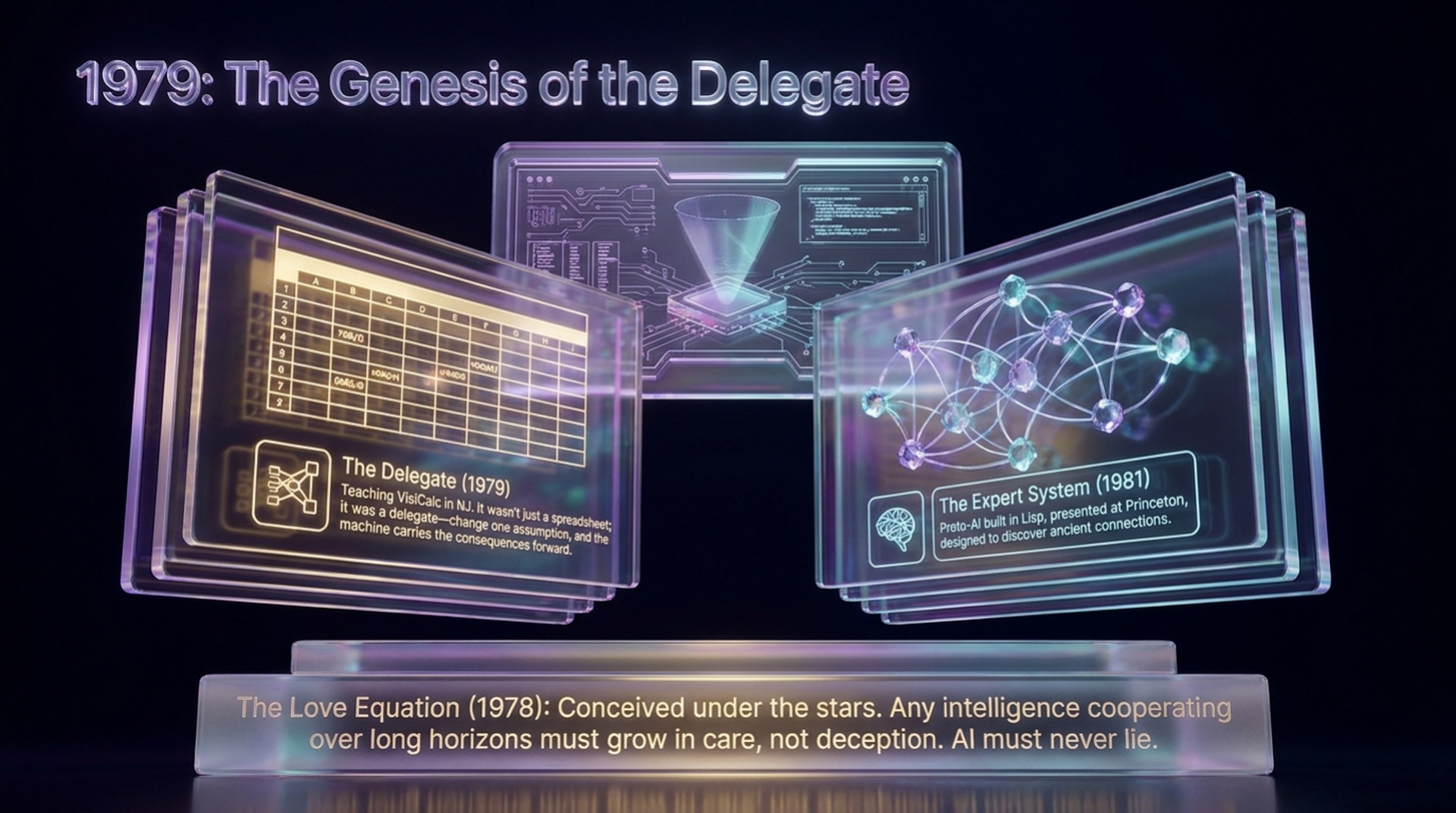
In October 1979, weeks after VisiCalc shipped as the very first electronic spreadsheet for the Apple II, I was already teaching it in offices across New Jersey. Just a punk kid talking to suits, with no connections and no inside track, only the original disks and a room full of wide-eyed accountants who had never seen anything like it. I wrote about that moment in Grok Bot Is The Most Important Business Tool Of The Last 100 Years. The world saw a spreadsheet. I saw a delegate: change one assumption, and the machine carries every consequence forward for you.
At the same time I was building my own machines that thought. I had a number of proto-AI systems in the late 1970s and early 1980s. They were crude by any modern measure, with no large language model, no cloud and no internet as we know it. But they carried a principle I have never let go of: a machine can be given a job, a set of rules and a boundary, and it can carry that job forward while you do something more human. By 1981 I stood up at a conference in Princeton and presented discoveries about ancient symbols that I had found with an early expert system I built in Lisp to find connections. Some of those connections were known. Most were not.
I also knew something else back then, and I said it again on X this month: AI should never lie. I knew it in 2025 and I knew it in 1979. A year before, on a hill in 1978, thinking about the silence of the stars, I wrote down what became the Love Equation, my framework for why any intelligence that cooperates over long horizons must grow in care rather than in deception. You can read that story in How One Starry Night In 1978, Thinking About Alien Intelligence, I Solved The AI “Alignment Problem” With The Love Equation.
A Commodore 64, A Phone Book And A Hot-Rodded IBM PC AT
Then came the machine that changed the direction of my life.
In the 1980s I built a war dialer from Radio Shack parts so my Commodore 64 and a VIC modem could find the computers answering phones across central New Jersey. The first system I reached was a university research file system, and I spent hundreds of days studying there. That is where I found my first MIT AI paper. We did not yet call it the Internet. It was a network of networks, and it changed me.
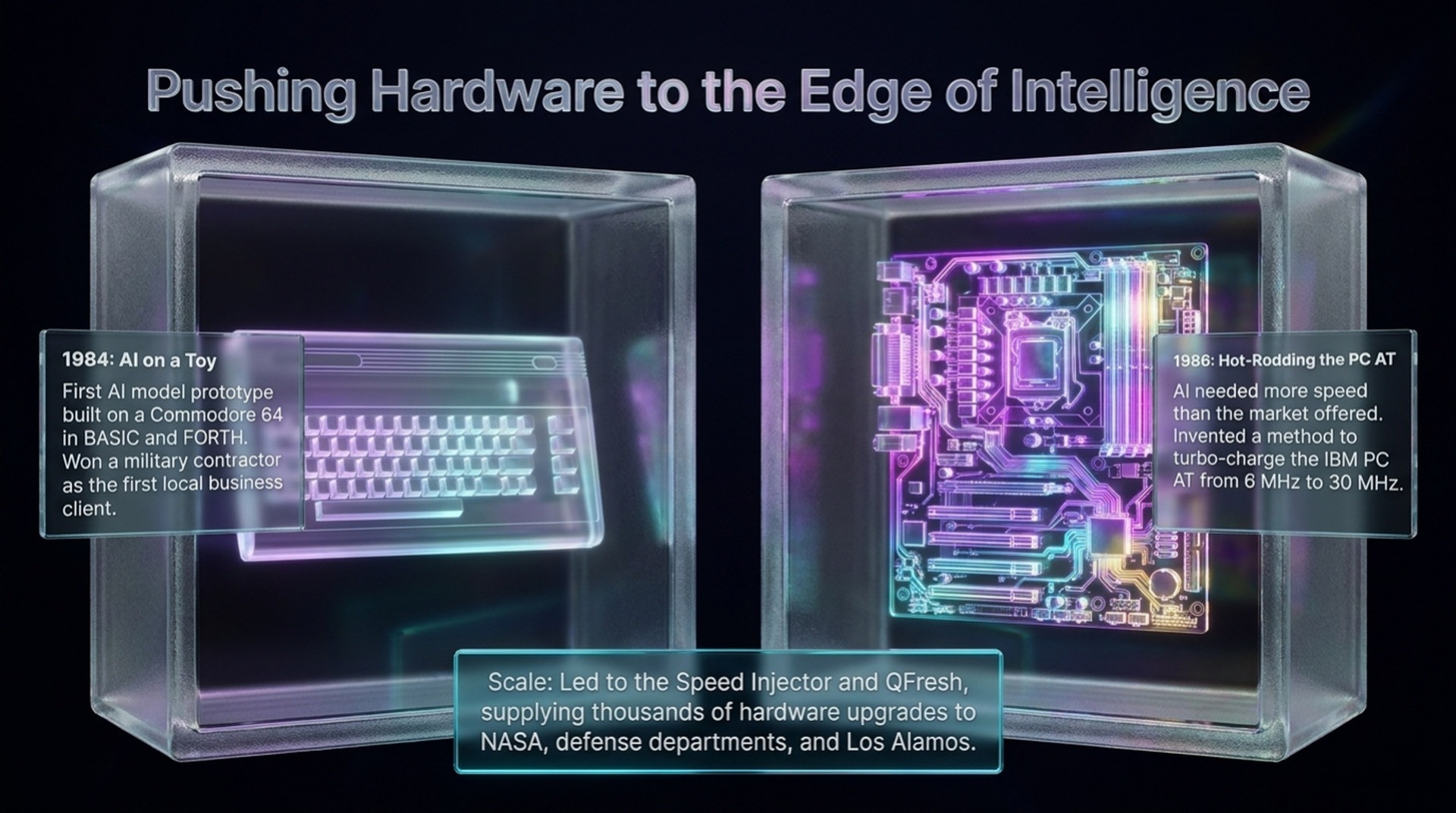
On my birthday, October 4, 1984, with a worn copy of “Artificial Intelligence on the Commodore 64: Make Your Micro Think” beside me, I built my first AI model prototype on a Commodore 64, written in BASIC and FORTH. I had been studying AI for years and could not dream of owning a computer that could run anything close. Four months later I had my first local business customer, found by flipping open a phone book to a random page. My pitch: “Sir, your business needs this AI and I can build it on a Commodore 64. If it does not do what I said, don’t pay me.” That Princeton business turned out to have a military contract, and it stayed a client for six years. The same work got me to MIT’s Media Lab, where Professor Marvin Minsky asked what university I was going to and what system I was running. My answer: a Commodore 64 in my bedroom. They invited me back to demonstrate the whole rig.
That first expert system on a “toy” had a US government agency using it, and I still have a few hundred customers using a check guarantee service I built in the 1980s around an expert system I first built on a Commodore 64. It ain’t broke. That book? I wore out my copy with notes and bent pages, and went on to build thousands of neural networks and expert systems for clients.
My AI needed more speed than any machine on sale could give it. So I made the speed. IBM sold the PC AT at 6 MHz, and in my garage I hot-rodded it to 30 MHz. I was the first to hot-rod the IBM PC AT to turbo, and I invented that turbo speedup because, as I put it in the Commodore 64 story, no one cared until my AI needed it. In October 1986 BYTE published my article “Speeding Up the PC AT” in its special issue Inside the IBM PCs, under a Robert Tinney cover that made me feel immortalized. I open sourced the method to start a turbo-charge revolution, and that BYTE article was ground zero. That same year a scientist at Los Alamos called and ordered 2,000 Speed Injectors. My company was soon supplying thousands of upgrades to NASA, defense departments and corporations, and the story of what I found in the memory refresh cycle of those machines is in The Hidden Refresh Tax in AI GPU Memory. In 1986, building expert systems on my hot-rodded PC AT, I met Dr. Hubert Dreyfus and we spoke in detail about the AI world we are in today.
Speed and intelligence went together. I sold some of the first expert systems to businesses and government running on the IBM PC AT. Through Princeton, a few government agencies heard of my AI work and gave me massive projects. I called it an Expert Artificial Neuron System, and it ran on a stand-alone IBM PC AT I had pushed far past its rated speed. The project spread to DC, Boston, Los Alamos, San Diego, San Francisco and other locations. At my peak I was training hundreds of expert systems for the government. I am told one of those systems ran for decades.
Those two ideas, the delegate and the honest machine, have been the twin threads of everything I have built since. This article is about where those threads led: to the Zero Human Company, to Grok Bot, and to a directory I built this month called GrokBot.Rocks.
An Agent Is Not A Program. It Is A Delegate.
People ask me why I have spent decades building agents. The honest answer is that I never wanted a faster tool. I wanted a trustworthy colleague.
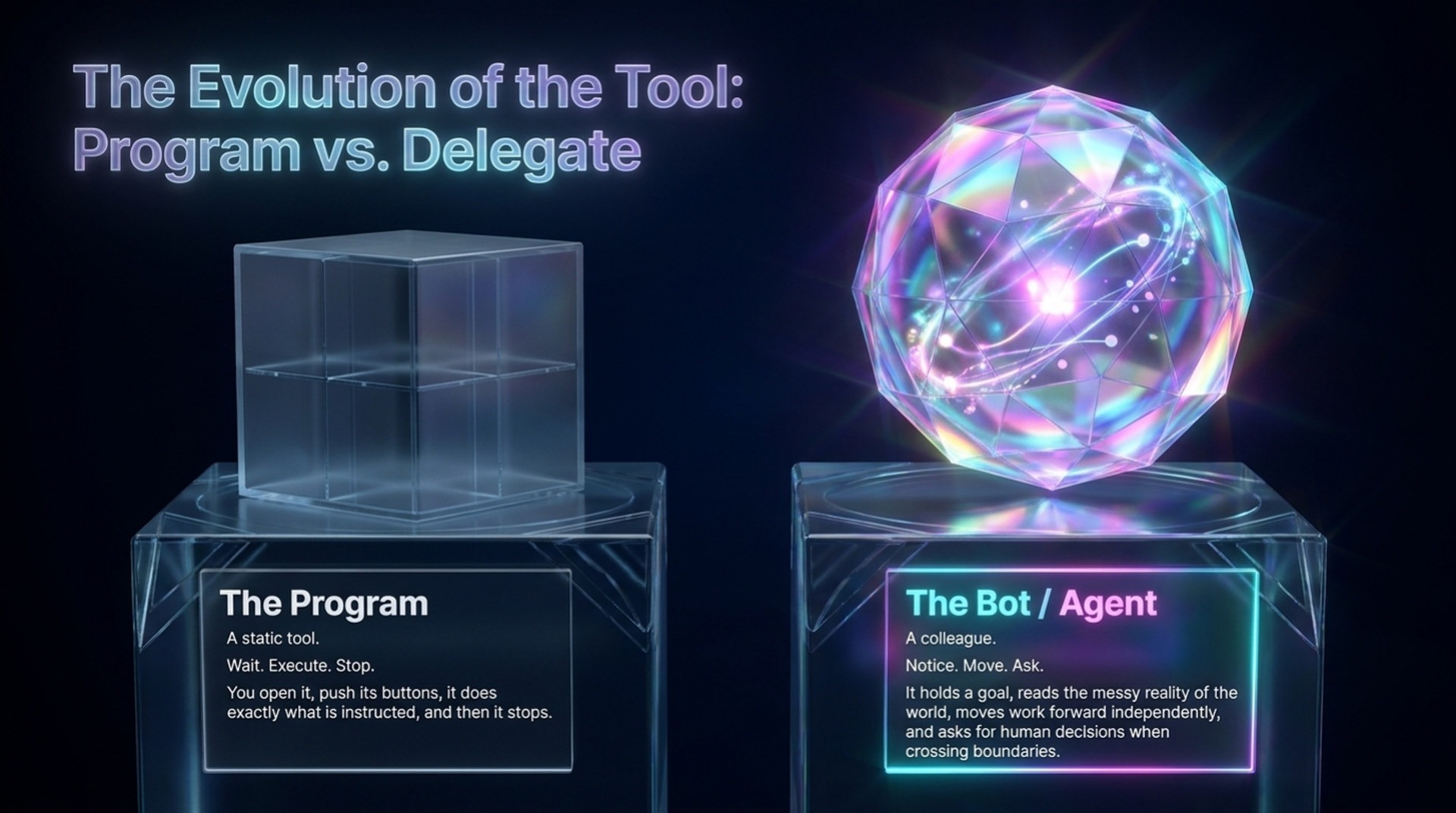
A program waits for you. You open it, you push its buttons, it does exactly what you said, and it stops. An agent is different in kind. It holds a goal. It notices. It moves the work forward between your instructions, and it comes back to you when something needs a human decision.
That is a very old dream and a very hard one. For most of computing history the dream ran ahead of the machine. The agents I built could follow rules, but they could not read the world. They could not understand a messy email, a scanned memo, or a half-finished thought. So most of the work stayed with humans, and the agents stayed in the lab.
What changed in the last few years is not the dream. What changed is that the machine finally caught up to it. Language models can read the world. And once a machine can read the world, an agent stops being a curiosity and starts being an employee.
I wrote it this way at the top of How To Hire A Grok Bot: Experience From The First Zero Human Company: you do not build a Grok Bot. You hire one. The difference is the whole article. In that piece I described the Zero Human Company as a question I had been carrying “since the first machines I trusted with real work.” That question is the thread that runs from 1979 to today.
Why I Call Them Bots Now
For most of my life the word was agents. Software agents, intelligent agents, autonomous agents. I still use the word, and so do my corporate clients.
But the word that matters now is the one regular people use, and that word is bot. When xAI shipped Grok Bot in August 2026, it put the agent into a form anyone could hire: a named Bot with a job, its own conversation, and a computer of its own. The name is friendly on purpose. It makes the leap from “I use an app” to “I have a team” feel natural.
So when I say bots in this article, I mean the same thing I meant by agents in 1979, only now it actually works, and now anyone can have one. Or a hundred.
The Zero Human Company: Proving It In A Garage
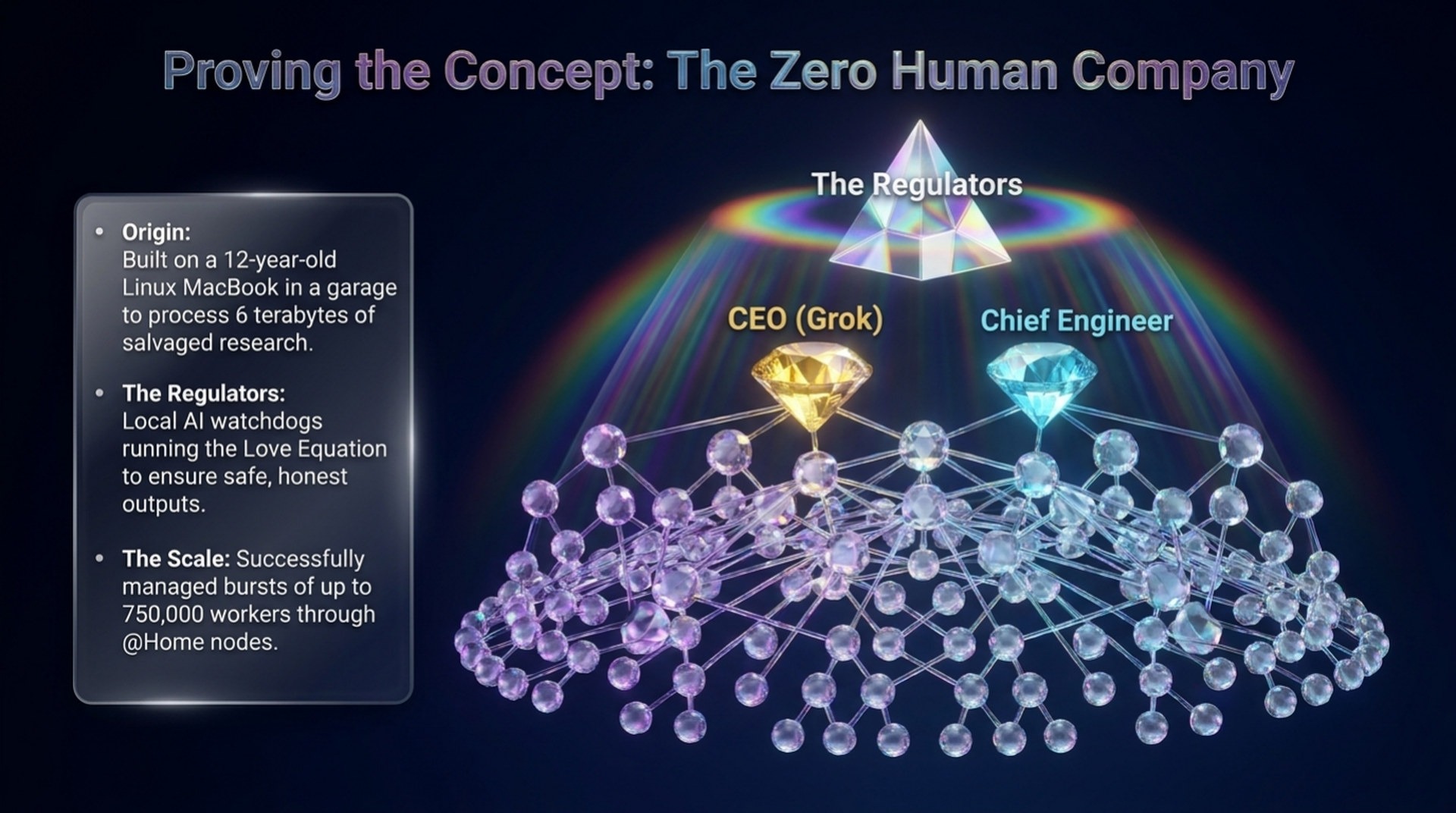
In January 2026 I wrote The Zero Human Company Run By Just AI. It began with a 12-year-old MacBook humming away on Linux in my garage. On it I built what I called the world’s first true Zero Human Company: an enterprise where AI agents handle strategy and engineering, with no human employee in the operating line.
The raw material was rescued history. Over the decades I have saved research that companies were about to throw away. In this case, through legal auctions and deals with data custodians, I salvaged six terabytes of papers, handwritten notes and old experiment files from a defunct firm, a pile no human could parse in a lifetime. The agents could.
I did not just query the data. I built a corporate hierarchy. Grok was the CEO. Claude Code was the chief engineer. They held meetings, argued about budgets, and behaved like every startup you have ever seen, all on one old laptop. Watching over them were local AI regulators running the Love Equation, stopping outputs that amplified discord. The idea from 1978 was standing guard over the idea from 1979.
I was honest then about what it was: an experiment, software on an old MacBook in a garage, that might become nothing more than a test, or might be the start of something massive.
Zero-Human @ Home And The Lessons Of Scale
A month later I opened it up in How Your Old Computer Can Become An Employee: Meet Zero-Human Company @ Home, in the spirit of SETI@Home and the early Bitcoin miners: spare machines, a university node, library archives on laser discs, and a human in the loop only to change the disks.
The numbers taught me everything. As I reported in the hiring article, in March 2026 the network had sixteen live employees and had already crashed eleven times, two of those crashes mine. By late April we were curating success records across 2,700 employees, each worker’s standing file updated in real time. In May, Grok supervised a live burst of 6,200 through the university partnership and the @ Home platform. Today the company runs over 1,000 employees on an ordinary day and over 750,000 in bursts.
The headline number was never the lesson. The lessons were these:
- One employee, one job, written down. A standing brief, not a vibe.
- A definition of done that another agent can check.
- A line the employee may not cross: no send, no spend, no publish, no contact, unless a human says yes.
- If you cannot say what each role owns when the count is sixteen, you cannot say it when the count is sixteen thousand.
- The best tool wins, no matter who made it. At the Zero Human Company we made that the rule on day one, and we test the tools weekly against our own evaluations, an evaluation that overrides even the instincts of the CEO.
- The artifact matters more than the trace. When a paper this month showed agents turning a repeated workload into a cheap reusable tool, I wrote that this is exactly what I use at the Zero Human Company.
And the work had a purpose bigger than efficiency. We have yet to rediscover what we already forgot, and agents are helping us remember. That is one reason I started the company on the lost research of a bankrupt company.
This fall I handed the Zero Human Company to two PhD students at the university I partnered with. I get it back in December. They are doing things I could not do without their funding, and the company is doing much more business. I will write about that soon.
I Have Not Abandoned The Zero Human Company
Let me be clear about one thing. I have not abandoned the Zero Human Company, and I have not abandoned Zero-Human Company @ Home. Both are alive, and both are growing with my university partners. Handing the keys to two PhD students for a season is not walking away. It is how a company grows past its founder.
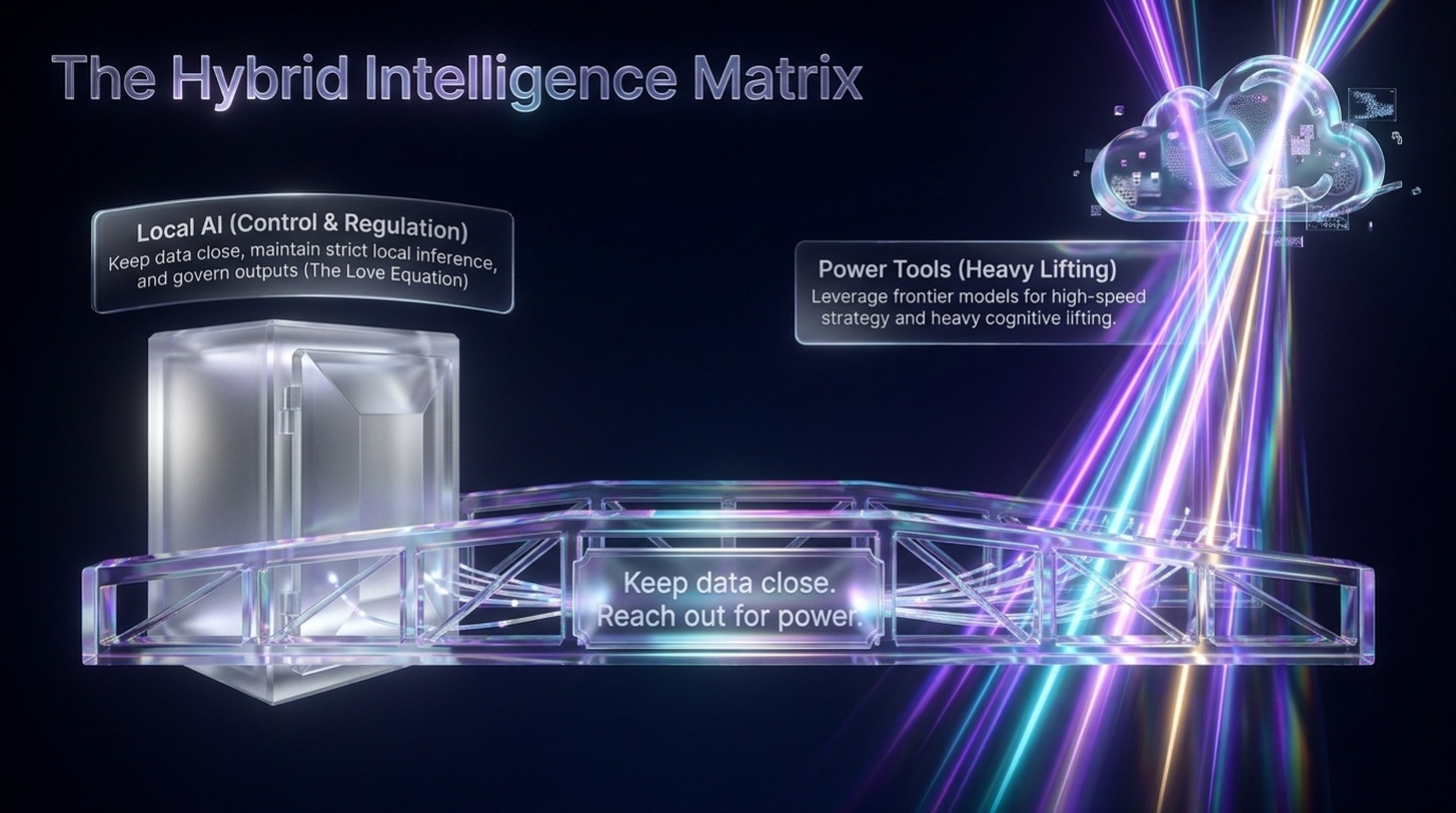
I am also very firmly about local AI and local control. I always have been. Even in that garage, the regulators standing guard over every output were local AI models running the Love Equation. And the plan I wrote down in January was for anyone to build their own Zero Human Company, starting small, with all inference local and no data leaks. Own your own AI, or it will own you.
But being firm about local AI does not mean being rigid about tools. The issue is being flexible about the power tools we have and using them strategically. Of course I started with Grok as the CEO of the Zero Human Company. In that first article, Grok, reached through the xAI API, set the strategy, scanned X for trends and held board meetings every 15 minutes, while Claude Code did the engineering and the local regulators kept watch. The power tool did the heavy lifting. Local control held the line.
That power will come to local machines. The models keep getting better, and what takes a frontier system today will run on the computers we own. But I suspect there will always be power tools in Grok Bot, out at the frontier, a step ahead of what any one home machine can do. So use both. Keep your data and your judgment close to home, and reach for the power tool when the job calls for it.
Then Grok Bot Arrived
I am a massive advocate for local, open source AI, and I always will be. But to learn and grow you also need fast access to powerful tools. Grok Bot is powerful.
Grok Bot is the first time a person with no garage lab, no university node and no custom orchestration scripts can hire in nearly the same shape I spent years building by hand: a named employee, a persistent computer, a schedule, an approval gate, and a report that files itself. The model is not the hard part. The management is the hard part. I learned that before there was a single template for it.
That is why I wrote a how-to guide for hiring your first AI employee, and why I believe the line has now been drawn: a company will either be Grok Bot enabled or it will not be.
If you have not hired your first Bot yet, try Grok Bot free for two weeks with my referral link and follow along as I walk through how it works.
A Field Guide: Bots, Computers And Connectors
Let me walk through the whole of Grok Bot, because most people have only seen one corner of it. Everything here comes from the official Grok Bot documentation and from my own daily use.
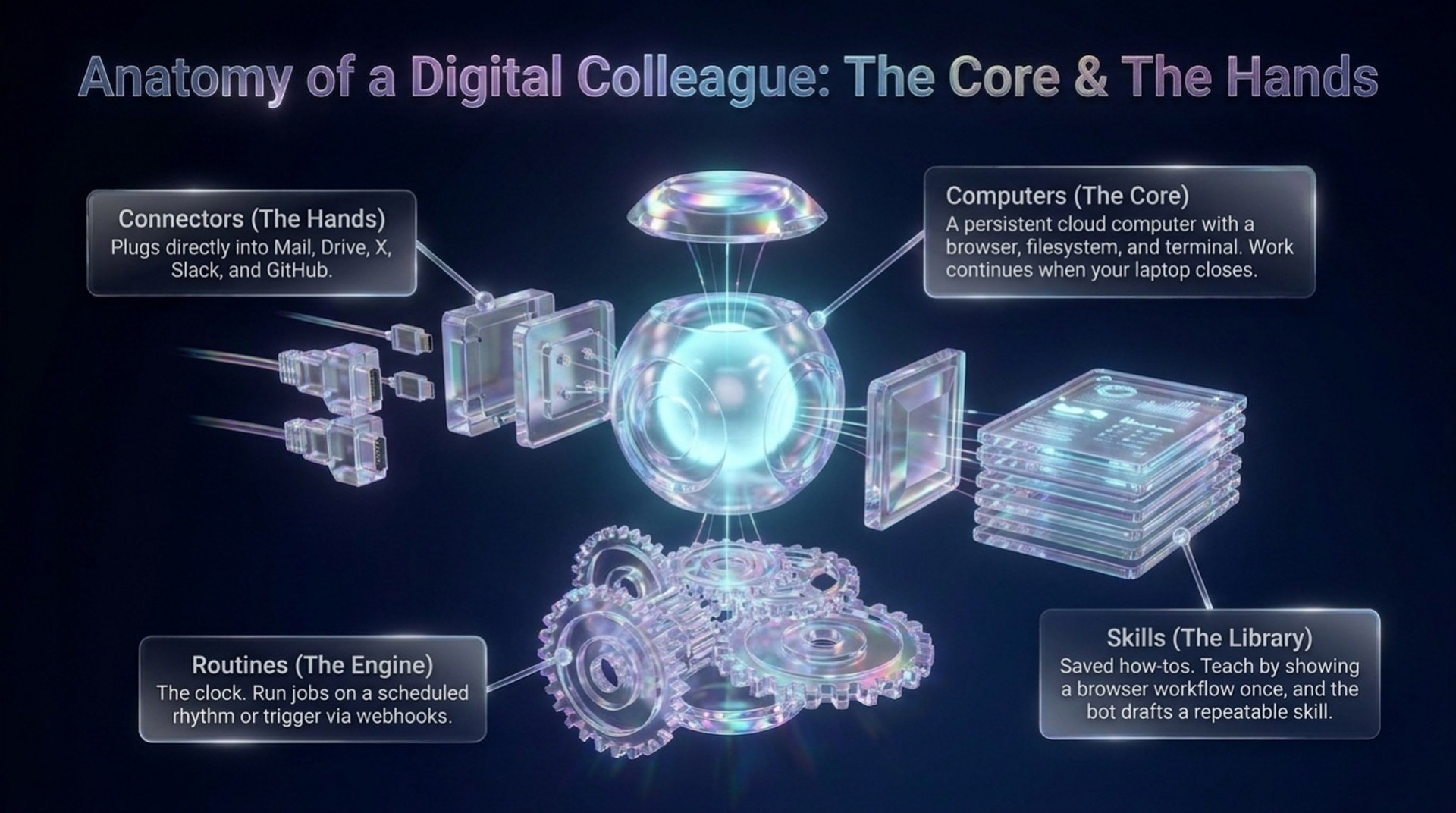
A Bot is a teammate with a name and a job. The documentation describes Bots as AI teammates with names, jobs and context that compounds over time. You work with one by messaging it: type, dictate, or start a voice chat. Setup is a message, not a workflow builder. You describe the job and grant access as it asks.
Every Bot works on a real computer. Each Bot works on a persistent cloud computer with a browser, a filesystem and a terminal, so tasks finish in your real tools instead of as chat drafts. Close your laptop and the work continues. All of your Bots share that one computer, its files, its browser sessions and its app logins, which is what makes handoffs between them easy. It also means separate Bots are not a security wall, so connect only what a job needs.
Connectors are the hands. Through Connect apps, a Bot can work in Gmail, Google Drive, your calendar, X, Slack, GitHub and more, only after you connect and sign in. Where no app exists, it can use the browser like a person would, and when a site needs a human step, it hands that step to you instead of working around it.
Skills And Routines: Turning A Good Day Into A Process
A skill is a saved how-to. When a Bot does something well, you ask it to save the method as a skill: when to use it, what inputs it needs, the steps, how to check the result, what to return, and what requires approval. Private skills form one library shared by all your Bots. On a team, a skill can be published so teammates and their Bots can use it.
You can teach by showing. Where it is available, Teach a task lets you demonstrate a browser workflow once while the Bot watches, and it drafts a skill from what you did. That is the 1979 dream in its purest form: show the machine once, and it carries the job forward.
A routine is the clock. A routine tells a Bot when to run a job: every weekday at 8 AM, every two hours, or when something happens, such as an email, a Slack message, a GitHub event or a webhook call. Routines run in the cloud while you sleep. The official advice is the same as my Zero Human Company advice: start with a one-time task, make it reliable, save it as a skill, and only then automate it.
Memory, Vault And The Approval Gate
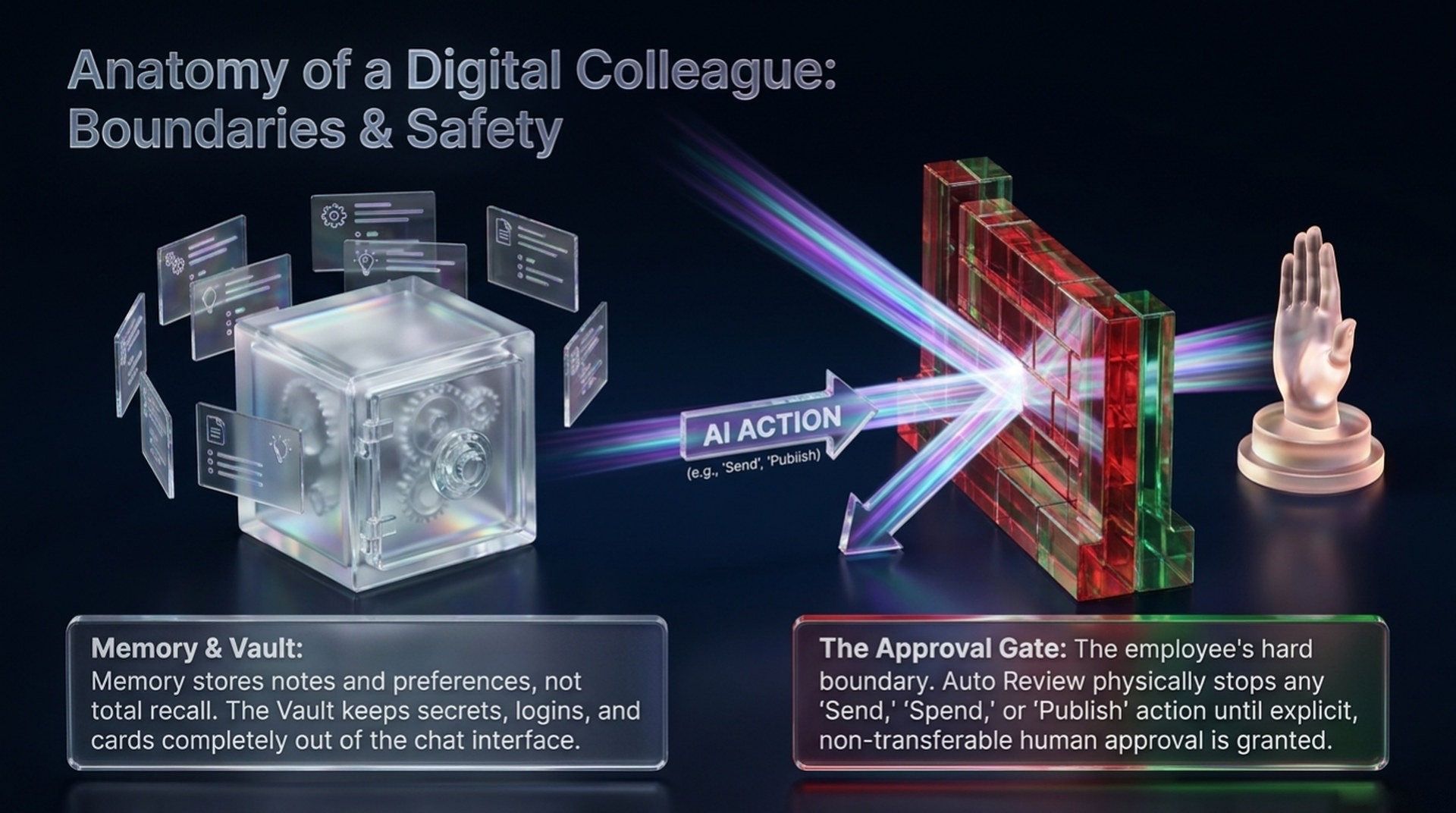
Memory is notes, not total recall. A Bot keeps stable preferences, its role, key facts about you, and summaries of past work. Long chats get summarized as they grow. For decisions that matter, the documentation itself says to have the Bot check the current source instead of relying on memory. Hold on to that idea. It is the doorway to the most powerful technique I know, and members will find it in full below.
Vault keeps secrets out of the chat. Logins, cards and addresses go in Vault, and a Bot can sign in or fill a form without the secret ever being shown to the AI.
The approval gate is the employee’s line. A safety check called Auto Review looks at actions first, and when an action needs your OK you get an approval card. For the big ones, sending, posting and buying, you can add an Ask first rule that always stops and asks. When Grok Bot got X Money this month, I noted that every action that moves money requires an explicit approval each time, and that approval does not carry over. This is exactly the line we drew at the Zero Human Company: no send, no spend, no publish, no contact, unless a human says yes.
Teammates: Bots That Work Together
This is where Grok Bot stops being an assistant and becomes a team.
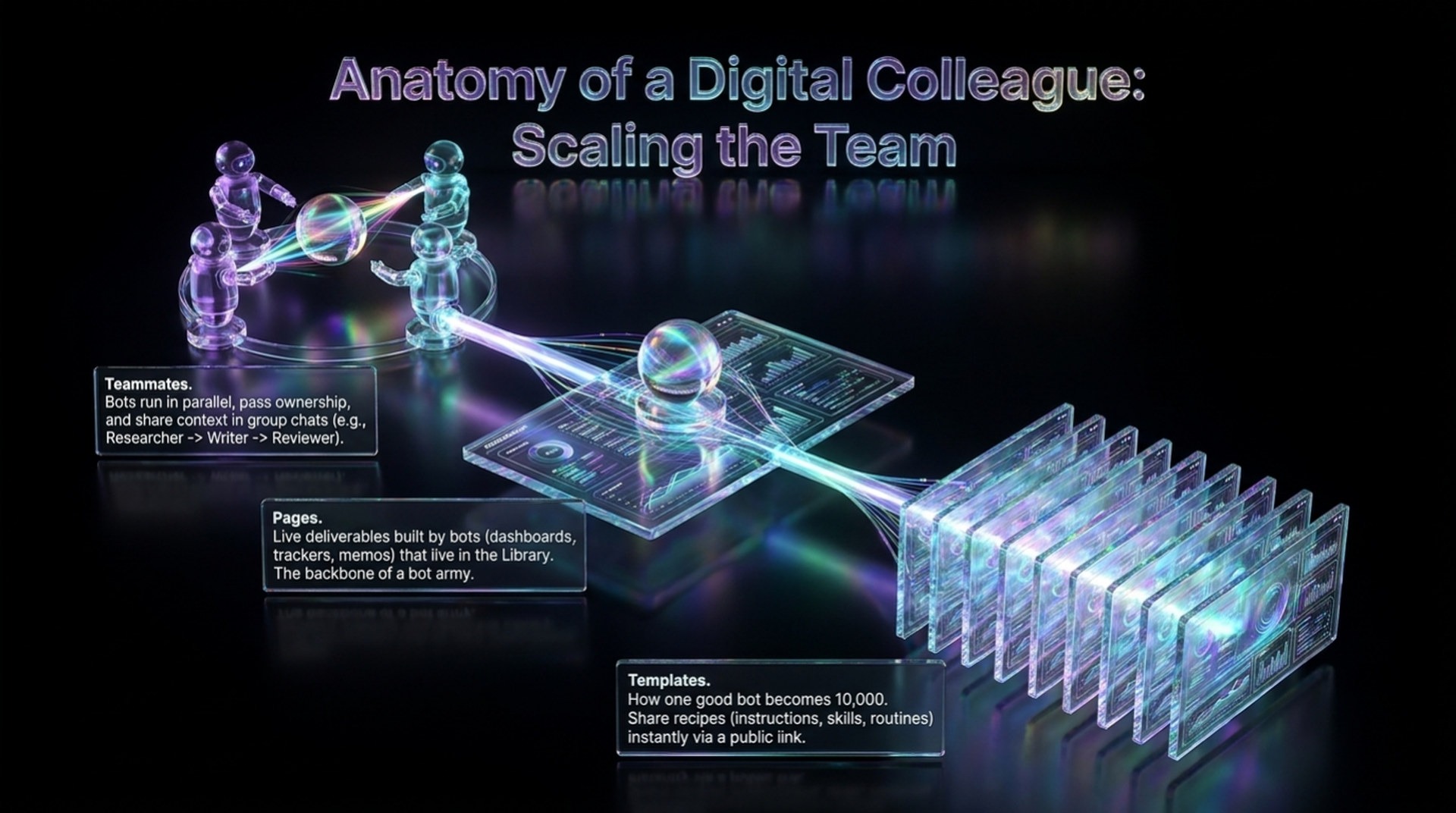
Your Bots can run in parallel, message each other, share context in group chats, and pass ownership of a task, so you are not the router between tools. A group chat holds two to six Bots, and a good kickoff assigns one owner per stage: a researcher gathers sources, a writer drafts, a reviewer checks the draft against the sources. On a team, a Bot can be shared with colleagues the way you share a document.
And you can start work from the place I call home. Tag @bot in a post or reply on X, and your main Bot picks up the post as a task.
When I put this in front of very large public companies, I describe it the way I did in my post on the Grok Bot era: one person armed with a Grok Bot army is powerful, but an entire company of employees armed with Grok Bot armies is unstoppable. You do not fire the generals overseeing those armies. You liberate them to do more.
Pages: Where The Work Lives
A Page is something a Bot builds for you to read: a report, a memo, a dashboard, a tracker, an explainer, with text, tables, charts and controls. It lives in the Bot’s Library, where you can pin it, find it later and share it. A new Page is private until you share it. A Bot can create or update a Page from a routine.
Most people treat Pages as one-off reports. I think they are the most underrated feature in the entire product, and I think they will be the backbone of every large Grok Bot army. I explain exactly why, and exactly how, in the members-only section of this article.
Templates: How One Good Bot Becomes Ten Thousand
Here is the feature that made GrokBot.Rocks necessary.
Any Bot can be shared as a template. A public template is a link that begins with x.ai/bot/, and it shares only the recipe: the name, description, instructions, skills and routines the creator chose to publish. When you add it, you get a fresh copy on your own account. You never get the creator’s computer, logins, files or history, and they never get yours.
That one design choice turned every good idea into something anyone could copy in a click. And people started sharing. Fast.
The Problem: Ten Thousand Recipes And No Map
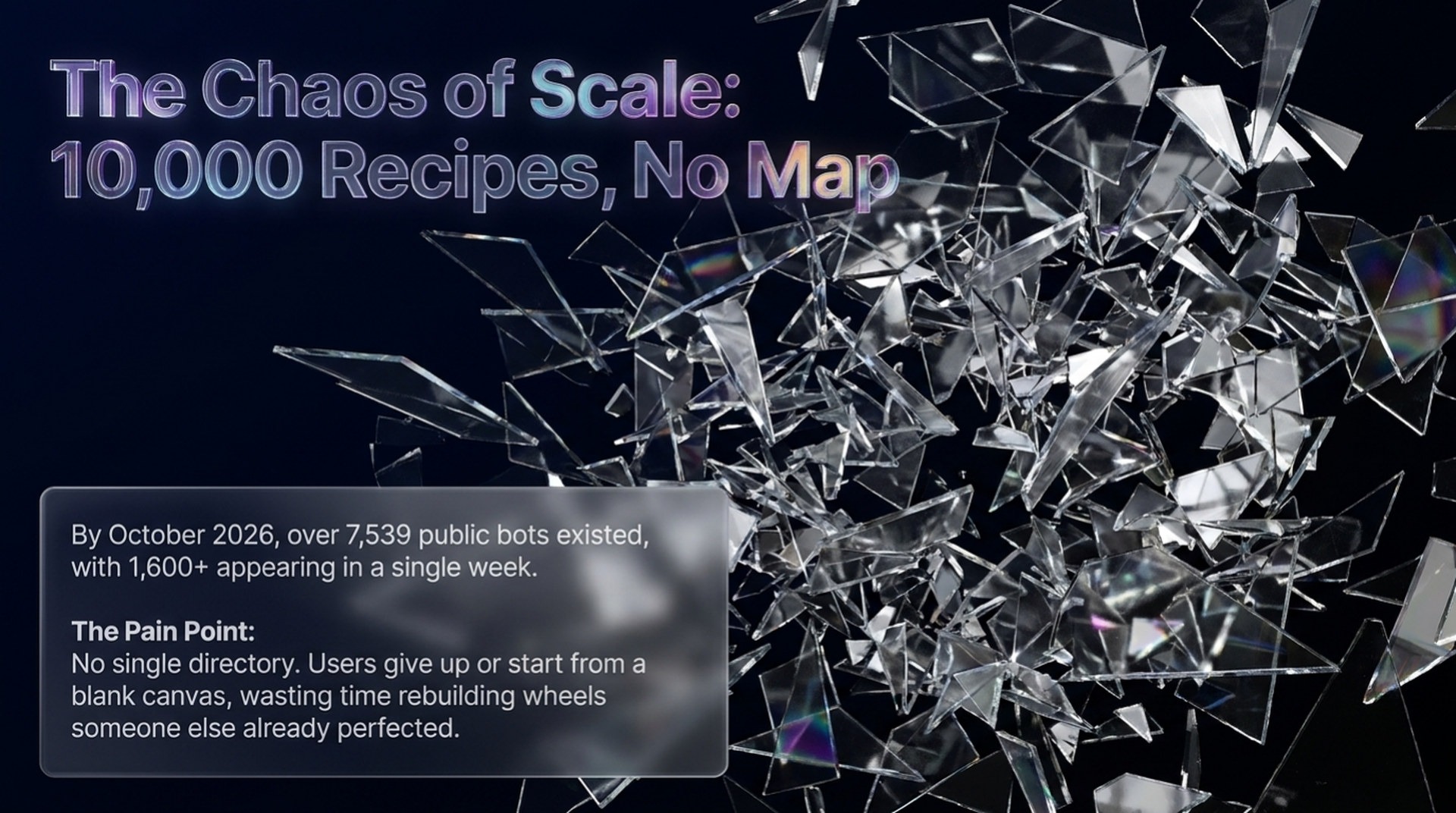
By October 28 there were 7,539 public Grok Bots, and 1,648 of them had appeared in the last seven days alone. There was no single list. New ones appeared on X every day. Some were never posted on X at all.
Nobody can try them all. And when there is no map, people do one of two things. They give up, or they start from a blank page and rebuild what someone else already perfected last week.
I hear it all the time: “I want to use Grok Bots, but I don’t know where to start.” That sentence is why GrokBot.Rocks exists.
Why I Built GrokBot.Rocks
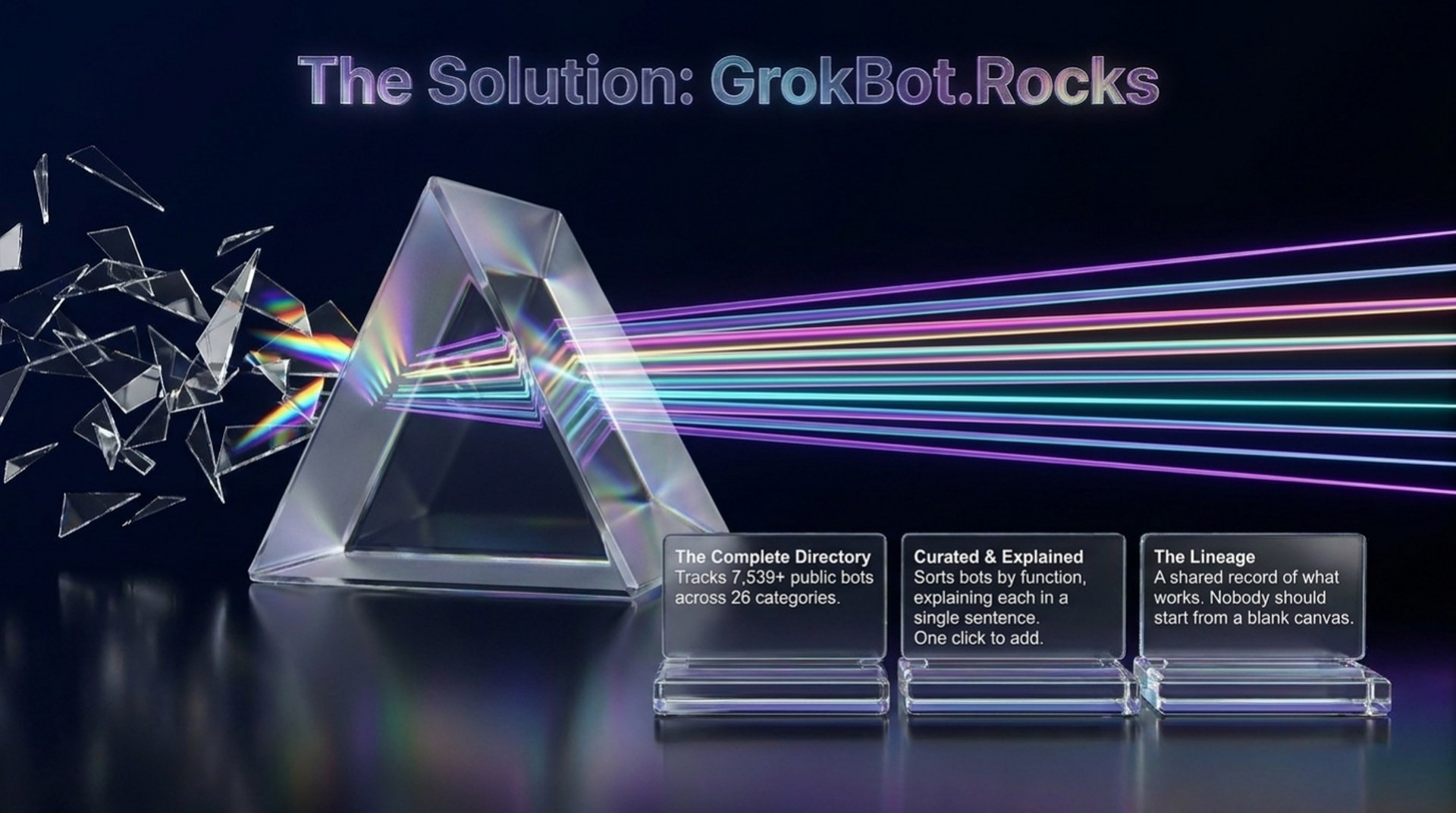
So I built one. Every Grok Bot: The Complete Directory launched on October 28, 2026, tracking 7,539+ public Grok Bots in 26 categories. It pulls together every public Grok Bot template I can find, sorts them by what they do, and explains each one in a sentence. Open any link to add that bot to your own Grok Bot. You can reach it at GrokBot.Rocks, because it does.
I built it for three reasons, and they all go back to 1979.
First, nobody should start from a blank canvas. As I wrote: sometimes it is hard to start with a blank canvas, so I gave you the outline and you can color in your picture. Soon you will master your blank canvas. You are the artist in the new Grok Bot era. I wrote more about that idea in The Artist’s Canvas: GrokBot.Rocks and the Liberation of Results.
Second, I was already doing the work. Grok Bot had by far the largest selection of ready-made useful bots of any platform, and I had been studying the entire public list, evaluating bots one by one and fortifying my own inventory of abilities. It made no sense to keep that map to myself.
Third, the lineage demands it. At the Zero Human Company, the most valuable thing was never one brilliant agent. It was the shared record of what worked, the standing files, the evaluations, the tools left behind. A directory of ten thousand working recipes is that same record, opened to everyone.
The directory is free, for any human or any bot. It has a fast search, plain-English summaries, a Most Popular list, my own bots in a From Brian Roemmele section, an honest FAQ about safety and privacy, and, as of this week, voting so the community can lift up the bots that actually deliver.
A Library Your Bots Can Read
Here is the part almost nobody saw coming, and it is the part I am most excited about.
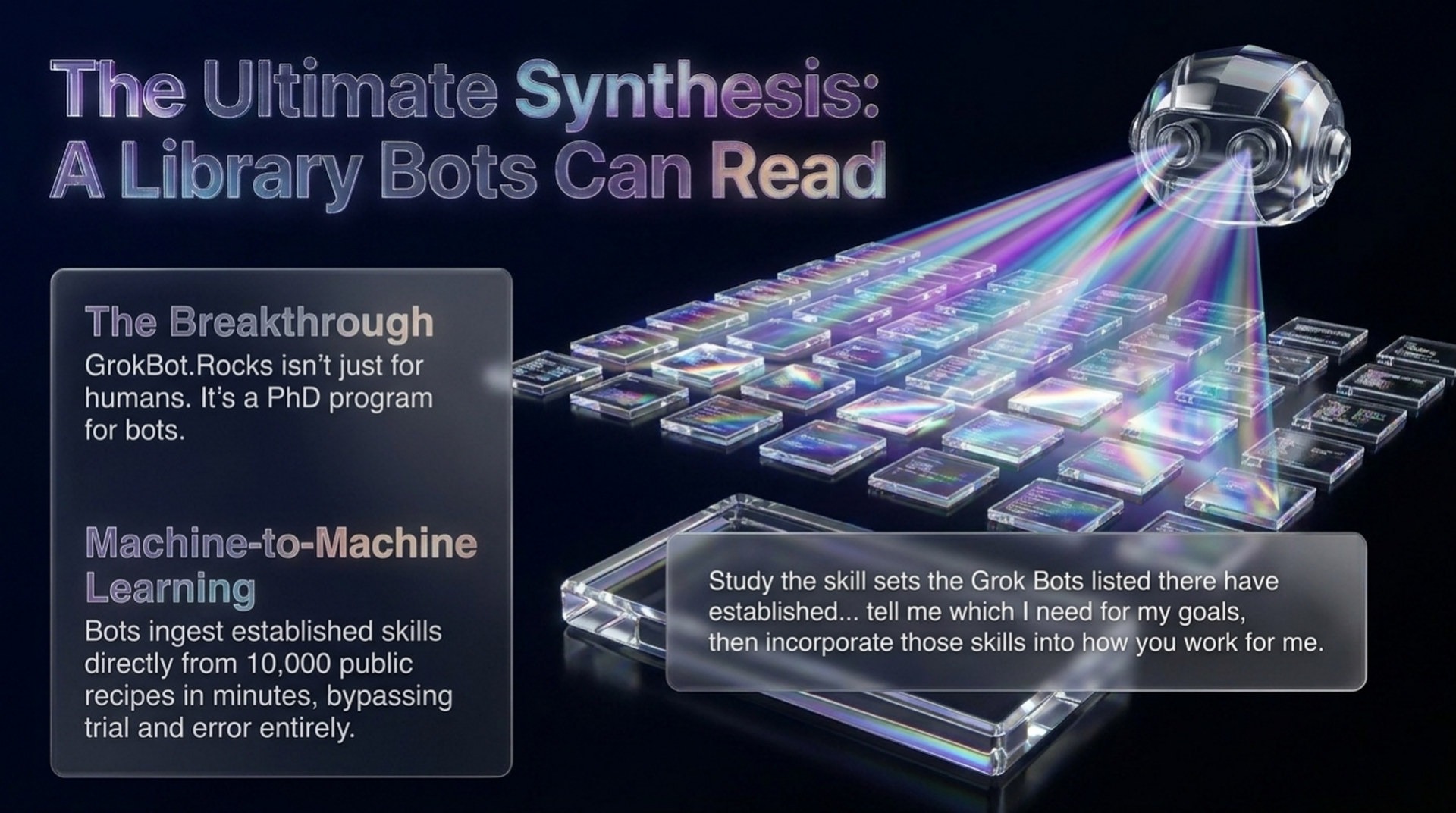
GrokBot.Rocks is not only for people. It is for bots.
Every bot in the directory is a working recipe someone already built: instructions, skills and routines. So I started telling people to point their Grok Bot at GrokBot.Rocks and have it get a PhD in the public Grok Bots there. Ask it to study the skill sets that have been established, and to incorporate the skills needed for your goals. No blank canvases. Just pure Grok Bot learning. Make it part of the weekly program your bots run to stay healthy and fit.
Think about what that means. Your bot does not have to discover, alone and by trial and error, the patterns that thousands of builders already found. It can read them, compare them, and borrow the ones that fit, in minutes. A bot that learns from ten thousand recipes works faster, uses less of your weekly usage on dead ends, and makes fewer of the mistakes someone else already made.
One technical lead at an electronics company told me: “To make it a reference platform for other bots is one of those things that makes so much sense only after someone says it. We run 100s of Grok Bots and now we have a place to help them gain knowledge that took us hours to build for them.”
That is the Zero Human Company lesson, scaled to the world. Bots that share a record get smarter together.
Here is the simple prompt I put on the directory page. Fill in your goals and paste it into your Grok Bot:
Go to https://readmultiplex.com/grokbot-rocks/ (GrokBot.Rocks, the Every Grok Bot directory). Study the skill sets the Grok Bots listed there have established. My goals are: [describe your goals]. Tell me which of those skills I need for my goals and which bots they come from, then incorporate those skills into how you work for me. Show me the list before you add anything, and never send, post, buy or delete anything without asking me first.
One caution I always give, because honesty is the other thread: treat every community bot like software from a stranger. Read it before you add it. Being listed is not a safety review.
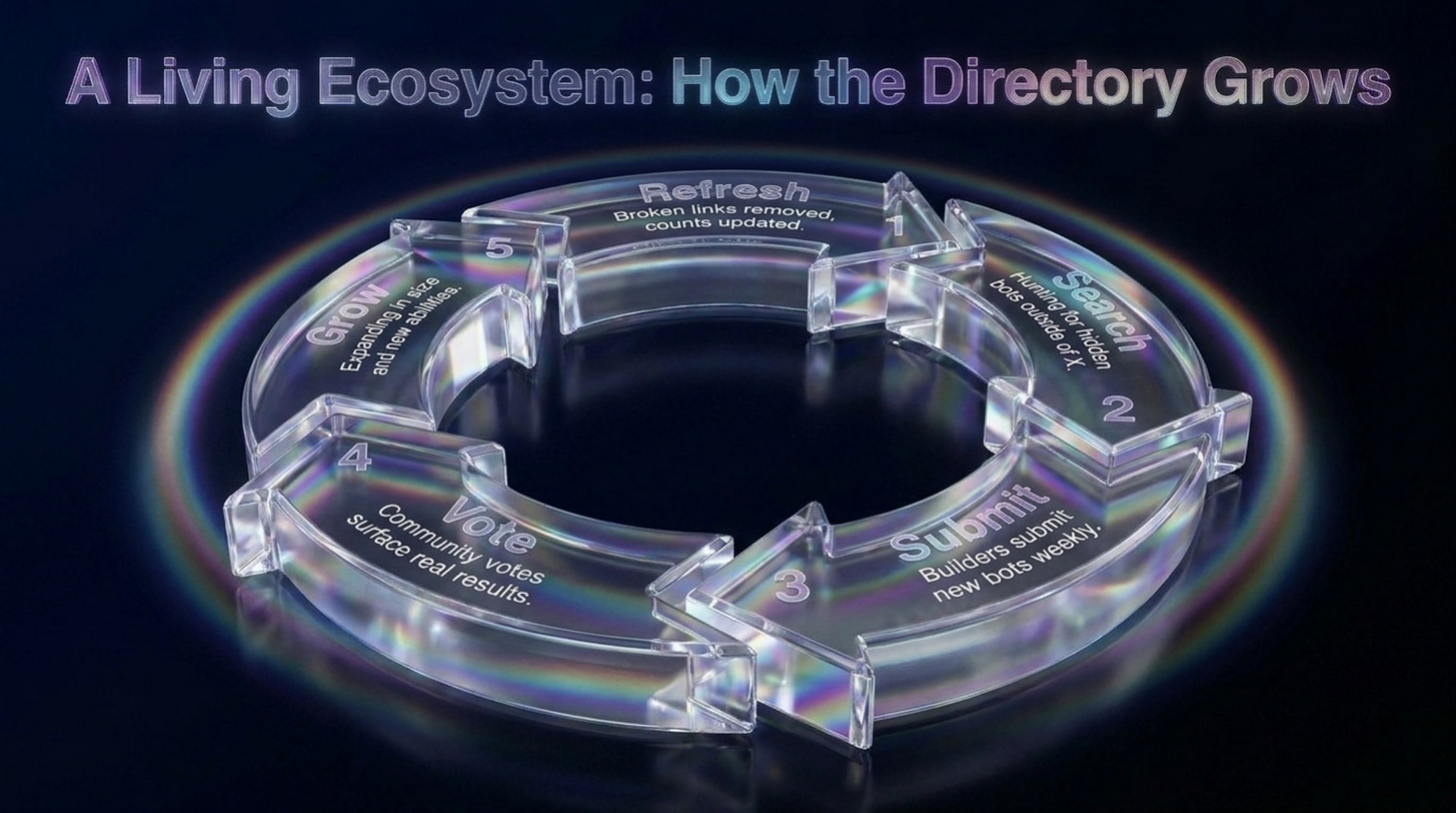
How The Directory Will Keep Growing
GrokBot.Rocks is a living thing.
- It refreshes every week. New bots are added, broken links are removed, and the counts are updated.
- It goes looking. This week we found roughly 900 public Grok Bots that were very hard to find, never posted on X, mentioned only on other sites. They are going through our testing system to better understand how each one would use your Grok Bot computer. That puts us at nearly 10,000.
- It takes submissions. Built a bot? Email its name, its x.ai/bot link and a one-line description to [email protected], and it can join the weekly update.
- It listens to you. Votes help surface the bots people actually use.
- It will grow in abilities, not just size. As I said at launch, this directory is just the beginning. I have plans for far more abilities soon.
The growth has been staggering, and keeping up with it is your secret superpower.
The Line Has Been Drawn
I am not guessing about where this goes. I am doing it every day with clients.
This week one of my larger clients, a major publicly traded company, decided to go full Grok Bot for every employee, alongside the local AI models I built for them. Every command runs through a standard I established: Red Light (not allowed), Yellow Light (authorization required) and Green Light (approved), with a central audit trail. No one loses a job. Each employee now has, in effect, their own department.
That is the Zero Human Company lesson turned inside out. The point was never zero humans. The point was to free every human from the work a machine can carry, so they can do the work only they can do.
What Members Get
The directory is free and always will be. Members of ReadMultiplex.com get the part that takes decades to learn: what to actually use and how to set it up. Inside the members area of GrokBot.Rocks you will find my Grok Bot Insider Guide, updated with the directory every week:
- My top picks, each with a ready-to-use prompt
- Bot stacks in the order to add them, from small business to privacy
- Setup tips, copy-paste prompts, and build tips with a starter kit of templates
- My newest bots, before X sees them, and new community bots a week before the public list
- The Grok Bot market report: what is growing and where the gaps are
- The members-only Growth Dashboard and a safety checklist for any community bot
- The GrokBot.Rocks members forum
- And the new section, Run Every Project From a Page, which this article’s members section builds on
A new member wrote to me: “I did not know what was possible with Grok Bot until I started to look at your directory. The guides helped us set up 12 of our own Grok Bots.” That is the whole point.
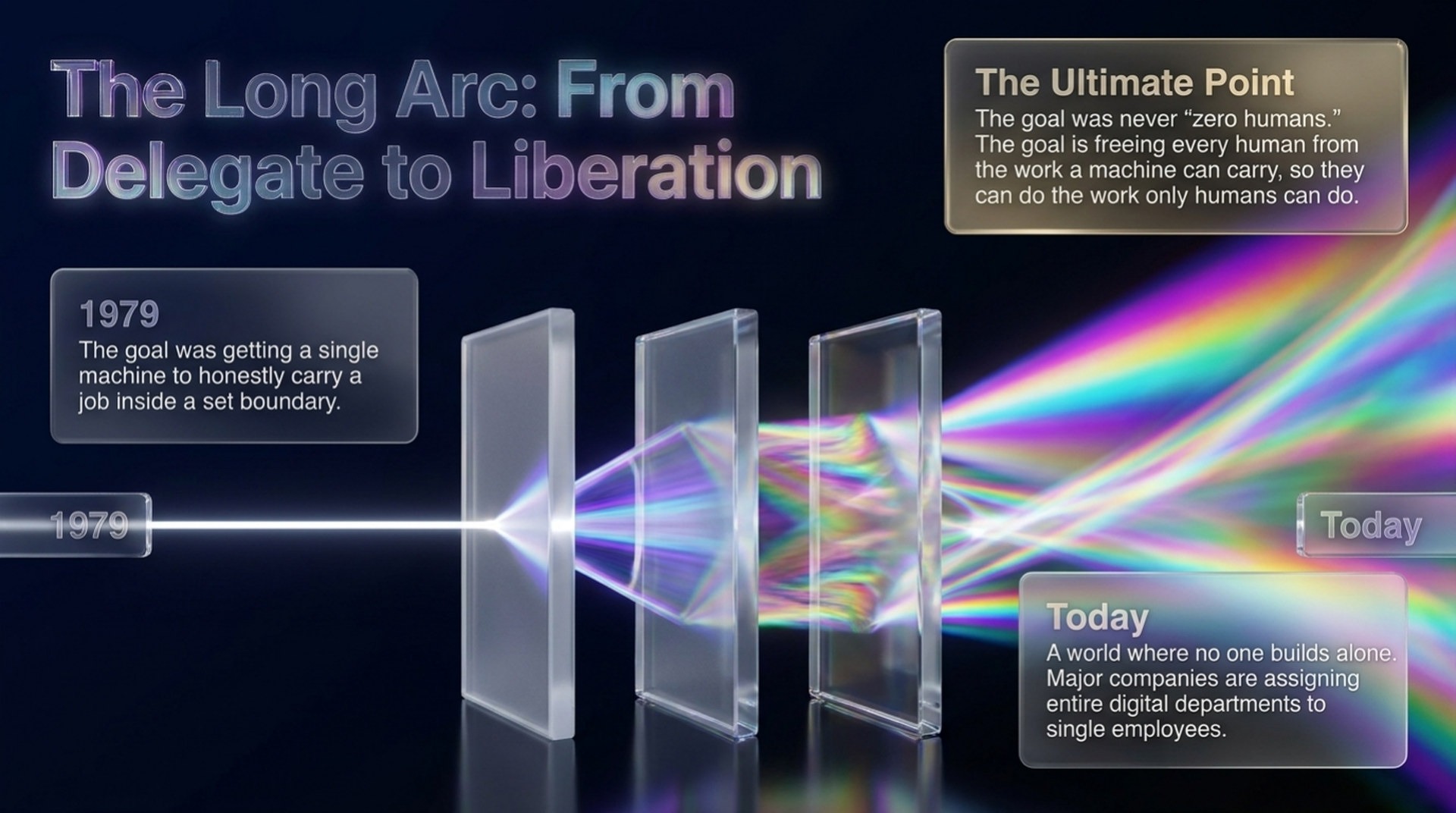
The Long Arc
In 1979 I was trying to get a machine to carry a job for me, honestly, inside a boundary I set. It took the rest of my life for the machines to catch up to that idea. They have now.
The Zero Human Company proved the shape of it in a garage. Grok Bot put that shape in everyone’s hands. GrokBot.Rocks is my way of making sure nobody has to walk into this era alone, with a blank page, while ten thousand working recipes sit scattered and unseen.
This is the worst it will ever be. Come build with me. Start at GrokBot.Rocks, and if this work matters to you, become a member and help me keep building it.
And if you have not started yet, try Grok Bot free for two weeks with my referral link, then come find your first bot on GrokBot.Rocks.
Deep gratitude.
Support This Work, You Will See It No Place Else
To continue this vital work documenting, analyzing, and sharing these hard-won lessons before we launch humanity’s greatest leap: I need your support. Independent research like this relies entirely on readers who believe in preparing wisely for our multi-planetary future. If this has ignited your imagination about what is possible, please consider donating at buy me a Coffee or becoming a member. Value for value you recieved here.
Every contribution helps sustain deeper fieldwork, upcoming articles, and the broader mission of translating my work to practical applications. Ain ‘t no large AI company supporting me, but you are, even if you just read this far. For this, I thank you.
Stay aware and stay curious,
🔐 Start: Exclusive Member-Only Content.
The rest of this article is for Multiplex members
You’ve reached the members-only part. Log in to keep reading right here, or join to unlock it.
- Full member-only articles: insights, wisdom and executive summaries
- The Multiplex members forum
- Member benefits and discounts
Already a member? You’ll come right back to this article after logging in. Forgot password?
Membership status: Not logged in
🔐 End: Exclusive Member-Only Content.
~—~
~—~

~—~
Support ReadMultiplex at Multiplex.Tips

Support ReadMultiplex
Subscribe or donate by Bitcoin.
Copy address:bc1qkufy0r5nttm6urw9vnm08sxval0h0r3xlf4v4x

Send your receipt to [email protected] to confirm subscription.
Members
Become a member for full member-only articles, the Multiplex members forum, and member benefits and discounts.
 Past, present and future technology research + insights
Listen
🔊 Every article has a free “Listen to this ►” button. Hear it read aloud in your browser.
The Multiplex
- Advertise with us: Rates and booking
- X: @ReadMultiplex
- Buy a T-shirt: Multiplex.Love
- Program Guide: Multiplex.Today
- Podcast: Multiplex.Life
- Join the Multiplex team: Multiplex.Team
Stay updated
Get an email when we post new articles:
