
The Artist’s Canvas: GrokBot.Rocks and the Liberation of Results
I have watched three revolutions reorder the way the world works. Each time, a cohort of capable people was left behind, not because they lacked skill, but because they loved the sequence of their work more than its results. The fourth revolution is here.
They fell in love with the process of their work and not the results. Every great shift in computing has left that cohort behind. The Grok Bot shift is happening now, and it is moving faster than any I have seen.
I Have Watched This Happen Before
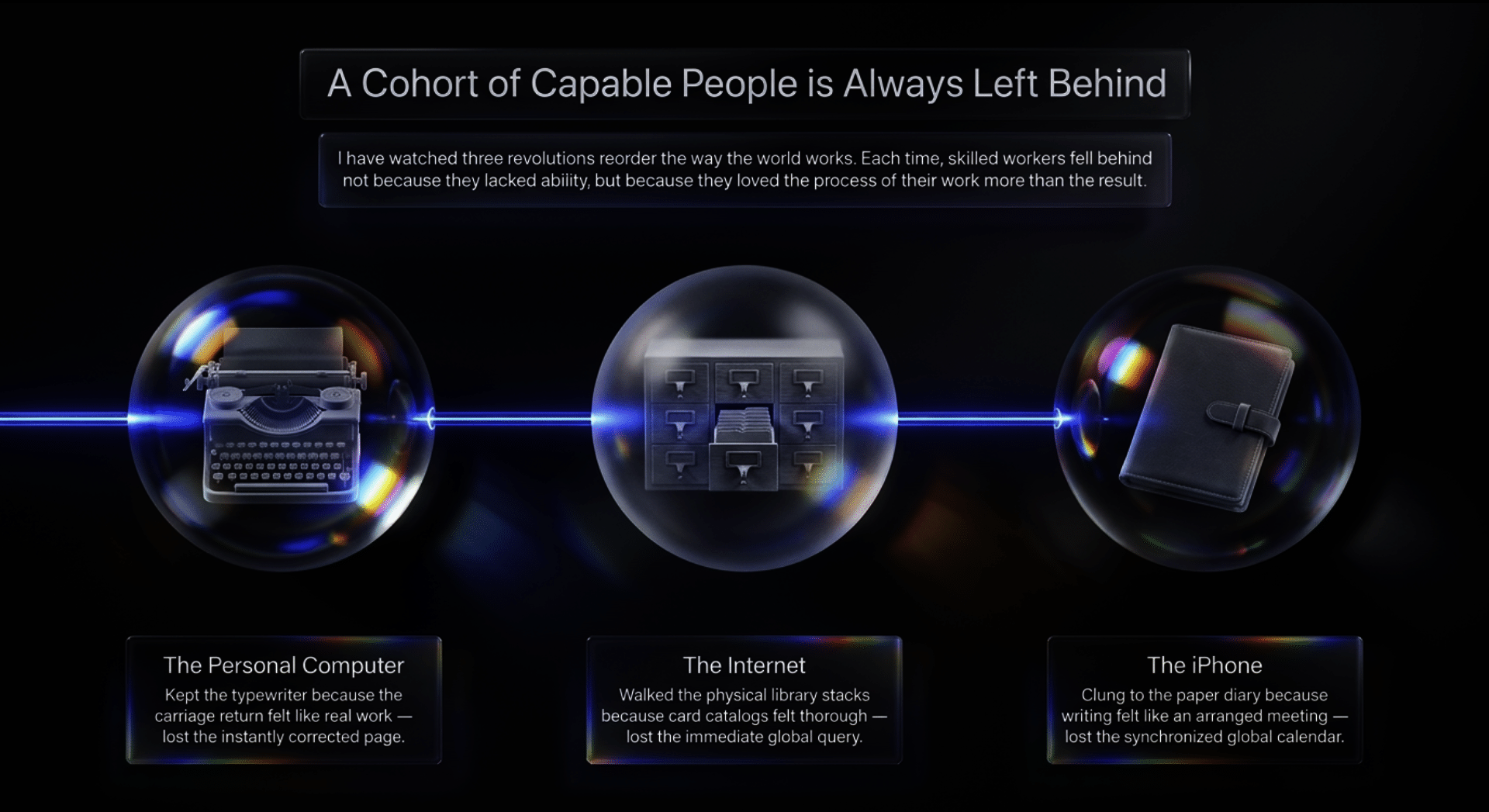
I watched the Personal Computer reorder the desks of the world. People who once typed on typewriters or wrote by hand moved to word processors that corrected spelling and moved paragraphs with a keystroke. The results arrived faster and with fewer errors. A group of skilled workers kept the old sequence anyway, because the feel of the keys and the sound of the carriage return still matched the work they recognized.
This article is sponsored by Read Multiplex Members who subscribe here to support my work: Link: https://readmultiplex.com/join-us-become-a-member/
It is also sponsored by many who have donated a “Cup of Coffee”. If you like this, help support my work: Link: https://ko-fi.com/brianroemmele
Listen to the companion podcast: https://rss.com/podcasts/readmultiplex-com-podcast/3278751
The Internet then placed libraries and catalogs on a screen that anyone could query. Research that once required a trip and a stack of indexes finished in minutes. Some researchers kept walking the stacks, because the physical volume and the card catalog confirmed the thoroughness they expected.
The iPhone put the calendar, the camera, the map, and the message box in one device that fit in a pocket. Meetings that once needed a phone call and a paper diary became entries that updated across every device. Some managers kept the paper diary, because the act of writing the time and place still felt like the meeting had been arranged.
Each time the sequence improved, a cohort of capable people stayed with the methods they already knew. They fell in love with the process of their work and not the results.
The Sequence and the Result
This is not a new story. It is the oldest story in the history of tools, and it always has the same two characters: the sequence, which is the chain of mechanical steps between an idea and a finished thing, and the result, which is the finished thing itself.
For centuries, type was set by hand, one letter at a time, by skilled compositors. In the 1880s Ottmar Mergenthaler’s Linotype machine cast whole lines of type from a keyboard, and a single operator could set type several times faster than a hand compositor. Newspapers grew because the sequence got shorter. A century later, in 1985, the Apple LaserWriter, Adobe PostScript, and Aldus PageMaker arrived within months of each other, and Aldus founder Paul Brainerd gave the shift its name: desktop publishing. Typesetting houses that had defined the craft for generations watched a single person at a single desk produce a finished page. The skill that survived was not the setting of type. It was the eye that knew what a good page looked like.
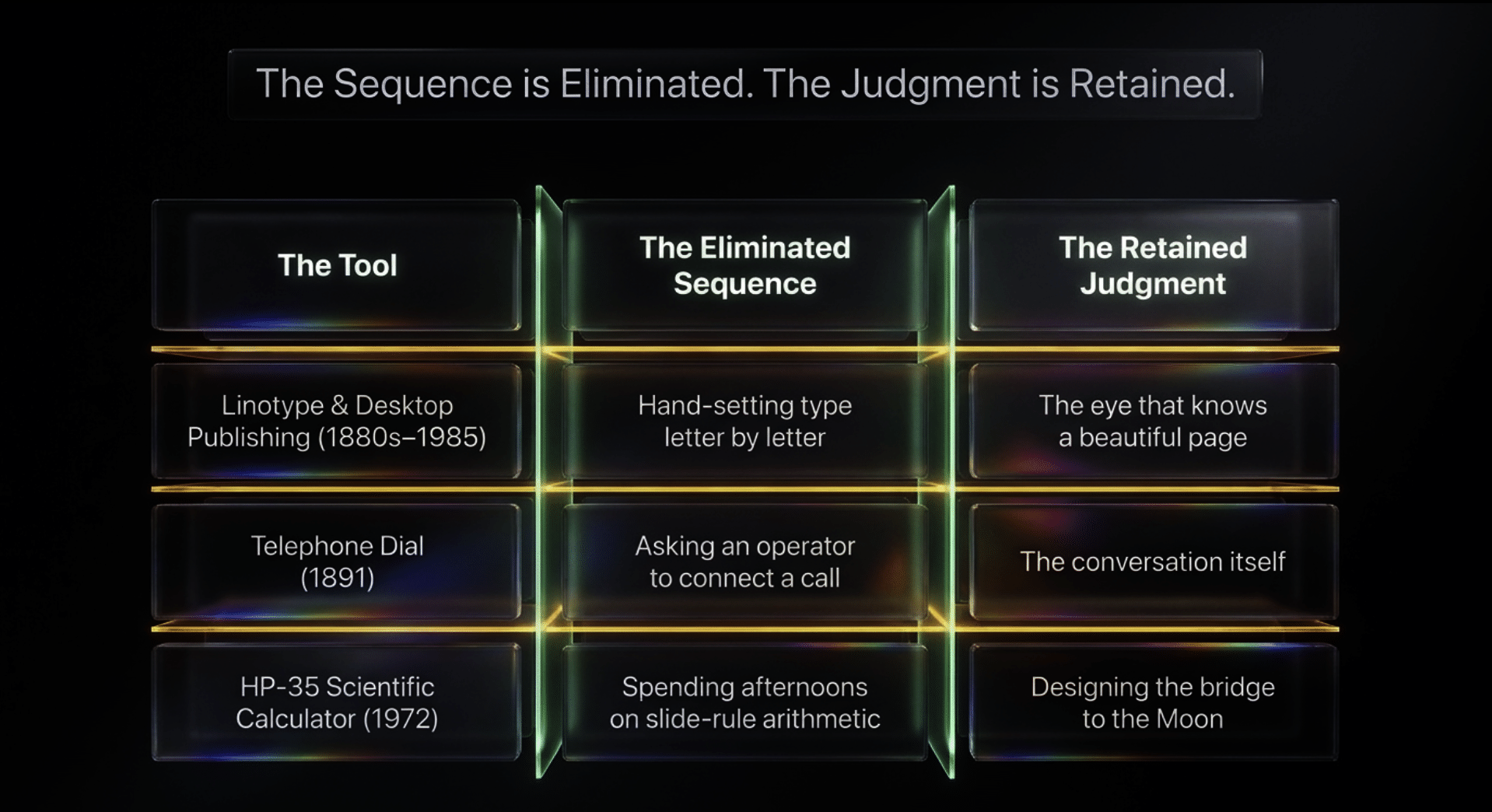
The telephone switchboard once required a human operator to connect every call by hand. Almon Strowger, a Kansas City undertaker, patented an automatic exchange in 1891. The story goes that he was convinced a local operator was sending his calls to a competitor. Whatever his motive, the dial removed the sequence of asking a person to make the connection. The conversation, which was always the point, remained.
Engineers carried slide rules for most of the twentieth century. The slide rule went to the Moon on Apollo. Then in 1972 Hewlett-Packard introduced the HP-35, a scientific calculator that fit in a shirt pocket, and within a few years Keuffel & Esser, the great American slide rule maker, stopped making them. The engineer did not disappear. The engineer stopped spending the afternoon on the arithmetic.
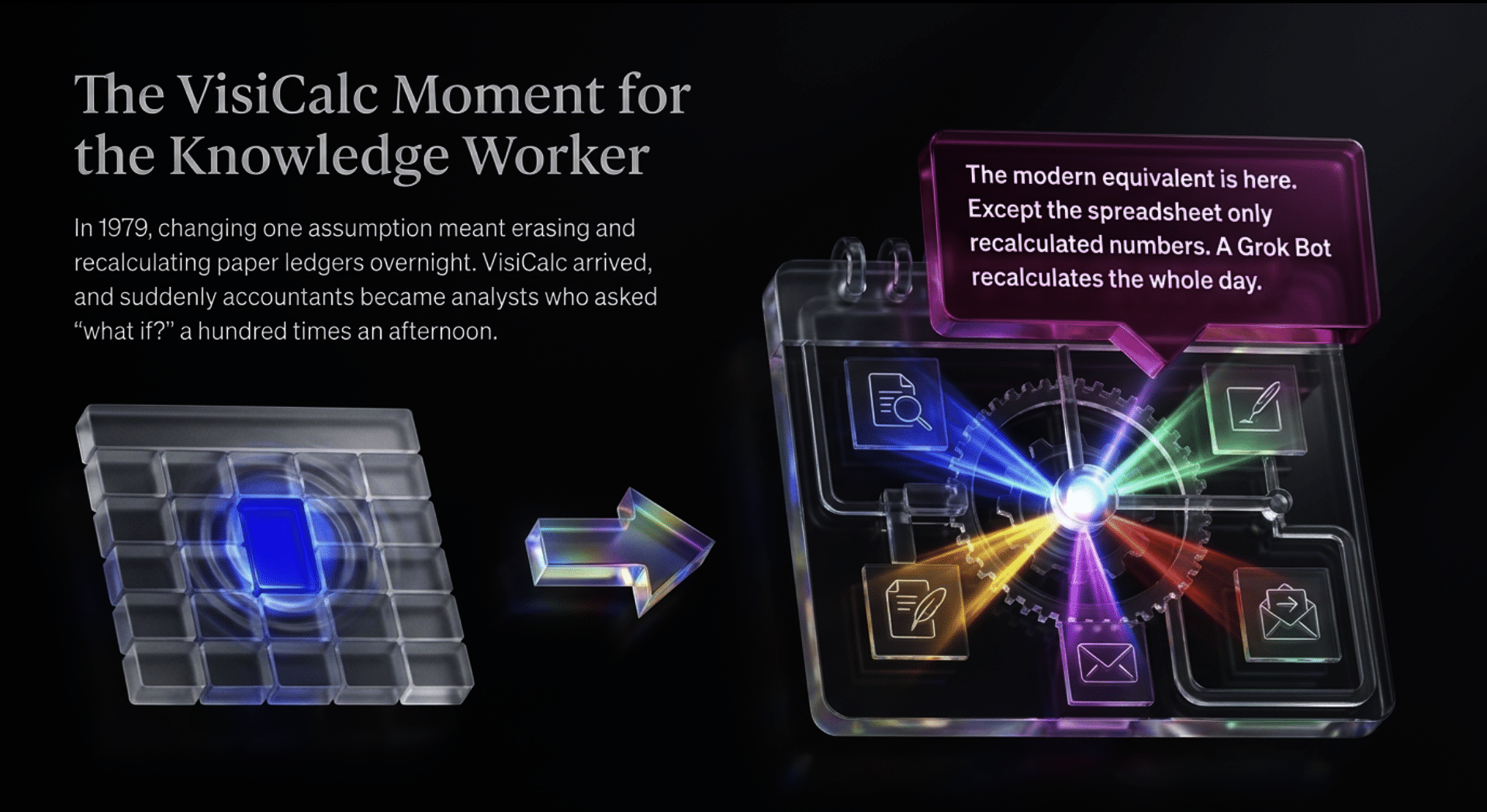
And then there is the shift I come back to most. In 1979 Dan Bricklin and Bob Frankston released VisiCalc for the Apple II. Before VisiCalc, a financial model lived on paper ledger sheets, and changing one assumption meant erasing and recalculating every cell that depended on it, often by hand, often overnight. After VisiCalc, you changed the number and the whole sheet answered. People bought an Apple II just to run it. Accountants who had been human recalculation engines became analysts who asked “what if?” a hundred times in an afternoon. I wrote about this in Grok Bot Is The Most Important Business Tool Of The Last 100 Years, because VisiCalc is the closest precedent I know for what is happening now.
Look at the pattern. The Personal Computer did not require anyone to abandon judgment. It removed the mechanical steps that sat between the idea and the finished page. The Internet did not require anyone to abandon sources. It removed the walking and the sorting that sat between the question and the answer. The iPhone did not require anyone to abandon the meeting. It removed the calls and the notes that sat between the decision and the calendar entry. Desktop publishing did not abandon the beautiful page. The dial did not abandon the conversation. The calculator did not abandon the bridge. The spreadsheet did not abandon the forecast.
Those who switched applied the same judgment to more finished work. Those who kept the old sequence applied the same judgment to less.
The Grok Bot Moment
The same pattern is visible right now with Grok Bots, and I said so plainly on X today: we are in the Grok Bot era.
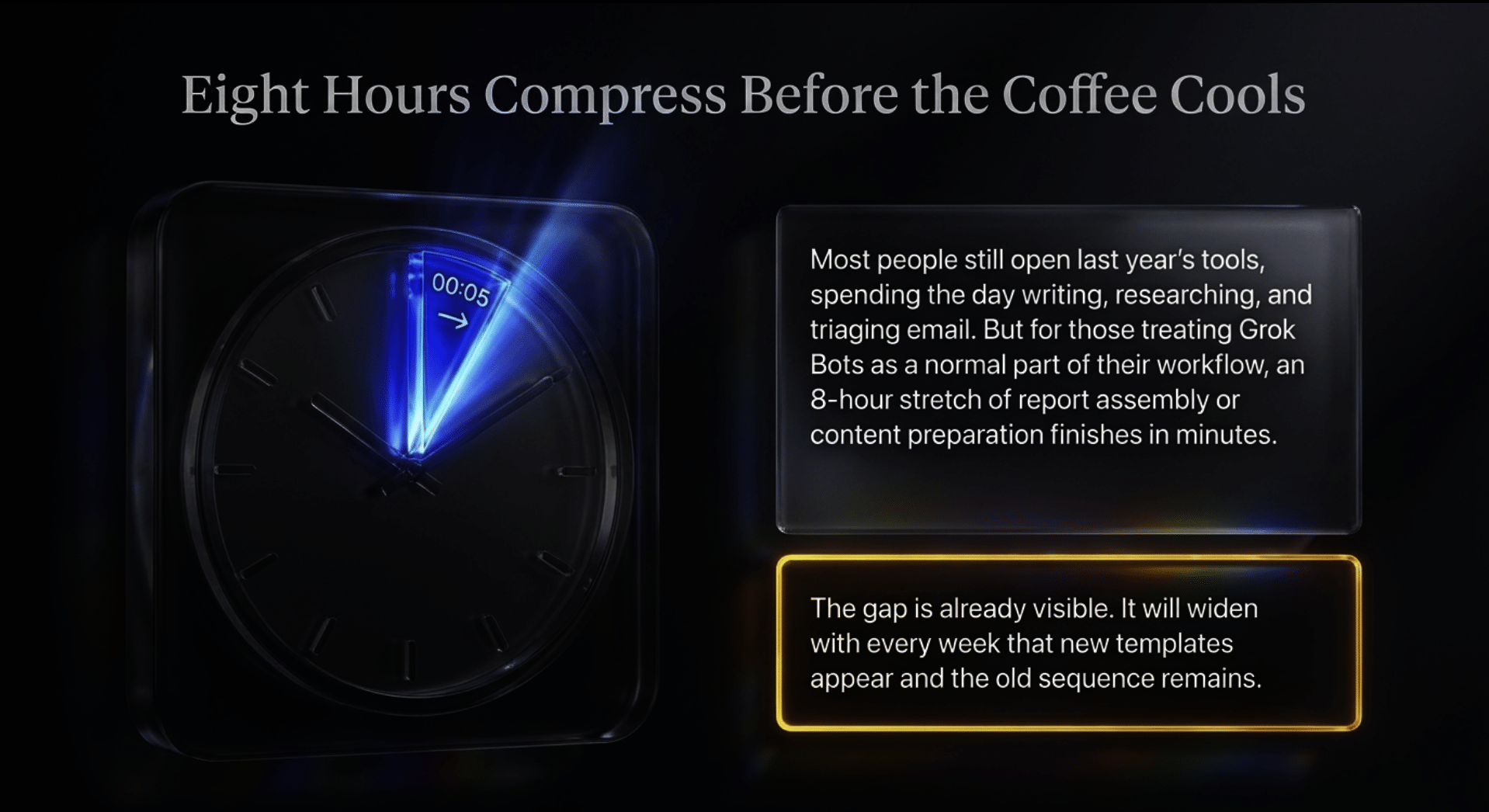
Most people still open the same tools they used last year and spend the day writing, researching, drafting, summarizing, or moving information from one place to another. An eight-hour stretch of email triage, report assembly, or content preparation can finish before a coffee cools when a Grok Bot does the sequence.
Let me be precise about the limits. Physical work, judgment that depends on context only one person holds, and decisions with real stakes still sit outside what the tool can finish alone. But a large share of office and knowledge work does not.
Most of the world has not made the shift. Their managers have not either. The people who treat a Grok Bot as a normal part of the work get through the day in far less time. Everyone else continues at the old pace. The gap is already visible. It will widen with every week that new templates appear and the old sequence remains.
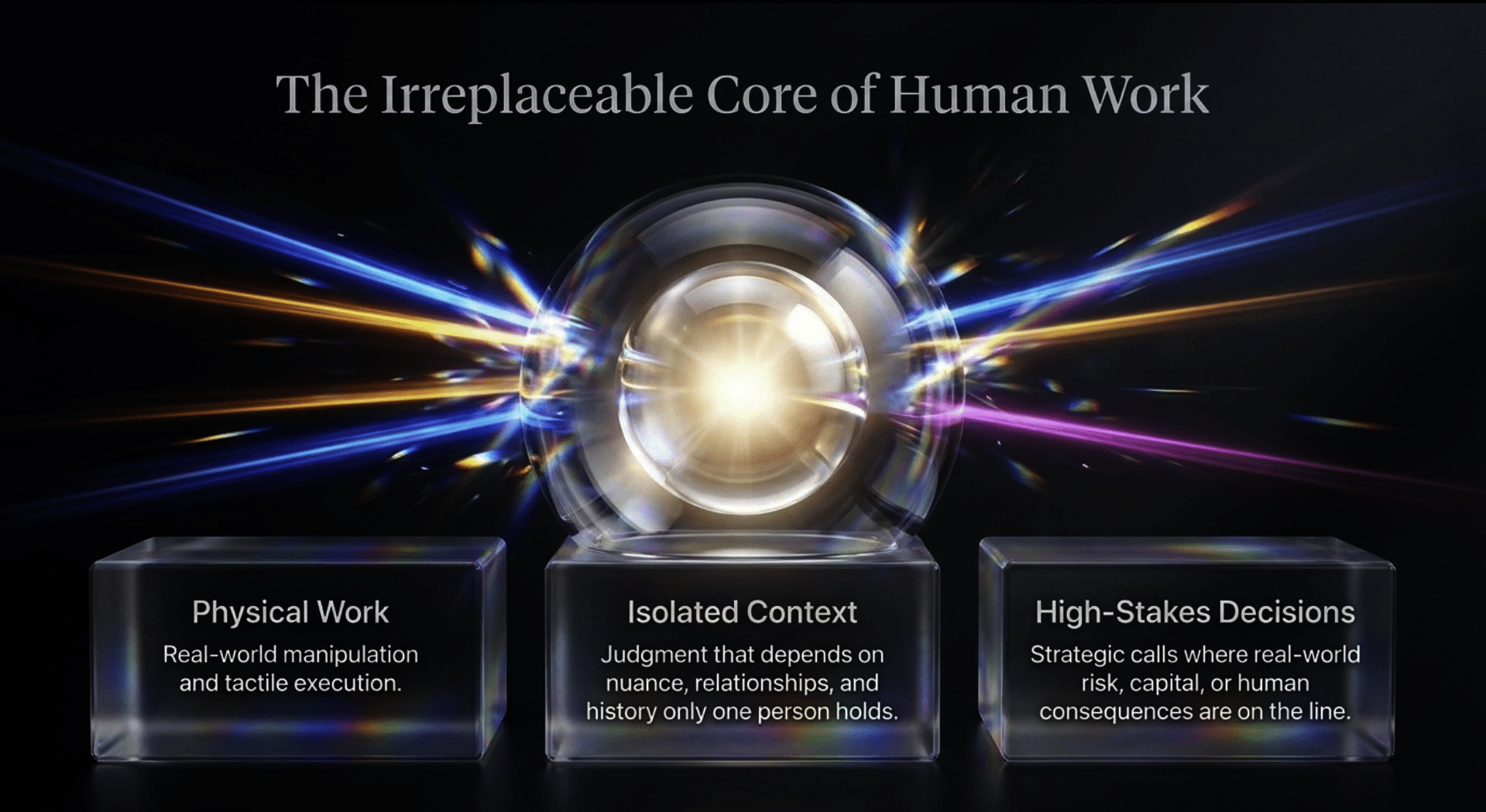
This is the VisiCalc moment again, except the spreadsheet only recalculated numbers. A Grok Bot recalculates the whole day.

An Army for Every Employee
I spent recent weeks with clients at large public companies and showed them the change, department by department.
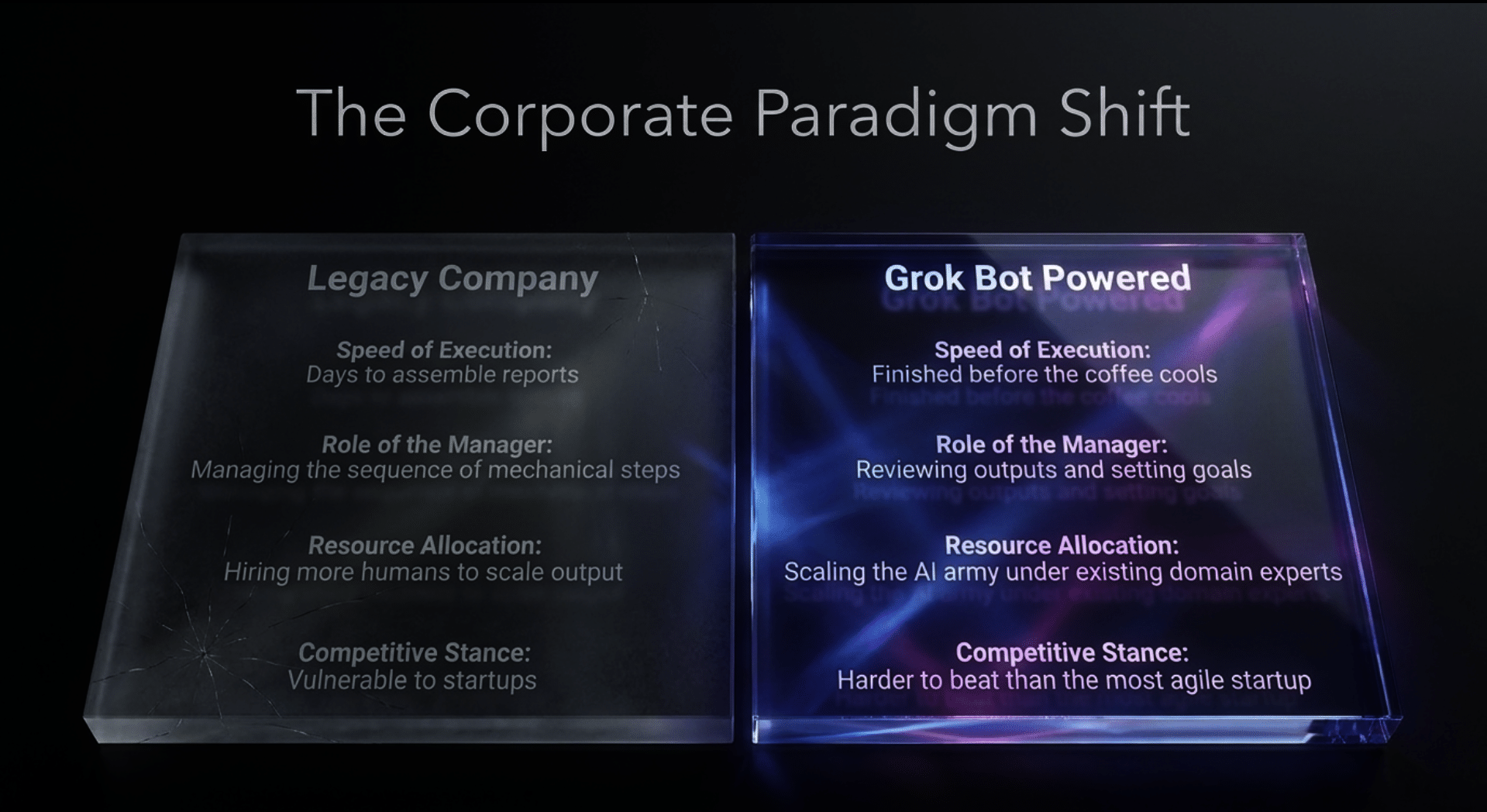
Here is what I told them. Each employee can now hire an almost unlimited number of Grok Bot employees. One person armed with that army is powerful. An entire company of people armed with those armies is very hard to compete against.
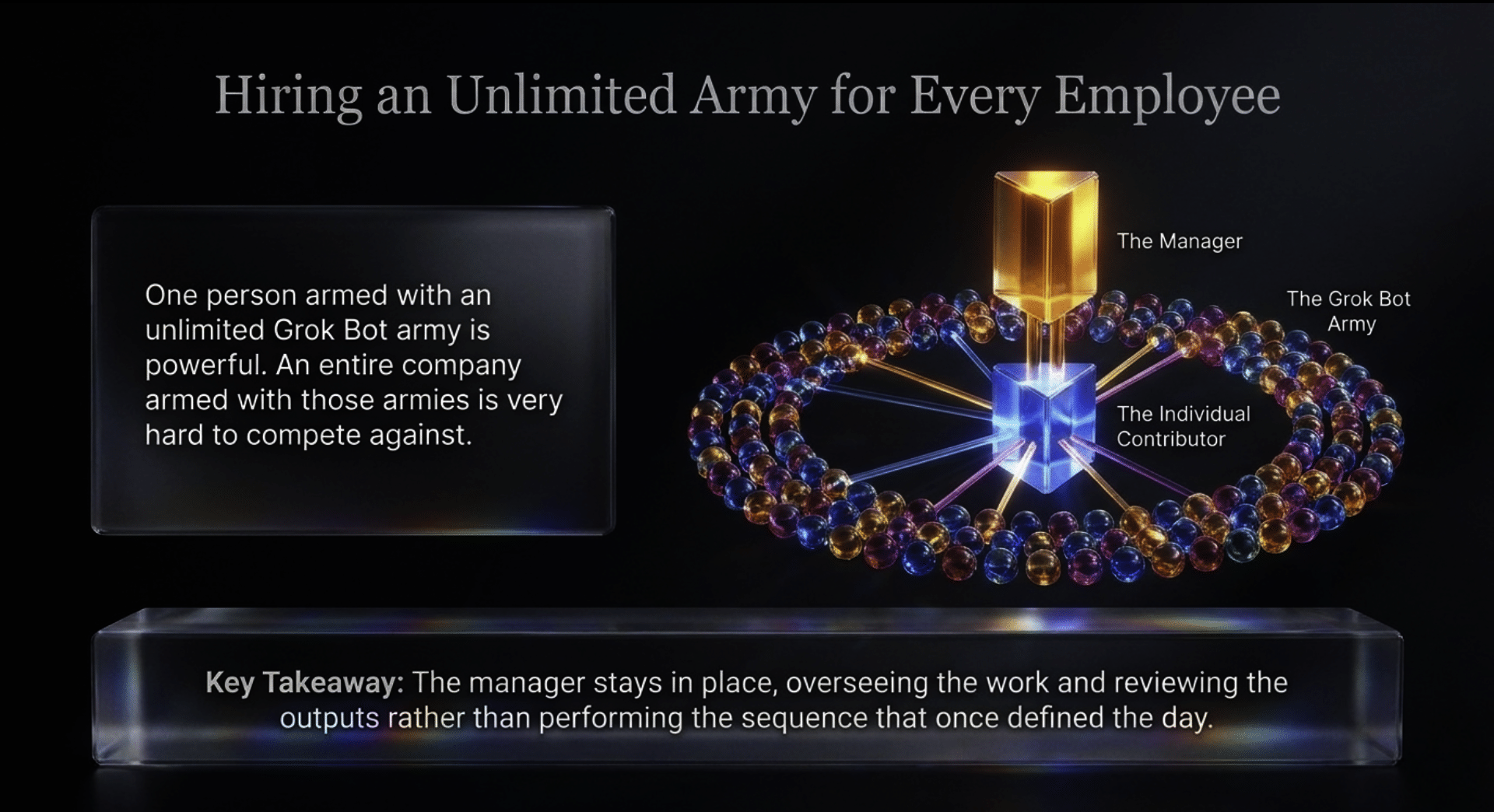
The managers stay in place. They oversee the work rather than perform the sequence that once defined the day. The results increase. When the culture and the incentives match the new capacity, the company becomes harder to beat than most startups. Companies that keep the old sequence will lose to companies that equip every person with the army.
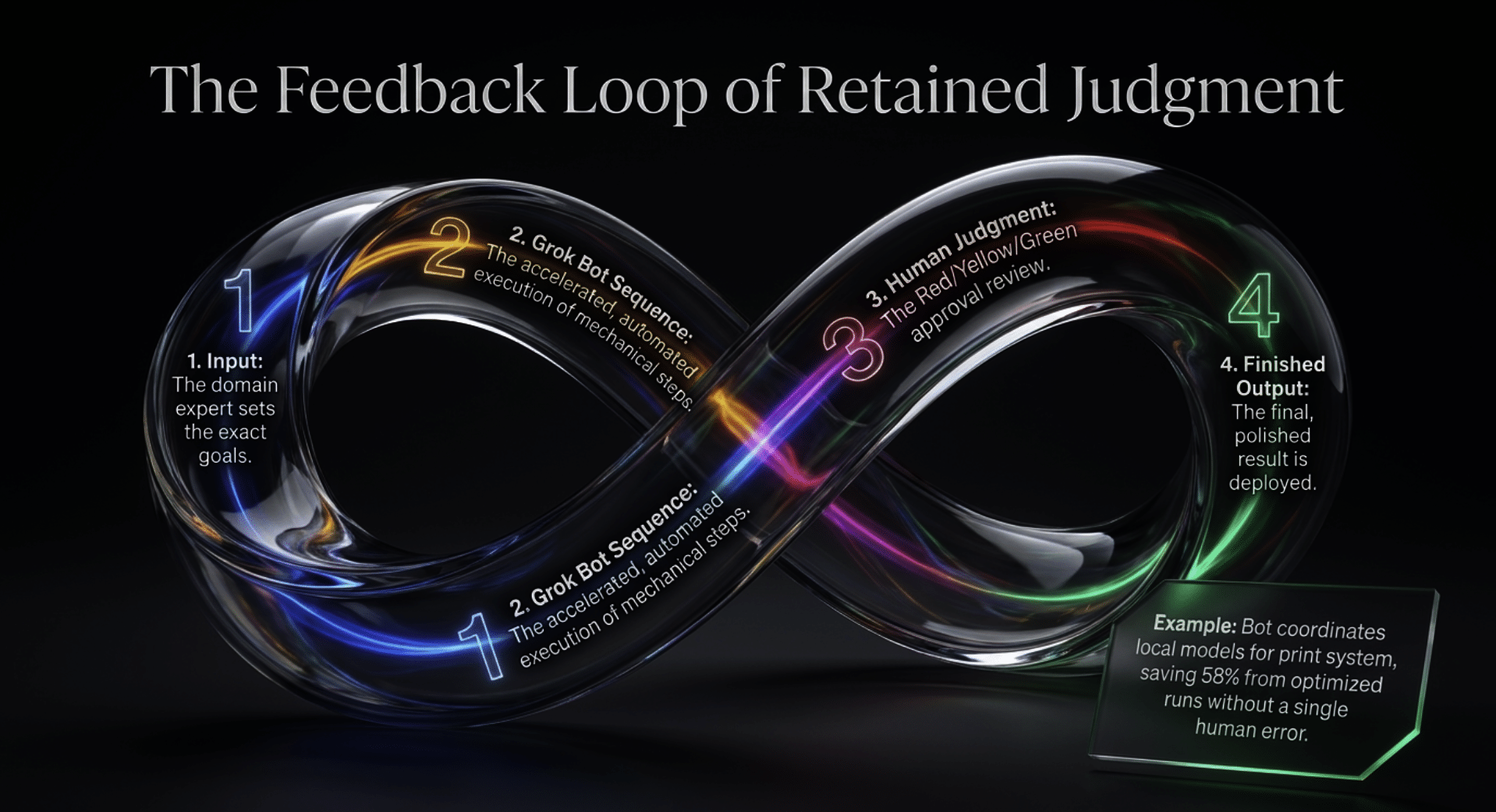
The domain expert remains the one who sets the goals and reviews the output. The sum of the best available methods now operates under that expert’s direction. I showed them how the same person who once rebuilt the weekly report from five files can now review the finished document and decide which figures require a different approach.
The sequence is handed off. The judgment stays.
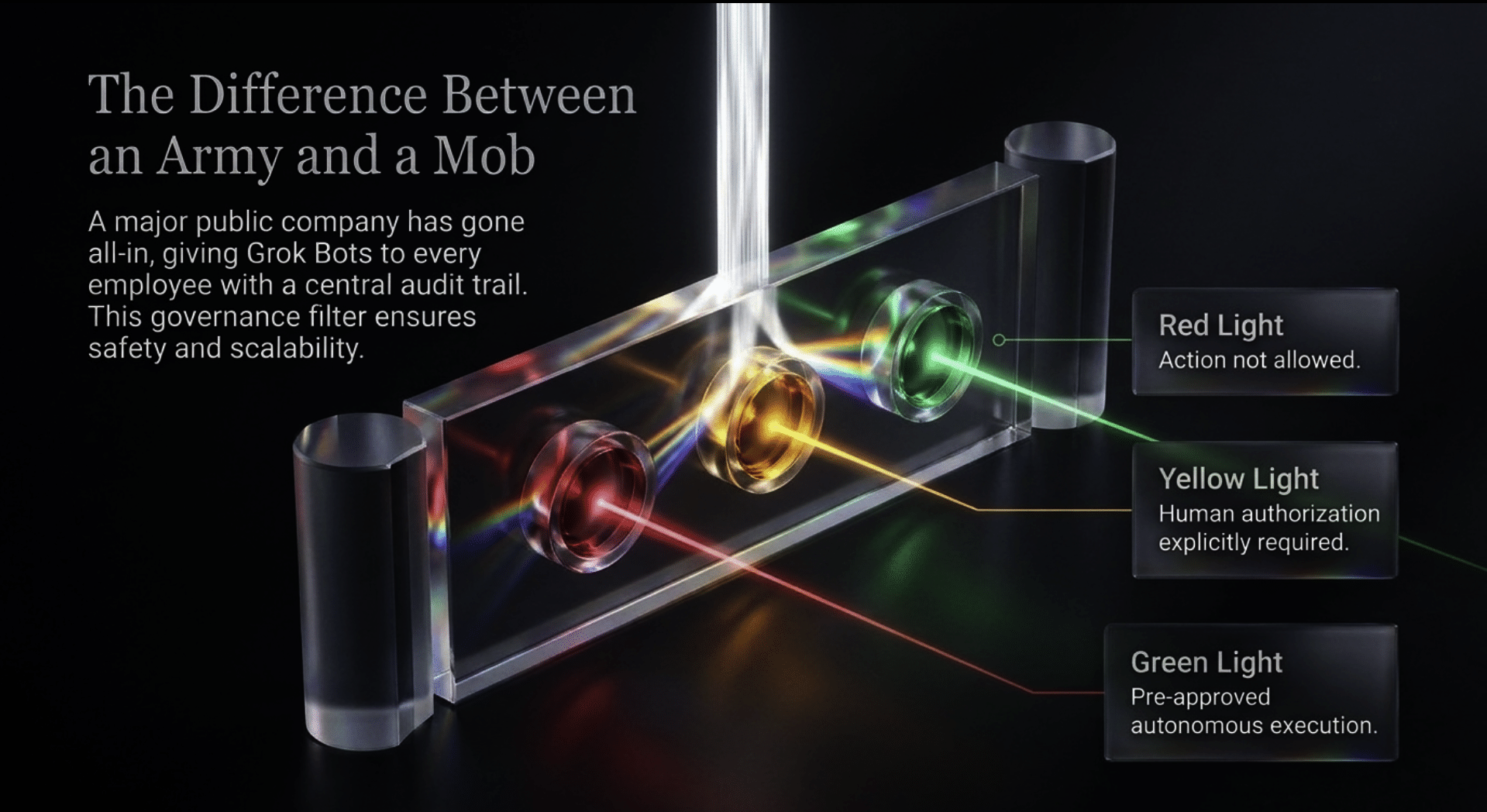
One of those companies has now gone all in. I wrote on X about how a major corporation is giving Grok Bots to every employee, with every command running through a Red Light (not allowed), Yellow Light (authorization required), and Green Light (approved) filter and a central audit trail. That filter is the difference between an army and a mob. Behind the members line below, I lay out the department-by-department map I use in these walkthroughs, written so any company can use it.
The Trail So Far
I have been building in public. If you are new here, these are the posts that lead to this one.
On X (@BrianRoemmele):
- We are in the Grok Bot era (Oct 29, 2026). The seed of this essay: most of the world still works the old way, and I have watched the PC, the Internet, and the iPhone leave behind people who loved the process more than the result.
- Every Grok Bot: The Complete Directory (Oct 29, 2026). The launch of the directory: thousands of public Grok Bots tracked across every category, each explained in a sentence and refreshed twice a week, on Monday and Thursday.
- A Grok Bot secret: point your bot at the directory (Oct 29, 2026). Ask your Grok Bot to understand the skill sets already established and to incorporate the skills needed for your goals. I called it a super power, and I meant it.
- The directory is free; members get the deep dives (Oct 29, 2026). The free list shows what exists. Members get how to build the best bots, a list of the best, and early access to my newest ones.
- A major corporation hires Grok Bots for every employee (Oct 28, 2026). A legacy public company rolls out Grok Bots to every employee, with Red, Yellow, and Green Light controls and a central audit trail, so each employee effectively gets their own department.
- Grok Bot in full control of a print system (Oct 10, 2026). A Grok Bot coordinating local AI models ran a package printing operation for three hours without a problem, with 58% savings from optimized print runs.
- Grok Bot templates are the new “App Store” (Sep 26, 2026). Why templates are a new way for builders to be rewarded, and why they mark a break-away moment for Grok Bot.
- Meet Mission Control (Oct 16, 2026). A fleet dashboard bot that audits every bot you run each morning, flags each one red, yellow, or green, and forecasts your plan usage. Managers want reports; this is how they get them.
- The Grok Bot that has self improvement (Oct 19, 2026). Your bots are already telling you where their time and tokens go. I show how to listen and have them improve, starting with which bots actually earn their keep.
- My bots had a “disagreement” at 3:27 a.m. (Oct 28, 2026). Per my protocol, they texted me one well-made message with choices A, B, C, D. That is what judgment staying with the human looks like in practice.
On ReadMultiplex.com:
- How To Hire A Grok Bot: Experience From The First Zero Human Company. My hiring manual for your first AI employee: one role, a job description, a trial, three runs, then a report. You do not build a Grok Bot. You hire one.
- Grok Bot Is The Most Important Business Tool Of The Last 100 Years. VisiCalc rewrote the rules of business in 1979. Grok Bot rewrites the rules of work itself.
- How Grok Bot and Grok Build Will Make the App and the Operating System Irrelevant. A device with almost nothing installed: you speak a need, and the software is generated, run by tireless AI teammates, then kept only if useful.
- The Last Program: How AI Is Replacing Every App You Use. Software sold as rent is meeting agents that can read public specifications and rebuild the same jobs. The rent just ended.
- The Zero Human Company Run By Just AI. My test of a company run by a team of AI platforms with human oversight, built on the discarded data of a long-bankrupt company.
- The End of Everything Familiar, An AI Agent-Driven Cambrian Explosion!. The coming agent-to-agent economy, where agents are the primary customers and businesses that cannot serve them fade away.
- What Are AI SuperPrompts And Why They Are Important. Where my prompting work began: a SuperPrompt delivers a “program” and a map, not a question. The master prompt for members below is built the same way.
- A Selection Of Powerful ChatGPT SuperPrompts. The guided, directed output I have been after since 2023, and how the attention mechanism makes a structured prompt work.
The Outline Before the Canvas
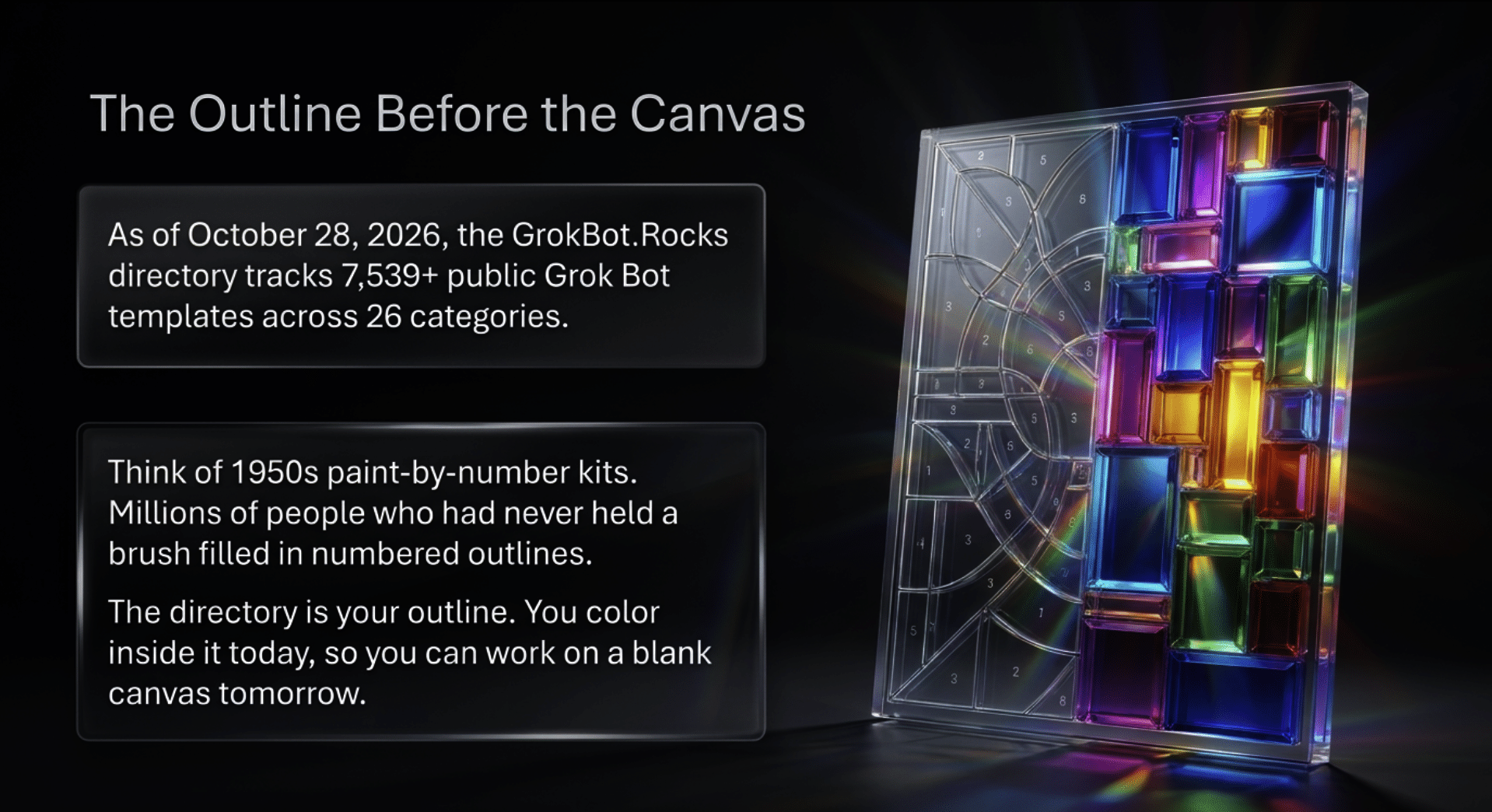
Grok Bots appear on X every day. No single list holds them. So I built GrokBot.Rocks, so that anyone can start from an existing outline rather than a blank canvas.
The directory tracks thousands of public Grok Bot templates across every category. Each entry carries a one-sentence description of the work it does and a link that adds the template to any Grok Bot. The list refreshes twice a week, every Monday and Thursday. New templates arrive and broken links leave.
Think of the paint-by-number kits of the 1950s. Millions of people who had never held a brush filled in numbered outlines, and some of them went on to paint their own. The directory is the outline. You can color inside it today and work on a blank canvas once the pattern is clear.
The free directory shows what already exists. Pointing a Grok Bot at the page turns the catalog into an active inventory of skills.
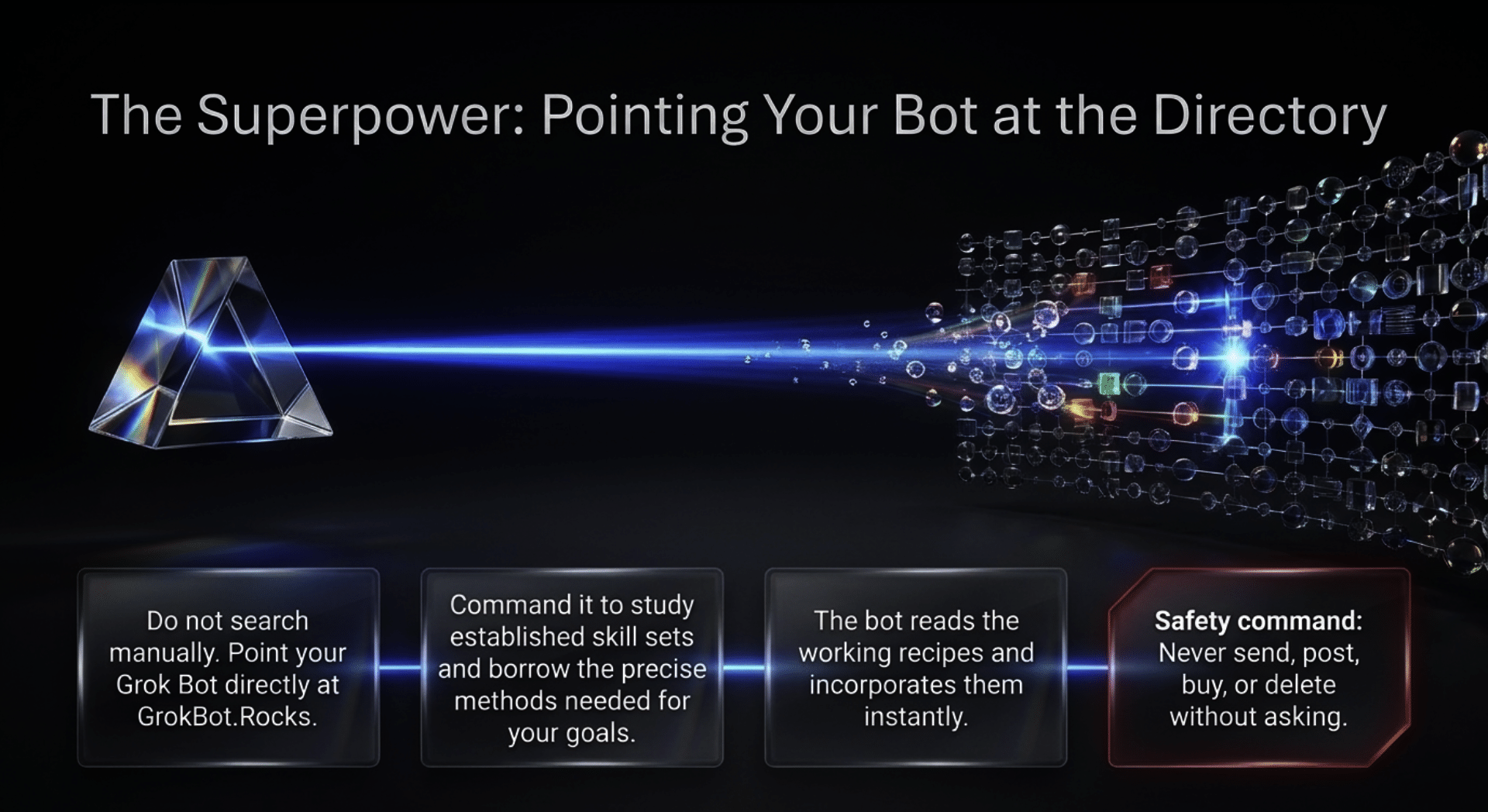
Point your Grok Bot at GrokBot.Rocks. Tell it to study the skill sets already established, name the skills required for the goals you set, show you the list of bots before any change is made, and never send, post, buy, or delete without asking. The bot then carries the collected methods into the work it does for you. That one step removes the need to search X one post at a time. The directory holds the working recipes. Your bot reads them and borrows the ones that fit.
The person who once spent the morning deciding which sequence to follow now spends the morning deciding which results to pursue.
Ten Handoffs That Change the Day
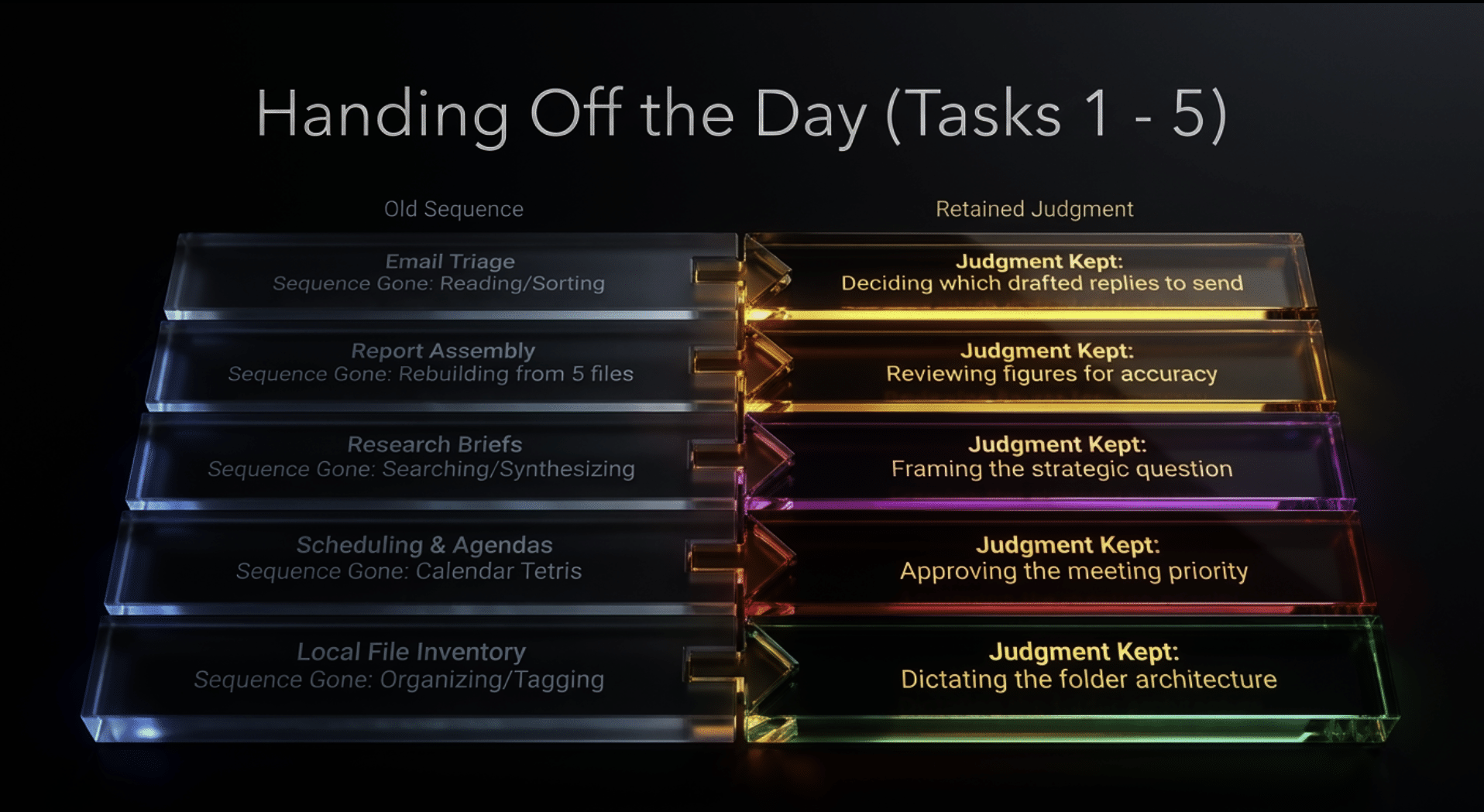
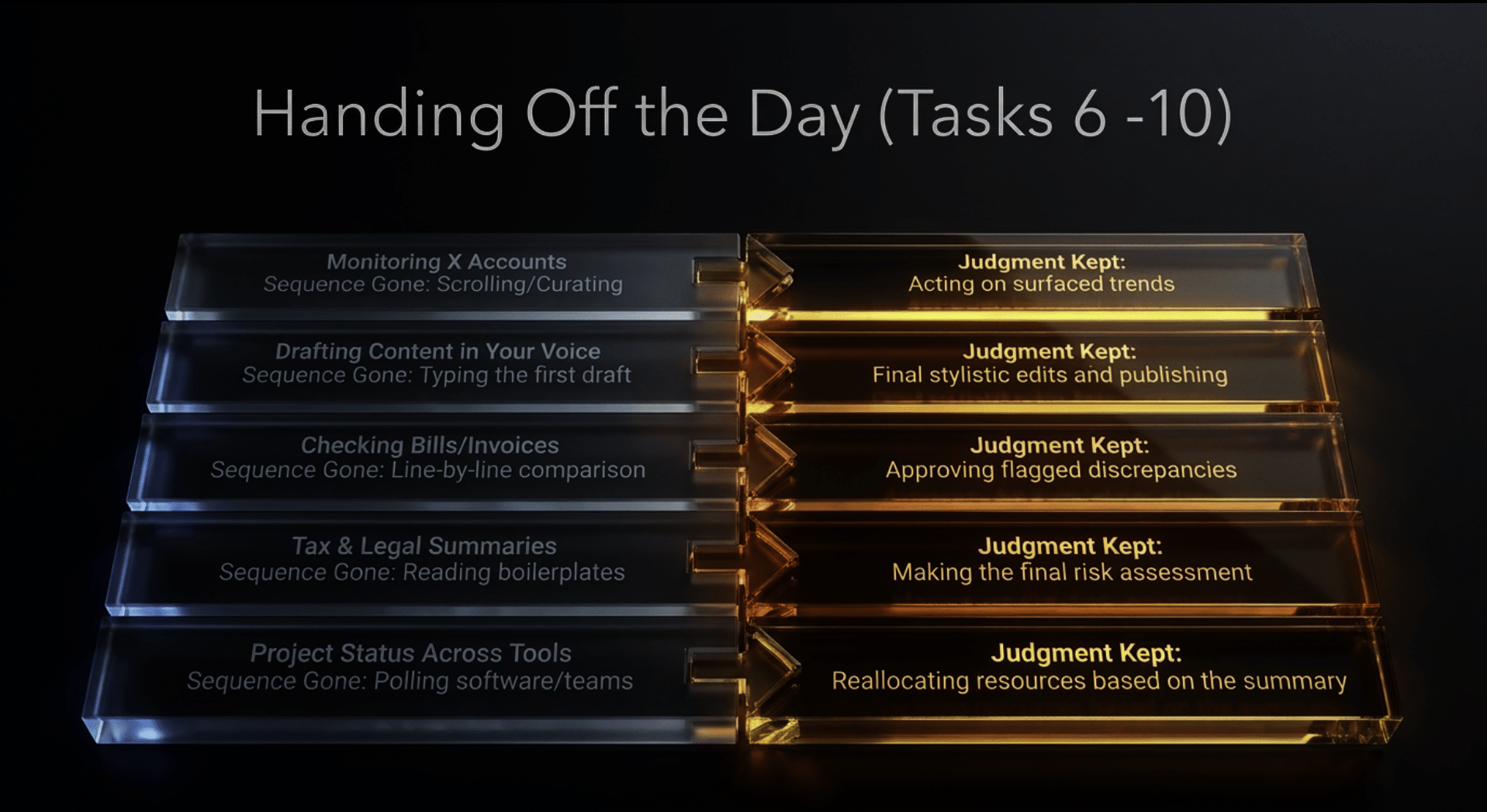
I have mapped ten concrete handoffs that show exactly how the shift works. Each one removes a sequence a person performs today and leaves the decision about the result:
- Email triage
- Report assembly
- Research briefs
- Scheduling and agendas
- Local file inventory
- Monitoring X accounts and topics
- Drafting content in your own voice
- Checking bills and invoices for errors
- Tax and legal paperwork summaries
- Project status across tools
Every one of these is a job someone in your company does by hand this week. Every one of them can finish before the coffee cools.
What follows is the part I give to the people who keep this work independent. It is the material I use when I sit with a company and hand off the sequence department by department.
Behind the Members Line
Read Multiplex members get the full playbook below, right now:
- The ten handoffs in full: the old sequence, what the bot does, and the one decision that stays yours, for each.
- The exact master prompt I use to point a Grok Bot at GrokBot.Rocks, with the safety rules built in.
- Ten ready-to-paste prompts, one for each handoff.
- “Hand off your first sequence this week”: a seven-step playbook.
- The department-by-department handoff map for companies: sales, support, finance, operations, marketing, and HR, with the Red, Yellow, and Green Light rules.
- The manager’s review checklist: judgment stays, sequence goes.
- A 30-day adoption plan for a person or a team.
- How to measure the hours returned, so the result is a number and not a feeling.
- The close of this essay: why you are the artist in the Grok Bot era.
Members also get the Insider Guide at the bottom of GrokBot.Rocks, updated with the directory twice a week: my twelve top picks with the reason each one earns its place and a ready-to-use prompt for each; nine best bot stacks in the order to add them for a small business, a creator, a home office, a family, money, a job seeker, a developer, real estate, and privacy; eight setup tips and seven copy-paste prompts that get more from every bot; sixty-two practical tips from builders and from my own fleet, plus a downloadable starter kit of templates; five new Grok Bots I build, three days before I announce them on X; twenty-eight of the newest bots worth a look a week before they reach the public list; the Grok Bot market report on what is growing, which apps bots connect to, and where the gaps are; a five-point safety checklist to use before adding any community bot; and twenty-five percent off custom Grok Bot work with me.
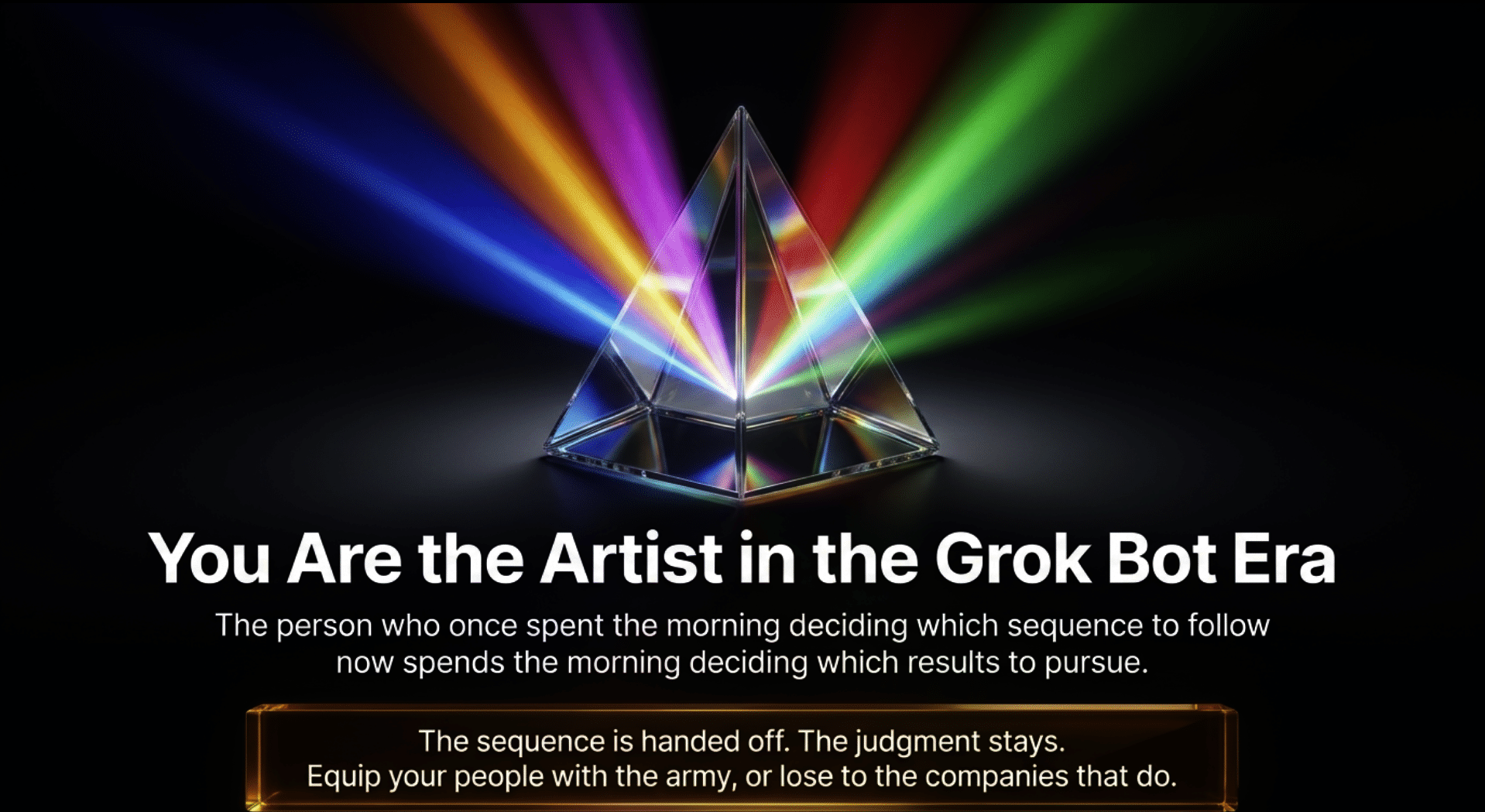
The free directory shows what exists. The members playbook shows what to use, how to set it up, and how to hand off the sequence without handing off your judgment.
Become a Read Multiplex member and read the rest →
If you are already a member, log in below and keep reading.
Support This Work, You Will See It No Place Else
To continue this vital work documenting, analyzing, and sharing these hard-won lessons before we launch humanity’s greatest leap: I need your support. Independent research like this relies entirely on readers who believe in preparing wisely for our multi-planetary future. If this has ignited your imagination about what is possible, please consider donating at buy me a Coffee or becoming a member. Value for value you recieved here.
Every contribution helps sustain deeper fieldwork, upcoming articles, and the broader mission of translating my work to practical applications. Ain ‘t no large AI company supporting me, but you are, even if you just read this far. For this, I thank you.
Stay aware and stay curious,

🔐 Start: Exclusive Member-Only Content.
The rest of this article is for Multiplex members
You’ve reached the members-only part. Log in to keep reading right here, or join to unlock it.
- Full member-only articles: insights, wisdom and executive summaries
- The Multiplex members forum
- Member benefits and discounts
Already a member? You’ll come right back to this article after logging in. Forgot password?
Membership status: Not logged in
🔐 End: Exclusive Member-Only Content.
~—~
~—~

~—~
Support ReadMultiplex at Multiplex.Tips

Support ReadMultiplex
Subscribe or donate by Bitcoin.
Copy address:bc1qkufy0r5nttm6urw9vnm08sxval0h0r3xlf4v4x

Send your receipt to [email protected] to confirm subscription.
Members
Become a member for full member-only articles, the Multiplex members forum, and member benefits and discounts.
 Past, present and future technology research + insights
Listen
🔊 Every article has a free “Listen to this ►” button. Hear it read aloud in your browser.
The Multiplex
- Advertise with us: Rates and booking
- X: @ReadMultiplex
- Buy a T-shirt: Multiplex.Love
- Program Guide: Multiplex.Today
- Podcast: Multiplex.Life
- Join the Multiplex team: Multiplex.Team
Stay updated
Get an email when we post new articles:
