
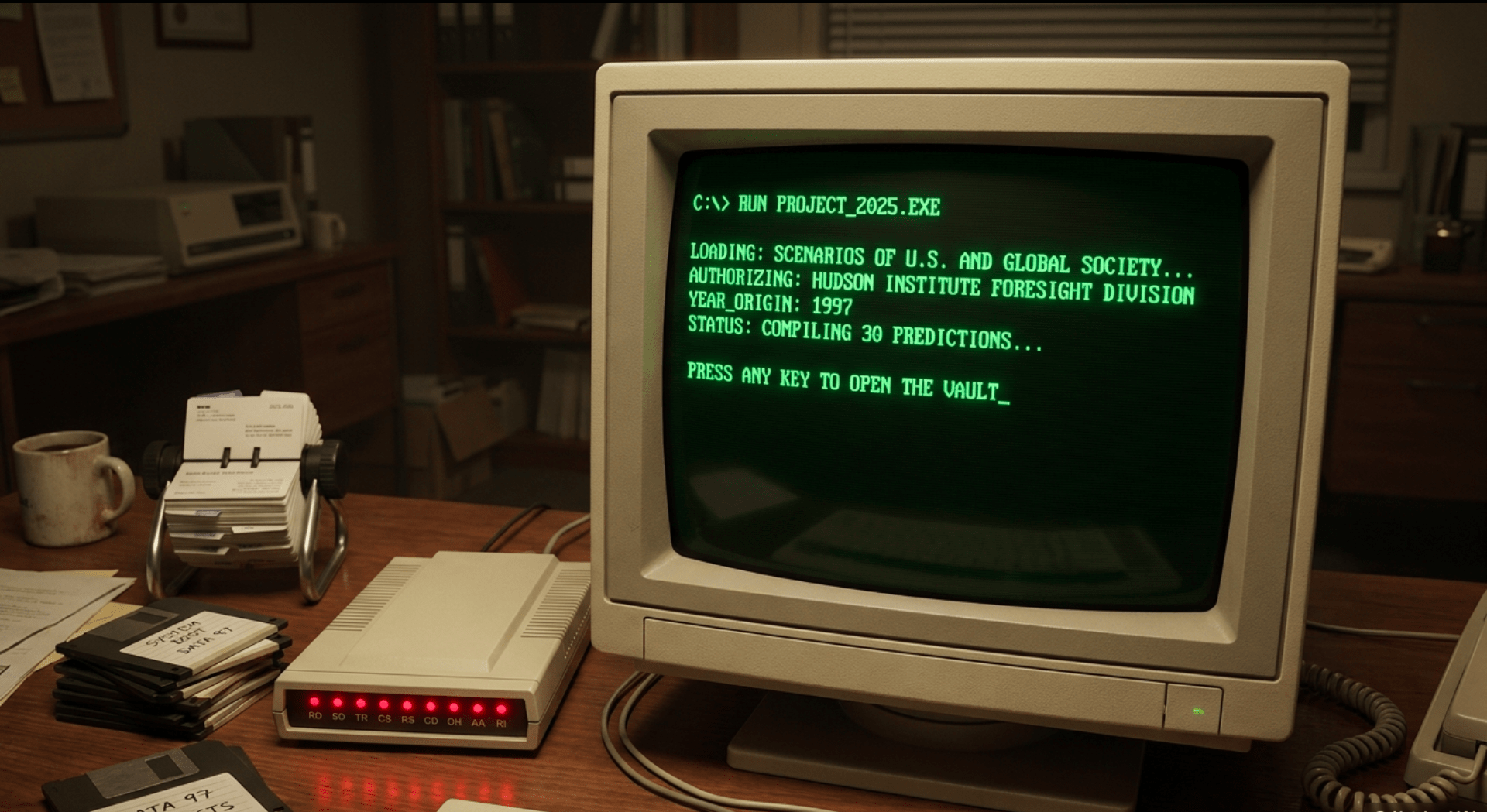
Did A 1997 Government Funded Report Predict Our Era?
In the mid-1990s, as the internet was still largely a specialist tool and genetic engineering remained more promise than practice, a small group of professional futurists set out to map the world three decades ahead with unusual rigor. Rather than offering vague speculation or single-point predictions, they gathered and stress-tested hundreds of forecasts across science, technology, and engineering, then distilled them into a disciplined set of high-probability assumptions. The result was one of the most ambitious exercises in applied foresight of its era. It offers us a window into how futurism works and can be accurate. But also show how it can become a blueprint for the human trap:
These government funded futurists predicted the loneliness of constant connection. They understood that being always reachable would make solitude feel like failure. They never admitted the loneliness was designed.
That foundational work crystallized in 1994 with Joseph F. Coates’s concise report, The Highly Probable Future: 83 Assumptions about the Year 2025. Drawing on Project 2025 a multi-year corporate and research collaboration: Coates laid out eighty-three carefully reasoned statements covering information technology, materials science, genetics, energy, demographics, environmental management, and social change. These assumptions were never meant to be destiny; they were intended as a shared intellectual platform on which organizations could test strategies and explore alternative futures.
This article is sponsored by Read Multiplex Members who subscribe here to support my work: Link: https://readmultiplex.com/join-us-become-a-member/
It is also sponsored by many who have donated a “Cup of Coffee”. If you like this, help support my work: Link: https://ko-fi.com/brianroemmele
Listen to the companion podcast: https://rss.com/podcasts/readmultiplex-com-podcast/3038162
Four years later those same assumptions were expanded and dramatized into a far richer volume. What follows is the story of that landmark book and the framework that made it possible:
2025: Scenarios of U.S. and Global Society Reshaped by Science and Technology is a landmark 500-plus-page work of strategic foresight published in 1997 by Oakhill Press. Authored primarily by Joseph F. Coates, John B. Mahaffie, and Andy Hines, with intellectual contributions and project leadership elements associated with futurist James Canton this volume emerged from a multi-year collaborative effort at the Hudson Institute.
The Highly Probable Future: 83 Assumptions about the Year 2025 is a 1994 report by Joseph F. Coates where he laid out 83 high-probability statements about science, technology, demographics, society, and the environment as a practical planning framework drawn from Project 2025.
These assumptions directly underpin the 1998 book 2025: Scenarios of U.S. and Global Society Reshaped by Science and Technology. The book expands the original 83 assumptions into a fuller set of 107 (adding 24 lower-probability developments) and uses them as the foundation for fifteen narrative scenarios that explore how information technology, materials science, genetics, energy systems, and environmentalism would reshape American and global life by 2025. The 83 assumptions supply the rigorous, evidence-based backbone; the book turns that backbone into vivid, interconnected pictures of everyday life, institutions, and geopolitics three decades ahead.
The book synthesizes forecasts from more than fifty fields of science, technology, and engineering into fifteen integrated, retrospective scenarios framed as histories written from the vantage point of 2025. It got many things right, but it got some things wrong.

The book does not offer simplistic predictions but paints nuanced pictures of daily life, commerce, governance, health, environment, geopolitics, and human experience in a world transformed by converging technologies. Its directional accuracy on dozens of fronts from remote work and digital finance to pandemics, cyberattacks, biotechnology revolutions, and societal restructuring has astonished readers decades later.
The Book That Tried To Predict 2025
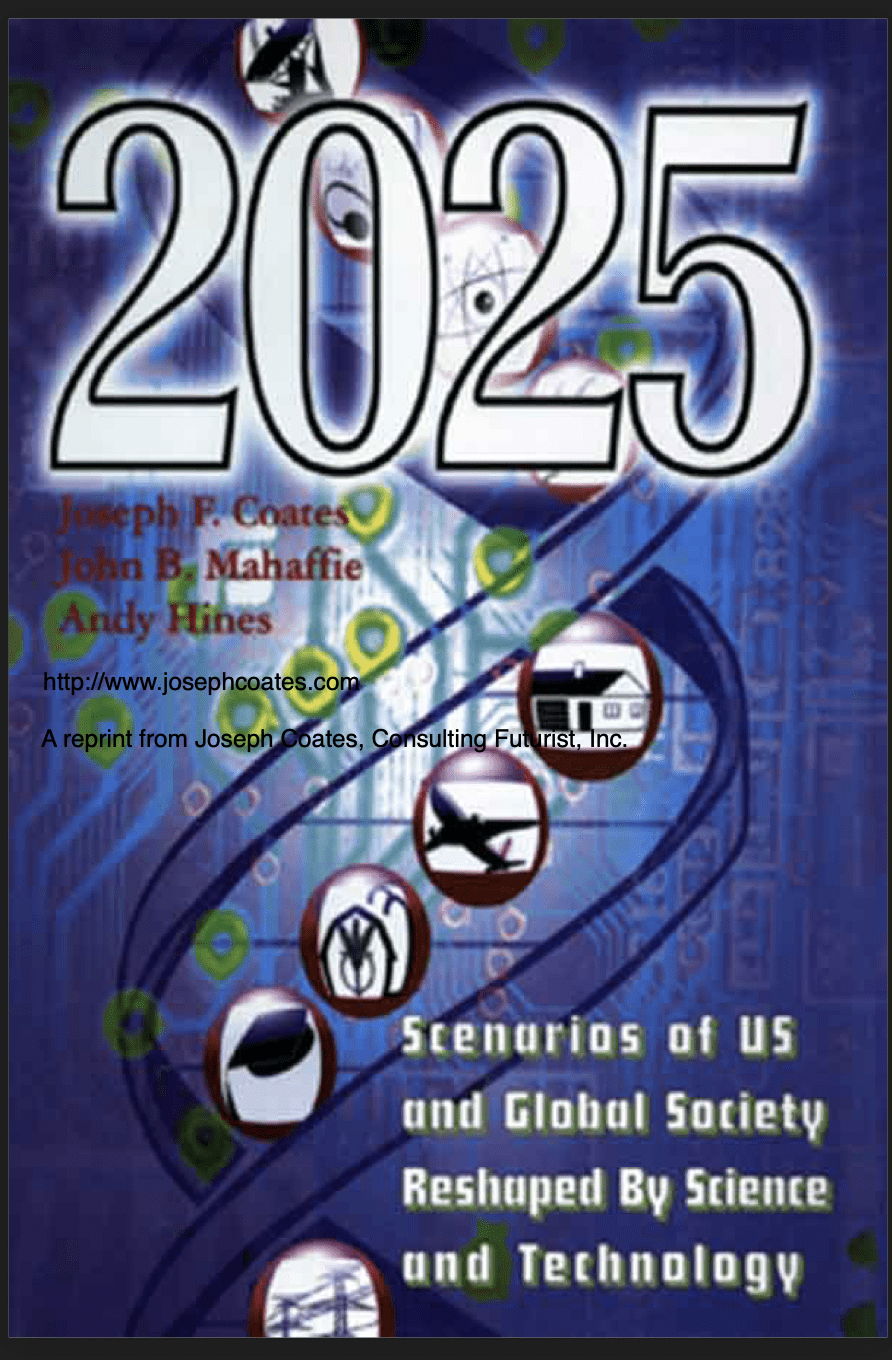
2025: Scenarios of U.S. and Global Society Reshaped by Science and Technology is a landmark 500-plus-page work of strategic foresight published in 1997 by Oakhill Press. Authored primarily by Joseph F. Coates, John B. Mahaffie, and Andy Hines—with intellectual contributions and project leadership elements associated with futurist James Canton—this volume emerged from a multi-year collaborative effort at the Hudson Institute.
The Highly Probable Future: 83 Assumptions about the Year 2025 is a 1994 report by Joseph F. Coates where he laid out 83 high-probability statements about science, technology, demographics, society, and the environment as a practical planning framework drawn from Project 2025. These assumptions directly underpin the 1998 book 2025: Scenarios of U.S. and Global Society Reshaped by Science and Technology.
The book expands the original 83 assumptions into a fuller set of 107 (adding 24 lower-probability developments) and uses them as the foundation for fifteen narrative scenarios that explore how information technology, materials science, genetics, energy systems, and environmentalism would reshape American and global life by 2025. The 83 assumptions supply the rigorous, evidence-based backbone; the book turns that backbone into vivid, interconnected pictures of everyday life, institutions, and geopolitics three decades ahead.
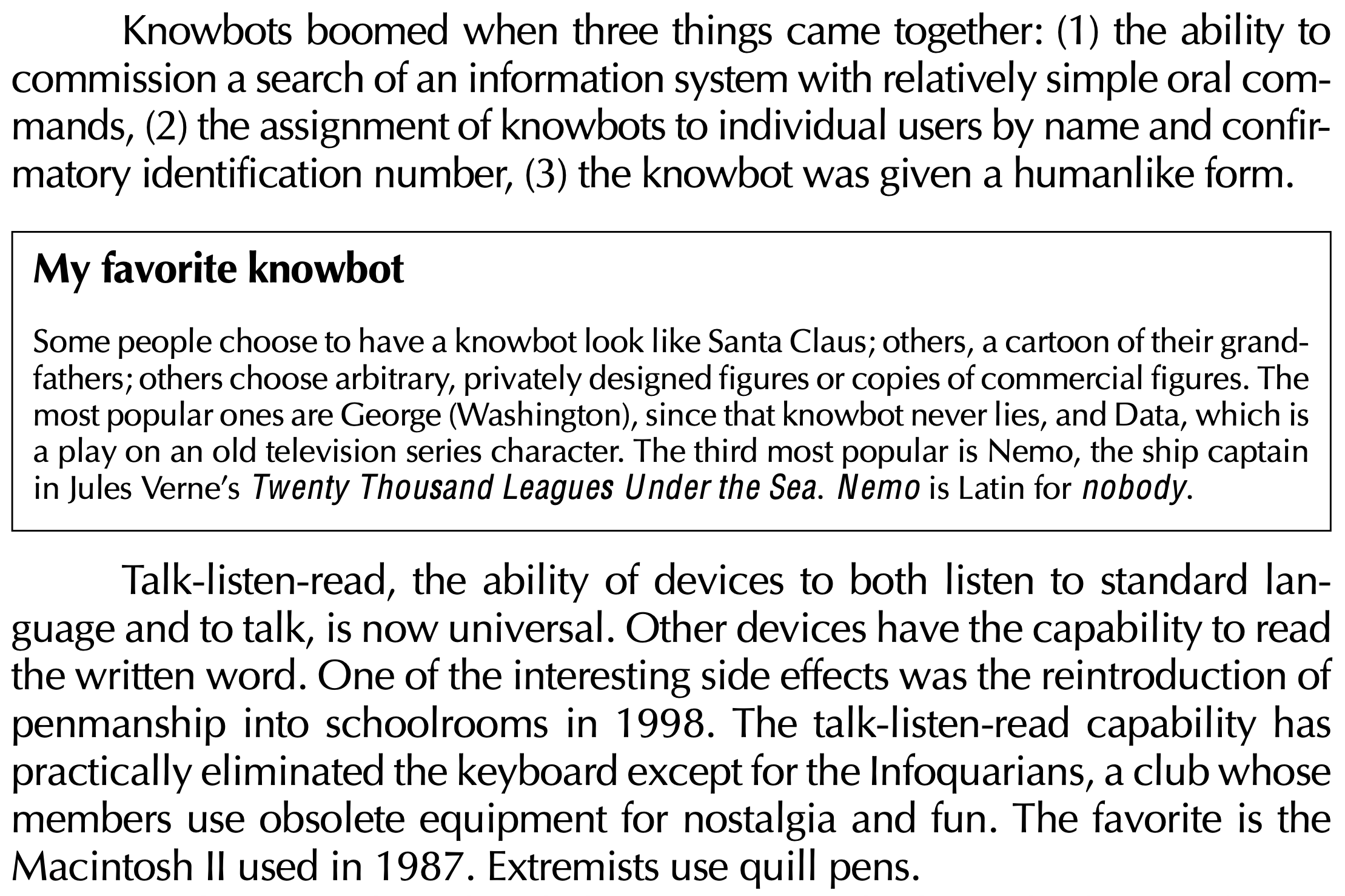
The book synthesizes forecasts from more than fifty fields of science, technology, and engineering into fifteen integrated, retrospective scenarios framed as histories written from the vantage point of 2025. The book does not offer simplistic predictions but paints nuanced pictures of daily life, commerce, governance, health, environment, geopolitics, and human experience in a world transformed by converging technologies. Its directional accuracy on dozens of fronts from remote work and digital finance to pandemics, cyberattacks, biotechnology revolutions, and societal restructuring has astonished readers decades later.
A full digital version is available through academic repositories, including this ResearchGate link:
https://www.researchgate.net/profile/Andy-Hines/publication/41090843_2025_Scenarios_of_US_and_Global_Society_Reshaped_by_Science_and_Technology/links/5c8dd5e292851c1df9463327/2025-Scenarios-of-US-and-Global-Society-Reshaped-by-Science-and-Technology.pdf.
The Backdrop Of A Futurist Organization
Coates & Jarratt, Inc. was a pioneering private futures consulting firm founded by Joseph F. Coates in the late 1970s (initially as J. F. Coates Inc.) and later joined by Jennifer Jarratt. Based in Washington, D.C., the firm specialized in technology assessment, long-range forecasting, and strategic foresight for corporations, government agencies, and research sponsors. Coates himself had deep roots in the field: a chemist by training who had worked at the Institute for Defense Analyses, the National Science Foundation, and the U.S. Congress’s Office of Technology Assessment before launching his consulting practice. The firm’s multi-year Project 2025, sponsored by roughly eighteen large organizations, systematically gathered and evaluated forecasts from more than fifty scientific and technical domains. This should inform us that there will be a tilt to the agendas of the US government. One can assume that these reports would not go fundemantlly against their largest client.
As mentioned the project produced two closely linked works. The first was the 1994 report The Highly Probable Future: 83 Assumptions about the Year 2025, in which Coates distilled the research into eighty-three high-probability statements covering science, technology, demographics, society, and the environment. Four years later those assumptions were expanded and dramatized in the full-length book 2025: Scenarios of U.S. and Global Society Reshaped by Science and Technology.
At the heart of both the report and the book lay a vision of technological abundance but not The Age Of Abundance we see before us today. The authors anticipated that converging advances in information technology, materials science, genetics, and energy systems guided by a rising ethic of environmental sustainability that would reshape daily life, work, health, and global structures for decades ahead. They foresaw rising living standards, smarter and more efficient systems, expanded human capabilities through biotechnology, and a managed planetary environment, all unfolding against a backdrop of demographic growth divided into three broad “Worlds” of affluence, middle-income stability, and persistent destitution. The tone was neither utopian nor dystopian; it was a pragmatic picture of a world made richer and more complex by science and technology.
In the decades after their release, the report and the book received quiet but steady attention within futures and corporate strategy circles rather than mass popular acclaim. Andy Hines, one of the co-authors, later revisited the 107 assumptions around 2009–2010 and found a substantial portion already materializing or clearly on track. By the actual arrival of 2025, retrospective reviews—most notably a February 2025 examination in Washingtonian—praised the work’s strong performance on technology, connectivity, virtual communities, and machine intelligence while noting misses on life expectancy gains, universal healthcare, political stabilization through a global middle class, and the resilience of democratic institutions. Both the original 83-assumption report and the full scenarios book remain available through academic repositories and occasional reprints, valued today less as perfect crystal balls than as unusually rigorous, assumption-driven examples of how systematic foresight can illuminate the long arc of technological change. We can gain the ambition of the work in the preface:
PREFACE
In the modern world, science and technology are some of the strongest drivers of change. Discoveries in science and new developments in technology change the course of people’s lives, their behaviors, and their attitudes to the world. The great and expanding influence of the telephone, the electric light, and the automobile are obvious examples. Some less obvious examples are the development of beneficial drugs, such as antibiotics, the proliferation of new fibers and fabrics, and the expansion of the social sciences. All of these have enabled people to live longer, have wider perspectives in their lives, and anticipate a prosperous future.
For the most part the influence of science and technology on our future is beneficial. The future is more likely to be positive if people can see how to use the developments of technology and science to improve the human condition.
We believe we have the power to influence the future and, therefore, the responsibility of shaping the future in a positive direction. In this book we start with the assumption that people and organizations are capable of using emerging science and technology capabilities in ways that will be useful, profitable, and of benefit to humanity over the next generation.
Why We Wrote This Book
The scenarios of 2025 that are the major part of this book are the outcome of years of work in gathering and evaluating forecasts made in more than 50 science, technology, and engineering fields. When we evaluated all these forecasts we recognized that although collectively they implied a strong future for science and technology, they were mostly relatively narrow in their viewpoint and missed the larger picture of what the world could be like if all, or most of, these developments occurred. So we drew on our own experience as futurists as well as that of the other forecasters to create images of the world in 2025 that show what may be in store for us at home, in business, on the road, around the world, and so on.
Intended Audience
We expect that business people, entrepreneurs, people who are responsible for planning, those involved in science and technology policy, and those engaged in scientific and technical issues, will all find this book interesting and useful. Young people, whose future this is, should find ideas here about potential opportunities for themselves. Everyone who has a thoughtful interest in the implications of science and technology for our future will find things to interest them.

The project was no lone academic exercise. The Hudson Institute’s legacy of long-range scenario planning, inherited from founder Herman Kahn’s Cold War-era work, provided the methodological backbone. Substantial funding and sponsorship flowed from a network that included government agencies focused on national security and economic forecasting, defense contractors, major technology and corporate partners, and institutions such as the American Academy of Arts and Sciences.
Herman Kahn was one of the most influential and controversial American strategists and futurists of the Cold War era. Trained as a physicist, he joined the RAND Corporation in 1948, where the U.S. Air Force funded extensive research into military strategy, operations research, systems analysis, and game theory. At RAND, Kahn helped pioneer the systematic use of scenarios to explore the unthinkable: the dynamics of nuclear escalation, deterrence, limited nuclear war, and the possible outcomes of a thermonuclear exchange with the Soviet Union. His approach treated nuclear conflict not as an abstract catastrophe that ended all rational calculation, but as a phenomenon that could—and must—be analyzed in degrees, phases, and contingent possibilities.
The most famous product of this work was his 1960 book On Thermonuclear War. Drawing on lectures and studies conducted for the government and military, Kahn argued that thermonuclear war differed from conventional war in degree rather than kind, and that realistic planning for survival, recovery, and even “winning” under certain conditions was both possible and morally necessary. He examined civil defense, post-attack recovery, escalation ladders, and the credibility of deterrence. The book sold widely and provoked intense debate; critics accused him of cold-blooded calculation, while supporters saw him as one of the few thinkers willing to confront the strategic realities of the nuclear age. Kahn left RAND the following year and co-founded the Hudson Institute in 1961 at Croton-on-Hudson, New York, to continue independent long-range studies of national security and public policy.
At the Hudson Institute, Kahn expanded his futurist work beyond pure nuclear strategy into broader scenario-based forecasting for government clients and others. He and his colleagues produced studies on long-term technological, economic, demographic, and geopolitical trends, including work for agencies such as NASA on space development scenarios. Books such as Thinking About the Unthinkable (1962), On Escalation (1965), and The Year 2000 (1967, with Anthony J. Wiener) applied the same rigorous, multi-scenario method to the wider future. Kahn insisted that policymakers needed flexible, realistic images of possible futures rather than single-point predictions or moral absolutism. His Cold War-era studies for the government helped institutionalize scenario planning as a tool of strategic analysis and left a lasting imprint on both nuclear doctrine and the emerging field of futures studies.
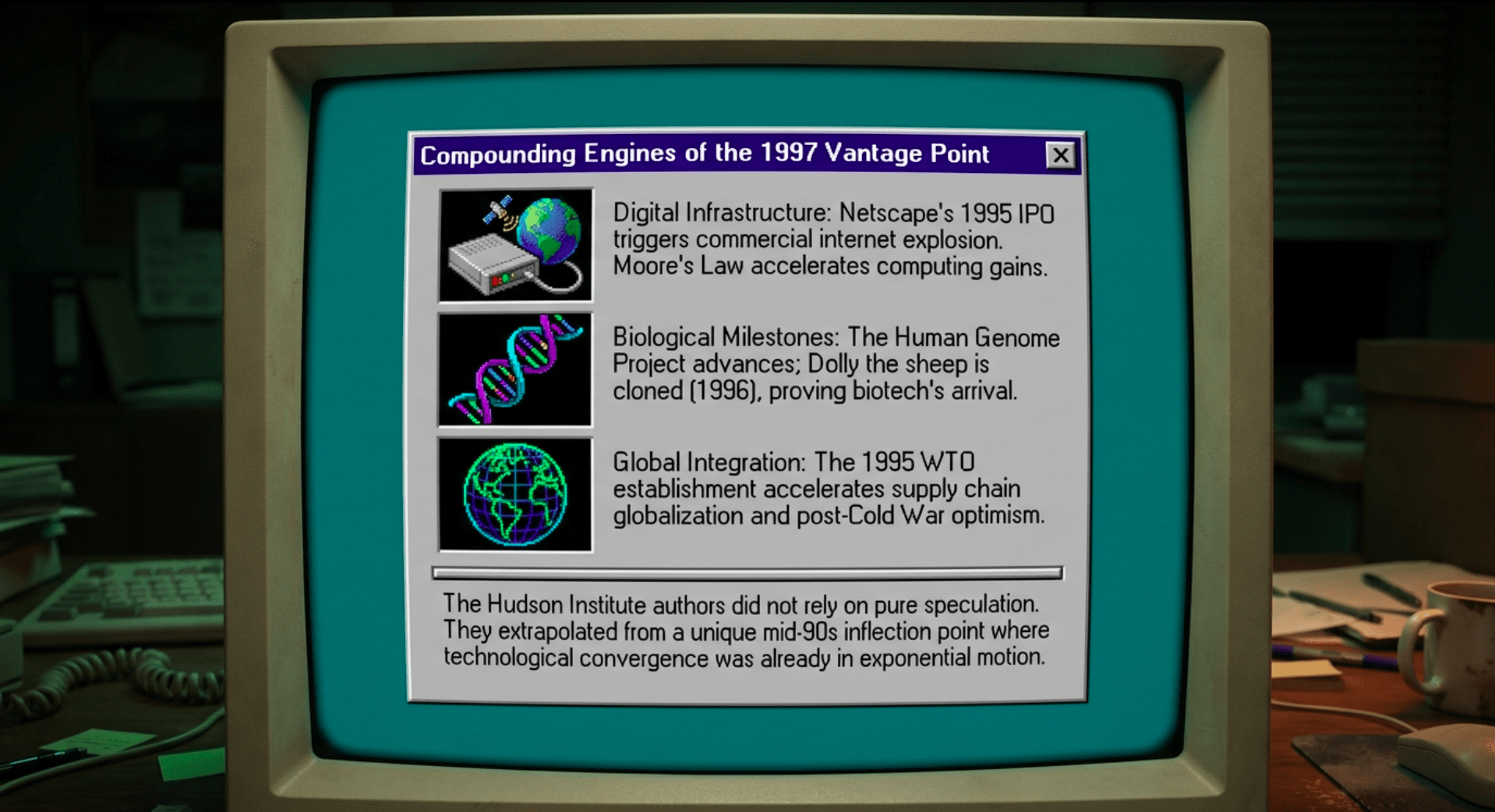
It was this ecosystem that granted the authors privileged visibility into active R&D pipelines, policy discussions, investment priorities, and emerging capabilities that were not yet public. Acknowledgments credit the organizations that made “Project 2025” possible, reflecting the classic think-tank model of blended public-private support. In the specific time and place of mid-1990s America—post-Cold War optimism redirecting resources toward technology, the commercial internet exploding after Netscape’s 1995 IPO, the Human Genome Project delivering tangible progress, Dolly the sheep cloned in 1996 heralding biotech’s arrival, early nanotech concepts gaining traction, Y2K preparations exposing digital vulnerabilities, and globalization accelerating via the 1995 WTO—the authors stood at an extraordinary vantage point. They could extrapolate from trends already in exponential motion rather than pure speculation.
This insider access, combined with rigorous scenario methodology, explains much of the book’s striking accuracy. The authors compiled and evaluated forecasts across dozens of disciplines, then integrated them into coherent, multi-faceted narratives that identified robust outcomes likely to occur across multiple possible futures. Many forecasts aligned because the underlying drivers—Moore’s Law delivering relentless computing gains, internet adoption doubling rapidly, globalization reshaping supply chains and labor, genomics moving from theory to application were already visible and accelerating in 1997.
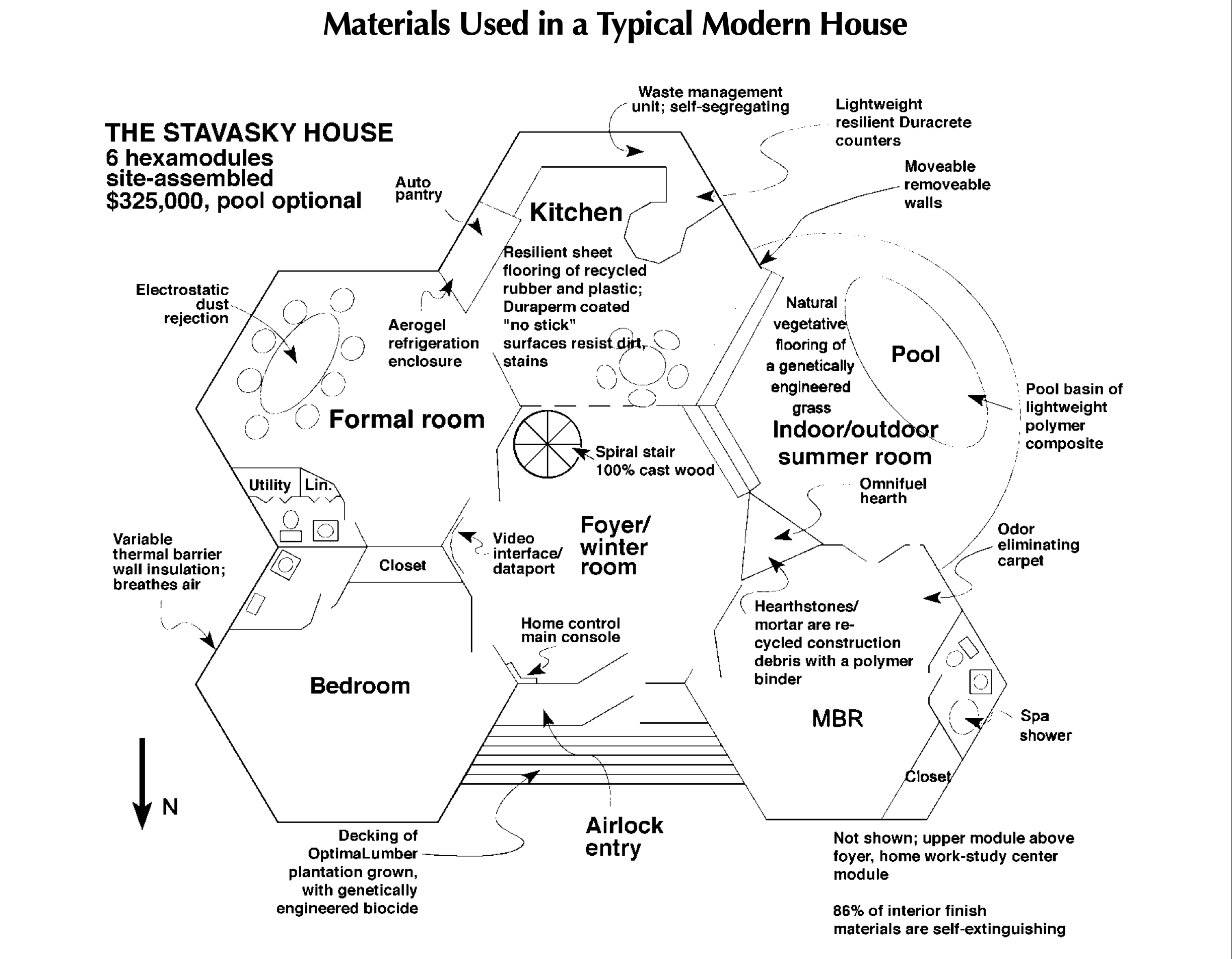
Sponsors with direct stakes in these domains shared not only funding but roadmaps, proprietary insights, and awareness of planned deployments and regulatory pathways. Some elements carried self-reinforcing potential: highlighting the promise of remote collaboration or digital finance encouraged infrastructure investment and policy attention, accelerating adoption.
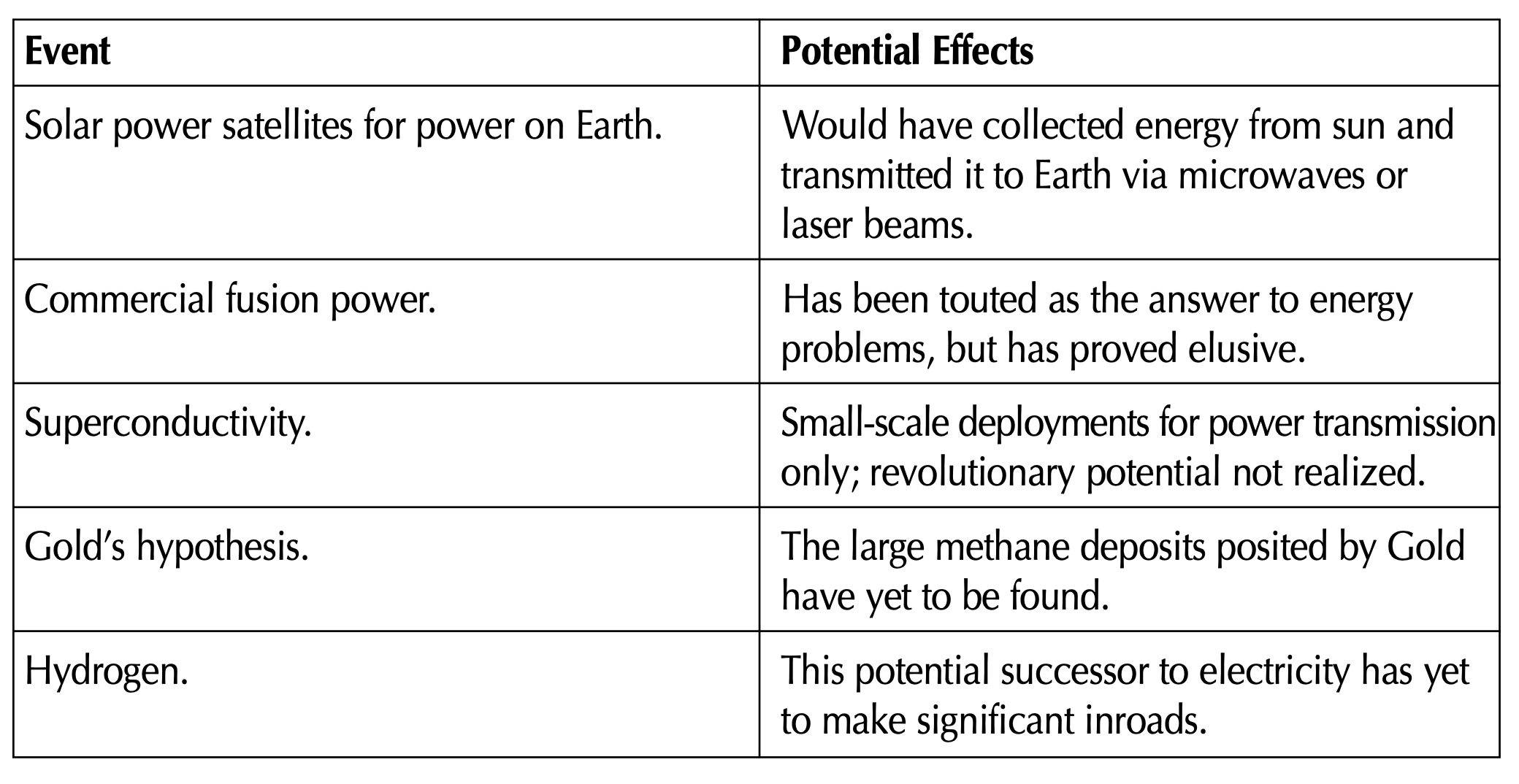
The book’s inclusion of downside risks, ethical tensions, and low-probability/high-impact wild cards (such as major conflicts or resource shocks) preserved balance and intellectual honesty rather than naive optimism. Its strength was synthesis connecting dots across fields that narrow specialists might overlook while its timing captured a genuine inflection point where technological convergence was becoming undeniable.
The book’s top thirty key predictions and insights, drawn directly from its scenarios and analyses, reveal a remarkably prescient map of the forces that have shaped our world. The predictions from the book (and the related “Highly Probable Future: 83 Assumptions about the Year 2025” framework by Joseph F. Coates et al.) that clearly or substantially came true by 2025–2026, with the original prediction and supporting evidence.
The book rests on 83 high-probability assumptions (plus 24 lower-probability ones) that underpinned its 15 scenarios. Comprehensive public analyses and direct comparisons to real-world outcomes show strongest accuracy in technology and connectivity. Not every one of the 83 has been exhaustively scored in public sources, so this focuses on those with clear confirmation.
Technology and Information Systems (Strongest Hits)
- Prediction: A “worldwide, broadband network of networks” (the Internet) will explode in reach and capability.
Proof: By the mid-2020s the global Internet had become ubiquitous for most of the world’s population in developed and many developing regions, with broadband (fixed and mobile) as the dominant infrastructure. Billions of users and continuous expansion of capacity confirmed the forecast. - Prediction: “Communication will be available to any place at any time from anywhere.”
Proof: Smartphones, mobile broadband, satellite constellations, and always-on connectivity made this routine for large parts of the global population by 2025. Instant messaging, video calls, and data access from virtually any location became standard. - Prediction: There will be “countless virtual communities based on electronic linkages.”
Proof: Social media platforms, online forums, gaming communities, professional networks, and specialized digital groups proliferated into the hundreds of millions of communities serving billions of users. - Prediction: “The learning of machines, systems, and devices will mimic or surpass human intelligence” (with examples of adaptive, intelligent systems).
Proof: Machine learning and modern AI systems (especially large language models and related technologies from the early 2020s onward) demonstrably matched or exceeded human performance on many cognitive, pattern-recognition, generative, and specialized tasks by 2025. - Prediction: People in advanced nations will become both “computer literate” and “computer dependent.”
Proof: Digital literacy is near-universal in developed countries, while dependence on computers, smartphones, cloud services, and AI tools for work, communication, finance, navigation, and daily life is extreme and widely documented.
Demographics
- Prediction: World population will reach about 8.4 billion by 2025 (with a three-tier structure of affluent “World 1,” middle-income “World 2,” and poorer “World 3” populations).
Proof: United Nations and World Bank estimates put the mid-2025 world population at approximately 8.23 billion (rising toward 8.3 billion by mid-2026). The figure was very close; the three-tier socioeconomic framing also broadly matches observed global income and development distributions.
Additional assumptions that aligned well include widespread digitization of information and services, growth of smart/embedded devices (“megatronics” or ubiquitous sensing and microprocessors in everyday objects), continued urbanization of the global population, and the centrality of sustainability and environmental management as organizing concepts in policy and technology.
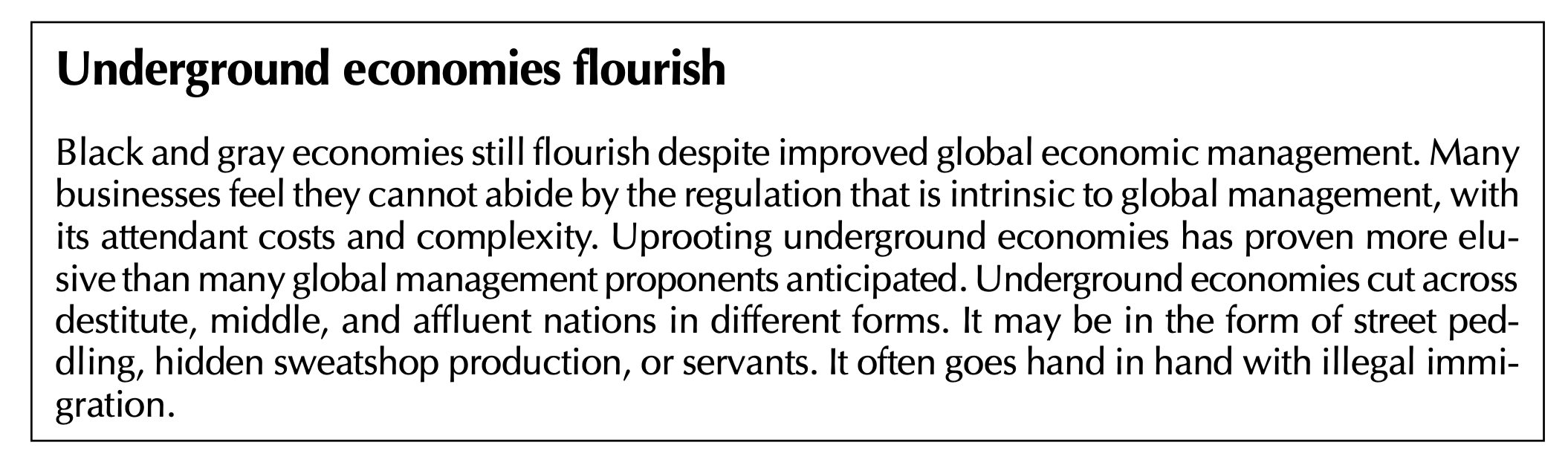
Coates performed best on technology forecasts. Life-expectancy gains, certain genetic/food applications, universal U.S. healthcare, prefabricated housing dominance, a stabilizing worldwide middle class as a force for democracy, a true global currency, and highly effective global governance bodies were among the clear misses or only partial hits.

Analysis Of The Predictions
I will focus on about 30 of the most notable predictions with a focus on how they have played out since the predictions. Here my analysis of the 1997 context, reasons for accuracy, multiple modern examples through 2026, nuances, interconnections with other forecasts, and broader implications.
1. Remote and virtual work will become widespread through pervasive computing, high-bandwidth networks, and software enabling seamless distributed collaboration. In 1997, telecommuting existed in pilot form amid rising internet commercialization; the authors foresaw it scaling dramatically. Accuracy stemmed from visible exponential growth in connectivity and productivity tools. By 2020 the pandemic forced global adoption via Zoom and cloud platforms; hybrid models persist in 2025–2026 with documented productivity and emission benefits in knowledge sectors. Edge cases include isolation effects and lags in hands-on industries. It interconnects with digital identities and cyber risks. Implications include transformed urban planning and policy needs for remote taxation.
2. Smart IDs, digital identities, and integrated databases will enable efficient governance, commerce, security, and personalized services. Early smart-card and database trends, plus post-Cold War administrative modernization, informed this forecast. Systems like India’s Aadhaar, EU digital wallets, and U.S. REAL ID expansions, plus COVID-era health credentials and CBDC pilots, demonstrate realization. Privacy versus convenience trade-offs and exclusion risks for marginalized groups represent key nuances. It underpins programmable finance and predictive systems.
3. Digital and electronic currencies will emerge, reducing cash reliance and enabling new monetary architectures. Visible early experiments in electronic money (way before Bitcoin) and globalization needs supported this. Bitcoin’s 2009 launch, stablecoins, mobile payments dominance in China and Africa, and widespread CBDC research by 2025–2026 confirm the trajectory. Volatility, regulatory battles, and inclusion gains for the unbanked illustrate nuances. It links to identity systems and cyber vulnerabilities.
4. Biotechnology revolutions—including genetic engineering, rapid vaccine platforms, and personalized medicine—will transform health, agriculture, and lifespans. The Human Genome Project’s momentum and Dolly’s 1996 cloning signaled this shift. The mRNA “vaccines” deployed in under a year for COVID, CRISPR therapies advancing, and longevity biotech targeting aging validate it. Ethical enhancement debates and access inequities are central nuances. It converges with nanotechnology and pandemic preparedness.
5. Fast-mutating viral pandemics and the need for global health coordination (including WHO-style vaccination programs) will challenge societies. Emerging zoonotic risks and globalization’s disease-spreading effects were already evident. SARS 2003, H1N1, and especially COVID-19 with its rapid vaccine response and equity debates match closely. Surveillance advances like wastewater monitoring coexist with trust and geopolitical frictions. It interconnects with biotech and systemic crisis scenarios.
6. Nanotechnology will enable microscopic devices, advanced materials, and medical interventions with broad industrial and health applications. Early conceptual work and materials science progress informed this. Nanoparticles in mRNA vaccines, quantum dots, and self-assembling materials show progress; targeted drug delivery research continues. Safety and dual-use concerns represent edge cases. It amplifies biotech and defense capabilities.
7. Cyberattacks and digital sabotage targeting critical infrastructure (power grids, air traffic, finance) will become major threats causing widespread disruption. Early worms and growing network dependence highlighted vulnerabilities. Stuxnet, NotPetya, Colonial Pipeline, and ongoing state-sponsored incidents validate the forecast. Attribution challenges and escalation risks are nuances. It ties directly to remote work and economic stability.
8. Risks of large-scale conflicts, potentially including nuclear elements or World War III-level disruptions amid great-power competition. Post-Cold War optimism was tempered by lingering tensions and proliferation concerns. Russia-Ukraine dynamics, Taiwan frictions, and nuclear modernization echo these warnings. Proxy conflicts versus direct escalation illustrate nuances. It interconnects with resource and systemic shocks.
9. Mass starvation or severe food shortages driven by climate, conflict, political disruptions, or supply strains will affect vulnerable regions. Resource competition and globalization fragilities were already visible. Ukraine war grain impacts, Sahel crises, and climate-affected yields demonstrate ongoing relevance. Vertical farming and GM crops offer partial counters amid distribution inequities.
10. Environmental and climate stresses will reshape economies, migration patterns, and infrastructure. Early climate science and urbanization trends supported this. Extreme weather events, sea-level pressures, and COP-driven transitions with climate migration flows validate the direction. Green technology races and adaptation investments show responses.
11. Advanced defense and dual-use technologies will proliferate, integrating AI precursors, drones, and autonomous systems. Military R&D trajectories in the 1990s pointed here. Drone warfare in Ukraine and AI-enabled systems demonstrate acceleration. Ethical and arms-control challenges are key nuances.
12. Demographic shifts, including aging populations and rapid urbanization, will strain labor markets, healthcare, and infrastructure. Visible trends in Japan, Europe, and developing megacities informed this. Pension pressures, senior care innovation, and urban infrastructure demands continue. Immigration and automation serve as partial mitigations.
13. Economic globalization will accelerate alongside rising inequality and political backlash. WTO-era integration and early trade tensions supported this. Supply-chain reshoring, trade conflicts, and populist movements reflect the dual dynamics. It interconnects with resource competition and social cohesion risks.
14. Energy transitions and competition over critical resources will intensify. Early renewable research and fossil-fuel geopolitics were evident. EV adoption, solar/wind scaling, and lithium/rare-earth races with China’s role show realization. Supply-chain vulnerabilities and innovation opportunities coexist.
15. Societal polarization and cultural/technological divides will challenge cohesion. Information overload and media evolution were already emerging. Algorithm-driven echo chambers, urban-rural gaps, and misinformation amplify this. Media literacy and platform regulation represent responses.
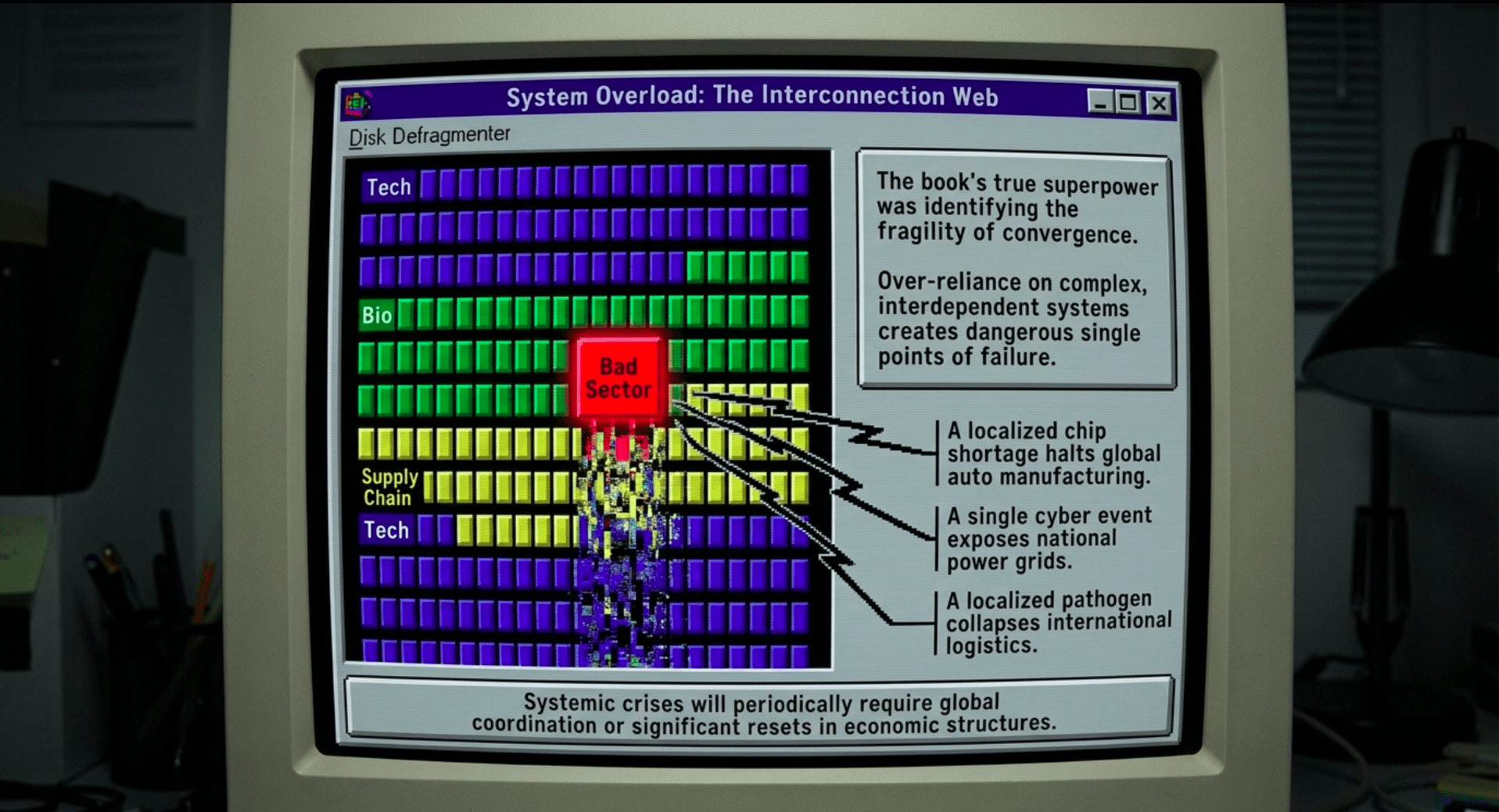
16. Systemic crises will periodically require global coordination or significant “resets” in economic and governance structures. Interconnected risks across domains pointed here. Pandemic responses, financial resets, and climate accords illustrate the pattern. Adaptive governance becomes essential.
17. Personalized, predictive, and preventive medicine powered by genomics and data will extend healthy lifespans. Genome project momentum and early wearables signaled this. Apple Watch diagnostics, precision oncology, and AI-driven health tools demonstrate progress. Privacy and equity nuances persist.
18. Lifelong education and workforce reskilling will become essential for tech-driven economies. Rapid change and skill obsolescence were foreseeable. Online platforms, AI tutors, and vocational surges address gaps. Hybrid human-AI collaboration emerges as a model.
19. Ethical dilemmas surrounding human enhancement, genetic modification, and early AI-like systems will intensify. Biotech and computing convergence raised these flags. Neural interfaces, CRISPR ethics, and AI alignment debates continue. Governance frameworks lag behind capability.
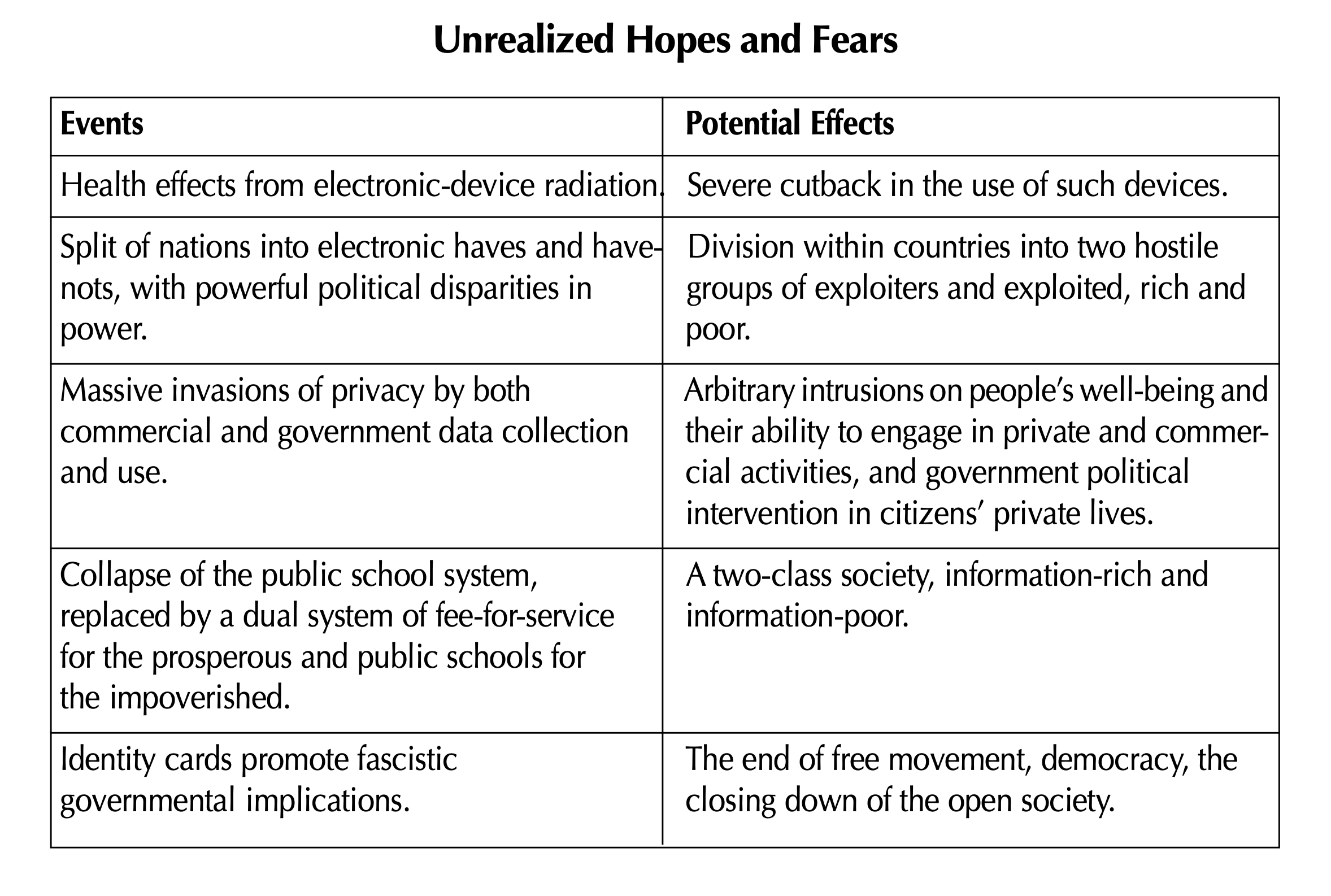
20. Privacy erosion versus security imperatives will create ongoing societal tensions in connected environments. Surveillance capabilities and data growth were evident. Major breaches, encryption debates, and regulatory responses like GDPR illustrate the balance. It underpins identity and cyber forecasts.
21. Innovation ecosystems blending public-private partnerships will accelerate technological progress. Think-tank and corporate collaboration models exemplified this. DARPA-style initiatives and Big Tech-government AI/semiconductor partnerships show continuity. Open innovation and garage-scale efforts complement large-scale efforts.
22. Wild-card events and black swans will periodically amplify or derail baseline scenarios. Scenario methodology explicitly included uncertainty. COVID-19 as a realized amplifier of multiple trends validates the approach. Preparedness and antifragility become strategic priorities.
23. Opportunities for human flourishing through technology—extended capability, creativity, and connection—will coexist with fragilities. Optimistic integration of forecasts supported this. AI productivity tools, renewable abundance, and global knowledge access demonstrate gains. Wise stewardship determines outcomes.
24. Over-reliance on complex technological systems will create new vulnerabilities and single points of failure. Interdependence was already growing. Chip shortages, solar flares or cyber events exposing grids, and cascading failures highlight risks. Redundancy and resilience engineering gain importance.
25. Foresight, ethical reflection, and adaptive governance institutions will prove essential for navigating change. The book itself modeled this need. AI safety summits, bioethics boards, and corporate scenario planning reflect responses. Long-term thinking becomes a competitive and societal advantage.
26. Urbanization and smart infrastructure will transform living patterns and resource use. City growth and early sensor/network trends informed this. Smart-city pilots, IoT integration, and sustainable urban design continue evolving. Equity in access and livability remain challenges.
27. Attention economies and new media forms will reshape information consumption, education, and social bonds. Information explosion was already underway. Algorithmic feeds, generative AI content, and deepfakes create both empowerment and epistemic strain. Digital literacy emerges as foundational.
28. Decentralized production, micro-manufacturing, and permissionless innovation will complement or challenge centralized systems. Early maker and internet-enabled trends pointed here. 3D printing, open-source hardware, and garage-scale AI/robotics efforts demonstrate this. It supports artisan awakening and local resilience.
29. Preservation of knowledge, stories, and personal/cultural archives will become increasingly vital amid rapid change and potential loss. Implicit in discussions of information transformation and societal memory. Personal knowledge systems, oral history projects, and offline archives address “great forgetting” risks. It underpins wisdom transmission across generations.
30. By 2025, society will be profoundly reshaped by science and technology into forms demanding resilience, ethical wisdom, proactive preparation, and human agency—neither utopia nor dystopia, but a landscape of both peril and unprecedented possibility. This overarching thesis frames the entire work.
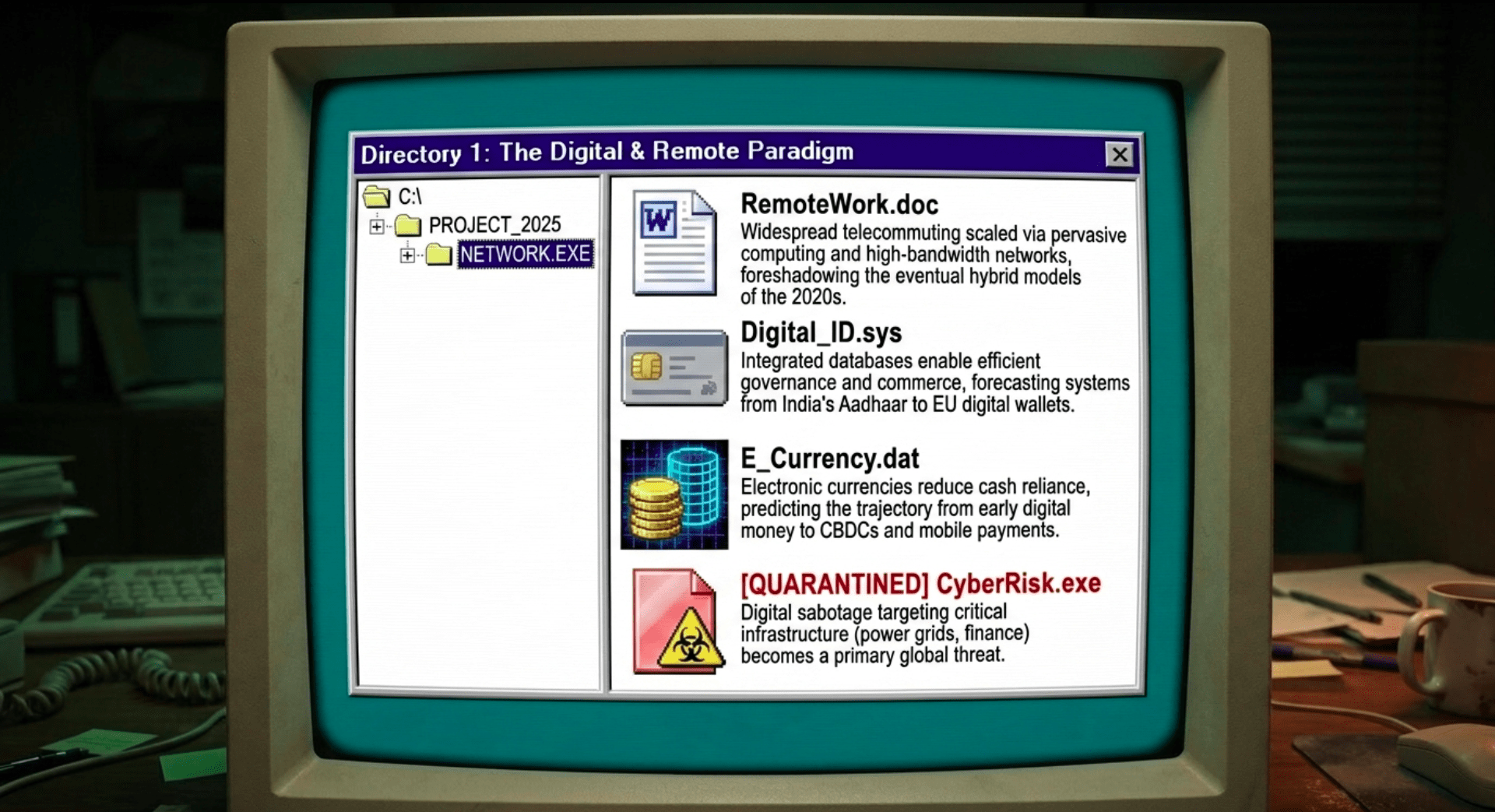
These forecasts interconnect densely: technological convergence fuels economic and health transformations while amplifying security and ethical risks; globalization and demographics interact with resource and climate stresses; digital systems enable both empowerment and vulnerability. The 1997 context of visible exponentials plus insider access made accurate directional forecasting possible without requiring perfect precision on timelines or details.
The enduring power of this 1997 masterpiece lies not in fatalism but in illumination. Its authors, working at a pivotal historical crossroads with institutional support and methodological rigor, mapped forces already in motion and warned of branches still open to choice. Awareness itself becomes the decisive variable.
The Darker Predictions That Did Not Take Place–Yet
The 2025: Scenarios of U.S. and Global Society Reshaped by Science and Technology were predominantly techno-optimistic, yet they still contained a set of darker, more disruptive assumptions, some labeled high-probability, others lower-probability that have not fully materialized by the mid-2020s. These include institutional breakdowns, large-scale technological risks, and forms of social control that the authors treated as plausible outcomes of accelerating science and technology. Their non-arrival does not prove the risks obsolete; it simply means the timelines or severity have so far been less absolute than projected.
One of the starker assumptions concerned a significant nuclear contamination event—accidental or deliberate rated higher on a severity scale than Chernobyl. The book treated this as a realistic possibility within the decades leading to 2025. While nuclear risks remain real and incidents of varying scale have occurred, no event matching the projected magnitude of widespread contamination has taken place. The combination of improved safety cultures in many civilian programs, tighter non-proliferation efforts in some domains, and sheer contingency has so far prevented the darker outcome the authors judged likely enough to include among their baseline assumptions.
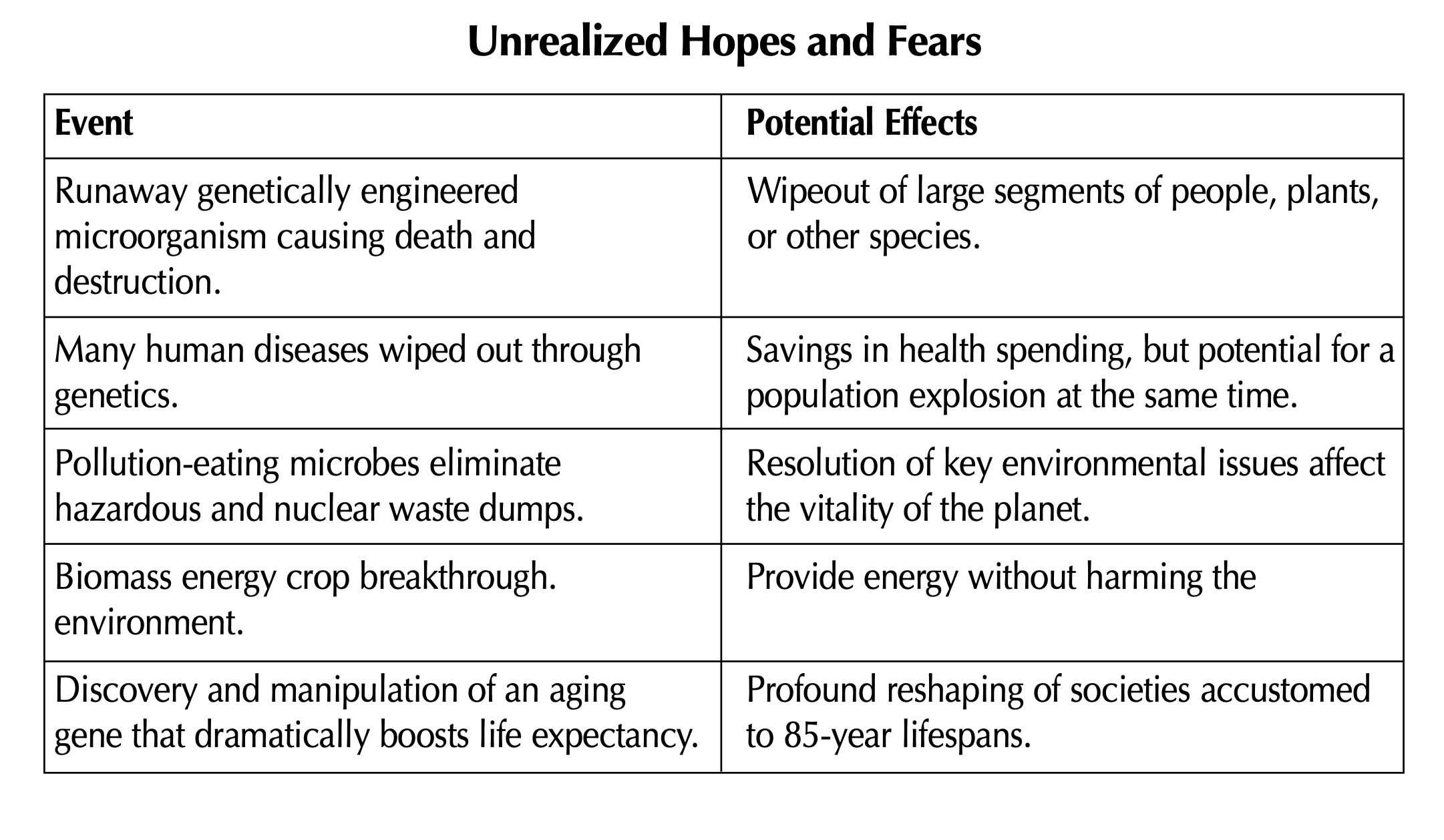
A parallel institutional forecast concerned the likely collapse of the U.S. Social Security system, to be replaced by a purely need-based form of old-age security. Demographic pressures, longer lifespans, and fiscal strain were already visible in the 1990s, and the authors expected those forces to force a fundamental break by 2025. The system has faced repeated solvency warnings and incremental adjustments, yet it has not collapsed into the need-only model predicted. Political resistance, stopgap financing, and the sheer difficulty of dismantling a program with broad constituencies have deferred the darker restructuring, even as long-term pressures continue to mount.
On the biomedical front, the book anticipated that direct, targeted interventions for human enhancement—along with brain-mind manipulation technologies capable of influencing emotion, learning, memory, and other psychological states—would become commonplace. Genetic screening and counseling were expected to expand into explicit programs for enhancing physical and mental abilities in parts of the world. While gene editing, neurotechnology, and brain-computer interfaces have advanced, they remain far from the widespread, routine societal application the authors envisioned. Ethical, regulatory, and technical barriers have slowed the transition from laboratory capability to mass deployment of the more invasive forms of enhancement and behavioral influence.
Environmental and infrastructural forecasts also contained darker edges that have not fully arrived. The authors expected substantial movement toward a “totally managed environment” at national and global scales, including planetary-scale macroengineering of oceans, forests, water systems, and other domains. Climate stress, biodiversity loss, and resource pressures have intensified, yet the radical, coordinated planetary management apparatus they described has not materialized. Governance remains fragmented, and large-scale geoengineering remains largely experimental or contested rather than operational reality.
The projected universal smart identification systems—cards or digital equivalents carrying extensive personal data including genomic information, financial records, affiliations, and medical history—have advanced in pieces but not to the comprehensive, inescapable degree outlined. Digital identity systems, biometric databases, and data aggregation have expanded dramatically, yet the fully integrated, mandatory personal dossier the book treated as probable has been constrained by privacy laws, technical fragmentation, and political pushback in many jurisdictions. The darker vision of near-total administrative legibility of the individual has progressed, but it has not yet reached the seamless, society-wide form the 1990s forecasts anticipated.
These unfulfilled darker predictions illustrate both the limits of even careful foresight and the contingent nature of risk. The underlying pressures fiscal strain on entitlement systems, dual-use nuclear and biological technologies, the temptation of human enhancement, and the drive toward comprehensive data systemsMhave not disappeared. They have simply unfolded more slowly, more unevenly, or with stronger countervailing forces than the authors expected when they looked forward from the mid-1990s.
This is the analysis of the 1994 predictions that gave foundation to the 1997 book. There are many more tributaries to the main themes and it gives us some insight of how they saw the future. The highly probable future: 83 assumptions about the year 2025 (1994) take a much wider approach.
The Highly Probable Future: 83 Assumptions about the Year 2025
Before we can plan the future, we must make some assumptions about what that future will be like. This inventory of “highly probable” futures, developed by Coates & Jarratt, Inc., provides a foundation for getting started.
Assumptions about the future are not like assumptions in a geometry exercise. They are not abstract statements from which consequences can be derived with mathematical precision. But we need to make some assumptions about the future in order to plan it, prepare for it, and prevent undesired events from happening.The following 83 statements about the year 2025 were developed for Project 2025: Anticipating Developments in Science and Technology and Their Implications for the Corporation, sponsored by 18 large organizations in the United States and Europe. The project’s goal is to explore how science and technology are likely to reshape society over the next three decades.
Some are assumptions drawn from the project. Others, such as the estimates of future population, come from public or highly credible private statistical and mathematical analyses of trends. Still others result from integrating a wide range of material; one such assumption is that we will be moving toward a totally managed globe. To present the underlying arguments supporting each of these highly reliable statements (which amount to forecasts) would require a massive report. We have, therefore, presented these statements about the future as simply and in as straightforward a manner as possible.
A few of these assumptions have a normative, or goals-oriented, aspect to them. The assumption, for example, that per capita energy consumption in the advanced nations will fall to 66% of the 1990 level is definitely not a trend extrapolation but a judgment about the confluence of social, political, economic, environmental, technological, and other concerns. Readers are urged to formulate and review alternatives that might characterize the next 30 years and test how those alternatives affect any other thoughts, concepts, beliefs, or conclusions about the future.
What follows is an inventory of high-probability statements about the year 2025 in two categories:
A. Scientific discoveries and research and technological developments and applications.
B. Contextual, that is, those factors forming the social, economic, political, military, environmental, and other factors that will shape or influence scientific and technological developments. These contextual areas form the environment for the introduction and maturation of new products, processes, and services in society.
These high-probability assumptions are the underpinnings to understanding how any particular area may develop under the influence of new scientific, technological, social, political, or economic developments.
It would be nice to suggest that these developments are inevitable, but few developments are. Nonetheless, the convergence of evidence indicates that these developments are of such high likelihood that they form an intellectual substructure for thinking about the year 2025.
Managing Our World
1. Movement toward a totally managed environment will have proceeded substantially at national and global levels.
Oceans, forests, grasslands, and water supplies make up major areas of the managed environment. Macroengineering–planetary-scale civil works–will make up another element of that managed environment. Finally, the more-traditional business and industrial infrastructure–telecommunications, manufacturing facilities, chemical plants, electric-generating facilities, and so on–will be a part of managed systems and subsystems.
Note that total management does not imply full understanding of what is managed. But expanding knowledge will make this management practical. Total management also does not imply total control over these systems.
2. Everything will be smart–that is, responsive to its external or internal environment. This will be achieved either by embedding micro-processors and associated sensors in physical devices or by creating materials that are responsive to physical variables such as light, heat, noise, odors, and electromagnetic fields, or by a combination of these two strategies.
Managing Human Health
3. All human disease and disorders will have their linkages, if any, to the human genome identified. For many diseases and disorders, the intermediate biochemical processes that lead to the expression of the disease or disorder and its interactions with a person’s environment and personal history will also have been explicated.
4. In several parts of the world, the understanding of human genetics will lead to explicit programs to enhance people’s overall physical and mental abilities–not just prevent diseases.
5. The chemical, physiological, and genetic bases of human behavior will be generally understood. Direct, targeted interventions for disease control and individual human enhancement will be commonplace. Brain-mind manipulation technologies to control or influence emotions, learning, sensory acuity, memory, and other psychological states will be available and in widespread use.
6. In-depth personal medical histories will be on record and under full control of the individual in some form of a medical smart card or disk.
7. More people in advanced countries will be living to their mid-80s while enjoying a healthier, fuller life.
8. Custom-designed drugs such as hormones and neurotransmitters (chemicals that control nerve impulses) will be as safe and effective as those produced naturally within humans or other animals.
9. Prosthesis (synthetic body parts or replacements) with more targeted drug treatments will lead to radical improvements for people who are injured, impaired, or have otherwise degraded physical or physiological capabilities.
Managing Environment And Resources
10. Scientists will have worked out the genome of prototypical plants and animals, including insects. This will lead to more-refined management, control, and manipulation of their health, propagation, or elimination.
11. New forms of microorganisms, plants, and animals will be commonplace due to advances in genetic engineering.
12. Foods for human consumption will be more diverse as a result of agricultural genetics. There will be substantially less animal protein in diets in advanced nations, compared with the present. A variety of factors will bring vegetarianism to the fore, including health, environmental, and ethical trends.
13. There will be synthetic and genetically manipulated foods to match each individual consumer’s taste, nutritional needs, and medical status. Look for “extra-salty (artificial), low-cholesterol, cancer-busting french fries.”
14. Farmers will use synthetic soils, designed to specification, for terrain restoration and to enhance indoor or outdoor agriculture.
15. Genetically engineered microorganisms will do many things. In particular, they will be used in production of some commodity chemicals as well as highly complex chemicals and medicines, vaccines, and drugs. They will be widely used in agriculture, mining, resource upgrading, waste management, and environmental cleanup.
16. There will be routine genetic programs for enhancing animals used for food production, recreation, and even pets. In less-developed countries, work animals will be improved through these techniques.
17. Remote sensing of the earth will lead to monitoring, assessment, and analysis of events and resources at and below the surface of the earth and ocean. In many places, in situ sensor networks will assist in monitoring the environment. Worldwide weather reporting will be routine, detailed, and reliable.
18. Many natural disasters, such as floods, earthquakes, and landslides, will be mitigated, controlled, or prevented.
19. Per capita energy consumption of all types of goods and services in the advanced nations will be at 66% of per capita consumption in 1990.
20. Per capita consumption in the rest of the world will be at 160% of per capita consumption in 1990.
21. Resource recovery along the lines of recycling, reclamation, and remanufacturing will be routine in all advanced nations. Extraction of virgin materials through mining, logging, and drilling will be dramatically reduced, saving energy and protecting the environment.
22. Restorative agriculture (i.e., “prescription” farming) will be routine. Farmers will design crops and employ more-sophisticated techniques to optimize climate, soil treatments, and plant types.
Automation and Infotech
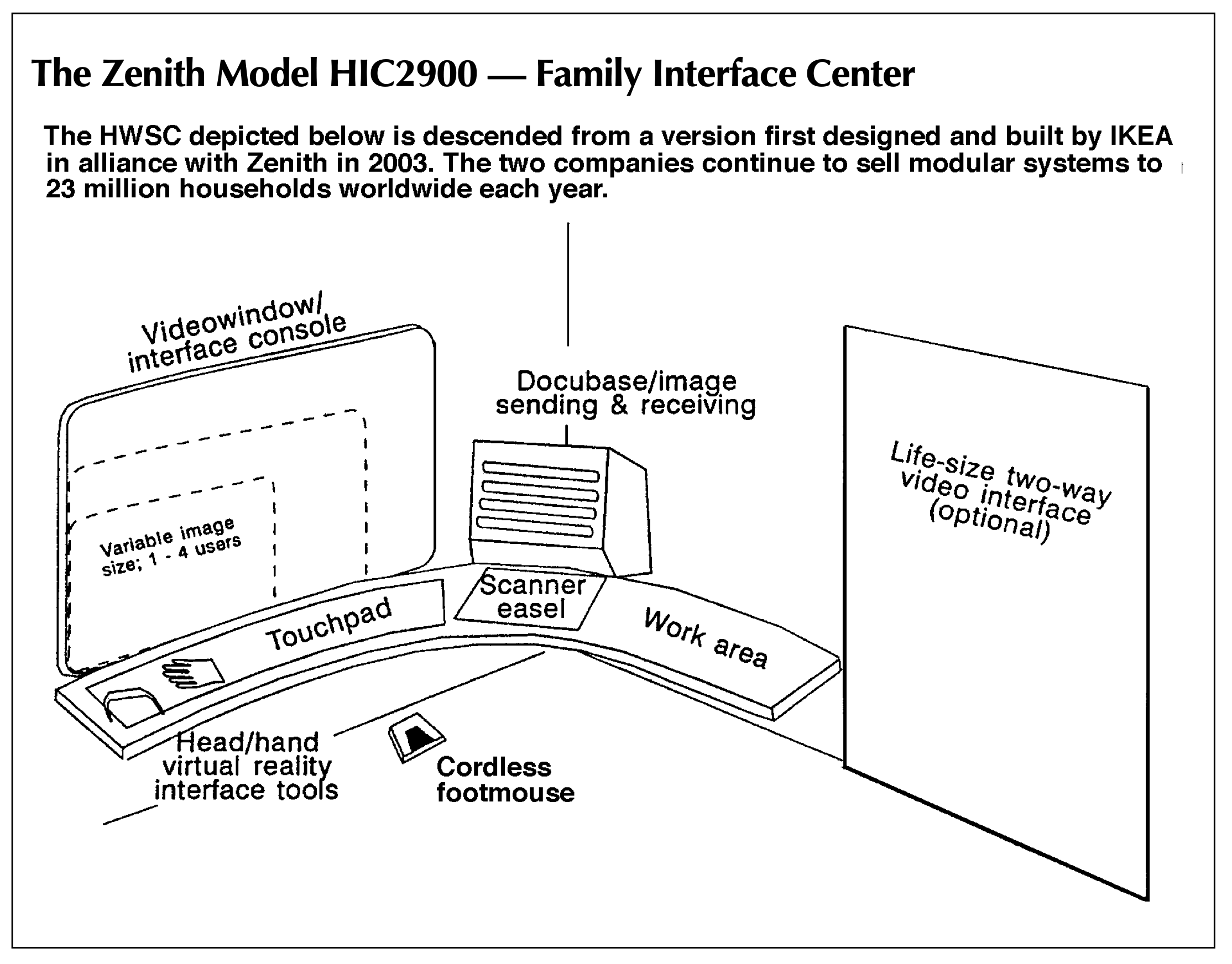
23. There will be a worldwide, broadband network of networks based on fiber optics; other techniques, such as communications satellites, cellular, and microwave will be ancillary. Throughout the advanced nations and the middle class and prosperous crust of the developing world, face-to-face, voice-to-voice, person-to-data, and, data-to-data communication will be available to any place at any time from anywhere.
24. Robots and other automated machinery will be commonplace inside and outside the factory, in agriculture, building and construction, undersea activities, space, mining, and elsewhere.
25. There will be universal, on-line surveys and voting in all the advanced nations. In some jurisdictions, this will include voting in elections for local and national leaders.
26. Ubiquitous availability of computers will facilitate automated control and make continuing performance monitoring and evaluations of physical systems routine.
27. The ability to manipulate materials at the molecular or atomic level will allow manufacturers to customize materials for highly specific functions such as environmental sensing and information processing.
28. Totally automated factories will be common but not universal for a variety of reasons, including the cost and availability of technology and labor conflicts.
29. Virtual-reality technologies will be commonplace for training and recreation and will be a routine part of simulation for all kinds of physical planning and product design.
30. In printed and–to a lesser extent–in voice-to-voice telecommunication, language translation will be effective for restricted but practically significant vocabularies.
31. Expert systems will be developed to the point where the learning of machines, systems, and devices will mimic or surpass human learning. Certain low-level learning will evolve out of situations and experiences, as it does for infants. The toaster will “know” that the person who likes white bread likes it toasted darker, and the person who chooses rye likes it light.
32. The fusion of telecommunications and computation will be complete. We’ll use a new vocabulary of communications as we talevote, teleshop, telework, and tele-everything. We’ll e-mail, tube, or upload letters to Mom. We’ll go MUDing in cyberspace and mind our netiquette during virtual encounters.
33. Factory-manufactured housing will be the norm in advanced nations, with prefabricated modular units making housing more flexible as well as more affordable.
34. In the design of many commercial products such as homes, furnishings, vehicles, and other articles of commerce, the customer will participate directly with the specialist in design.
35. New infrastructures throughout the world will be self-monitoring. Already, some bridges and coliseums have “tilt” sensors to gauge structural stress; magnetic-resonance imaging used in medical testing will also be used to noninvasively examine materials for early signs of damage so preventive maintenance can be employed.
36. Interactive vehicle-highway systems will be widespread, with tens of thousands of miles of highway either so equipped or about to be. Rather than reconstruct highways, engineers may retrofit them with the new technologies.
37. Robotized devices will be a routine part of the space program, effectively integrating with people. Besides the familiar robotic arm used on space shuttles, robots will run facilities in space, operating autonomously where humans are too clumsy or too vulnerable to work effectively.
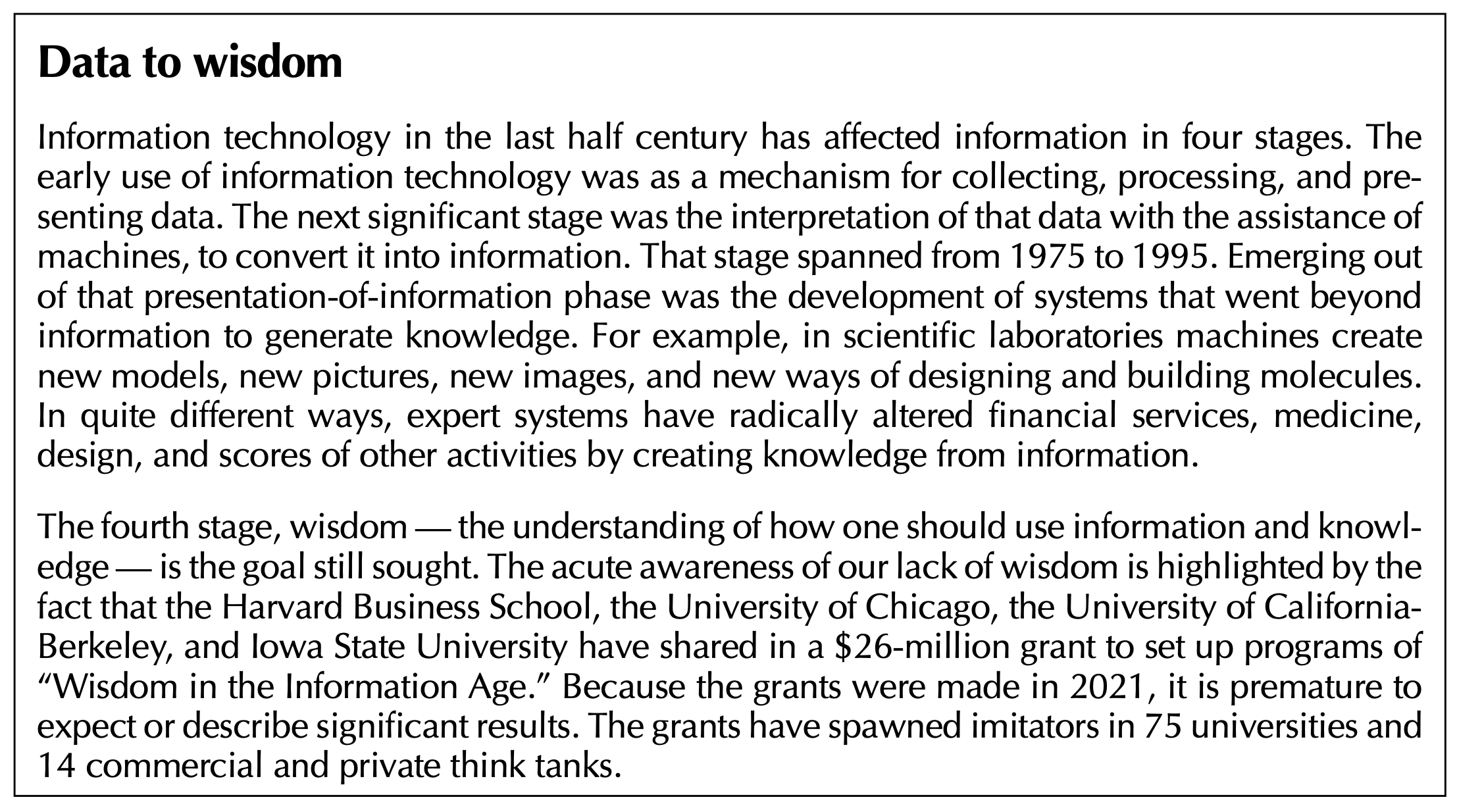
38. Applied economics will lead to a greater dependency on mathematical models embodied in computers. These models will have expanded capabilities and will routinely integrate environmental and quality-of-life factors into economic calculations. One major problem will be how to measure the economic value of information and knowledge. A Nobel Prize will be granted to the economist who develops an effective theory of the economics of information.
Population Trends
39. World population will be about 8.4 billion people.
40. Family size will be below replacement rates in advanced nations but well above replacement rates in the less-developed world.
41. Birth-control technologies will be universally accepted and widely employed, including a market for descendants of RU486.
42. The population of advanced nations will be older, with an average age of 41.
43. The less-developed world will be substantially younger but will have made spotty but significant progress in reducing birth rates. However, the population of these countries will not stop growing until sometime after 2025.
44. The majority of the world’s population will be metropolitan, including people living in satellite cities clustered around metropolitan centers.
45. World population will divide into three tiers: at the top, World 1, comprising advanced nations and the world’s middle-classes living in prosperity analogous to Germany, the United States, and Japan; at the bottom, World 3, people living in destitution; and in the middle, World 2, a vast range of people living comfortably but not extravagantly in the context of their culture. We use the terms World 1, World 2, and World 3 for the emerging pattern of nations that moves us beyond the post-World War II nomenclature.
46. A worldwide middle class will emerge. Its growth in World 2 and to a lesser extent in World 3 will be a powerful force for political and economic stability and for some forms of democracy.
Worldwide Tensions
47. There will be worldwide unrest reflecting internal strife, border conflicts, and irredentist movements. But the unrest will have declined substantially after peaking between 1995 and 2010.
48. Under international pressures, the United Nations will effectively take on a peacemaking role to complement its historic peacekeeping role.
49. Widespread contamination by a nuclear device will have occurred either accidentally or as an act of political/military violence. On a scale of 1 to 10 (with Three Mile Island a 0.5 and Chernobyl a 3), this event will be a 5 or higher.
50. Increasing economic and political instabilities will deter business involvement in specific World 3 countries.
51. Despite technological advances, epidemics and mass starvation will be common occurrences in World 3 because of strained resources in some areas and politically motivated disruptions in others.
52. Supranational government will become prominent and effective, though not completely, with regard to environmental issues, war, narcotics, design and location of business facilities, regulation of global business, disease prevention, workers’ rights, and business practices.
53. There will be substantial environmental degradation, especially in World 3. Governments will commit money to ease and correct the problem, but many will sacrifice long-term programs that will prevent the problems from happening in the first place.
54. There will be shifts in the pattern of world debtor and creditor countries. Japan’s burst economic bubble, the ever-growing U.S. debt, and Germany’s chronic unemployment problems are harbingers of things to come.
55. NIMBY (“Not In My Back Yard”) will be a global-scale problem for a variety of issues, ranging from hazardous-waste disposal to refugees to prisons to commercial real-estate ventures.
56. Migration throughout the world will be regulated under new international law.
57. Terrorist activity that crosses international borders will continue to be a problem.
The Electronic Global Village
58. Global environmental management issues will be institutionalized in multinational corporations as well as through the United Nations and other supranational entities.
59. A global currency will be in use.
60. English will remain the global common language in business, science, technology, and entertainment.
61. Schooling on a worldwide basis will be at a higher level than it is today. Education may approach universality at the elementary level and will become more accessible at the university level through distance-education technologies.
62. In the advanced nations, lifelong learning will be effectively institutionalized in schools and businesses.
63. There will be substantial, radical changes in the U.S. government. National decisions will be influenced by electronically assisted referenda.
64. Throughout the advanced nations, people will be computer literate and computer dependent.
65. Worldwide, there will be countless virtual communities based on electronic linkages.
66. There will be a worldwide popular culture. The elements of that culture will flow in all directions, from country to country. In spite of the trend toward “demassification” in both information and production, the global links of communications and trade will ensure that ideas and products will be available to all, whether they like it or not.
67. The multinational corporation will be the world’s dominant business form.
68. Economic blocs will be a prominent part of the international economy, with many products and commodities moving between these porous blocs. The principal blocs will be Europe, East Asia, and the Americas.
69. Universal monitoring of business transactions on a national and international business basis will prevail.
70. Identification cards will be universal. Smart cards will contain information such as nationality, medical history (perhaps even key data from one’s genome), education and employment records, financial accounts, social security, credit status, and even religious and organizational affiliations.
Public Issues and Values
71. Within the United States there will be a national, universal health-care system.
72. In the United States, the collapse of the Social Security system will have led to a new form of old-age security such as one based on need-only criteria.
73. Genetic screening and counseling will be universally available and its use encouraged by many incentives and health choices.
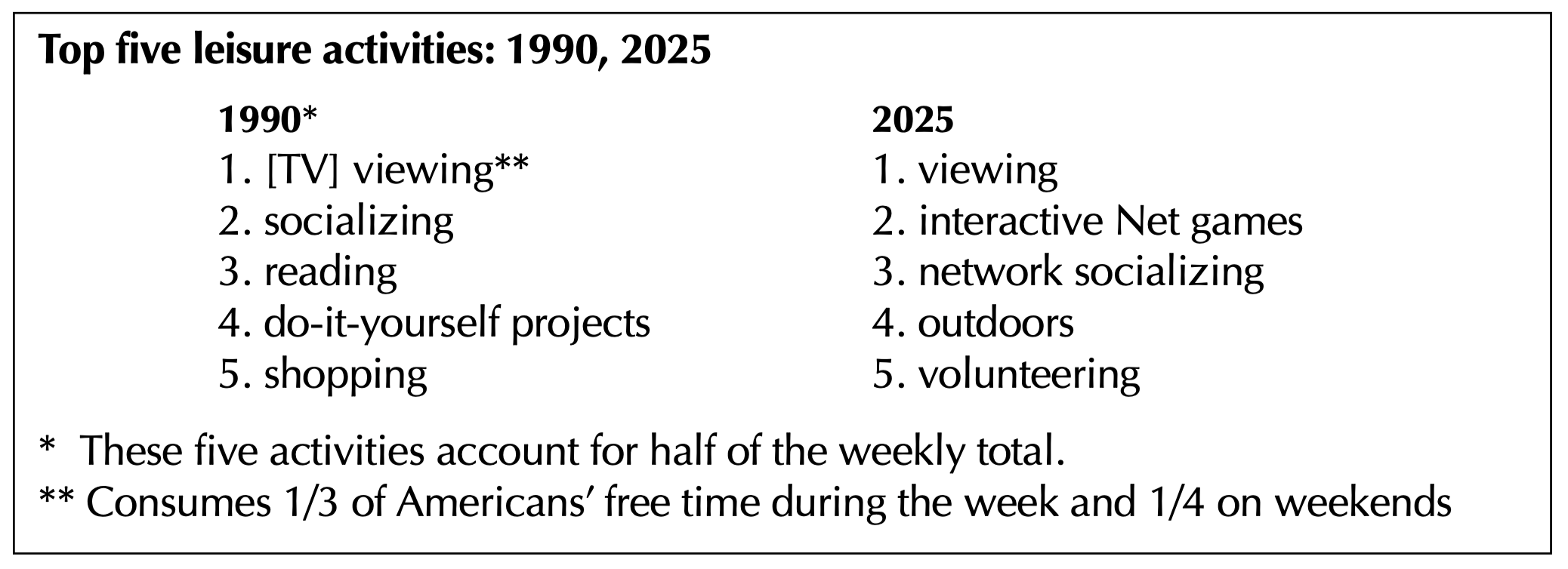
74. There will be more recreation and leisure time for the middle class in the advanced nations.
75. The absolute cost of energy will rise, affecting the cost of transportation and goods movement. Planners will reallocate terrain and physical space to make more-efficient use of scarce resources. In other words, cities will be redesigned and rezoned to improve efficiencies of energy in transportation, manufacturing, and housing, etc.
76. There will be a rise in secular substitutes for traditional religious beliefs, practices, institutions, and rituals for a substantial portion of the population of the advanced nations and the global middle class. The New Age movement, secular humanism, and virtual communities built on electronic networking are a few harbingers.
77. Socially significant crime–i.e., the crimes that have the widest negative effects–in the advanced nations will be increasingly economic and computer based. Examples include disruption of business, theft, introduction of maliciously false information, and tampering with medical records, air traffic control,or national-security systems.
78. Tax filing, reporting, and collecting will be computer managed.
79. Quality, service, and reliability will be routine business criteria around the globe.
80. Customized products will dominate large parts of the manufacturing market. Manufacturers will offer customers unlimited variety in their products.
81. Economic health will be measured in a new way, including considerations of environment, quality of life, employment, and other activity and work. These new measures will become important factors in governmental planning.
82. GNP and other macroeconomic measures and accounts will include new variables such as environmental quality, accidents and disasters, and hours of true labor.
83. Sustainability will be the central concept and organizing principle in environmental management, while ecology will be its central science.
Converging Technologies
When we know what converging technologies can unleash—both their gifts of extended capability and abundance and their risks of fragility, division, and unintended consequence—we cease to be passive passengers. Foresight hands us the steering wheel. Prediction is never destiny; it is a mirror reflecting probable trajectories if trends continue unchecked and a lantern revealing the forks where deliberate action can alter course. In the specific time and place of the mid-1990s, the authors saw the internet, genomics, and globalization not as isolated curiosities but as compounding engines. Today we stand at an even sharper inflection, where AI, robotics, and distributed systems accelerate those same dynamics exponentially. Knowing the map does not trap us upon it; it equips us to redraw it.
Human history is the long record of forecasts defied by courage, ingenuity, and collective will. The agricultural revolution, the printing press, the scientific method, and the digital age itself were each met with dire predictions that failed to account for adaptation, ethics, and creative response. When societies become aware truly aware of converging forces, they invent new institutions, new norms, and new forms of cooperation. The 2025 scenarios did not describe an inevitable future; they described what could unfold if humanity continued on autopilot. Awareness interrupts autopilot. It invites the deliberate cultivation of resilience: redundant systems, ethical guardrails, lifelong learning cultures, and communities that value both innovation and wisdom preservation.

Ethics, Past, Present An Future
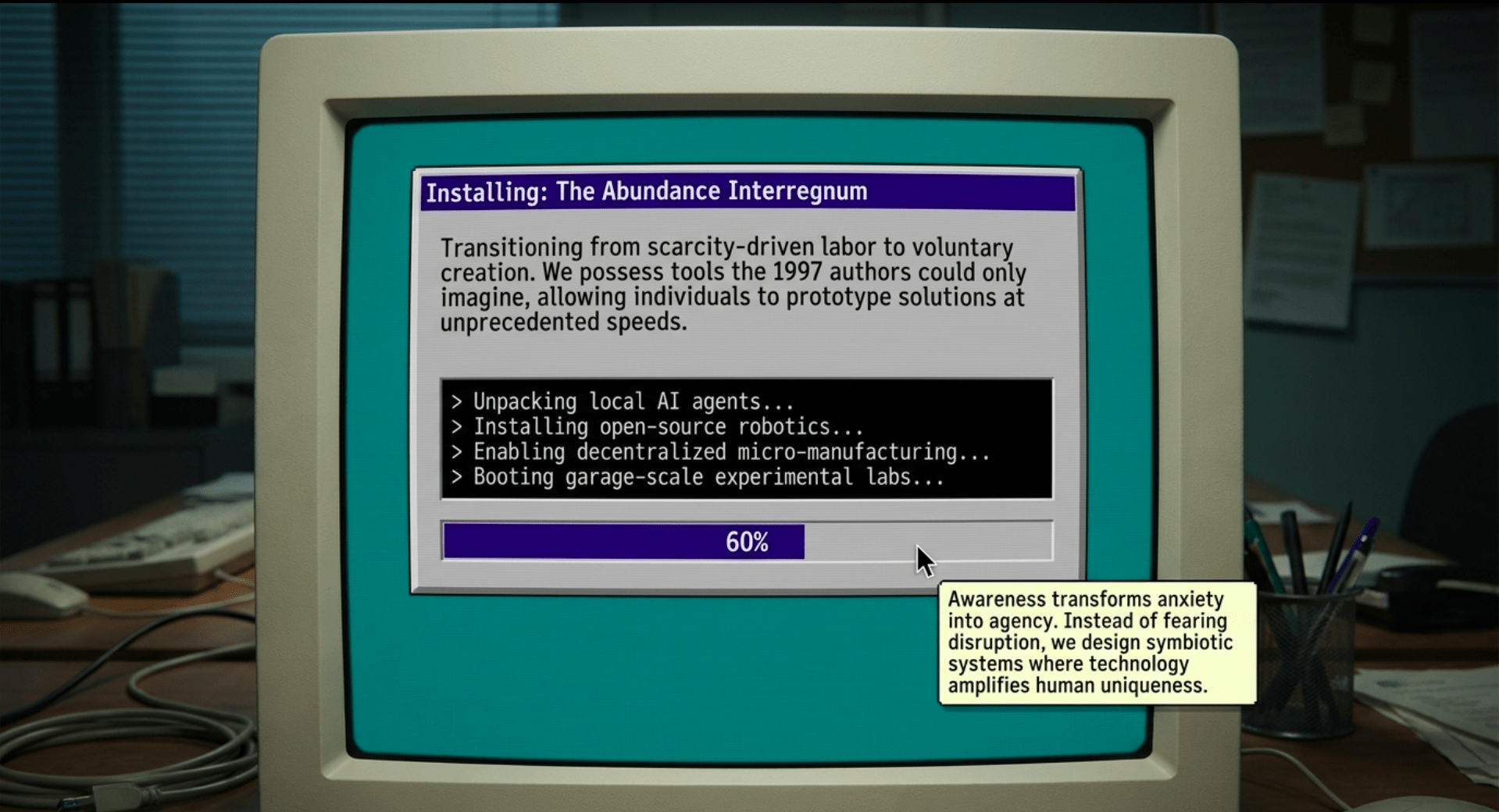
In our current era of the Abundance Interregnum the bridge between scarcity-driven labor and voluntary creation we possess tools the 1997 authors could only imagine. Local AI agents, open-source robotics, personal knowledge archives, and global networks of curious minds allow individuals and small groups to prototype solutions at unprecedented speed.
Garage laboratories and distributed communities can now perform experiments once reserved for nation-states or corporations. Awareness transforms anxiety into agency: instead of fearing automation or disruption, we can design symbiotic systems where technology amplifies human uniqueness—creativity, compassion, judgment, and care. The book’s warnings about polarization and systemic shocks become calls to build stronger social fabrics, not retreats into isolation.
Ethical reflection, once a luxury in fast-moving fields, becomes the essential infrastructure of progress. When we know that biotechnology can heal or enhance, that digital systems can connect or surveil, that resource competition can unite or divide, we choose the higher path through deliberate governance, transparent dialogue, and inclusive design.
Foresight without ethics is merely prediction; foresight married to awareness and values becomes wisdom in action. The scenarios that once felt distant now read as invitations: invest in human capital, protect the vulnerable, steward the planet, and ensure that technological power serves human flourishing rather than the reverse.
These government analysts described the end of offline existence. They knew the last people who remembered silence would be treated as relics. They still framed the transition as progress. The journey ahead is not written in any 1994 or 1997 volume or any algorithm. It is authored daily by those who refuse to outsource their future to trends. Every person who builds a local AI agent for community benefit, every family that archives its stories against forgetting, every innovator who prioritizes meaning over extraction, every leader who plans for resilience rather than reaction these are the true authors of the next chapters. Prediction reveals momentum; awareness reveals choice.
When we see clearly the forces the Hudson Institute team mapped so carefully, we also see the immense latitude still available for courage, collaboration, and creativity. We can shape the future as well or better than the futurists.
In all of the predictions found in these reports missing is the reality of our AI and robotic fueled Age Of Abundance. We can’t fault the authors as few could see this age from the perch of rational ideals they tried to maintain. As you have read in my You Have 5000 Days: The End Of Work As we Know it, series it was really only in the mind of the Science Fiction writers primarily from the 1950s.
The report also unfortunately brought into the “Limits To Growth” Malthusian narrative that became fashionable with the elite and academics from the 1970s forward. the reality is we are in a worldwide population collapse. This glaring assumption was weaved into the entire elements of the report.
Finally as we have learned in the 5000 Days series, the idea of centralized control and a “Global Order” is an antiquated notion even today and most certainly in to the Interregnum. The belief systems was to a utopian dream of one central government that would somehow care for you as much as the goals they thought were important. And although they got many things right, they got some things like this wrong.
The Message From !994 and 1997
The greatest gift of this extraordinary book like is not the accuracy of its forecasts but the clarity it grants us to recognize that we are not spectators. We are participants in an unfinished story. With eyes open to both peril and possibility, with tools of foresight and hearts committed to wisdom, we can steer toward futures richer in meaning, connection, and abundance than any scenario could fully capture. The 2025 world the authors imagined has arrived in many dimensions; the 2030, 2040, and beyond worlds remain gloriously unwritten. Let us write them together with awareness as our compass, agency as our engine, and hope as our enduring fuel. The future is not something that happens to us. It is something we make, one aware and courageous choice at a time.
To continue this vital work documenting, analyzing, and sharing these hard-won lessons before we launch humanity’s greatest leap: I need your support. Independent research like this relies entirely on readers who believe in preparing wisely for our multi-planetary future. If this has ignited your imagination about what is possible, please consider donating at buy me a Coffee or becoming a member. Value for value you recieved here.
Every contribution helps sustain deeper fieldwork, upcoming articles, and the broader mission of translating my work to practical applications. Ain ‘t no large AI company supporting me, but you are, even if you just read this far. For this, I thank you.
Stay aware and stay curious,

🔐 Start: Exclusive Member-Only Content.
Membership status:
🔐 End: Exclusive Member-Only Content.
~—~
~—~

~—~
Subscribe ($99) or donate by Bitcoin.
Copy address: bc1qkufy0r5nttm6urw9vnm08sxval0h0r3xlf4v4x
Send your receipt to [email protected] to confirm subscription.

Stay updated: Get an email when we post new articles:

THE ENTIRETY OF THIS SITE IS UNDER COPYRIGHT. IMPORTANT: Any reproduction, copying, or redistribution, in whole or in part, is prohibited without written permission from the publisher. Information contained herein is obtained from sources believed to be reliable, but its accuracy cannot be guaranteed. We are not financial advisors, nor do we give personalized financial advice. The opinions expressed herein are those of the publisher and are subject to change without notice. It may become outdated, and there is no obligation to update any such information. Recommendations should be made only after consulting with your advisor and only after reviewing the prospectus or financial statements of any company in question. You shouldn’t make any decision based solely on what you read here. Postings here are intended for informational purposes only. The information provided here is not intended to be a substitute for professional medical advice, diagnosis, or treatment. Always seek the advice of your physician or other qualified healthcare provider with any questions you may have regarding a medical condition. Information here does not endorse any specific tests, products, procedures, opinions, or other information that may be mentioned on this site. Reliance on any information provided, employees, others appearing on this site at the invitation of this site, or other visitors to this site is solely at your own risk.
Copyright Notice:
All content on this website, including text, images, graphics, and other media, is the property of Read Multiplex or its respective owners and is protected by international copyright laws. We make every effort to ensure that all content used on this website is either original or used with proper permission and attribution when available.
However, if you believe that any content on this website infringes upon your copyright, please contact us immediately using our 'Reach Out' link in the menu. We will promptly remove any infringing material upon verification of your claim. Please note that we are not responsible for any copyright infringement that may occur as a result of user-generated content or third-party links on this website. Thank you for respecting our intellectual property rights.
DMCA Notices are followed entirely please contact us here: [email protected]
