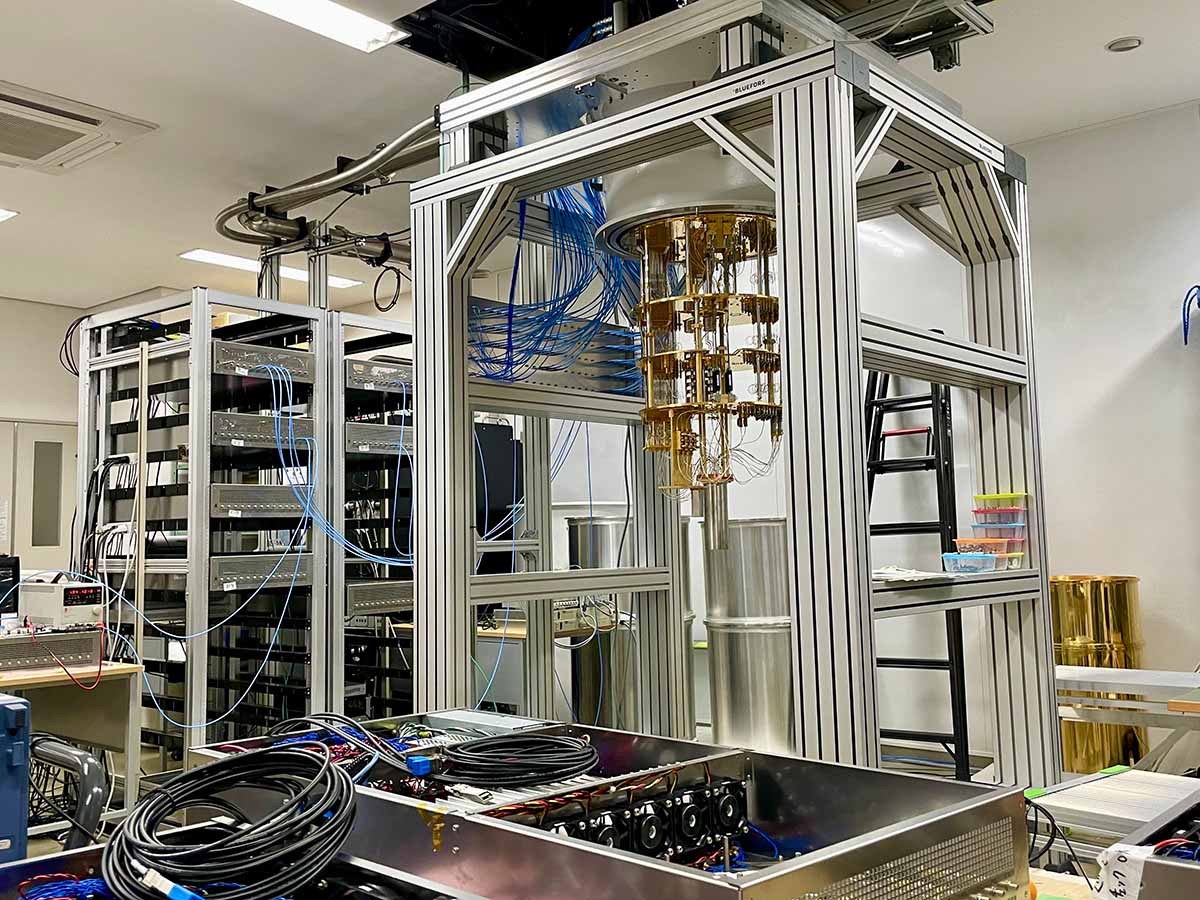
Learn How To Use A Free Working Quantum Computer To Test The First Quantum AI ‘Nano Model’.
In this exclusive member’s article, you’ll dive deep into the revolutionary world of Osaka University’s cloud-accessible trapped-ion quantum computer, learning hands-on how to harness real quantum hardware from your own device, and no lab required. I’ll guide you through quantum fundamentals like superposition and entanglement, step-by-step setup on the OQTOPUS platform, and five exciting projects, from generating unhackable random numbers to exploring quantum interference.
Then, we’ll advance to my pioneering “nano AI” model, a very, very, simple yet powerful variational quantum classifier that blends AI with quantum circuits, complete with code and training loops to replicate my experiments. By the end, you’ll not only understand how to program qubits but also grasp the hybrid quantum-AI fusion that’s reshaping computation.
Hey, didn’t IBM offer this? Yes, however Osaka University’s QIQB cloud-accessible trapped-ion quantum computer stands out from IBM’s Quantum Experience and other programs like IonQ or Google’s offerings primarily through its groundbreaking use of trapped-ion technology, employing ytterbium ions for qubits with exceptional 94% fidelity over 1,000 operations, rather than the more common superconducting qubits favored by IBM, which, while scalable to hundreds of qubits as of 2025, often contend with higher noise and shorter coherence times. Unlike IBM’s platform, launched in 2016 and built around the Qiskit framework for both simulation and hardware access with a focus on developer ecosystems and enterprise partnerships,
Osaka’s system is the world’s first fully automated, 24/7 cloud-operated trapped-ion setup, requiring no manual calibration and open to anyone worldwide without institutional barriers or waitlists, democratizing hands-on quantum experimentation in a way that prioritizes global accessibility over commercial scalability. Furthermore, while programs like IonQ provide trapped-ion access through cloud services like AWS, they are typically geared toward paid enterprise users with multi-qubit capabilities; Osaka’s emphasis on domestic Japanese hardware production, high-stability automation, and transdisciplinary integration (spanning quantum biology to AI) positions it as a unique educational and research hub, fostering rapid innovation in hybrid quantum-AI applications that could outpace the more mature but architecturally distinct ecosystems of IBM and others.
ANYONE CAN DO THIS. I MADE IT EASY TO LEARN.
What sets this apart is the opportunity to be among the first to truly comprehend and experiment with quantum-enhanced AI on actual hardware, not simulations. As one of the earliest testers of this 2025 breakthrough, I’ve uncovered how these nano models: AI isn’t just boosted by quantum, it’s testing and refining quantum systems, accelerating error correction, and scalability toward fault-tolerant machines. Members get this insider knowledge before it hits the mainstream, positioning you at the forefront of a paradigm shift that could redefine drug discovery, optimization, and machine learning by 2030. Imagine leading conversations on quantum AI while others are still catching up, and this article equips you with the tools and insights to do just that.
Your membership directly fuels this independent exploration, supporting my deep dives into emerging tech without corporate agendas. By becoming a member, you gain access to full articles like this, plus exclusive updates, Q&A sessions, and The Member Forums, where we collaborate on countless projects. It’s more than content, it’s investing in unbiased, forward-thinking research that empowers everyday innovators. Join today and help sustain the work that brings these quantum leaps to light!
If you are a member, thank you. If you are not yet a member, join us by clicking below.
🔐 Start: Exclusive Member-Only Content.
The rest of this article is for Multiplex members
You’ve reached the members-only part. Log in to keep reading right here, or join to unlock it.
- Full member-only articles: insights, wisdom and executive summaries
- The Multiplex members forum
- Member benefits and discounts
Already a member? You’ll come right back to this article after logging in. Forgot password?
Membership status: Not logged in
🔐 End: Exclusive Member-Only Content.
~—~

~—~

~—~
Support ReadMultiplex at Multiplex.Tips

Support ReadMultiplex
Subscribe or donate by Bitcoin.
Copy address:bc1qkufy0r5nttm6urw9vnm08sxval0h0r3xlf4v4x

Send your receipt to [email protected] to confirm subscription.
Members
Become a member for full member-only articles, the Multiplex members forum, and member benefits and discounts.
 Past, present and future technology research + insights
Listen
🔊 Every article has a free “Listen to this ►” button. Hear it read aloud in your browser.
The Multiplex
- Advertise with us: Rates and booking
- X: @ReadMultiplex
- Buy a T-shirt: Multiplex.Love
- Program Guide: Multiplex.Today
- Podcast: Multiplex.Life
- Join the Multiplex team: Multiplex.Team
Stay updated
Get an email when we post new articles:
