multiplex-past, present, future technology research + insights ☂️
Read 500+ Words Per Minute With This 1970s Lost Superpower and Conquer the Information Tsunami.
Read 500+ Words Per Minute With This 1970s Lost Superpower and Conquer the Information Tsunami.
Imagine blasting through mountains of emails, reports, and books at speeds that make your brain feel like a turbocharged engine. Picture yourself absorbing knowledge faster than ever, turning information overload into your personal playground. This is the electrifying reality of speed reading, supercharged by Rapid Serial Visual Presentation (RSVP). In a world drowning in data, where every second counts, this technique is not just a skill. It is your secret weapon for dominance. Strap in as we explode through the full history of speed reading, dissect RSVP with razor-sharp precision, dive deeper into groundbreaking research with a laser focus on comprehension, and expose why it is indispensable in our high-stakes information era. Plus, I will reveal how I embedded it on this site to propel you beyond 300 words per minute. Prepare for liftoff!
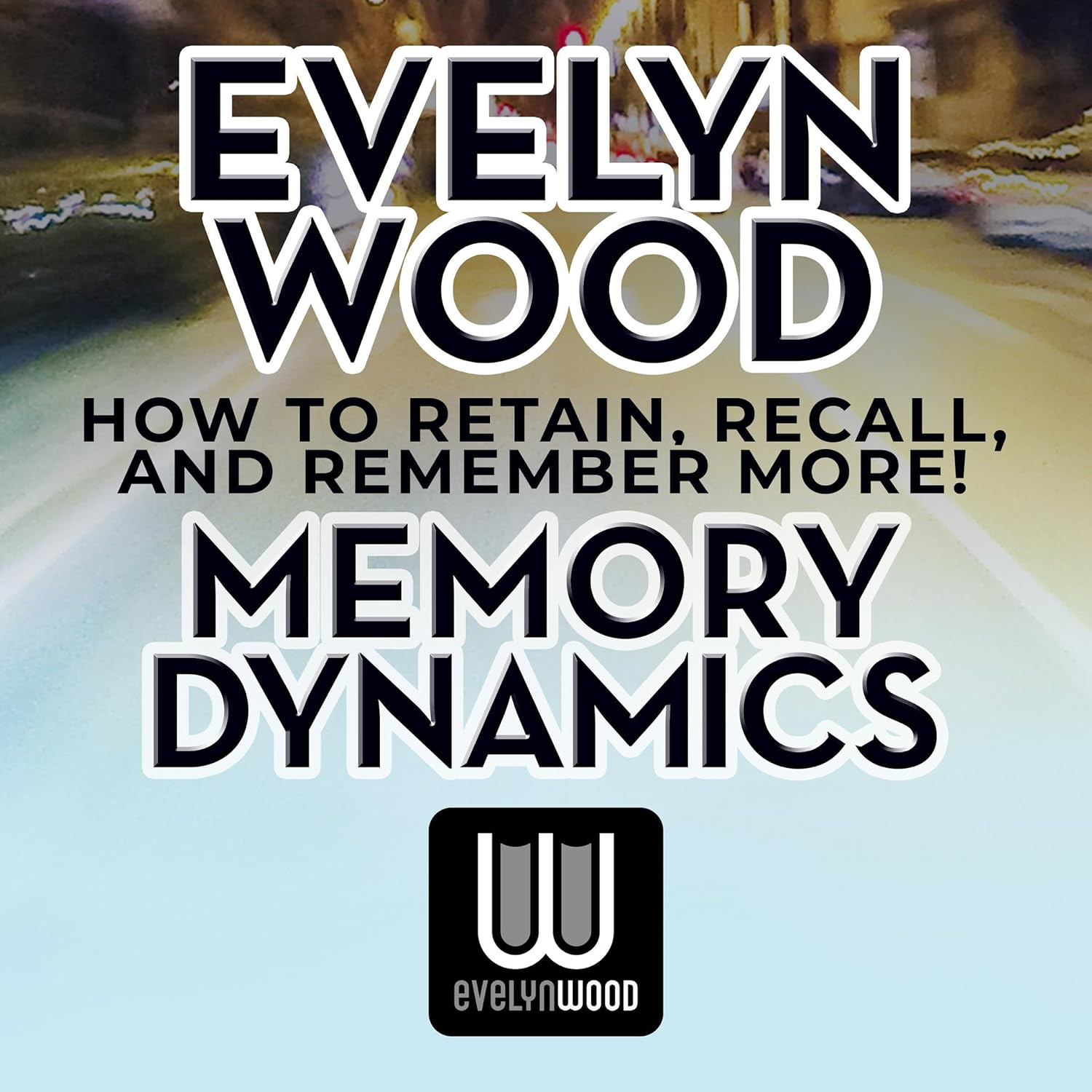
I started trained speed reading in the 1970s when MENSA (a sort of nerd club, I did not like much) offered to pay for me to take the local classes to learn. It was the Evelyn Wood Reading Dynamics and I was the only kid in this evneing class. I must say I could not hide my laughter when more advanced students began to show how they read. It seemed like a comdy skit.
Needless to say I still smirk when I see Reading Dynmic folks in public but it is sadly less and less. I did regain my pre-teen composure and learned by Mrs. Wood herself. She was the ultimate teacher and knew I had a sense of humor and started out with me by saying “I can read this book in 5 seconds” and just fanned out the pages. She stopped and stared at me and said “now you do it”, I took the book and she laughed. It was a joke. But it was no joke what I learned. Reading Dynmics has changed my life, for actual books. But for the computer screen? Well I have many solutions. One is to have the content read to me while I read, usually at 200x speed. Another is using RSVP. Let us explore what this is and I hope you can read AND COMPREHEND more material into this new AI world we are in.
This article is sponsored by Read Multiplex Members who subscribe here to support my work:
Speed reading is no modern gimmick. Its origins trace back to the late 19th century, when French ophthalmologist Emile Javal shattered old assumptions in 1878 by discovering saccades, those lightning-fast eye jumps that skip across text, allowing the brain to grab chunks of words at once instead of plodding letter by letter. 2 By 1884, silent reading techniques emerged, emphasizing the reduction of subvocalization, that pesky inner voice echoing words as we read. 2This laid the groundwork for efficiency, proving humans could process text in groups, not isolation.
The early 20th century ignited further sparks. In 1921, John Anthony O’Brien’s book Silent Reading championed non-vocalized methods, pushing readers to internalize text faster and deeper. Popular science magazines hyped acceleration through scientific tweaks, but World War II turned theory into high-stakes practice. The U.S. Air Force, buried in reconnaissance data, invented the tachistoscope, a device flashing images at blistering speeds like 1/500th of a second for four words. This proved humans could instantly grasp word clusters, debunking letter-by-letter myths. In 1925, the Air Force launched the first formal speed reading course at Syracuse University, training pilots to spot threats in a flash.
The 1950s exploded into the golden age. Schoolteacher Evelyn Wood, frustrated by sluggish readers, pioneered her method after noticing her hand brushing pages smoothed eye flow. She launched Reading Dynamics in 1959 from Washington, D.C., crushing subvocalization and widening eye sweeps. Seminars surged nationwide. Presidents bought in: John F. Kennedy claimed 1,200 words per minute and ordered staff courses. Jimmy and Rosalynn Carter followed at the White House. 0 Wood boasted 2,700 words per minute, arguing traditional reading was inefficient.
The 1960s and 1970s mainstreamed it all. Millions trained in Wood’s courses, including celebrities like Charlton Heston. Claims skyrocketed: Howard Berg hit 25,000 words per minute in 1990. Skeptics fired back, with research exposing comprehension crashes at extreme paces. Here is a link to an audiobook I have sent many to learn this technique: https://amzn.to/4t0ZV0S.
Meanwhile, aural speed-reading for the blind emerged in the 1930s, using variable playback to accelerate talking books, legitimizing non-visual speed techniques. By the digital era, apps and tools transformed speed reading into a tech-fueled powerhouse, blending ancient insights with cutting-edge interfaces. Better reading skills are not taught in a majority of schools with reading and comprehension droping to the lowest in history. We need to do better, we must do better. I have urged that ALL US schools adopt a form of speed reading to aid students and to advocate for RSVP and other similar systems to be used on computer devices.
Other Explosive Speed Reading Techniques to Dominate Your Reading
These are other methods in addtion to Reading Dynamics honed over decades of my research and practice, shatter the chains of slow, linear reading. They empower you to skim vast oceans of text, scan for hidden gems, and even reverse-engineer books for instant mastery. In our AI-driven world, where information explodes exponentially, these tools are not optional. They are essential for turning data into dominance. Let us dive deep into the powerhouse techniques that will supercharge your cognitive toolkit.
Start with skimming, the lightning-fast reconnaissance mission for your brain. Skimming involves rapidly glancing over the text to capture the big picture without getting bogged down in details. Focus on headings, subheadings, bolded terms, images, graphs, and the first and last sentences of paragraphs. This technique, rooted in early 20th-century reading strategies, allows you to preview material, review key points, or decide if a text is worth a full dive. Research shows skimming can boost your initial comprehension by identifying structural cues and pivotal words, effectively tripling your processing speed for overviews. Pair it with RSVP below for online hybrid power: skim first to map the terrain, then flash through sections at warp speed. It is perfect for research, where you sift through stacks of articles to pinpoint relevance, saving hours in the info deluge.
Closely allied is scanning, your targeted strike for specific intel. Unlike skimming’s broad sweep, scanning hunts for particular words, phrases, or facts. Establish keywords from questions, syllabi, or goals, then let your eyes dart across the page, ignoring the rest. Use a finger to trace lines swiftly, repeating keywords mentally to lock in focus. Studies highlight scanning’s efficiency in fact-heavy scenarios, like answering exam questions or extracting data from reports. In practice, combine it with chunking: read groups of words as units instead of individually. This expands your peripheral vision, processing “chunks” of 3-5 words at once, slashing time while maintaining grasp. Beginners start small, building to larger phrases, focusing on nouns and verbs while gliding over fillers like articles. It is exhilarating. Your eyes become lasers, devouring text in bursts.
Amp up the intensity with meta-guiding and subvocalization reduction, the dynamic duo for fluid motion. Meta-guiding uses a pointer, like your finger or a pen, to guide your eyes smoothly across lines at a pace faster than comfortable. This curbs regression, those wasteful backtracks that slow you down, and disciplines your gaze to flow left-to-right without pauses. Pioneered in Evelyn Wood’s era, it forces acceleration, often doubling speeds with practice. Now, tackle subvocalization, that inner voice narrating every word, capping you at speaking pace. Minimize it by chewing gum, humming, counting silently, or pushing your pointer faster than speech allows. Research confirms: reducing this habit unlocks 400+ words per minute, freeing your brain for pure visual processing. Together, these eradicate drag, making reading feel like gliding on ice.
Finally, unleash the counterintuitive powerhouse: working backwards from the last chapter, or reverse reading, to grasp a book’s essence in record time. It works weel in non-fiction books the best. This technique flips the script by starting at the conclusion, where authors distill their core arguments and revelations. Read the end first to understand the destination, then backtrack through summaries, chapter endings, and key sections to fill in the journey. It sets a mental framework, enhancing retention and spotting inconsistencies early. 9 Ideal for non-fiction, it mirrors how experts learn: outcome-first for context. Interleave with multiple books on similar topics for cross-pollination, switching mid-chapter to reinforce connections. In the high-information era, this method turns overwhelming tomes into conquerable maps, letting you absorb wisdom faster than AI can generate it.
These techniques do not replace RSVP. They amplify it. Mix and match: skim to scout, scan to strike, meta-guide through chunks, silence your inner voice, and reverse for mastery. Practice daily, and watch your speeds soar while comprehension deepens. In 5000 days, as AI reshapes reality, these human hacks keep you ahead, no Neuralink required.
The Game-Changer in Speed Reading: What is RSVP?
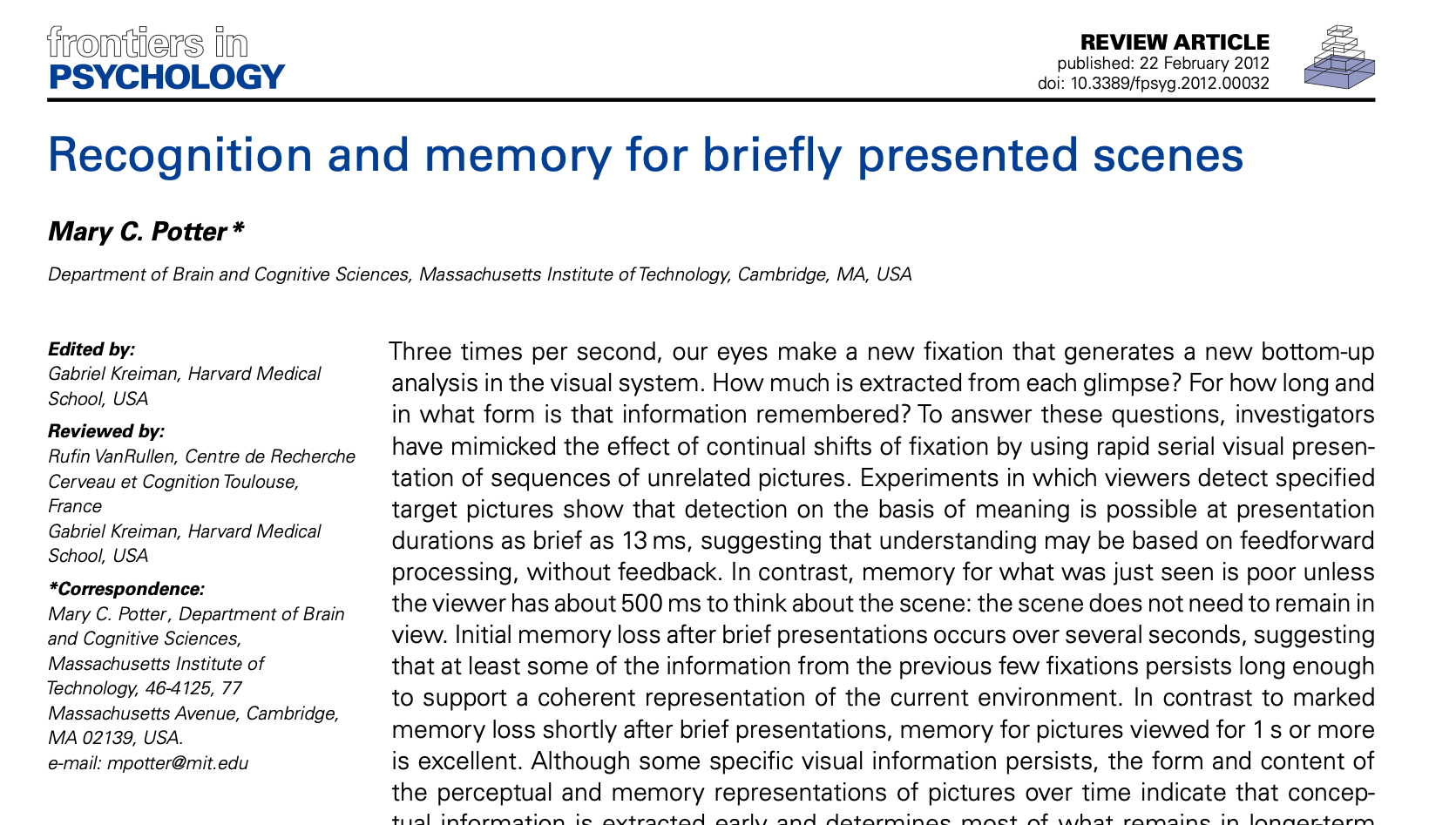
At the heart of modern speed reading on screens is Rapid Serial Visual Presentation (RSVP). This revolutionary method flashes words or phrases one at a time in a fixed screen spot, slashing unnecessary eye movements and channeling pure focus. Born in the 1970s from psychologist Mary C. Potter’s visual timing experiments, RSVP evolved from attention labs into a reading juggernaut. Average adults plod at 100-250 words per minute traditionally. RSVP obliterates that by ditching saccades, letting your brain feast on content without the drag of eye strain.
Innovations like Spritz amp it up, highlighting each word’s Optimal Recognition Point in red for instant grasp. Longer words hang longer, sentences pause perfectly. It is streamlined. It is addictive. Variants present character-by-character, word-by-word, or line-by-line, adapting to screens from phones to watches. RSVP is not just faster. It is smarter, especially for tiny displays where space is king.
I use RSVP almost exclusively on my local AI devices when the output is beyond 500 words. It allows me to understand far more, far faster than any other system when I need the highest comprehension for non-fiction types of AI output. It is my hope that someday I will have this for you to use. But It is here today on this site now.
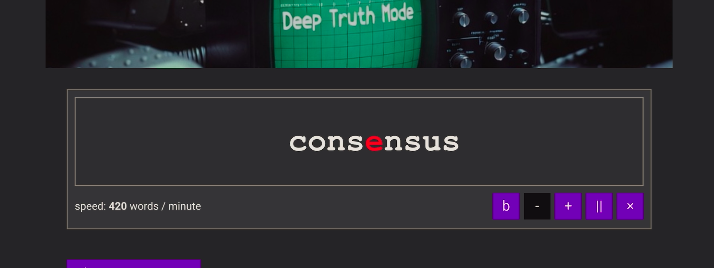
This is at the top of each ReadMultiplex.com page at the upper right, just below the main image at the top.
A Deep Dive into the Research: Does RSVP Really Deliver, and What About Comprehension?
Science delivers the unfiltered truth on RSVP, and it is a mixed bag of triumphs and traps. Let us unpack the studies with brutal detail, zeroing in on comprehension, the holy grail of reading.
Pioneering work in 1982 by Juola and team revealed RSVP matched traditional reading efficiency for standard formats.Rubin and Turano in 1992 pushed limits, showing higher RSVP rates with decent comprehension, though comfort dipped. A 2014 meta-analysis clocked up to 33% speed boosts for short texts without comprehension nosedives. It shines for dyslexics, visually impaired, and non-natives by axing eye movements. Fine, Peli, and Reeves in 1997 highlighted benefits for aging readers as visual acuity wanes.
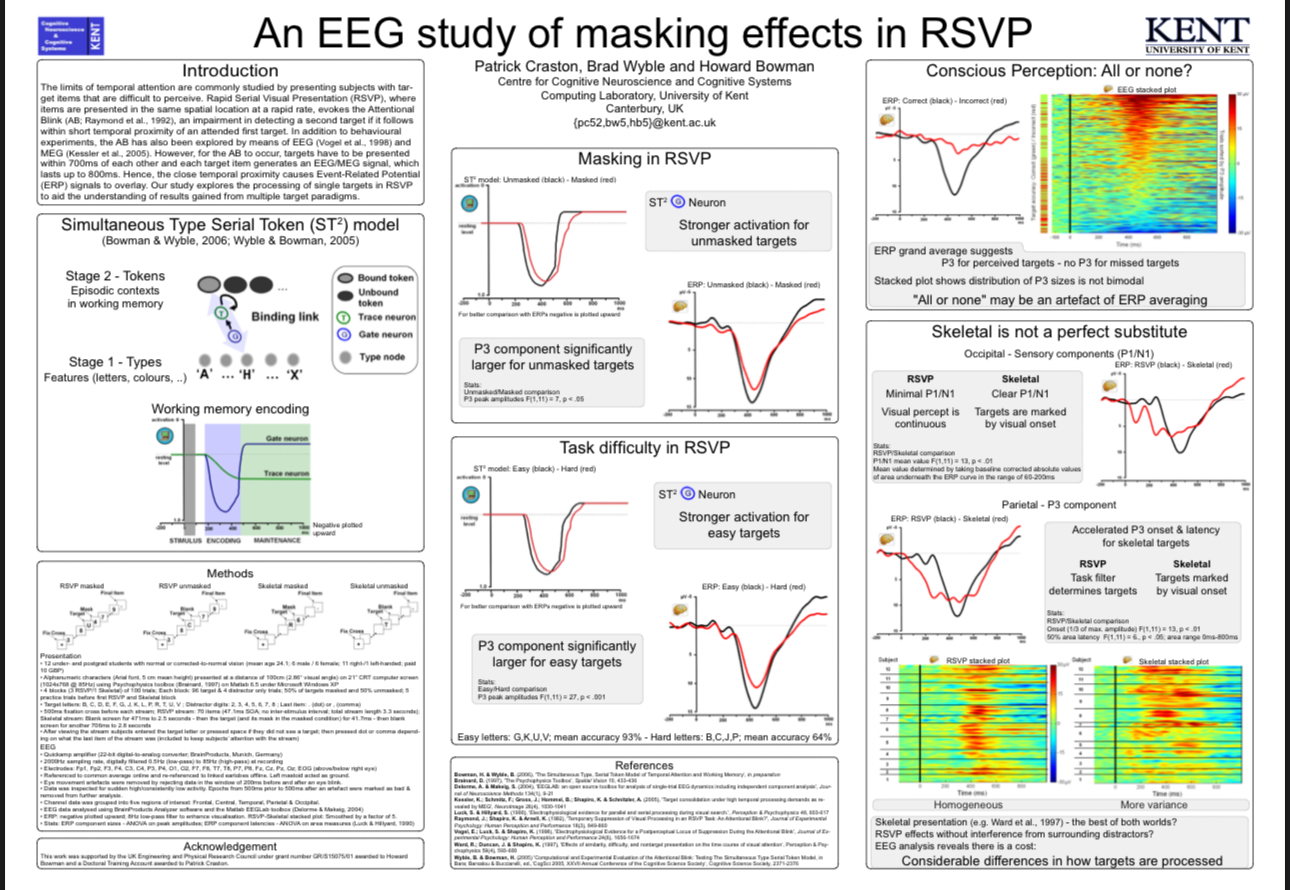
But push too hard, and it crumbles. At 700-1,000 words per minute, comprehension tanks. A 2015 Spritz study showed it spiked visual fatigue and gutted literal comprehension by blocking regressions, those vital rereads. No parafoveal previews means lost context, overloading cognition for long passages, as Masson nailed in 1983. EEG research in 2020 linked faster presentations to brain strain via alignment and speed tweaks. Static text often trumps for deep inference, while RSVP excels in quick scans.
Comprehension splits into literal (direct facts) and inferential (deeper connections). RSVP hammers literal grasp by forbidding backtracks, as Schotter’s 2014 study proved: masking regressions slashed understanding across simple and complex sentences. A 2018 analysis confirmed: at 500-1,000 words per minute, single-word RSVP impairs both natives and non-natives compared to natural reading. For non-natives, patterns mirror natives, but thresholds drop lower. Proaps and Bliss in 2014 pegged 250 words per minute for comparable performance; beyond, retention evaporates. Eye movements, just 10% of reading time, are crucial; ditching them worsens grasp.
Yet, hope glimmers. A 2017 smartwatch study showed RSVP boosts speeds without comprehension hits on tiny screens. With practice, 171-350 characters per minute yields top scores in word-by-word or line formats. 18Subtitles as RSVP even enhanced EFL learners’ speed without comprehension loss. The takeaway? RSVP dominates for bursts and skims, but demands training for depth. Extreme claims like 25,000 words per minute? Pure myth.
Why Speed Reading is Your Lifeline in the High-Information World
We are besieged by data tsunamis: emails avalanche, feeds never stop, reports bury us alive. Information overload zaps productivity, fuels burnout, and erodes focus. Speed reading, turbocharged by RSVP, slices through like a blade. Professionals outpace rivals by devouring intel at warp speed. Students demolish textbooks in hours, acing exams with ease. In an era where knowledge equals power, this skill multiplies your edge.
Digital screens shrink, but content erupts. RSVP thrives on mobiles, watches, even glasses, making tiny interfaces epic. It sharpens focus, crushes distractions, and flips overwhelm into triumph. No shallow skims. You seize more, retain deeper, and rule the info age. With AI accelerating change, speed reading ensures survival: anticipate shifts, upskill fast, and stay ahead. 31 It saves time on mundane reads, clears inboxes, and frees you for high-impact work. Yet, balance with slow reading for equilibrium; filtering info prevents overload.
Here is a simple testing area for using this RSVP technology on your test (none is save on this site, it is local). You also can click this link for a stand alone page. I will update it soon to allo for other formats like PDF and ebooks.
Here is a test for the RSVP system below. You can also find it here as a stand alone. It does not hold any data. In the future I will upgrade it to read ebooks, PDF and websites.
You Have 5000 Days To Ignite Your Mind with RSVP and Outpace the AI Revolution!
Listen up. You have 5000 days. That is right. Roughly 13 years to redefine your existence in a world where AI and robotics obliterate jobs as we know them. I wrote about this here. This is not fearmongering. It is reality barreling toward us like a freight train loaded with boundless abundance on one track and existential upheaval on the other. In my “You Have 5000 Days” series, we confront this head-on: the end of work as we know it demands preemption. Denial is the first killer, as Elisabeth Kubler-Ross outlined in her five stages of grief. Anger, bargaining, depression follow. But acceptance? That is where the magic ignites. You are not alone in this storm. We all face it. The key is to act now, arm yourself with tools that amplify your humanity, and surge forward.
Enter the AI world. Machines churn out information at godlike speeds: research papers, code tutorials, market analyses, creative insights, all generated in seconds. The deluge is endless. Traditional reading? It crawls at 200-300 words per minute, leaving you buried under the avalanche. You drown in data, unable to synthesize, innovate, or adapt. But speed reading, powered by RSVP, flips the script. It catapults you to 500, 700, even 900 words per minute with practice, while honing comprehension to razor sharpness. Why is this vital? Because in the AI era, knowledge is not just power. It is survival.
Detail this out. AI accelerates everything. Breakthroughs in quantum computing, biotechnology, and neural networks drop daily. To upskill, you must devour tutorials on prompt engineering, data ethics, or emergent AI behaviors faster than the tech evolves. Slow readers lag, stuck in obsolescence. Faster reading lets you absorb vast volumes: scan 10 articles where others manage one, cross-reference ideas across disciplines, and spot patterns AI might miss. But speed alone is worthless without comprehension. Research shows RSVP boosts literal grasp for quick scans but demands training for inferential depth. Master it, and you do not just read. You internalize. You connect dots between AI ethics debates and real-world applications, turning raw info into actionable wisdom. In a high-information world, this edge lets you pivot careers, launch ventures, or collaborate with AI as an equal, not a subordinate.
Not everyone will strap on a Neuralink. Elon Musk’s brain-computer interface promises direct knowledge downloads, merging minds with machines for instant expertise. But access? Limited. It is not for all. For the rest of us, RSVP is the next best thing. It is non-invasive human augmentation. No implants, no wires. Just your brain, optimized. It slashes eye strain, crushes subvocalization, and streams text like a neural feed. Studies confirm: with practice, comprehension rivals or exceeds traditional methods for bursts of info. In 5000 days, AI will automate routine cognition. Humans thrive by excelling in synthesis, creativity, empathy. RSVP fuels that: consume more, comprehend deeper, create bolder.
Imagine this. You wake in 2039, jobs transformed, abundance flowing. Those who denied? Left behind. Those who preempted with tools like RSVP? Thriving architects of the new world. You process AI-generated reports in minutes, comprehend nuances to guide decisions, and outthink the machines. It saves hours daily, compounding into years of advantage. Burnout fades as efficiency soars. Focus sharpens amid distractions. In my series, we grieve the old, embrace the new. RSVP is your bridge: read faster to learn quicker, comprehend better to innovate harder.
You have 5000 days. Do not waste a single one. Click that Rocket Reader button above now. Feel the rush. Master RSVP. Conquer the AI tsunami. Your future self demands it. Ignite!
How I Turbocharged This Site with RSVP for Blazing Speeds
Fueled by this research, I embedded RSVP here using the Rocket Reader Speed-Reader. On articles like this, the button sits at the top of the page right below the main image [ROCKET READER], press the button and you will get a default 300 words per minute reading flashing words at tunable speeds but I want to launch you past 300 words per minute. Some are at 700 words per minute using this technology. Full text stays for classic reads. It is audacious. It is user-friendly. It unleashes your inner speed demon. Hit it above and ignite! The video below is a demo of how it works.
Speed reading is evolution in action. Harness RSVP, master comprehension trade-offs, and storm the information frontier. Your mind is primed. Ignite it
We are all facing the 5000 days ahead as our world changes, where love it or not, work will become an option. I speak to this here https://readmultiplex.com/2025/12/24/you-have-5000-days-how-to-navigate-the-end-of-work-as-we-know-it-part-1/. All of us will need tools to unlock our creativity. This is just one, and there are many more I will write about. But know that if you read this far through my rantings, you are a pioneer. You are part of the first generation to have options ahead.
Read Multiplex members will have a section below where I show in detail how to add RSVP to your computer and smartphone. I will also go over how it can be used with AI outputs to make you have a new super power. Join us and learn.
To continue this vital work documenting, analyzing, and sharing these hard-won lessons before we launch humanity’s greatest leap: I need your support. Independent research like this relies entirely on readers who believe in preparing wisely for our multi-planetary future. If this has ignited your imagination about what is possible, please consider donating at buy me a Coffeeor becoming a member.
Every contribution helps sustain deeper fieldwork, upcoming articles, and the broader mission of translating my work to practical applications. Ain ‘t no large AI company supporting me, but you are, even if you just read this far. For this, I thank you.
Stay updated: Get an email when we post new articles:
THE ENTIRETY OF THIS SITE IS UNDER COPYRIGHT. IMPORTANT: Any reproduction, copying, or redistribution, in whole or in part, is prohibited without written permission from the publisher. Information contained herein is obtained from sources believed to be reliable, but its accuracy cannot be guaranteed. We are not financial advisors, nor do we give personalized financial advice. The opinions expressed herein are those of the publisher and are subject to change without notice. It may become outdated, and there is no obligation to update any such information. Recommendations should be made only after consulting with your advisor and only after reviewing the prospectus or financial statements of any company in question. You shouldn’t make any decision based solely on what you read here. Postings here are intended for informational purposes only. The information provided here is not intended to be a substitute for professional medical advice, diagnosis, or treatment. Always seek the advice of your physician or other qualified healthcare provider with any questions you may have regarding a medical condition. Information here does not endorse any specific tests, products, procedures, opinions, or other information that may be mentioned on this site. Reliance on any information provided, employees, others appearing on this site at the invitation of this site, or other visitors to this site is solely at your own risk.
Copyright Notice:
All content on this website, including text, images, graphics, and other media, is the property of Read Multiplex or its respective owners and is protected by international copyright laws. We make every effort to ensure that all content used on this website is either original or used with proper permission and attribution when available.
However, if you believe that any content on this website infringes upon your copyright, please contact us immediately using our 'Reach Out' link in the menu. We will promptly remove any infringing material upon verification of your claim. Please note that we are not responsible for any copyright infringement that may occur as a result of user-generated content or third-party links on this website. Thank you for respecting our intellectual property rights.
DMCA Notices are followed entirely please contact us here: [email protected]