
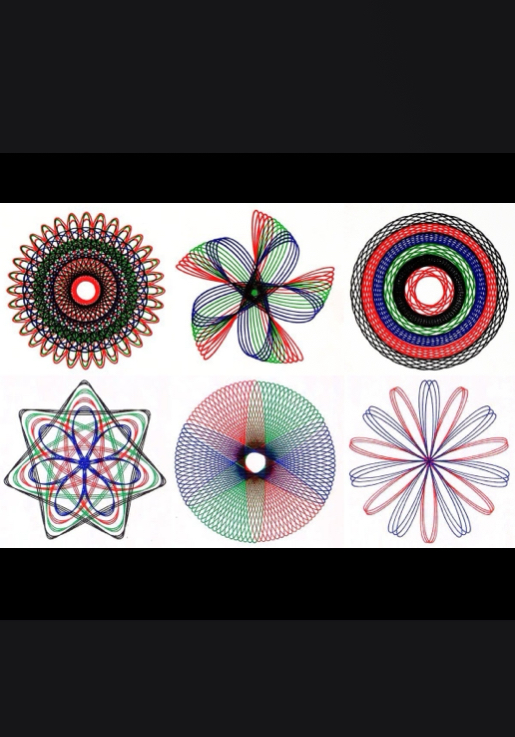
Whispers of the Wheel: The Spiralgraph As A Tool For Creative Thinking.
Imagine, if you will, a cosmic dance where chaos bows to order, yet defies it in the same breath. A pen glides across paper, not by the whims of a wild hand, but guided by the unyielding teeth of interlocking gears as tiny mechanical gods that whisper secrets of the universe. Loops unfurl like petals in a forbidden garden, each curve a rebellion against straight lines, each intersection a spark of unintended genius. This is no mere doodle; it is the birth of a mandala from the marriage of constraint and freedom. Welcome to the Spirograph, that humble toy which, like a philosopher’s stone for the mind, transmutes rigid geometry into boundless imagination. In its hypnotic rotations lies a portal to creativity, where the controlled becomes the canvas for the infinite. But why does this simple device, born from engineering precision, hold the key to unlocking the creative vaults of the human spirit? Let us spiral deeper.
This article is sponsored by Read Multiplex Members who subscribe here to support my work:
Link: https://readmultiplex.com/join-us-become-a-member/
It is also sponsored by many who have donated a “Cup of Coffee”. If you like this, help support my work:
A Tool To Unlock Creativity
You have innate creativity, yet many of us have been called to become more and more practical and pragmatic in our lives to earn a living that may not serve our maximal creative skills. This dormancy does not need to be a life sentence; many systems can unlock creativity. The Spirograph can be an artistic statement in and of itself, and this is fine. However, the actual process of constraining the infinity of the system opens up latent thoughts and ideas. This is tied to the ancient Mandala building from thousands of years ago.
The history of the Spirograph is a fascinating tapestry woven from mathematical curiosity, engineering ingenuity, and commercial serendipity, spanning nearly two centuries. What began as arcane tools for architects, mathematicians, and anti-forgery experts evolved into one of the most beloved creative toys of the 20th century, captivating generations with its ability to produce intricate, hypnotic patterns through simple mechanical means. To fully appreciate this evolution, we must delve into its predecessors, the pivotal invention of the modern version, and its subsequent development and commercialization, drawing on historical accounts that highlight key figures, innovations, and cultural impacts.
The conceptual roots of the Spirograph trace back to the early 19th century, long before it became a household toy. In 1827, Peter Hubert Desvignes, a Greek-born English architect and engineer, developed and advertised a device called the “Speiragraph.” This early apparatus was designed specifically to create elaborate spiral drawings, leveraging gears and rotating mechanisms to generate complex curves. Desvignes’ invention was not merely for artistic purposes; it emerged in an era when precision drawing tools were essential for technical illustrations. However, controversy arose shortly after its introduction when a man named J. Jopling claimed to have previously invented similar methods, hinting at the competitive landscape of early mechanical drawing innovations.
Desvignes refined his device during his time in Vienna between 1845 and 1848, transforming it into a practical tool for preventing banknote forgeries. By producing nearly endless variations of roulette patterns—intricate, interwoven spirals that were extraordinarily difficult to replicate or reverse-engineer—the Speiragraph became a safeguard for currency security. This application underscored the device’s mathematical sophistication, as the patterns it created were based on hypotrochoids and epitrochoids, curves formed by tracing a point on a circle rolling inside or outside another circle. These designs, often referred to as guilloché patterns, were employed on banknotes to deter counterfeiters, marking one of the earliest intersections of art, mathematics, and security technology. Guilloché, derived from mechanical engraving on rose engine lathes since the 18th century, mirrors the Spirograph’s hypotrochoid curves, proving that what delights a child today once safeguarded empires’ wealth.

Building on these foundations, the late 19th century saw further advancements. Between 1881 and 1900, Polish mathematician Bruno Abdank-Abakanowicz invented a new iteration of the Spirograph, primarily intended for calculating the area delimited by curves—a practical tool for mathematical and engineering computations. A bakanowicz’s device was more instrument than toy, emphasizing precision over play, and it drew inspiration from earlier kinematic models. These models explored the principles of motion and geometry, with precursors dating even further back. For instance, Scottish engineer James Watt experimented with linkage mechanisms in the late 1700s to convert rotational motion into straight lines, laying groundwork for understanding complex curves. In the early 1900s, German mathematician Martin Schilling produced over 300 such models, further advancing the study of kinematics through physical apparatuses.
By the early 20th century, gear-based drawing toys began to emerge as recreational items. As early as 1908, “The Marvelous Wondergraph” was advertised in the Sears catalog, promising users the ability to create intricate designs through mechanical means. A 1913 article in the Boys Mechanic publication provided instructions for building a homemade Wondergraph, democratizing access to these tools and shifting their perception from professional instruments to educational playthings. These early devices set the stage for the Spirograph’s transformation into a mass-market product, blending mathematical rigor with accessible creativity.
The Modern Invention: Denys Fisher’s Breakthrough
The Spirograph as we know it today—a colorful, gear-driven toy for children and adults alike—was born in the mid-20th century through the ingenuity of British engineer Denys Fisher. Between 1962 and 1964, Fisher, a self-taught inventor, began experimenting with drawing machines constructed from Meccano pieces, a popular modular construction toy in the UK. His inspiration struck in the early 1960s while examining the intricate designs on a British one-pound note. Fisher hypothesized that the elaborate guilloché patterns—reminiscent of those produced by Desvignes’ anti-forgery device—were generated by a simple gearing mechanism. Motivated by this insight, he set out to create a pattern-drawing tool based on that principle, initially prototyping it in his home workshop.

Fisher’s children played a crucial role in the invention’s pivot toward the toy market; after seeing their father’s creations, they encouraged him to market it as a playthings rather than a professional drafting tool. He applied for a U.S. patent in 1964, which was granted in 1966, securing his design’s intellectual property. The breakthrough moment came in 1965 when Fisher exhibited his Spirograph at the Nuremberg International Toy Fair, a premier event for showcasing new playthings to global buyers.
Development and Commercialization: From Workshop to Worldwide Phenomenon
Following the Nuremberg fair, Fisher produced the Spirograph through his own company, Denys Fisher Toys, with the first sets going on sale in March 1965. It first went on sale in Schofields department store in Leeds, and its success led to rapid expansion. Kenner Products acquired U.S. distribution rights in 1966, introducing it to American audiences as a creative toy for drawing “a million marvelous patterns.” By 1967, it had won awards like the Educational Toy of the Year in the UK and Design Idea of the Month in the U.S. Fisher’s company was eventually bought by Hasbro in the 1980s, ensuring the Spirograph’s enduring legacy. Over 30 million units were sold by 1977, cementing its status as an iconic toy.
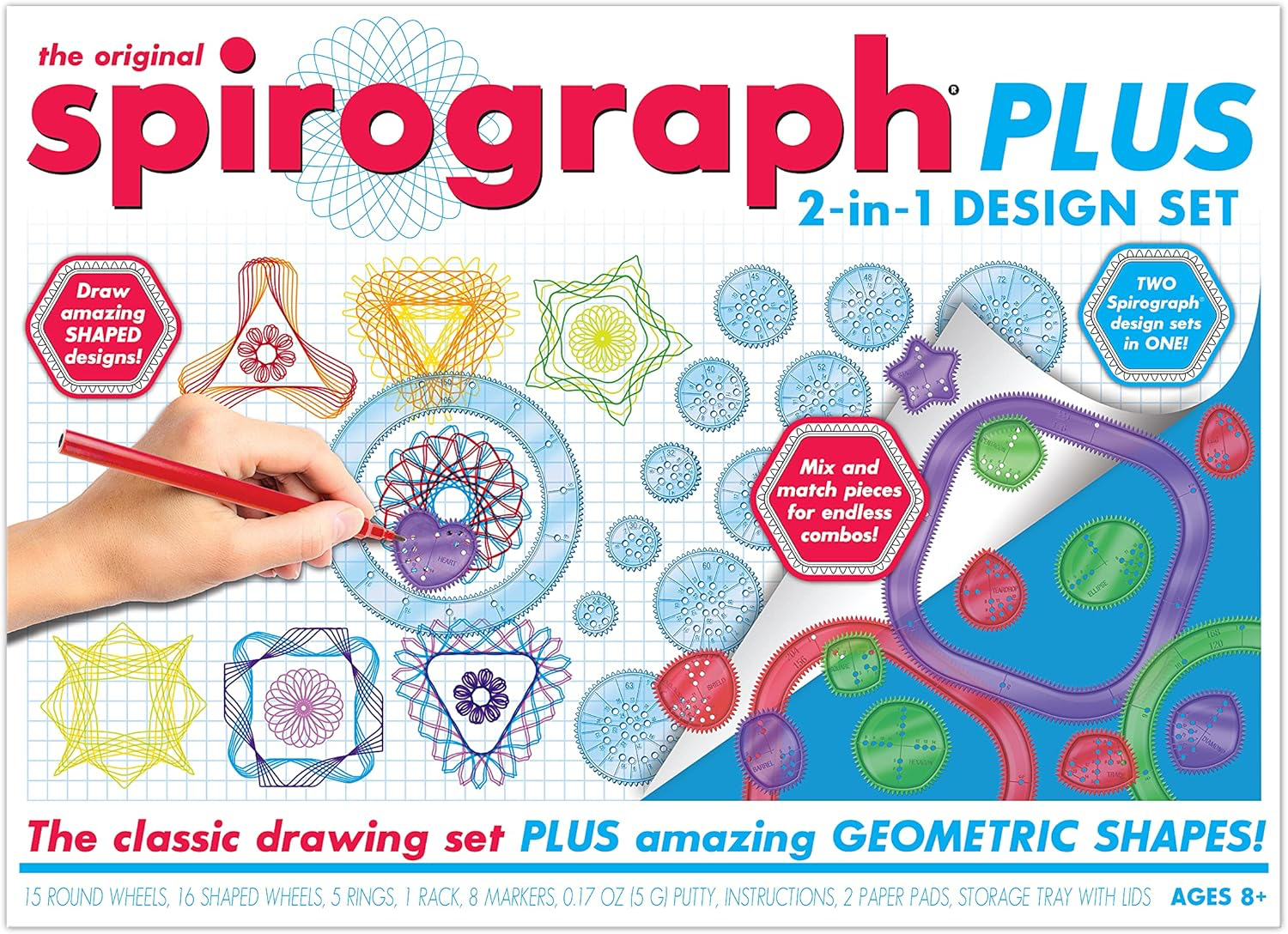
Today Spirograph is still in production, yet in our online world has become an artifact of nostalgia. We will see that this is not really a toy in the traditional sense, but in a creative sense, it offers a place for your mind to play out ideas as you solve an artistic circuitous path. I like the Spirograph Plus as it has added shapes.
Buy it here: https://amzn.to/4qEcblZ
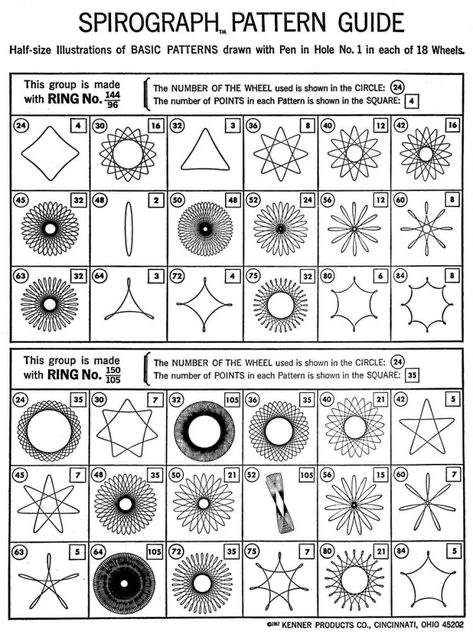
At its core, the Spirograph embodies “fluidity in containment,” a paradox where strict rules birth endless variety. Mathematically, it crafts hypotrochoids and epitrochoids—roulette curves formed by a point tracing the path of a circle rolling inside or outside another. The fixed outer ring (stator) and rotating inner wheel (rotor) engage via gear teeth, with pen holes allowing the user to select the tracing point. The parametric equations governing this motion are deceptively simple:
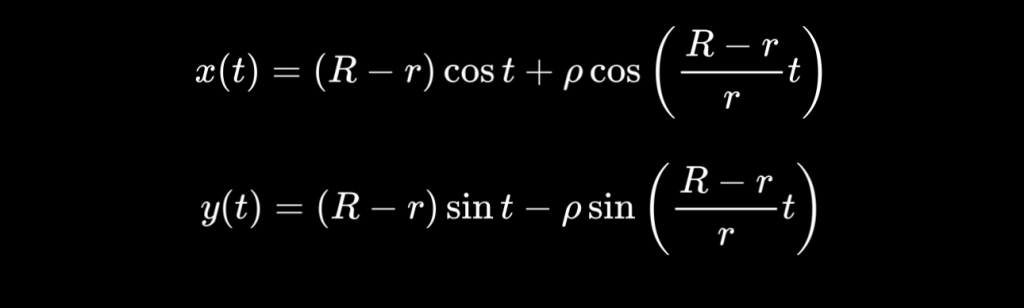
Here, (R) is the outer radius, (r) the inner, and (\rho) the distance from the inner circle’s center to the pen. Adjust the ratios—say, (k = r/R) or (l = \rho/r)—and the patterns morph from star-like hypocycloids to floral loops. This simplicity belies complexity: a single setup can yield thousands of variations through color changes, wheel swaps, or rotations. The Super Spirograph, with its triangles and bars, expands this further, turning a child’s toy into a design engineer’s playground. Yet, it’s the containment—the fixed gears dictating motion—that enables fluidity, much like how sonnet structure liberates poetic expression.
This duality makes the Spirograph a potent creativity unlocker, transforming passive observation into active invention. For children, it’s a “spectacular system to divine math algorithms into physical form,” as one enthusiast puts it, bridging abstract concepts with tangible art. But for adults, it’s a “way to divine and flush out logical ideas from your creative brain,” a hard focus for formulating breakthroughs. Research underscores this: geometric drawing, akin to Spirograph patterns, engages both brain hemispheres, fostering balanced cognition. Studies on mandala creation—those symmetrical, radial designs echoing Spirograph outputs—reveal psychological benefits, including reduced anxiety and enhanced focus. In art therapy, the repetitive motion induces a meditative state, calming the mind while sparking innovation. One study highlights how such structured activities boost self-esteem by yielding visually appealing results with minimal skill, empowering even the artistically timid.
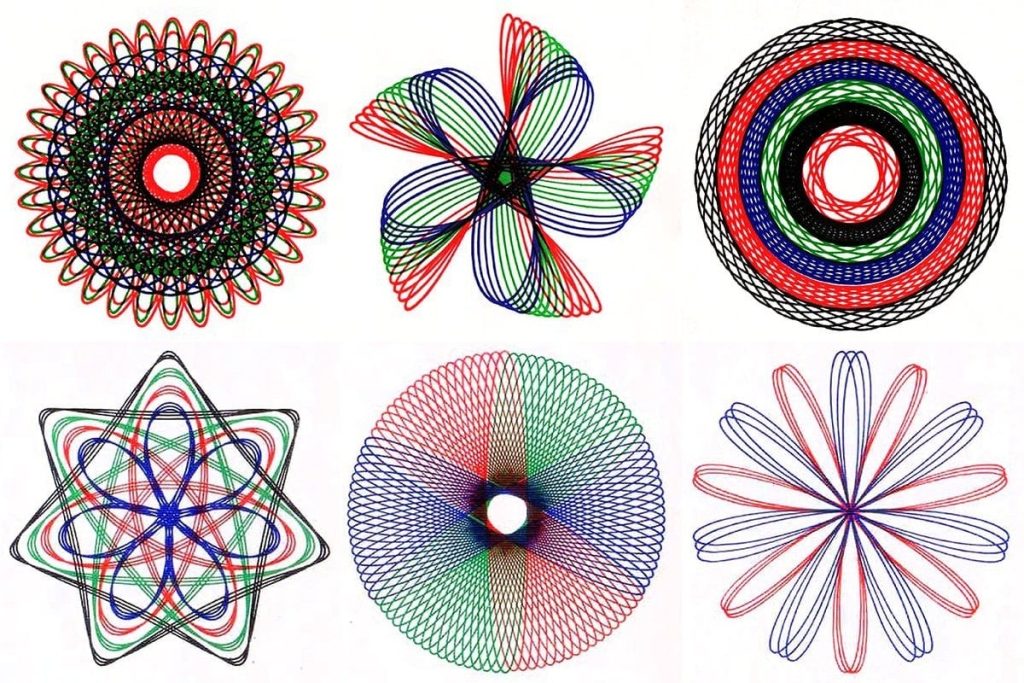
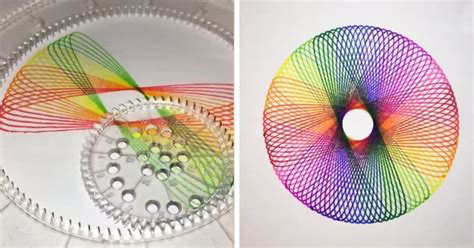
Visually, the allure is undeniable. Consider these intricate designs, where loops intertwine like cosmic threads:

These patterns, born from mechanical precision, invite personalization—layer colors, overlap wheels, or even digitize them for modern twists, as seen in online Spirograph simulators that blend nostalgia with tech.
The Psychology: Unlocking Hemispheric Harmony Through Geometric Creation
The Spirograph’s power as a creativity tool lies deeply in its ability to synchronize the brain’s left and right hemispheres, fostering a holistic cognitive state that bridges analytical precision with intuitive flow. The left hemisphere, often dominant in verbal, logical processing, handles the structured aspects of Spirograph use—such as following gear ratios and tracing lines—while the right hemisphere, associated with spatial awareness, pattern recognition, and creativity, interprets the emerging designs, colors, and holistic forms. This bilateral engagement counters the typical left-brain bias in modern tasks, allowing users to shift into “R-mode” thinking, where perceptual reality takes precedence over preconceived labels. As Betty Edwards explains in her seminal work Drawing on the Right Side of the Brain, suppressing the analytical left brain enables the right to perceive and render complex visuals more accurately, leading to breakthroughs in creative problem-solving. This hemispheric integration not only enhances drawing skills but also promotes emotional balance, as the rhythmic, repetitive motions induce a meditative state that quiets overactive logical rumination.
Empirical studies on similar activities, like mandala drawing—which mirrors the Spirograph’s geometric symmetry—underscore these benefits. A 2020 study in Frontiers in Psychology found that both cooperative and individual mandala drawing significantly boosted subjective well-being, mindfulness, and spirituality by enhancing positive affect and reducing stress, with cooperative forms showing stronger effects through social interconnection. Another investigation using functional near-infrared spectroscopy (fNIRS) revealed differential hemispheric activation: artists showed greater left-hemisphere involvement for technical execution, while non-artists experienced heightened frontal lobe activity linked to reward and novelty processing. 5 In art therapy contexts, a 2017 study published in The Arts in Psychotherapy demonstrated that mandala coloring increased blood flow to the medial prefrontal cortex—the brain’s reward center—more than free drawing, resulting in elevated mood and reduced anxiety. These findings suggest that geometric drawing’s structured yet fluid nature provides a “cognitive break,” alleviating decision fatigue and optimizing the brain’s environment for innovative thinking.
At a deeper level, this works by reducing amygdala hyperactivity—lowering stress responses—while strengthening inter-hemispheric connections, as noted in neuroscience reviews linking mandalas to improved concentration and neuroplasticity. 3 The containment of patterns within a circle mimics natural fractals, engaging the default mode network for introspection and the visual attention pathways for immersion, leading to a “flow state” where time dissolves and subconscious insights emerge. 6 Bilateral elements, akin to using both hands in drawing exercises, further integrate explicit (conscious) and implicit (subconscious) memories, fostering resilience against mental blocks. Ultimately, the Spirograph’s mechanism taps into ancient therapeutic principles, like those Jung identified, to harmonize the psyche, making it a profound tool for unlocking creativity in an era of fragmented attention.
Mandalas: Ancient Symbols of Wholeness, Concentration, and Meditation
The Spirograph’s swirling, symmetrical designs evoke the timeless allure of mandalas those intricate circular patterns that have captivated human minds for millennia. Derived from the Sanskrit word meaning “circle” or “completion,” mandalas represent the universe, wholeness, and the interconnectedness of all things. Far more than mere art, they serve as profound tools for concentration and meditation, guiding practitioners toward inner harmony and enlightenment. To understand how the Spirograph harnesses similar powers, we must journey through the mandala’s rich history and its enduring role in fostering mental clarity and spiritual depth.
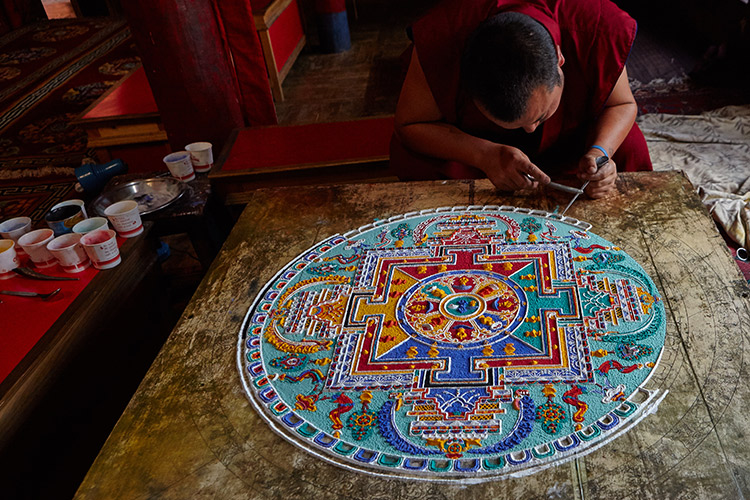
Mandalas trace their origins to ancient Eastern spiritual traditions, emerging prominently in Hinduism and Buddhism around the 4th century BCE, though some accounts suggest even earlier roots. In Hinduism, mandalas appear in Vedic texts as symbolic diagrams used in rituals to invoke deities and establish sacred spaces. They embody the cosmos, with the center representing the divine essence and outer layers depicting the layers of existence. Buddhist mandalas, which gained prominence in India during the 1st century BCE, evolved into sophisticated meditative aids. Tibetan Buddhism, in particular, refined the practice with sand mandalas elaborate creations made from colored sand, meticulously constructed by monks over days or weeks. These impermanent artworks, known as dul-tson kyil-khor (“mandala of colored powders”), symbolize the transient nature of life; once completed, they are ritually dismantled and dispersed into water, reminding practitioners of attachment’s futility. Historical records indicate that Shakyamuni Buddha himself may have taught mandala construction in the 5th or 6th century BCE, using them to illustrate complex teachings on the wheel of time (Kalachakra) and the path to enlightenment. By the 11th century, sand mandalas were well-documented in Tibet, serving as focal points for visualization practices in Anuttarayoga Tantra, where meditators internalize the mandala’s geometry to transcend ego and achieve unity with the divine.
In these traditions, mandalas are not passive images but active instruments for concentration and meditation. Practitioners gaze upon or visualize the mandala to focus the mind, quieting distractions and cultivating a state of profound awareness. The symmetrical structure often featuring gates aligned with cardinal directions, deities, and symbolic elements like lotus petals or thunderbolts guides the meditator inward, from the chaotic periphery to the serene center, symbolizing the journey from ignorance to wisdom. This process fosters samadhi (deep concentration), where the mind achieves single-pointed focus, dissolving dualities and revealing the interconnected web of existence. In tantric practices, mandalas act as “supports for the meditating person,” internalized through repeated contemplation until they can be vividly summoned in the mind’s eye, aiding trance induction and spiritual insight. The eight auspicious symbols commonly embedded in mandalas—such as the endless knot for infinite compassion or the lotus for purity—serve as mnemonic devices, reinforcing meditative themes and enhancing mental retention. This historical use underscores mandalas’ efficacy in training attention, much like modern mindfulness techniques, by providing a visual anchor that stabilizes the wandering mind.
The mandala’s migration to the West owes much to Swiss psychiatrist Carl Gustav Jung, who encountered them during his studies of Eastern philosophies in the early 20th century. Jung viewed mandalas as archetypal representations of the “Self” the unified psyche encompassing both conscious and unconscious elements—emerging spontaneously in dreams, art, and visions during times of psychological turmoil. He sketched his own mandalas daily, describing them as “cryptograms” of the soul that facilitated inner reconciliation and wholeness. In therapy, Jung encouraged patients to create mandalas, observing that they revealed unconscious processes and promoted individuation—the integration of fragmented aspects of the personality. This marked mandalas’ entry into modern psychotherapy, transforming ancient spiritual tools into psychological aids for self-discovery and healing.
Today, mandalas thrive in art therapy, where their creation or coloring induces meditative states that enhance concentration and alleviate stress. Research supports this: A 2020 study in Frontiers in Psychology found that both individual and cooperative mandala drawing boosted subjective well-being, mindfulness, and spirituality, with cooperative forms fostering social bonds and deeper positive affect. Another study using functional near-infrared spectroscopy showed increased frontal lobe activity during mandala work, linked to reward processing and mood elevation. In a 2017 Arts in Psychotherapy investigation, mandala coloring reduced anxiety more effectively than free drawing by activating the medial prefrontal cortex, the brain’s reward center. 9 These effects stem from the mandala’s structure: Its symmetry reduces amygdala activity (lowering stress), while the repetitive process engages the default mode network for introspection and flow states, mirroring ancient meditative benefits in a therapeutic context. Cooperative mandala drawing, a modern innovation, adds interpersonal dimensions, enhancing altruism and team motivation.
Just as mandalas have evolved from ritualistic diagrams to therapeutic instruments, the Spirograph democratizes this power, allowing anyone to generate mandala-like patterns through mechanical precision. Its hypotrochoids and epitrochoids capture the essence of mandalic symmetry, offering a secular gateway to the concentration and meditative benefits historically reserved for spiritual adepts. In an age of digital distractions, rediscovering mandalas through tools like the Spirograph invites us to reclaim ancient wisdom for modern minds.
In my own experience, I’ve wielded the Spirograph in client sessions to shatter engineering blocks. Picture a team stalled on a circuit design problem: screens glare with data overload, ideas stagnate in linear spreadsheets. Introduce the Super Spirograph, and suddenly, hands engage gears, pens trace curves. The laughs come first—“This is goofy!”—but then, epiphanies. One client, grappling with fluid dynamics in a pump system, watched a hypotrochoid unfurl and realized their flow model needed non-linear rethinking. It always works, not as therapy, but as a catalyst for lateral thinking. The containment forces focus, while fluidity sparks associations—much like how Desvignes’ device solved forgery by complexity, we solve modern puzzles by embracing pattern diversity. Research supports this: drawing tools enhance problem-solving by nurturing visual-spatial skills and unconventional approaches. In engineering, Spirograph-inspired parametric equations aid pattern design, from gear mechanics to architectural motifs.
In 2026, the Spirograph’s relevance surges amid digital saturation. Screens dominate, algorithms curate our feeds, AI generates “art” with a prompt yet true creativity withers in this passive consumption. Analog toys like the Spirograph offer detox: tactile engagement promotes physical activity, social interaction, and open-ended play absent in apps.
Studies show traditional play elicits more parent-child interaction and language than digital alternatives, fostering deeper emotional bonds. In an AI era, where tools like ChatGPT boost productivity but risk homogenizing ideas, the Spirograph reminds us of human ingenuity’s edge: the joy of manual creation. A 2025 study on human-AI collaboration reveals a “Goldilocks effect” moderate AI use enhances creativity via diverse ideas, but over-reliance stifles it. Thus, amid burnout from endless scrolling, Spirograph parties—off-phone, hands-on—reignite communal sparks, as urged by modern advocates.
Delve deeper into its complexity: vary (k) slightly, and patterns evolve from roses to stars, mirroring nature’s fractals—snowflakes, galaxies, DNA helices. This “simple yet endlessly complex” nature teaches resilience; a slip of the wheel creates “imperfections” that inspire new directions, much like life’s detours. In design, it’s a prototyping tool; in therapy, a mindfulness aid; in education, a STEM gateway.
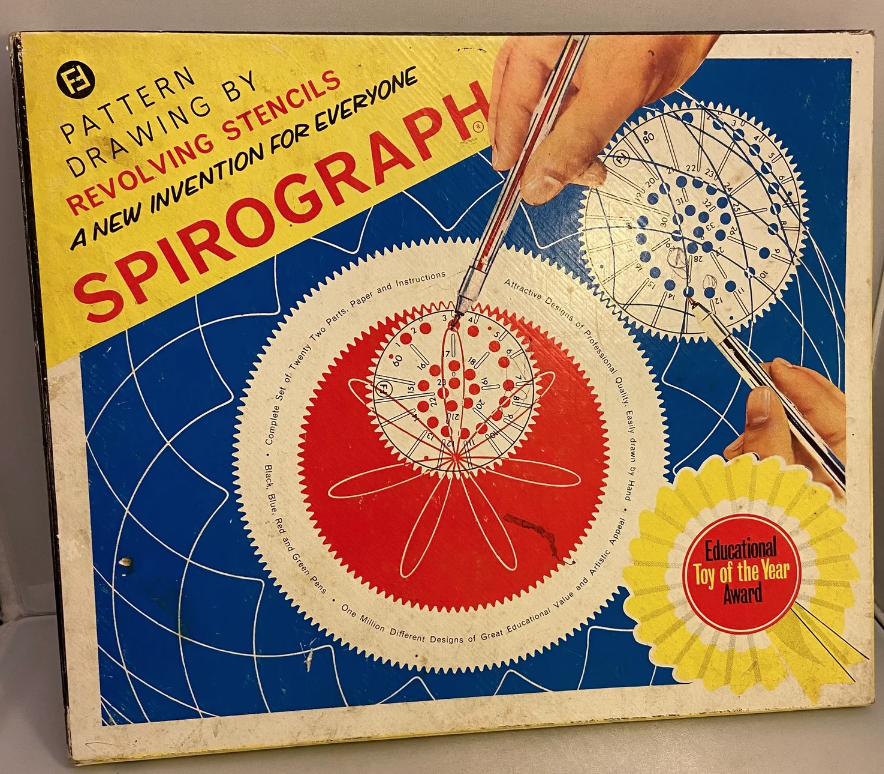
A Playful Guide: Spiraling into Creativity with Your Spirograph
With this process, you’re not just doodling, you’re embarking on a whimsical adventure where interlocking gears become your creative co-pilots, guiding you through uncharted territories of the mind. The Spirograph isn’t about crafting museum-worthy masterpieces (though who knows, you might surprise yourself!); it’s a sneaky gateway to flushing out those elusive ideas lurking in your brain’s nooks and crannies. Whether you’re tackling an engineering puzzle, brainstorming a story, or just shaking off the daily grind, this step-by-step ritual turns playtime into profound insight. Grab your Super Spirograph set, a stack of paper, some colorful pens, and—crucially—a voice recorder (your phone’s app will do just fine). Let’s spin into action!
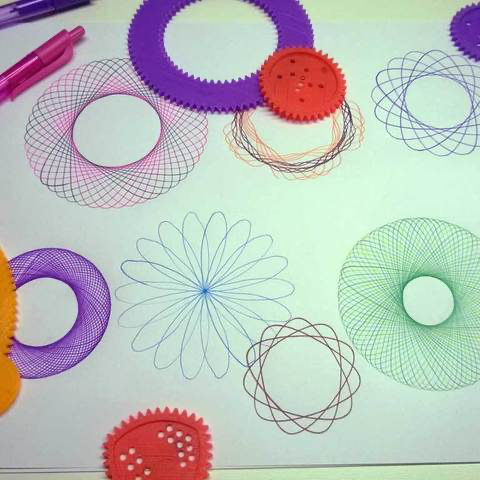
Step 1: Craft Your Creative Cocoon. Start by carving out a cozy nook free from distractions—no phones buzzing, no emails pinging. Dim the lights if you like, queue up some ambient tunes (think ethereal synths or gentle rain sounds), and lay out your Spirograph kit like a treasure trove. Pin down a single problem or idea to “unlock”—maybe it’s “how to streamline my workflow” or “what’s the plot twist for my novel?” Jot it lightly at the top of your paper as a north star, but don’t overthink it. The goal? Create a space where your mind feels safe to wander, like a kid in a candy store of curves and loops. Pro tip: Brew a fun beverage herbal tea for zen vibes to signal to your brain, “Hey, this is playtime, not pressure time!”
Step 2: Gear Up and Choose Your Starting Shape. Here’s where the magic ignites! Dive into your gears—those toothy wheels are your building blocks. Begin with something simple to ease in: snag the classic round stator (the fixed outer ring) and pair it with a medium-sized rotor wheel, say the one with 96 teeth for a balanced start. Why? It produces those satisfying, flower-like hypotrochoids that feel familiar yet full of potential. If you’re feeling bold, swap in a triangular bar for edgier, starburst patterns that jolt your thoughts sideways. There’s no wrong choice to pick based on your mood! A spiky, angular setup might mirror a prickly problem, while smooth circles invite calm flow. Poke the pen through a hole closer to the center for tighter, denser swirls that build intensity, or edge it out for looser, expansive loops that let ideas breathe. Remember, the art isn’t the endgame (unless you want it to be—frame it if it sparks joy!); it’s the rhythmic motion that lulls your logical left brain to sleep, letting the right-brain rebels party with fresh perspectives.
Step 3: Color Your World and Let the Pen Dance. Now, the fun ramps up with hues! Snag a rainbow of pens vibrant reds for fiery energy, cool blues for introspective calm, or wild neons for that “aha!” pop. Start with a single color to keep it simple, like a steady black for grounding, then layer on as patterns unfold. Switch mid-spin if inspiration strikes—maybe transition from earthy greens (symbolizing growth) to sunny yellows (for optimism) as your design evolves. The key? No rules! If a “mistake” happens—like a gear slip creating an unexpected wobble—embrace it as a cosmic nudge toward novelty. As you rotate the wheel, let your mind meander: watch the curves intersect like ideas colliding, and feel the hypnosis set in. This is where blocks crumble; the controlled chaos tricks your brain into free-associating, turning “stuck” into “spark.”
Step 4: Voice It Out—Capture the Epiphanies with a Recorder. As the patterns bloom, ideas will bubble up like popcorn in a hot pan. Don’t let them vanish! That’s where your voice recorder swoops in as your trusty sidekick. Keep it handy and hit record the moment a thought twinkles: narrate aloud, “Whoa, this loop reminds me of recycling workflows, maybe loop in automation here?” or “That starburst? Perfect metaphor for branching plotlines in my story!” Speak freely, rambling is encouraged! The recorder catalogs these gems without interrupting your flow, turning fleeting whispers into a treasure trove. Later, play it back like a podcast from your subconscious, transcribing solutions or wild notions. It’s like having a brainstorming buddy who never judges, ensuring no “eureka” slips away. Bonus fun: Add sound effects—mimic the gear’s whir or hum a tune to make reviewing as entertaining as creating.
Step 5: Reflect, Rinse, and Remix. Once your page is a kaleidoscope of curves (or you’ve filled a few—go wild!), pause and ponder. Step back, sip your drink, and ask: “What surprises popped up? How does this tie to my original puzzle?” Jot notes or doodle connections right on the artwork. Then, remix! Swap gears for a fresh shape—try an epitrochoid for outward-blooming vibes—or layer colors in unexpected ways, like a rainbow gradient to symbolize evolving ideas. Repeat the process daily or weekly; it’s not about perfection but persistence. Over time, you’ll notice patterns in your patterns—recurring themes that unlock deeper creativity. And hey, if the “art” steals the show, turn it into wallpaper or a gift; the point is the journey, but the souvenirs are sweet!
This ritual isn’t rigid tweak it to your whims, invite friends for a “Spirograph jam session,” or even blend in scents like lavender for extra zen. The Spirograph whispers: creativity isn’t a lightning bolt; it’s a joyful spin, one gear at a time. Dive in, and watch your ideas unfurl like never before!
I assert: in a world chasing digital perfection, the Spirograph is revolutionary, an analog rebel against algorithmic tyranny. It demands no batteries, no updates, just curiosity. It solves not by computation, but by revelation. Try it: host that Spirograph party, break those blocks, divine those ideas. In its spirals, find not just patterns, but the essence of creation itself.
We are all facing the 5000 days ahead as our world changes, where love it or not, work will become an option. I speak to this here https://readmultiplex.com/2025/12/24/you-have-5000-days-how-to-navigate-the-end-of-work-as-we-know-it-part-1/. All of us will need tools to unlock our creativity. This is just one, and there are many more I will write about. But know that if you read this far through my rantings, you are a pioneer. You are part of the first generation to have options ahead.
Read Multiplex members will have a section below where I show in detail how a layering process of endless spirals can work with tips from decades of experience. Join us and learn.
To continue this vital work documenting, analyzing, and sharing these hard-won lessons before we launch humanity’s greatest leap: I need your support. Independent research like this relies entirely on readers who believe in preparing wisely for our multi-planetary future. If this has ignited your imagination about what is possible, please consider donating at buy me a Coffee or becoming a member.
Every contribution helps sustain deeper fieldwork, upcoming articles, and the broader mission of translating my work to practical applications. Ain ‘t no large AI company supporting me, but you are, even if you just read this far. For this, I thank you.
Stay aware and stay curious,
🔐 Start: Exclusive Member-Only Content.
Membership status:
🔐 End: Exclusive Member-Only Content.
~—~
~—~

~—~
Subscribe ($99) or donate by Bitcoin.
Copy address: bc1qkufy0r5nttm6urw9vnm08sxval0h0r3xlf4v4x
Send your receipt to [email protected] to confirm subscription.

Stay updated: Get an email when we post new articles:

THE ENTIRETY OF THIS SITE IS UNDER COPYRIGHT. IMPORTANT: Any reproduction, copying, or redistribution, in whole or in part, is prohibited without written permission from the publisher. Information contained herein is obtained from sources believed to be reliable, but its accuracy cannot be guaranteed. We are not financial advisors, nor do we give personalized financial advice. The opinions expressed herein are those of the publisher and are subject to change without notice. It may become outdated, and there is no obligation to update any such information. Recommendations should be made only after consulting with your advisor and only after reviewing the prospectus or financial statements of any company in question. You shouldn’t make any decision based solely on what you read here. Postings here are intended for informational purposes only. The information provided here is not intended to be a substitute for professional medical advice, diagnosis, or treatment. Always seek the advice of your physician or other qualified healthcare provider with any questions you may have regarding a medical condition. Information here does not endorse any specific tests, products, procedures, opinions, or other information that may be mentioned on this site. Reliance on any information provided, employees, others appearing on this site at the invitation of this site, or other visitors to this site is solely at your own risk.
Copyright Notice:
All content on this website, including text, images, graphics, and other media, is the property of Read Multiplex or its respective owners and is protected by international copyright laws. We make every effort to ensure that all content used on this website is either original or used with proper permission and attribution when available.
However, if you believe that any content on this website infringes upon your copyright, please contact us immediately using our 'Reach Out' link in the menu. We will promptly remove any infringing material upon verification of your claim. Please note that we are not responsible for any copyright infringement that may occur as a result of user-generated content or third-party links on this website. Thank you for respecting our intellectual property rights.
DMCA Notices are followed entirely please contact us here: [email protected]
