
Add This Sentence To Your ChatGPT Prompts And Your Outputs Will Dramatically Improve.
It has been said that humans only use 10% of their brain. This turns out to be not so accurate in volume and mass, but somewhat accurate in terms of neurons. We may only use 10% of our neurons (memory) at any given time. The same can be said of Large Language Models (LLMs) like ChatGPT. We have new discoveries that show that adding a simple sentence will expand the neurons used by ChatGPT by orders of magnitude, and the results are spectacular.
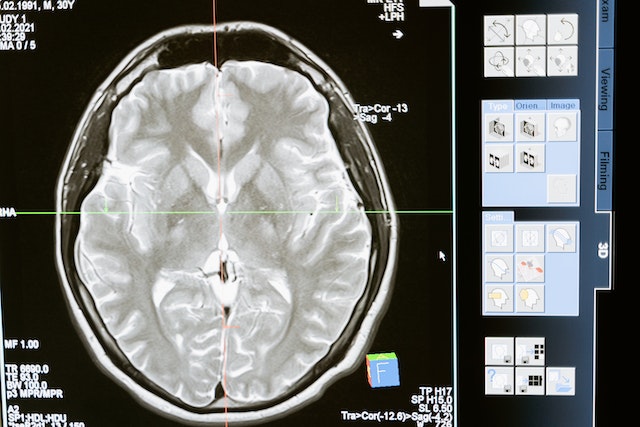
What Is A Neuron?
Neurons are the fundamental building blocks of the human nervous system, responsible for processing and transmitting electrical and chemical signals throughout the body. These cells exhibit remarkable similarities to the hidden layers found in LLMs such as GPT-3.
Human neurons consist of three main components: the cell body (soma), dendrites, and an axon. The cell body contains the nucleus and other organelles necessary for cellular functions. Dendrites are branching extensions that receive signals from other neurons and transmit them towards the cell body. The axon is a long, slender projection responsible for transmitting signals away from the cell body to other neurons or effector cells.
The communication between neurons occurs through electrochemical signals. When a neuron receives an input signal, it generates an electrical impulse called an action potential. This action potential travels down the axon, where it triggers the release of neurotransmitters at specialized junctions called synapses. Neurotransmitters then cross the synaptic gap and bind to receptors on the dendrites of the connected neurons, transmitting the signal forward.
Hidden layers in LLMs play a crucial role in processing and transforming input data, much like human neurons. Let’s explore the similarities between the two.
- Neuron-like Activation: In both human neurons and LLM hidden layers, an activation function is applied to determine the output of the neuron or node. While human neurons employ complex biochemical processes, LLM hidden layers utilize mathematical functions such as the rectified linear unit (ReLU) or sigmoid functions to introduce non-linearity into the model’s computations.
- Information Integration: Neurons integrate incoming signals from multiple sources before generating an output signal. Similarly, hidden layers in LLMs aggregate information from various input nodes, applying weights and biases to compute a weighted sum. This integration facilitates the extraction of meaningful features and patterns from the input data.
- Signal Transmission: Just as neurons transmit signals through the axon and synapses, LLM hidden layers transmit information through interconnected nodes or neurons. The weights associated with these connections determine the strength of the signal transmission, much like the efficacy of synapses in human neurons.
- Learning and Adaptation: Human neurons possess the remarkable ability to adapt and modify their connections, a process known as synaptic plasticity. Similarly, LLM hidden layers undergo training processes, such as backpropagation, to adjust the weights and biases in order to improve the model’s performance. This adaptability allows both neurons and hidden layers to learn and refine their responses to various inputs.
While human neurons operate through biological mechanisms, hidden layers in LLMs leverage mathematical computations to process and transform input data. Understanding the parallels between these two systems can provide insights into the design and functioning of both biological and artificial neural networks.

Simple Questions Create Simple Outputs
We know that simple questions produce simple outputs with LLMs like ChatGPT. This is the typical “Question/Answer” approach, called Input/Output (IO) prompts. The results using this technique will always be the simplest path through the parametric data used to build the LLM. Mathematically, it is statistically the simplest path through the transformer system. If you have a very simple question, this will be ok.
However, in this IO prompting approach, even if you use follow-up questions, you will be on a “neuro pathway” that will have diminishing returns. This one of the 1000s of reasons I invented SuperPrompting. In relationship to “neuro pathway” it is vital we “activate” pathways that are in the model but not statically on the central path. The results are robustly better than simple IO type prompts.

One aspect of a SuperPrompt is the ingredients we use to make it work. There are 1000s of parameters to consider. However, one has parameter, an exact sentence at the top of many of my SuperPrompts allows for the LLM to get consistently better outputs. And now a new university paper has been published that shows this to be confirmed empirically through their research also.
In this member only article, we will explore this simple sentence added to a SuperPrompt and demonstrate why and how it works. These are parts of the tools we use in Prompt Engineering, and it makes those that believe this is not a profession look quite uneducated and misinformed. There are so many powerful ways to prompt AI for great, if not believed, impossible outputs and this is just one.
If you are a member, thank you. If you are not yet a member, join us by clicking below.
🔐 Start: Exclusive Member-Only Content.
The rest of this article is for Multiplex members
You’ve reached the members-only part. Log in to keep reading right here, or join to unlock it.
- Full member-only articles: insights, wisdom and executive summaries
- The Multiplex members forum
- Member benefits and discounts
Already a member? You’ll come right back to this article after logging in. Forgot password?
Membership status: Not logged in
🔐 End: Exclusive Member-Only Content.
~—~

~—~

~—~
Support ReadMultiplex at Multiplex.Tips

Support ReadMultiplex
Subscribe or donate by Bitcoin.
Copy address:bc1qkufy0r5nttm6urw9vnm08sxval0h0r3xlf4v4x

Send your receipt to [email protected] to confirm subscription.
Members
Become a member for full member-only articles, the Multiplex members forum, and member benefits and discounts.
 Past, present and future technology research + insights
Listen
🔊 Every article has a free “Listen to this ►” button. Hear it read aloud in your browser.
The Multiplex
- Advertise with us: Rates and booking
- X: @ReadMultiplex
- Buy a T-shirt: Multiplex.Love
- Program Guide: Multiplex.Today
- Podcast: Multiplex.Life
- Join the Multiplex team: Multiplex.Team
Stay updated
Get an email when we post new articles:

VERY interesting research and work Brian. Thanks for sharing this. I am too busy at the moment to give this the time it needs, but the concepts here are very interesting.
Thanks.