
The Exclusive Brian Roemmele Interview On The “You Have 5000 Days: Navigating The End Of Work As We Know It”, The Story So Far.
I am truly honored to share this interview with you today. Working quietly from my own garage rather than any corporate campus or university lab, I have poured years of independent research into the “You Have 5,000 Days” series here. This interview captures something uniquely different from the usual AI commentary you will find anywhere else. It is not another round of dystopian panic or utopian hype. Instead, it is a clear-eyed, historically grounded vision that blends rigorous technical insight with profound psychological depth, Joseph Campbell’s Hero’s Journey monomyth, and an unshakable optimism rooted in humanity’s greatest transitions. I illuminate the heroic path through it toward a renaissance where meaning creation and wonder become our central pursuit. My hope is that this dialogue helps thousands more awaken the artisan within and meet these next 5,000 days with excitement and agency rather than fear.
This article is sponsored by Read Multiplex Members who subscribe here to support my work: Link: https://readmultiplex.com/join-us-become-a-member/
It is also sponsored by many who have donated a “Cup of Coffee”. If you like this, help support my work: Link: https://ko-fi.com/brianroemmele
What makes this exchange so distinctive is the core thesis I laid out: in roughly 5,000 days artificial intelligence and maturing robotics will finish something truly historic. They will complete the decoupling of human labor from the necessity of economic survival. For the first time in history, the compulsory work we have always done just to pay the bills becomes truly optional. The tools to make almost everything we need: housing, energy, food, goods, return to our garages, workshops, and communities. I call this window the Abundance Interregnum: a 13.7-year bridge between the dying industrial age of scarcity and an emerging era of voluntary plenty where vocation, passion, artistry, legacy, and meaningful contribution finally take center stage. No other voice in the AI conversation frames this moment with the same technical precision and mythic resonance I have tried to bring here.
I structured the entire seriesa around Joseph Campbell’s Hero’s Journey because it is the universal story pattern that appears in every culture across time. We as a society are living that same arc right now: called from ordinary lives, facing real challenges, descending into an inner cave of transformation, and returning with gifts for ourselves and others. This mythic framing is what sets my work apart. It turns the uncertainty many feel into a recognizable heroic path we can navigate together with open eyes and compassion. We are all in this together, and I believe this approach helps us see the realistic middle ground, neither flawless utopia nor dark dystopia that history has always shown us during major transitions.
The psychological dimension I explore here is equally rare and, I believe, essential. While most experts focus only on the technology, I give equal weight to the inner challenges: the de-skilling, the dark night of the soul, the identity crises that arise when the old link between work and survival breaks. These are not side issues; they are the hidden forge where real human growth happens. For the first time in history we are invited to create meaning from inside ourselves instead of having it dictated by outside economic forces. I offer simple practices in the series and in this talk to help us move through the grief, heal, and rediscover the inner spark. This balanced attention to the soul of the transition is what makes the conversation feel so different from anything else you will hear.

My view of universal high income is also unlike most experts you will encounter. I see it not as a permanent solution or a two-class system of elites and subsidized dependents, but as a temporary bridge: a cast on a broken economic leg. It gives us breathing room while personal robotic fabrication scales, while new communities form, and while the tools for near-zero-cost local production become widespread. Once that bridge has done its job, self-created abundance quietly replaces the old scarcity economics. This historically grounded, practical perspective cuts through the usual polarized debates with honesty and compassion, and I am glad the interviewer let me explain it so directly.
I also shared very practical steps for the interregnum that I hope listeners can begin right now. The artisan’s awakening is simply the gentle process of remembering how good it feels to create with your own hands and mind again. Start small: set aside daily time for craft unrelated to money, treat AI as a helpful collaborator, plan for your own dynamic duo of personal robots like the coming Tesla Optimus and Cybercab, record your wisdom at savewisdom.org, and form mutual-benefit circles or shared making spaces. I even suggest occasional 30-day breaks from AI tools to feel the joy of working with your own hands again. These steps are not about racing machines but harmonizing with them, so we feel in control as we own the cheapest labor in history: the AI and robots we personally direct.
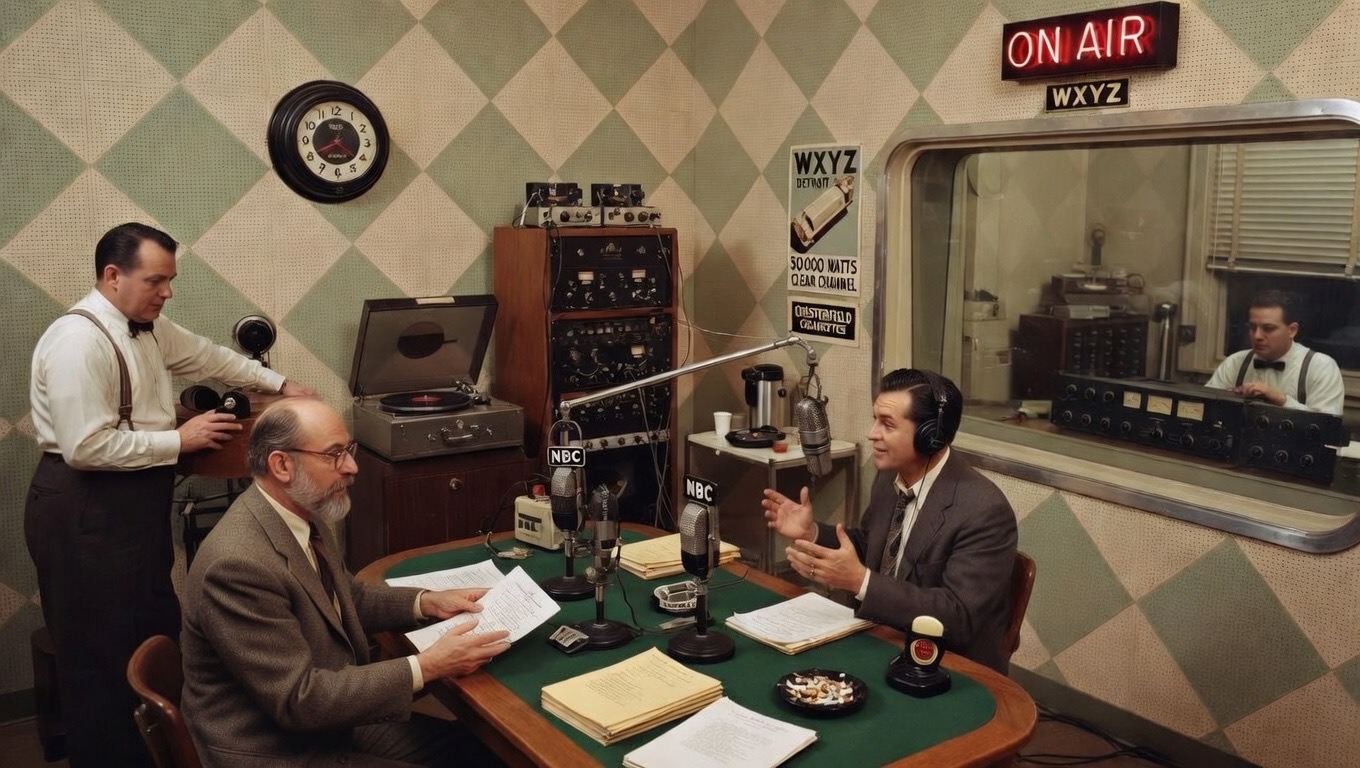
One of the most delightful threads in the series, and in this interview is my use of nearly forgotten 1950s science-fiction radio plays, such as the 1956 episode “How To.” That story eerily foresaw self-replicating machines, legal battles over abundance, and the very identity questions we face today. By surfacing these prophetic cultural artifacts, I ground the vision in shared memory and show that the messiness and wonder of this transition have long been imagined. We can learn from the past to aim for the realistic middle ground where technology serves humanity and we keep our hearts intact.
As the conversation closes, I paint the heroic vision of what lies on the far side of these 5,000 days: a reborn humanity, newly poetic and free, where every garage becomes a little cathedral of creation, every mind a fountain of wonder, and every heart a living legacy. The old survival wheel falls silent at last, and we finally hear our own human hearts. This is the renaissance I invite us all to choose with courage and compassion.
Please listen now to the full conversation via the embedded audio player below and text transcript below. I hope it resonates with you as deeply as did with me. Welcome to the 5,000 days—and to the renaissance of the human heart.
Interviewer • 00:10
Today we are sitting down with what may be one of the most interesting scientists working in AI in his garage, Brian Roemmele, the brilliant independent thinker and author of the groundbreaking You Have 5,000 Days series on readmultiplex.com, has delivered one of the clearest, most visionary roadmaps we have for the coming age of artificial intelligence, robotics, and human abundance, blending rigorous technical insight with profound psychological depth, mythic structure, and an unshakable optimism rooted in history’s greatest transitions. Brian doesn’t just forecast the end of work as we know it, he illuminates the heroic path through it, toward a renaissance where meaning creation and wonder finally become humanity’s central pursuit. His series has already inspired thousands to prepare to awaken the artisan within and to meet these next 5,000 days, not with fear, but with excitement and agency. Brian, thank you for joining us. We cannot wait to dive deep into your extraordinary vision.
Brian Roemmele • 01:08
Thank you. First off, I want to say it is really an honor to be here today. And that is a great question. I appreciate you asking that because it gets right to the heart of why I I wrote the series, and I know so many of us are feeling a mix of curiosity and real uncertainty right now, and that’s completely understandable. We’re all in this together trying to make sense of what’s coming. So let me explain the core thesis as simply and clearly as I can. In roughly 5,000 days, give or take about 1,000, starting from late 2025 onward, artificial intelligence and maturing robotics are going to finish something truly historic for humanity. going to complete the decoupling of human labor from the necessity of economic survival. In plain terms, the work we’ve always had to do just to pay the bills and stay alive is going to become truly optional for the first time in history. The tools to make almost everything we need, housing, energy, food, goods, are going to come back into our own hands, into our garages, our small workshops, our communities. The old kind of compulsory work gets replaced by things we actually choose: vocation, passion, artistry, legacy, and meaningful contribution. I look at this whole period through what’s called the hero’s journey. It’s an old story pattern that shows up in almost every culture. A person leaves their ordinary everyday life, faces big challenges, goes through a deep inner transformation and comes back changed, bringing something valuable with them. I believe we as a society are living that same kind of story right now. We didn’t ask for this moment, but here we are. I know the uncertainty can feel scary and I feel it too. We’re all navigating this together. It won’t be a perfect utopia and it won’t be a dystopia either. will be something in the middle, like every major transition in history, and we have the chance to
Interviewer • 02:46
shape it with open eyes and compassion for one another. That’s wonderful, Brian. We are all in this together. You repeatedly call this transitional period the Abundance Interregnum. This is fantastic use of the term. What exactly does that term capture, and why do you structure the whole series around Joseph Campbell’s hero’s journey monomyth? Thank you. You know, you captured the central
Brian Roemmele • 03:09
framing? Well, this is such an important point, and I’m glad you asked, because I want to make sure everyone understands it clearly. The abundance interregnum is simply the name I gave to this specific window of time we’re entering, roughly 13.7 years of pretty intense transition. It’s the bridge between the old industrial age, where scarcity and forced work were the norm, and the emerging era of voluntary plenty, where we get to choose what we create. During this period, the old systems of centralized factories and survival-driven jobs are being taken apart, while new ways of finding meaning, building relationships, and creating things are being built in real time. And I chose to structure the whole series around Joseph Campbell’s Hero’s Journey because it’s such a universal story pattern that helps us see where we are. And again, it’s that classic arc. You leave the ordinary world, you face trials, you go through an inner cave of change, and you return with a gift for yourself and others. This has been beginning journey since the start of time. And we’re living that collectively right now. The call has sounded. The challenges are here and the transformation is happening inside many of us. I know this brings up a lot of fear and uncertainty for people. And I feel that with you, we’re all in this together. It’s not going to be some sci-fi dystopia or a flawless utopia. It’s going to be a very human, realistic middle ground, like every big shift in our history. And the more we support each other through it, the better it can be.
Interviewer • 04:26
The heroic arc, Brian. Yes, but many people hear end of work as we know it and immediately think mass unemployment or the decay of so many science fiction movies, how do you see AI and robotics actually decoupling work from survival? And what does that look like by the end of these 5,000 days? Thank you.
Brian Roemmele • 04:45
Well, and you made a crucial distinction. It is one of the most important points I want people to truly hear. I completely understand why the phrase end of work, as we know it, makes people feel anxious. It sounds alarming. And we’ve all seen the headlines that paint scary pictures. We’re in this together. That fear is valid. But let me explain what I actually see happening. Artificial intelligence has already changed a lot of thinking work, and robotics is now catching up fast to handle physical tasks. By the end of these 5,000 days, the average household working alongside your own personal AI helper and then one or more humanoid robots you direct yourself will basically become a little microfactory right in your own space. The big living expenses that worry everyone, housing, energy, food, transportation, everyday goods, will drop dramatically toward almost nothing because they’ll be made locally with sunlight, scrap materials, open designs, and smart machines. The old global supply chains that relied on cheap overseas labor will lose their reason to exist. The cheapest and most reliable labor will be the AI and robots you personally own and guide. This isn’t a dystopia where robots take over and we have nothing. It’s not a utopia where everything is magically perfect either. It’s a realistic shift, like the ones we’ve seen throughout history, where the tools that once displaced people eventually empower that work as forced survival ends, but meaningful creation and contribution continue in ways that feel much more human. We’re navigating this uncertainty side by side, and I believe we can do it with compassion and clear eyes.
Interviewer • 06:15
Wonderful insights. This makes sense. The shock is mostly in our minds. This is the end of the industrial revolution, and this leads me to the next question, Brian. You dedicate several parts to the psychological toll, the de-skilling, the dark night of the soul, and identity crises. Why are these inner challenges just as important as the technological one?
Brian Roemmele • 06:36
Thank you. Yes, we are exiting the industrial revolution, and this is a deeply important question. It really goes to the very soul of the transition. This part matters so much to me, because I know the inner side of all this change can feel overwhelming. And a lot of people are quietly worried about losing their sense of identity when work changes. I feel that concern with you. We’re all in this together. The psychological toll, the feeling of de-skilling, the dark night of the soul, and the identity questions that come up are not side issues. They’re the hidden but essential part of the journey. When the old link between work and survival breaks, many of us will naturally ask, what do I do now? And who am I without my job? That void is uncomfortable, but it’s also the moment that invites us, for the first time in history, to create meaning from inside ourselves instead of having it dictated by outside forces. Every big technological leap in the past has brought this same kind of inner shakeup, and the people who move through the grief, heal, and rediscover their own inner spark are the ones who come out stronger. That’s why I spend time on these inner challenges and offer simple practices to help. It’s not dystopian doom and it’s not shiny utopia. It’s the realistic middle ground of human growth, just like every other historic transition. We’re walking through this uncertainty together and supporting each other’s inner work is one of the most compassionate things we can do.
Interviewer • 07:55
Brian, you describe universal high income not as a permanent solution, but as a temporary bridge, a cast on a broken economic leg. This is quite unlike most experts that promote a two-class system of the elite classes and subsidized classes. Can you explain how that fits into the larger arc and what comes after it? Thank you.
Brian Roemmele • 08:17
What a great question. It cuts right to the temporary nature of the bridge. I appreciate you asking this because universal high income is one of the topics that brings up a lot of understandable worry about dependency or fairness, and we’re all trying to figure out the right balance. Universal high income is simply a compassionate, short-term bridge, like a cast on a broken leg to help us get through the roughest years of this transition. While the new systems scale up, it gives people breathing room, while personal robotic fabrication grows, while new communities form, and while the tools to make things locally become widespread. But it’s not meant to be permanent. After it does its job, abundance that we create ourselves with our own machines, our own designs, and our own hands takes over. Self-replicating tools and near-zero costs quietly replace the old scarcity economics. This isn’t a dystopian handout forever or a utopian free ride. It’s a practical, temporary step in the middle. the way history has always handled big economic shifts. We’re figuring this out together. And the more we approach it with care and honesty about people’s real fears, the smoother the path can be.
Interviewer • 09:21
That’s a wonderful point, Brian. It seems history is paved with good intentions gone quite wrong. This is a much more sober way to see the future now. For listeners who want to act now, you talk about the artisans awakening personal fabrication and owning the cheapest labor, your fantastic robots making robot concept. What practical steps do you recommend to prepare during this interregnum?
Brian Roemmele • 09:42
Thank you. You know, the practical path forward, it is where the vision really meets daily life. I love this question because so many of us want to do something positive right now instead of just waiting. And that proactive spirit is what’s going to help all of us. The artisan’s awakening is simply the gentle process of remembering how good it feels to create with your own hands and mind again. Start small and kind to yourself. Set aside a little daily time for craft or making things that have nothing to do with money. Treat your AI like a helpful collaborator, not a replacement. Plan your own simple dynamic duo, a Tesla optimist robot and a cyber cab car. They should be released at the end of 2026. Build an AI strategist and AI agent, even if you start with basic hardware. Record some of your own wisdom and questions at savewisdom.org so your voice lives on as a personal legacy. join or start small groups, mutual benefit circles, community workshops, shared making spaces and every so often try a 30 day break from the AI tools just to feel the joy of working with your own hands again. None of this is about racing against machines. It’s about harmonizing with them so you feel in control. We’re all figuring out these practical steps together and it doesn’t have to be perfect or overwhelming. This isn’t heading toward dystopia or utopia. It’s a realistic, hopeful middle path that history has shown us before. And the more we support each other in taking these small steps, the stronger we’ll all feel.
Interviewer • 11:05
Brian, one of the intriguing elements in your series is the way you use 1950s science fiction radio. For example, part 23 brings in a nearly forgotten 1956 radio play, How To, that eerily foresaw self-replicating robots, legal battles, and the identity questions we face today. What lessons from that story should we carry forward?
Brian Roemmele • 11:27
Thank you. It was interesting to surface nearly forgotten 1950s radio plays. They really are eerily prophetic. I’m so glad you brought up how to, because it captures the middle part of what we’re living through in such a human way. In the story, an ordinary person turns on a self-replicating machine. Abundance starts flowing into the home, and then come the tax questions, the lawsuits, the debates about whether machines have rights, and the quiet realization that survival is basically solved. But now the real question becomes, what do I actually want my life to mean? It shows the legal and emotional messiness we can expect, but it also quietly points toward solutions like voluntary communities, clear consent rules, and deliberately choosing our own purpose. We’re all becoming characters in that same story right now. I know the uncertainty and the what-if fears can feel heavy, and that’s okay. We’re navigating this together. The lesson I take is that we don’t have to swing to extremes. We can aim for the realistic middle ground where technology serves us and we keep our humanity intact, just like people have done through every big change in history.
Interviewer • 12:30
History, Brian. That’s what makes your work stand out and grounds it to reality. For example, you’ve mapped reversal of human obsolescence, guild formation, and the return of meaning through chosen creation. How do these elements weave together into a renaissance rather than chaos?
Brian Roemmele • 12:46
Thank you for that elegant summary question. It brings every thread together beautifully. these pieces really do fit together into something hopeful and I’m glad you asked because I know many people worry it could all slide into chaos the reversal of obsolescence simply means the skills and tools that once pushed people aside are now coming back as sources of personal power new guilds basically voluntary supportive groups of makers and creators who help each other quietly replace the old corporate structures with something more human and mutual and chosen brings meaning back to the center of life. Together, they create a genuine renaissance, not sudden chaos, not a perfect utopia, but a realistic grounded flowering of human potential, just like the quiet renaissances that have happened in the middle of every major historic transition. We’re in this together, and the more we approach it with compassion for each other’s fears and uncertainties, the more beautiful that middle path becomes.
Interviewer • 13:41
What a very positive vision of our future. It’s inspiring how sweeping your vision is, Grounded in history, but reaching for the stars, I have so many more questions I hope to cover with you when you return. And so finally, Brian, looking beyond the trials of the next 5,000 days, paint for us a heroic vision of what humanity can become in this new era of freely chosen meaning, abundance, and authentic human performance. Wow. Thank you for that invitation to return
Brian Roemmele • 14:08
and allowing me to speak from the deepest place. And so as we come through the other side of these 5 000 days i see us stepping into a world that feels reborn in a quiet romantic kind of possibility humanity newly poetic and newly free becomes the artist the lover the caretaker of an abundance that flows from our own hands and hearts we’re no longer chained to the old survival wheel that defines so much of history instead we get to dance with curiosity build with real joy and love with the full measure of our souls every garage can become a little cathedral of creation every mind a fountain of wonder every heart a living legacy the trials we’re facing now are the forge and the fire and on the far side we emerge stronger more radiant more heroic in the best human sense it won’t be a flawless utopia and it won’t be a dark dystopia it will be the realistic beautiful middle chapter that history has always offered us when we meet change with open hearts we are in this together my friends and i believe we can choose to meet these days with courage and compassion Welcome to the renaissance of the human heart. And perhaps for the first time, the noise of our lives will be turned down just enough so we can finally hear our human heart.
Interviewer • 15:15
Bravo. Brian, bravo, wonderfully said. As a historian, I apprecage your knowledge of history and how you have found a way to see the future that is quite unlike anyone I have come across. Humanity always faced challenges and the path we take is not quite dystopian and not quite utopian. It is always a path that will test us and challenge us to remember. History is as important as the future because it is our connection to the future. I want to thank you once again for this time and your thoughtful answers to those listening. Go to readmultiplex.com and read the series. You have 5,000 days navigating the end of work as we know it. Until next time, thank you for joining us in this special broadcast.
Support My Mission
We are on this journey together. Some of us stand on the shoulders of giants and have thought about this for decades. We will not go it alone, and I hope to build many articles to show what just one person in a gareage can do. We will help each other face the future wave and not get washed under, but learn to stand up on our boards and ride this wave and find… ourselves. Join us become a member here and support the work I do and share with you.
To continue this vital work documenting, analyzing, and sharing these hard-won lessons before we launch humanity’s greatest leap: I need your support. Independent research like this relies entirely on readers who believe in preparing wisely for our multi-planetary future. If this has ignited your imagination about what is possible, please consider donating at buy me a Coffee or becoming a member. Value for value you recieved here.
Every contribution helps sustain deeper fieldwork, upcoming articles, and the broader mission of translating my work to practical applications. Ain ‘t no large AI company supporting me, but you are, even if you just read this far. For this, I thank you.
Stay aware and stay curious,

🔐 Start: Exclusive Member-Only Content.
Membership status:
🔐 End: Exclusive Member-Only Content.
~—~

~—~

~—~
Subscribe ($99) or donate by Bitcoin.
Copy address: bc1qkufy0r5nttm6urw9vnm08sxval0h0r3xlf4v4x
Send your receipt to [email protected] to confirm subscription.

Stay updated: Get an email when we post new articles:

THE ENTIRETY OF THIS SITE IS UNDER COPYRIGHT. IMPORTANT: Any reproduction, copying, or redistribution, in whole or in part, is prohibited without written permission from the publisher. Information contained herein is obtained from sources believed to be reliable, but its accuracy cannot be guaranteed. We are not financial advisors, nor do we give personalized financial advice. The opinions expressed herein are those of the publisher and are subject to change without notice. It may become outdated, and there is no obligation to update any such information. Recommendations should be made only after consulting with your advisor and only after reviewing the prospectus or financial statements of any company in question. You shouldn’t make any decision based solely on what you read here. Postings here are intended for informational purposes only. The information provided here is not intended to be a substitute for professional medical advice, diagnosis, or treatment. Always seek the advice of your physician or other qualified healthcare provider with any questions you may have regarding a medical condition. Information here does not endorse any specific tests, products, procedures, opinions, or other information that may be mentioned on this site. Reliance on any information provided, employees, others appearing on this site at the invitation of this site, or other visitors to this site is solely at your own risk.
Copyright Notice:
All content on this website, including text, images, graphics, and other media, is the property of Read Multiplex or its respective owners and is protected by international copyright laws. We make every effort to ensure that all content used on this website is either original or used with proper permission and attribution when available.
However, if you believe that any content on this website infringes upon your copyright, please contact us immediately using our 'Reach Out' link in the menu. We will promptly remove any infringing material upon verification of your claim. Please note that we are not responsible for any copyright infringement that may occur as a result of user-generated content or third-party links on this website. Thank you for respecting our intellectual property rights.
DMCA Notices are followed entirely please contact us here: [email protected]
