
You Have 5000 Days: How To Navigate The End Of Work As We Know It. Part 2.
As the final whispers of 2025 fade on this December 31, a profoud stillness envelops the world, pregnant with the inexorable march toward transformation. In Part 1 of this series (https://readmultiplex.com/2025/12/24/you-have-5000-days-how-to-navigate-the-end-of-work-as-we-know-it-part-1/), we confronted the accelerating tide of artificial intelligence and automation, projecting a horizon where careers as we know them dissolve into an Age of Abundance within the next 5000 days, spanning roughly from mid-2036 to mid-2041.
This article is sponsored by Read Multiplex Members who subscribe here to support my work:
Link: https://readmultiplex.com/join-us-become-a-member/
It is also sponsored by many who have donated a “Cup of Coffee”. If you like this, help support my work:
Listen to the companion podcast: https://rss.com/podcasts/readmultiplex-com-podcast/2464692
We framed this seismic shift through Joseph Campbell’s Hero’s Journey: the Ordinary World of job-defined identities disrupted by the Call of machines, the Refusal clinging to familiar routines, the Road of Trials amid vanishing vocations, the Inmost Cave’s psychic voids, the Ordeal’s shattering, and the ultimate Return with an elixir of purpose rooted in wonder, relationships, and intrinsic meaning.
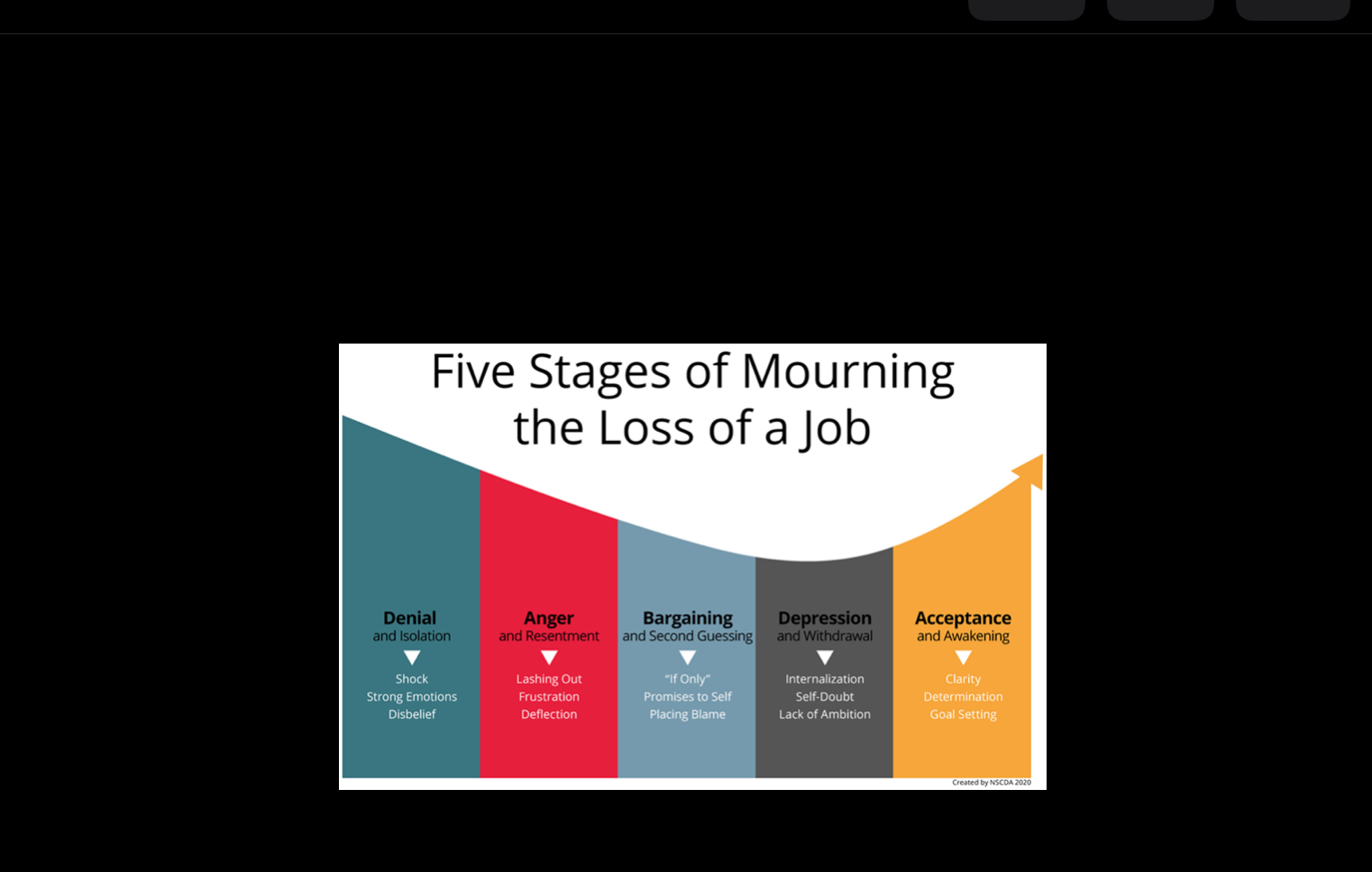
In this journey will be a self imposed grieving process of the ending of just about all jobs and careers. The first step is getting over the denial.
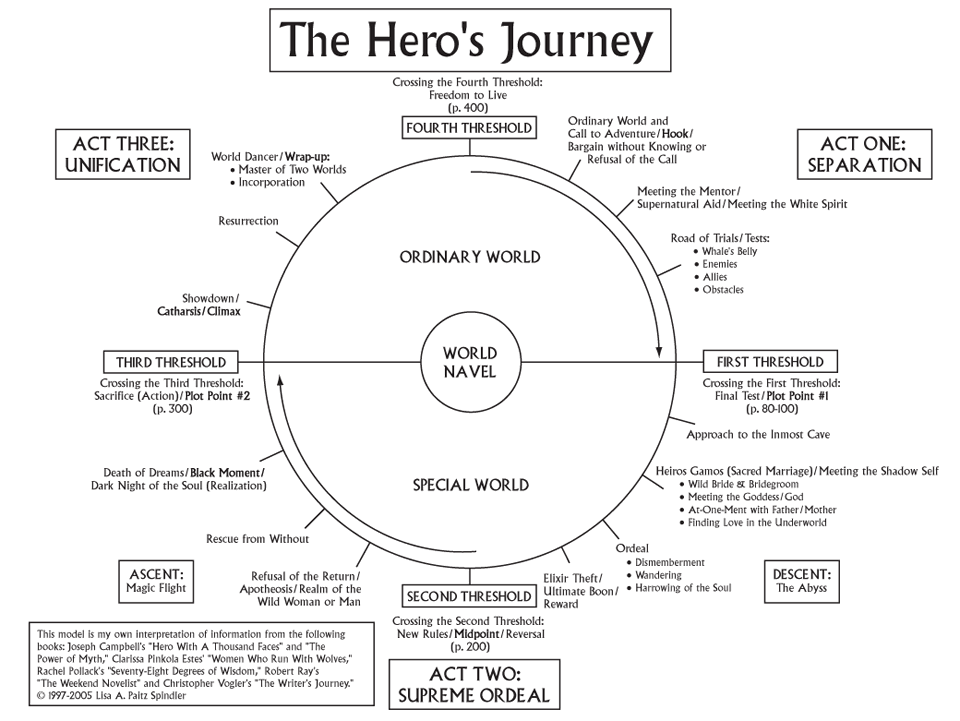
We traced humanity’s historical arc from ancient, biologically logical roles, women’s nurturing tied to fertility cycles and communal planning, men’s protective hunting fostering exploration, to the Industrial Revolution’s wage-labor abstractions and mid-20th-century dual-career norms. We chronicled 20 obsolete jobs, from fullers to secretary pools, as echoes of today’s displacements. Drawing on Julian Jaynes’s bicameral mind theory and Joseph Chilton Pearce’s Magical Child, we explored consciousness rebirth and wonder reclamation. A library of companions, books like Viktor Frankl’s Man’s Search for Meaning, Albert Camus’s The Myth of Sisyphus, and Daniel Pink’s Drive, provided Supernatural Aid for trials, emphasizing intrinsic motivations over extrinsic toil. We concluded with a January 1, 2026, action plan: healing foundations, experimentation, deepening integration, and preserving wisdom via SaveWisdom.org.
Yet, as automation accelerates, AGI prototypes by 2025, humanoid robots by 2026, superintelligence optimizing resources by 2030, the deepest Ordeal emerges: the grief of losing not just jobs, but selves. We must become preemptive and assume the jobs we had, the careers we had will reach an end in the next 5000 days.

In this Part 2, we delve profoundly into Elisabeth Kubler-Ross’s pioneering work on grief, adapting her five stages, denial, anger, bargaining, depression, and acceptance, to the existential bereavement of career eclipse. Her model, forged in the shadows of mortality, becomes our compass through the labyrinth, transforming breakdown into breakthrough in the Hero’s Journey toward abundance.

The Architect of Grief: Elisabeth Kubler-Ross’s Life, Legacy, and Enduring Framework
Elisabeth Kubler-Ross, born July 8, 1926, in Zurich, Switzerland, as one of triplets in a modest family, defied early fragility and patriarchal constraints to become a revolutionary psychiatrist. Weighing just two pounds at birth, she survived against odds, a resilience that defined her. Her father, a strict businessman, opposed her medical aspirations, insisting she pursue secretarial work; undeterred, she volunteered in post-World War II refugee camps, witnessing Holocaust horrors that ignited her passion for human suffering.

Emigrating to the United States in 1958 after marrying Emanuel “Manny” Ross, an American medical student, she completed her psychiatry residency at Manhattan State Hospital, where she encountered the dehumanizing treatment of dying patients, isolated, ignored, their deaths clinical footnotes.
At the University of Colorado and later Billings Hospital in Chicago, Kubler-Ross pioneered seminars interviewing terminally ill patients onstage, humanizing their narratives. This radical approach, treating death as a teachable moment, culminated in her 1969 bestseller, On Death and Dying: What the Dying Have to Teach Doctors, Nurses, Clergy and Their Own Families. Drawing from over 200 patient interviews, the book introduced her five-stage model, challenging a medical culture that viewed death as failure. It sold millions, birthing the hospice movement and earning her Time magazine’s “Woman of the Decade” in the 1970s.
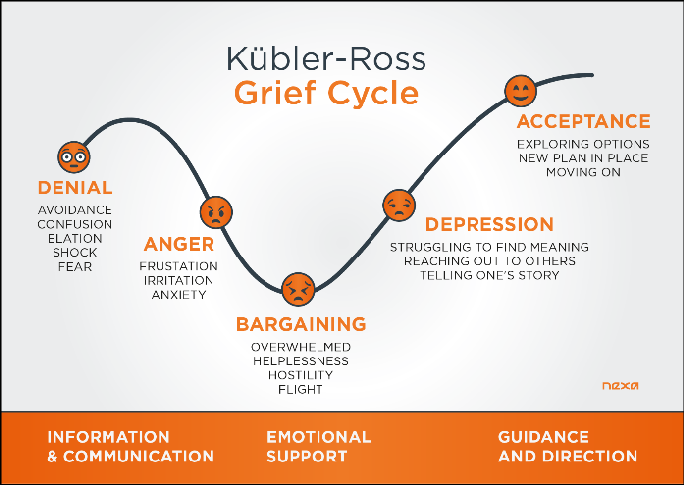
Kubler-Ross authored over 20 books, expanding her framework. Death: The Final Stage of Growth (1975) portrayed dying as transformative; Living with Death and Dying (1981) addressed children’s grief; On Children and Death (1983) drew from her work with bereaved families. Her memoir, The Wheel of Life: A Memoir of Living and Dying (1997), reflected on personal losses, including her divorce, health struggles with strokes, and the 1994 arson of her Virginia farm amid AIDS hospice controversies. Co-authored with David Kessler, On Grief and Grieving: Finding the Meaning of Grief Through the Five Stages of Loss (2005) (https://amzn.to/3Lqb4XU), published posthumously after her August 24, 2004, death, applied stages to broader bereavement, emphasizing grief’s non-linearity.
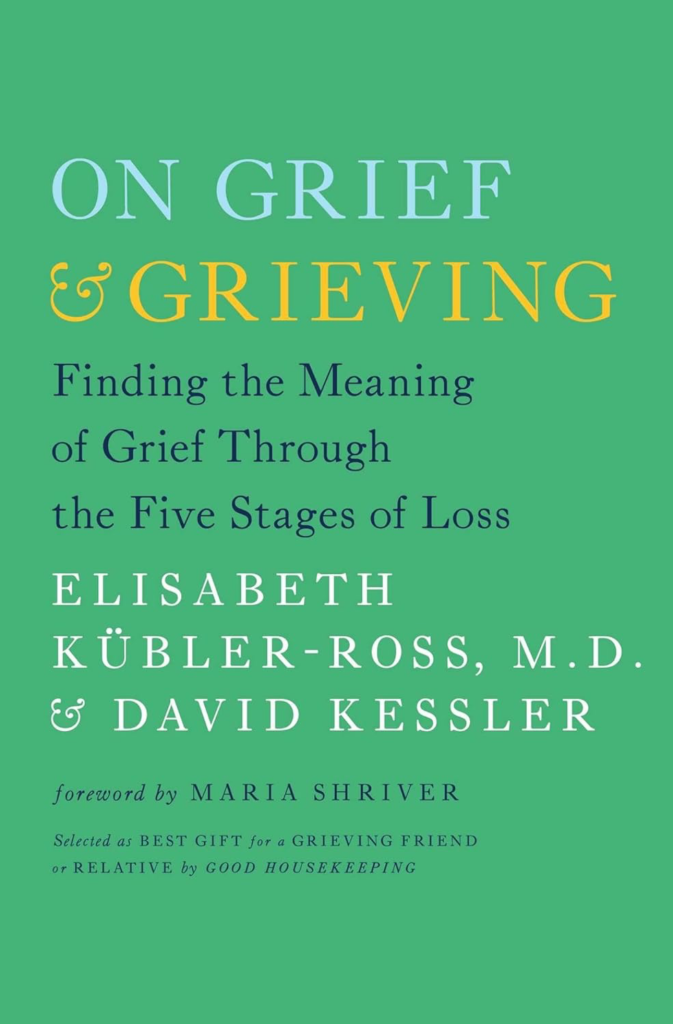
Critics noted the model’s empirical limitations, stages aren’t universal, sequential, or exhaustive, influenced by culture and personality. Modern psychology favors models like the dual process (oscillating between loss and restoration) or continuing bonds theory. Yet Kubler-Ross stressed flexibility: stages as “defense mechanisms” against overwhelm, not a rigid prescription. Her Elisabeth Kubler-Ross Foundation perpetuates adaptations, including the “Kubler-Ross Change Curve” for organizational transitions.
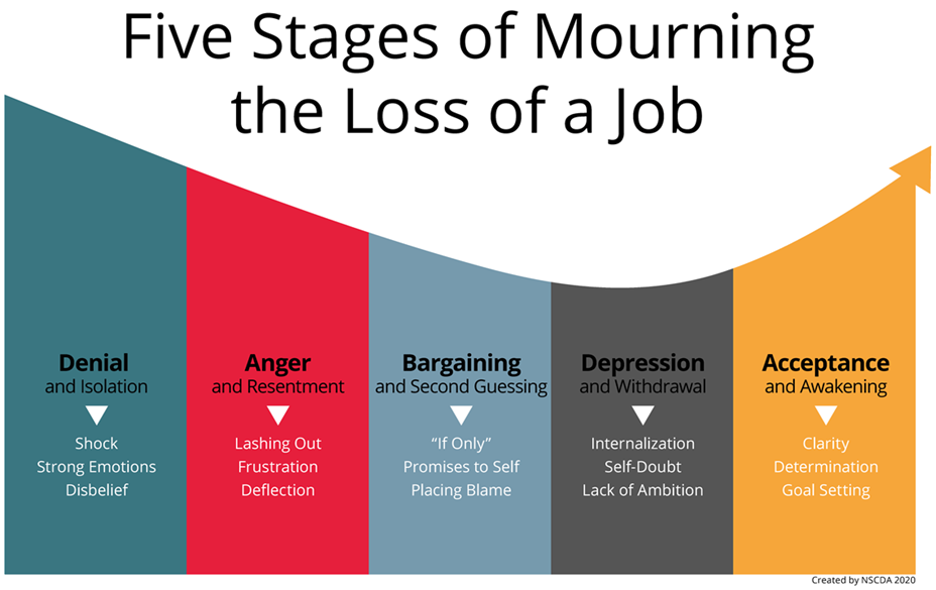
The Kubler-Ross Model: A Profound Dissection of the Five Stages
Kubler-Ross’s framework, observational rather than experimental, emerged from patient dialogues revealing patterned emotional responses to terminal diagnoses. She described stages as fluid, overlapping, recurring, or skipped, shaped by individual contexts. In On Death and Dying, she detailed them as coping tools pacing trauma assimilation.

Stage 1: Denial – The Protective Veil of Disbelief
Denial acts as a shock absorber: “This isn’t happening.” Kubler-Ross illustrated with patients rejecting diagnoses, mishearing doctors, or fixating on minor details to avoid reality. Psychologically, it’s adaptive, preventing psychic overload by filtering truth gradually.
In job loss amid automation, denial manifests as minimization: “AI won’t replace my role, it’s just hype.” Historical parallels: 19th-century weavers dismissing power looms until unemployment struck, per E.P. Thompson’s accounts. Today, McKinsey’s 2023 reports predict 30% of work hours automated by 2030, yet surveys show 70% of workers in denial, clinging to exceptionalism. Prolonged, it isolates, delaying adaptation.
Kubler-Ross’s process: Empathetic confrontation, education without coercion. For our era: Awareness via AI literacy programs pierces the veil, aligning with the Hero’s Refusal, propelling the Threshold cross.
Stage 2: Anger – The Eruption of Powerlessness
As denial fractures, anger surges: “Why me? It’s unfair!” Kubler-Ross described displaced rage, at God, family, medical staff, stemming from vulnerability. It’s cathartic, externalizing pain, but risks relational damage if unchanneled.
Applied to career eclipse: Fury targets employers (“They prioritized bots!”), tech firms, or society. 1980s Michigan auto workers smashed robots; modern equivalents rage in online forums against AI overlords. Studies link this to physiological stress, elevated cortisol, hypertension, amplifying health crises like Rust Belt opioids.
Her approach: Validate without judgment, redirect to advocacy. In abundance’s transition, anger fuels unions or policy demands, like tech taxes for UBI, transforming Hero’s Trials into alliances against the antagonist of change.
Stage 3: Bargaining – The Illusion of Regained Control
Bargaining pleads: “If I do this, spare me.” Kubler-Ross noted guilt-infused negotiations, promises to God, vows of better living, attempting to postpone inevitable.
In job obsolescence: “If I learn coding, I’ll adapt.” Frantic upskilling booms (Coursera’s AI courses surged 500% post-ChatGPT), yet often futile against exponential tech. Historical: 1920s lamplighters bargained for electric training, only to fade.
Kubler-Ross warned of its temporariness; resolution demands acceptance. Societally, it sparks hybrids, human-AI collaborations, but over-bargaining breeds burnout, echoing the Hero’s futile detours before the Cave.
Stage 4: Depression – The Profound Descent into Sorrow
Depression envelops: “What’s the point?” Kubler-Ross distinguished reactive (past losses) from preparatory (future voids), urging supportive presence over cheer.
Automation’s depression: Clinical symptoms in 40% of unemployed, per longitudinal studies, self-worth erosion, social withdrawal. Factory closures birthed epidemics; AI threats amplify midlife crises, fracturing narratives.
Process: Active listening, space for mourning. Integrated with Frankl’s logotherapy from Part 1, it seeks meaning; Csikszentmihalyi’s flow pursuits lift veils. This Supreme Ordeal forges Apotheosis, resilience from depths.
Stage 5: Acceptance – The Equanimous Integration
Acceptance brings peace: “I can face this.” Not joy, but energized realism, honoring loss while envisioning forward. Kubler-Ross portrayed it as growth’s gateway.
In work’s end: Pivots to passions, “Identity beyond title.” Post-WWII women channeled displacement into feminism; today, it unlocks abundance’s renaissance.
Her emphasis: It’s active, not passive. In the Hero’s Return, acceptance yields the elixir, liberated selves in post-scarcity.
Kubler-Ross in Organizational Change: The Change Curve Adaptation
Since 1969, her model evolved into the Kubler-Ross Change Curve for workplaces, per the EKR Foundation. In On Grief and Grieving, she and Kessler applied stages to losses like divorce or job changes. Prosci’s change management integrates it: denial resists announcements, anger manifests sabotage, bargaining seeks concessions, depression lowers productivity, acceptance boosts adoption.
Applications abound: During COVID layoffs, stages guided HR; in automation, like Ford’s 2023 EV shifts displacing workers, curve-based training mitigated turnover. Books like Leading Change by John Kotter reference it implicitly, warning unmanaged grief derails transitions.
Expanding Actionable Plans: Fortifying Before Job Loss
To preempt grief’s full force, expand Part 1’s plan into a robust pre-loss strategy, viewing your life as a diversified portfolio where work is one asset among many. Start immediately: Conduct a “vulnerability audit” by listing all job tasks, scoring each 1-10 on automation risk (repetitive=high, creative=low). Use free tools like Will Robots Take My Job? for benchmarks. 0 Dedicate 5-10 hours weekly to “abundance building”: In weeks 1-4, financial prep, build a 12-18 month emergency fund via automated savings apps like Acorns, reduce debt with snowball methods, explore passive income like dividend stocks or peer-to-peer lending on LendingClub.
Weeks 5-8: Skill diversification, enroll in free MOOCs on edX or Khan Academy for adjacent fields (e.g., marketer to UX design). Practice AI integration daily, use tools like Grammarly or Jasper to augment work, tracking efficiency gains. Weeks 9-12: Network expansion, join LinkedIn groups for your industry plus “AI futures,” attend virtual webinars weekly, aim for 3 informational interviews monthly to map escape routes.
Ongoing quarterly: “Life simulations,” dedicate a day to “jobless mode,” pursuing hobbies, volunteering, or family time, journaling emotional responses to build tolerance. Incorporate Kubler-Ross: Weekly reflections on potential stages, e.g., “What denial signs do I see?” to normalize emotions early. Financially, explore UBI pilots or gig platforms like Fiverr for testing non-traditional income. Relationally, strengthen support nets, schedule monthly check-ins with mentors or peers. This expanded blueprint shifts from reactive grief to proactive empowerment, aligning with the Hero’s preparation before the Threshold.
10 Ways to Identify Your Replacement by AI or Robotics and How to Ride the Waves
Spotting encroachment early allows strategic pivots. Here are 10 indicators, compiled from expert sources, with adaptation strategies to “ride the wave” toward resilience.
- High Repetitive Task Percentage: If 70% or more of your duties are routine, like data entry, per McKinsey analyses. 1 Ride the Wave: Automate your routines with tools like AI Agents; upskill in oversight via Coursera’s automation courses, positioning as a process optimizer.
- Paid Per Hour for Digital Work: Time-based pay signals scalability issues, as AI works tirelessly. Ride the Wave: Shift to value-based contracts; build a portfolio site showcasing outcomes, freelancing on Upwork to decouple income from hours.
- Role as a “Digital Laborer”: Handling basic digital processing without strategy. Ride the Wave: Elevate to advisory, certify in data analytics via Google Data Analytics Certificate, and consult on AI implementations.
- Tasks Emphasize “Doing” Over “Thinking”: Execution-focused without innovation. Ride the Wave: Seek creative projects; read Pink’s Drive for motivation, launch a side hustle emphasizing problem-solving.
- Repetitive and Rule-Based Duties: Predictable patterns prime for algorithms or bots. Ride the Wave: Learn scripting with Python tutorials on freeCodeCamp; transition to bot maintenance roles, a booming sector.
- Involves Machine Learning or Robotics Directly: Proximity to tech testing your field. Ride the Wave: Engage in pilots; earn ML certifications from fast.ai, becoming a specialist in human-robot interfaces.
- AI Tools Fixing or Enhancing Your Output: Software like auto-correctors supplanting precision. Ride the Wave: Master advanced AI, e.g., Midjourney for designers; specialize in bespoke, human-empathy enhancements.
- Company Testing AI Models Internally: Pilots shadowing roles for months before rollout. Ride the Wave: Volunteer for testing; network via industry forums, preparing resumes for AI-adjacent positions.
- High Vulnerability Score on Assessment Tools: Ratings over 70% on sites like Will Robots Take My Job?. Ride the Wave: Use scores for motivation; diversify via bootcamps in resilient fields like healthcare ethics or creative AI.
- Quantitative or Analytical Focus with ML Augmentation: Roles like analysts augmented by systems. Ride the Wave: Integrate ML tools; pursue advanced degrees or certifications in AI strategy, evolving into decision-maker.
Forming Groups Like Kubler-Ross: Preempting the Job Loss Crash Through Communal Sharing
Kubler-Ross revolutionized death discourse by forming seminars where dying patients shared raw stories, demystifying mortality and fostering empathy among medical professionals and families. These groups created safe spaces for vulnerability, turning isolation into collective wisdom. Similarly, to preempt automation’s “job loss crash,” widespread displacement risking societal ennui, form proactive support circles mirroring her model.
Start locally or virtually a Matermind group: Use platforms like ReadMUltiplex.com Forums, Meetup.com or Discord to launch “Abundance Transition Groups,” meeting bi-weekly for 90 minutes. Structure like Kubler-Ross: Begin with check-ins sharing fears (e.g., “What stage am I in?”), rotate storytelling on career journeys, discuss adaptations from the 10 ways above. Invite experts, career coaches or AI ethicists, for guest sessions. Scale to 8-12 members for intimacy, focusing on industries (e.g., “Tech Workers Facing AI”).
Benefits: Normalize grief early, accelerating acceptance; build networks for opportunities; co-create resources like shared skill maps or UBI advocacy. Historical precedents: Great Depression mutual aid societies buffered crashes. In our Hero’s Journey, these groups are Allies on the Road of Trials, transforming individual Ordeals into communal Apotheosis.
The Pivotal Role in the Next 5000 Days: From Grief to Abundance’s Elixir
Kubler-Ross’s processes are monumental for our Hero’s arc: Demystifying grief empowers navigation. Individually: Career coaches adapt DABDA for therapy, journaling denial, channeling anger via exercise. Societally: Policies address stages, education combats denial, forums vent anger, mental health nets ease depression.
Tied to Part 1: Her stages deepen the Ordeal, complementing Frankl’s meaning-seeking in acceptance, Pink’s intrinsics post-depression. As Susskind’s “useless class” looms (from allied texts), Kubler-Ross ensures abundance isn’t ennui but rebirth.
Begin integrating: Map your stage, seek support. In Part 3, we explore resilience builders. The labyrinth leads to light, ride the wave, find yourself.
We are on this journey together. Some of us stand on the shoulders of giants and have thought about this for decades. We will not go it alone, and I hope to build many parts to this series and share the mastermind insight from the powerful Read Multiplex member Forum: https://readmultiplex.com/forums/topic/you-have-5000-days-how-to-navigate-the-end-of-work-as-we-know-it-part-1/. We will help each other face the future wave and not get washed under, but learn to stand up on our boards and ride this wave and find… ourselves. Join us.
What will YOU do in the next 5000 days?
To continue this vital work documenting, analyzing, and sharing these hard-won lessons before we launch humanity’s greatest leap: I need your support. Independent research like this relies entirely on readers who believe in preparing wisely for our multi-planetary future. If this has ignited your imagination about what is possible, please consider donating at buy me a Coffee or becoming a member.
Every contribution helps sustain deeper fieldwork, upcoming articles, and the broader mission of translating my work to practical applications. Ain ‘t no large AI company supporting me, but you are, even if you just read this far. For this, I thank you.
Stay aware and stay curious,

🔐 Start: Exclusive Member-Only Content.
Membership status:
🔐 End: Exclusive Member-Only Content.
~—~
~—~

~—~
Subscribe ($99) or donate by Bitcoin.
Copy address: bc1qkufy0r5nttm6urw9vnm08sxval0h0r3xlf4v4x
Send your receipt to [email protected] to confirm subscription.

Stay updated: Get an email when we post new articles:

THE ENTIRETY OF THIS SITE IS UNDER COPYRIGHT. IMPORTANT: Any reproduction, copying, or redistribution, in whole or in part, is prohibited without written permission from the publisher. Information contained herein is obtained from sources believed to be reliable, but its accuracy cannot be guaranteed. We are not financial advisors, nor do we give personalized financial advice. The opinions expressed herein are those of the publisher and are subject to change without notice. It may become outdated, and there is no obligation to update any such information. Recommendations should be made only after consulting with your advisor and only after reviewing the prospectus or financial statements of any company in question. You shouldn’t make any decision based solely on what you read here. Postings here are intended for informational purposes only. The information provided here is not intended to be a substitute for professional medical advice, diagnosis, or treatment. Always seek the advice of your physician or other qualified healthcare provider with any questions you may have regarding a medical condition. Information here does not endorse any specific tests, products, procedures, opinions, or other information that may be mentioned on this site. Reliance on any information provided, employees, others appearing on this site at the invitation of this site, or other visitors to this site is solely at your own risk.
Copyright Notice:
All content on this website, including text, images, graphics, and other media, is the property of Read Multiplex or its respective owners and is protected by international copyright laws. We make every effort to ensure that all content used on this website is either original or used with proper permission and attribution when available.
However, if you believe that any content on this website infringes upon your copyright, please contact us immediately using our 'Reach Out' link in the menu. We will promptly remove any infringing material upon verification of your claim. Please note that we are not responsible for any copyright infringement that may occur as a result of user-generated content or third-party links on this website. Thank you for respecting our intellectual property rights.
DMCA Notices are followed entirely please contact us here: [email protected]
