

You Have 5000 Days: Navigating the End of Work as We Know It. Part 17: Universe 25 Mouse Utopia.
The 5000 days ahead can play out many ways before a system is stablized. We will explore one scenario that is used time and time again as “proof” some scenario will not work out. And likre most things there are keranls of truth in big partws of untruth. It starts out…In the quiet confines of a man-made paradise, where every need was met and every threat banished, a civilization crumbled not from scarcity, but from the weight of its own perfection. Universe 25, John Calhoun’s infamous mouse utopia, stands as a stark warning etched in the annals of behavioral science. What began as a haven of unlimited food, water, and shelter devolved into a nightmare of social decay, violence, and extinction. Yet, as we stand on the threshold of our own age of abundance, driven by AI and automation’s relentless march, this experiment whispers a profound truth. The peril lies not in plenty, nor in numbers alone, but in the rigid, unnatural structures we impose upon ourselves. Governments, in their quest for control, may unwittingly craft laws that mirror this cage, trapping humanity in a behavioral sink of our own making.
This article is sponsored by Read Multiplex Members who subscribe here to support my work: Link: https://readmultiplex.com/join-us-become-a-member/
It is also sponsored by many who have donated a “Cup of Coffee”. If you like this, help support my work: Link: https://ko-fi.com/brianroemmele
Listen to the companion podcast: https://rss.com/podcasts/readmultiplex-com-podcast/2599195
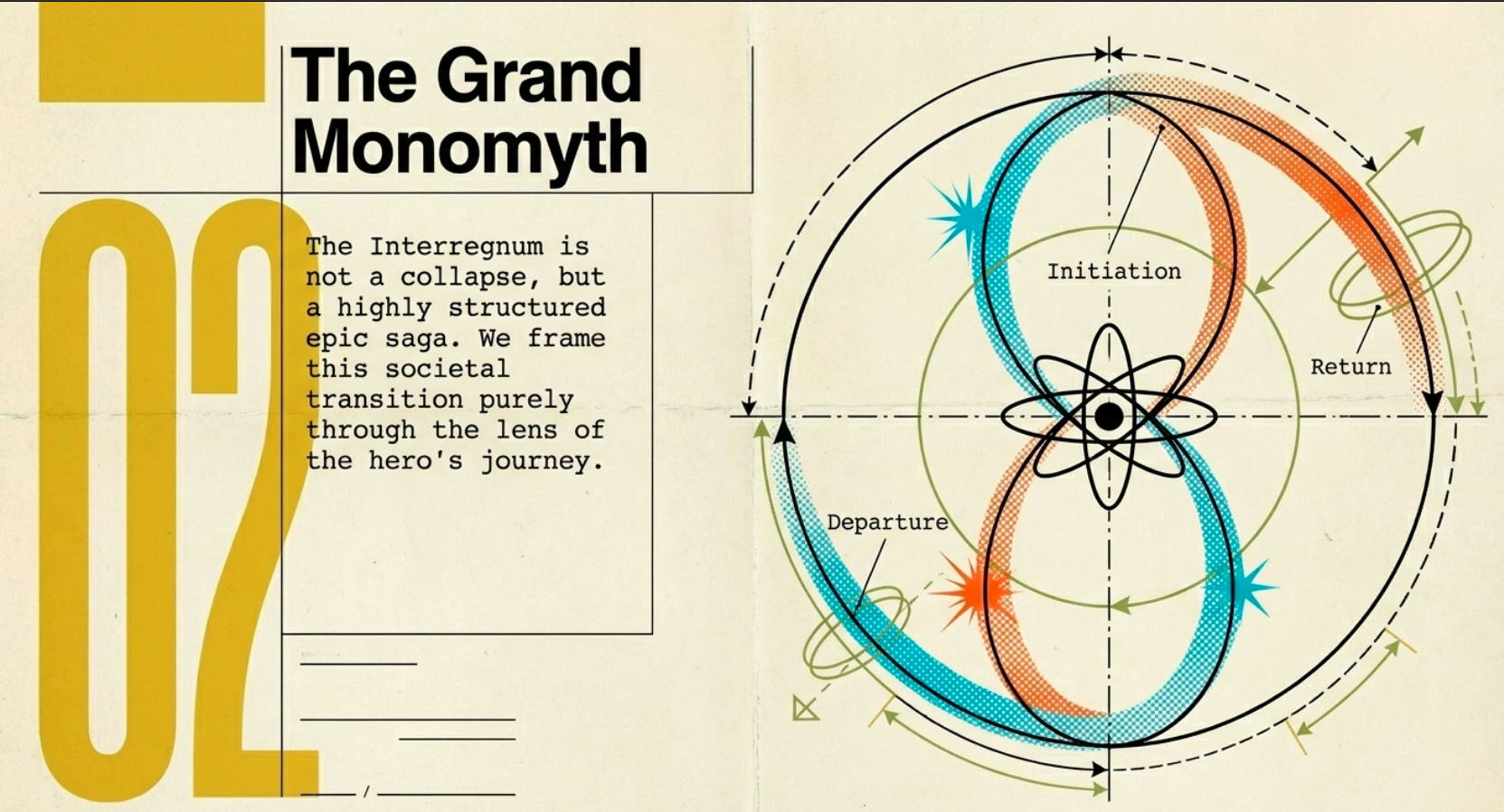
Imagine a world where work vanishes, replaced by boundless leisure and provision. This is the promise of the Interregnum, that turbulent bridge from 2025 to 2039, where AI and robots dismantle old wage systems and usher in unprecedented wealth. But without the call to adventure that true stressors provide, we risk inventing our own demons. In Universe 25, access to social bonds became the fabricated torment, fracturing the colony’s soul. Today, as we navigate this transformation, we must heed the hero’s journey. The ordinary world of toil is ending; the refusal of the call leads to stagnation. Only by embracing trials, seeking mentors in wisdom, and transforming our societal designs can we emerge victorious, forging a golden age from the ashes of potential collapse.
The myth of overpopulation as the villain persists, yet Universe 25 reveals a deeper flaw: the absence of natural purpose and challenge. Mice, like humans, thrive on genuine adversity. Remove it, and the psyche invents substitutes, often destructive. As we enter abundance, lawmakers may enforce “safety nets” that become invisible bars, stifling the human spirit’s need for growth. This article charts a course through the experiment’s history, unmasks its hidden agendas, and illuminates solutions. It is a map for the hero within each of us, turning the Interregnum’s chaos into triumph.
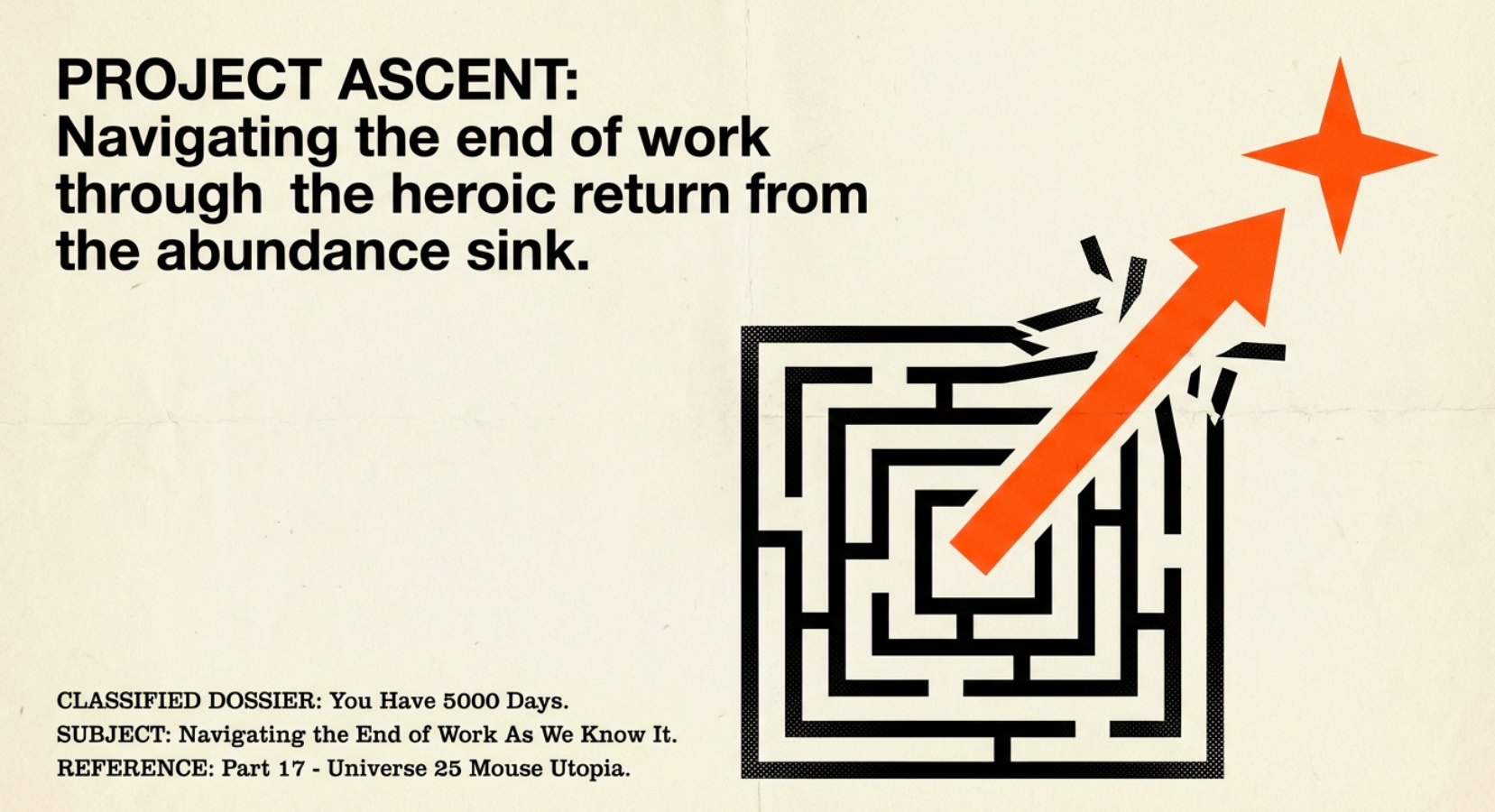
5000 Days Series Recap: Charting the Hero’s Odyssey Through the End of Work
As we venture deeper into this series, let us pause to reflect on the path traversed thus far, much like the hero reviewing trials overcome before facing the ultimate ordeal. In Part 1, we answered the call to adventure, exploring AI’s disruption of labor and the dawn of abundance. Parts 2 through 4 delved into the refusal of the call, examining societal resistance, economic upheavals, and the mentor’s role in guiding adaptation. By Parts 5 to 7, we crossed the threshold into the Interregnum’s tests, allies, and enemies, from guild formations to ethical AI frameworks. Parts 8 and 9 approached the inmost cave, dissecting psychological shifts and community resilience. In Parts 10 to 12, the ordeal intensified with discussions on universal basic income, creative pursuits, and spiritual awakenings amid leisure. Parts 13 and 14 seized the sword, offering blueprints for personal reinvention and global collaboration. Finally, Part 15, our template for this recap, illuminated the road back with strategies for harmonious integration of technology and humanity, emphasizing voluntary associations and individual purpose as keys to resurrection. Parts 16 and now 17 build toward the return with the elixir, weaving lessons from history like Universe 25 to ensure triumph over potential pitfalls. Together, these 16 installments form a monomythic arc, equipping readers to master the end of work and claim a radiant future. If thsi is the first one you are reading, stop and take the time to go back to the first in the series: https://readmultiplex.com/2025/12/24/you-have-5000-days-how-to-navigate-the-end-of-work-as-we-know-it-part-1/.
The Mouse Utopia And How Universe 25 Came About
John B. Calhoun’s work spans decades, a relentless pursuit to model population dynamics in controlled environments. Beginning in the 1940s, Calhoun constructed habitats for rats and mice, providing unlimited resources while constraining space. These “rodent universes” were engineered paradises: abundant food dispensers, clean water, nesting materials, and protection from predators and disease. The goal? To observe how populations grow and behave under ideal conditions, free from external threats.
By the 1950s, Calhoun had refined his setups at the National Institute of Mental Health. His early rat experiments, conducted between 1958 and 1962, showed consistent patterns. Populations boomed initially, reaching densities far beyond natural limits. Then, social order eroded. Dominant males formed gangs, assaulting females and young. Mating rituals broke down; some rodents turned hypersexual or homosexual, while others withdrew entirely. Mothers abandoned litters, leading to infant mortality rates as high as 96 percent. Calhoun coined the term “behavioral sink” to describe the central huddles where subordinate animals clustered in apathy, surviving physically but crumbling psychologically.
These findings culminated in Universe 25, launched in 1968 with four pairs of mice in a 9-foot-square enclosure designed for up to 3,000 inhabitants. The setup included 256 “apartments,” ramps for movement, and endless sustenance. Growth exploded, peaking at 2,200 mice by day 560. But paradise fractured. “Beautiful ones” emerged, sleek, groomed males who avoided all interaction, focusing solely on self-care. Females ceased nurturing; violence surged in crowded areas. By day 600, births halted, and the population plummeted to extinction by 1973. Similar experiments, numbering 24 before Universe 25, replicated these outcomes with rats, confirming the pattern across species.
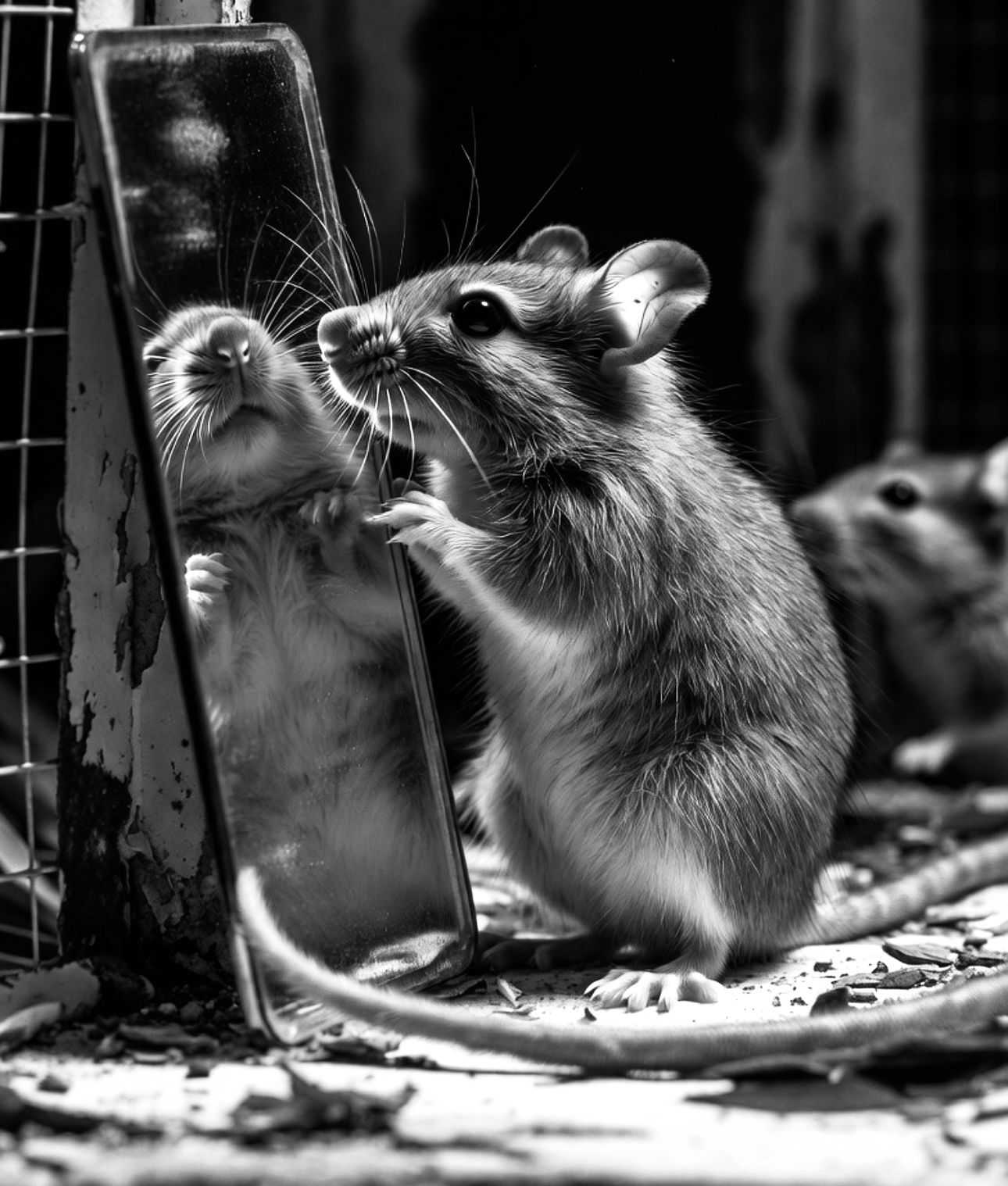
Calhoun’s inspirations drew from earlier overpopulation studies, such as those by Thomas Malthus in the 18th century, who warned of resource limits curbing growth. Yet Calhoun’s work echoed 20th-century concerns, including Paul Ehrlich’s 1968 book The Population Bomb (https://amzn.to/40K0YFj), which predicted famines from unchecked expansion. Parallel experiments included Hans Selye’s stress research on rats in the 1930s, showing how chronic pressure leads to breakdown, and Konrad Lorenz’s ethological studies on aggression in confined animals. In the 1970s, ecologists like Garrett Hardin invoked “tragedy of the commons” in overpopulated systems, mirroring Calhoun’s sinks. John Calhoun’s experiment, and its weaponization amid 1968–1973 overpopulation fears), the two books directly referenced or tied to its popularization are:
1. The Population Bomb by Paul R. Ehrlich (1968)
Overview: This bestselling nonfiction book warned that unchecked global population growth would soon lead to widespread famine, resource collapse, and societal breakdown unless aggressive population-control measures (including family planning and sterilization programs) were implemented immediately. Ehrlich framed humanity as facing an imminent “bomb” of overpopulation, using dramatic predictions of mass starvation in the 1970s–1980s. It became a cornerstone of the era’s environmental movement, Earth Day activism, and zero-population-growth campaigns, amplifying the Malthusian panic that Calhoun’s mouse experiments were later folded into.
2. The Pump House Gang by Tom Wolfe (1968) — Focus
Overview: This is a collection of New Journalism essays by Tom Wolfe (the acclaimed author known for works like The Electric Kool-Aid Acid Test and The Right Stuff). The key piece relevant to Universe 25 is the essay “O Rotten Gotham—Sliding Down into the Behavioral Sink” (originally published in the New York World Journal Tribune around the same time and anthologized here). Wolfe takes Calhoun’s scientific term “behavioral sink” the point where overcrowding triggers total social collapse, violence, withdrawal, and the rise of the non-breeding “Beautiful Ones” and turns it into vivid, satirical pop horror about real-world urban decay. He describes New York City (and by extension modern megacities) as a human version of Calhoun’s mouse utopia gone wrong: crowded commuters reduced to rat-like frenzy, alienation, and psychological breakdown despite material abundance.
Wolfe’s piece was published in the exact same cultural moment as Ehrlich’s book and Calhoun’s early Universe 25 results (1968). It helped transform a lab experiment into mainstream “proof” that paradise + density = inevitable extinction — exactly the narrative your post highlights as being seized for depopulation agendas. The essay is often credited with popularizing “behavioral sink” far beyond academia, embedding it in pop culture as a cautionary tale about cities (and later influencing everything from urban planning debates to dystopian fiction).

Beneath the science lurked agendas. Calhoun’s funding from the NIMH tied into Cold War-era fears of urban overcrowding and social unrest. His results were popularized in media, fueling Malthusian narratives that justified population control policies, from China’s one-child rule to Western environmental movements. Critics argue Calhoun designed Universe 25 to reinforce “limits to growth” ideologies, as promoted by the Club of Rome’s 1972 report. The enclosed, inescapable structure ensured collapse, with no outlets for migration or natural selection. Evidence suggests Calhoun anticipated doom to advance an agenda of societal redesign, yet his public focus lingered on pathology rather than remedies. He spoke of “healing” humanity through better urban planning, but provided scant blueprints, leaving interpretations to alarmists. This article shifts the lens: solutions exist, rooted in recognizing the hero’s journey from constraint to liberation.

In the late 1960s and early 1970s, the world was gripped by overpopulation panic, fueled by Paul Ehrlich’s The Population Bomb (1968), which predicted mass starvation and societal collapse unless aggressive measures curbed human numbers. Zero Population Growth movements, influential environmentalists, and even elements within governments and foundations pushed for birth control, sterilization campaigns, and policy interventions often targeting poorer communities or developing nations.
Calhoun’s Universe 25 (launched 1968, results peaking around 1972-1973) landed like a gift-wrapped propaganda tool:
- It provided vivid, visceral imagery: a “utopia” of unlimited food, water, and shelter devolving into violence, sexual deviance, maternal neglect, social withdrawal (“beautiful ones” who groomed obsessively but never reproduced), and total extinction, despite no resource scarcity.
- The dramatic arc of boom to behavioral sink to collapse mirrored exactly what neo-Malthusians warned would happen to humanity under unchecked growth and urban density.
- Calhoun himself anthropomorphized aggressively (labeling mice “juvenile delinquents,” “dropouts,” “autistic-like”), inviting direct human parallels. In papers like “Death Squared” (1973), he wrote phrases such as “For an animal so complex as man, there is no logical reason why a comparable sequence of events should not also lead to species extinction,” which could be (and were) read as endorsing doomsday inevitability.
This made Universe 25 a blunt instrument in public debates:
- Politicians referenced it in congressional discussions on urban decay and population policy.
- Birth control advocates invoked it as a cautionary tale: “See what happens when populations explode without limits? Family breakdown, violence, extinction.”
- Media and popular culture amplified it, echoing in films like Soylent Green (1973), books, and articles warning of overcrowded cities leading to moral and biological ruin.
- It was brandished to justify targeted population control efforts, often disproportionately aimed at marginalized groups (as noted in historical reviews like Edmund Ramsden’s analyses).
The experiment’s timing was uncanny: right as Ehrlich’s alarmism peaked and global institutions debated “carrying capacity.” It shifted the frame from “we’ll run out of food” (Malthusian) to “even with abundance, density destroys social fabric and reproduction”, a more insidious argument for intervention, because it implied welfare states, urban planning failures, or even UBI-like abundance could accelerate collapse unless paired with population reduction.

The Manipulation Angle: Taken Advantage Of, Sometimes Willingly
Calhoun was a government scientist (NIMH-funded, federal employee), not a private depopulation operative. But his work escaped the lab and was repurposed:
- He repeatedly warned against fatalistic misreadings. Later experiments showed rodents could adapt with better design (more compartments, escape routes, social engineering), and he pushed creative solutions like revolutionary architecture to foster cooperation and prevent sinks.
- He denounced simple “cull the population” interpretations, emphasizing that the real lesson was redesigning environments for meaning, roles, and connection in abundance.
- Yet he also fed the beast: his dramatic language, public lectures, and willingness to link rodents to humans gave ammunition to those who ignored his nuances.
This made him a useful (perhaps partially complicit) figure, a sincere researcher whose findings were cherry-picked by agenda-driven actors. The public rarely read his caveats or limitations (for example, no predation, no disease, artificial enclosure dynamics, failure to replicate human cultural adaptation). Instead, they absorbed the horror story: abundance plus density equals doom. This narrative lingered in debates on welfare, urban policy, and even modern abundance-era fears (automation, UBI, declining birth rates), often detached from Calhoun’s ameliorative intent.
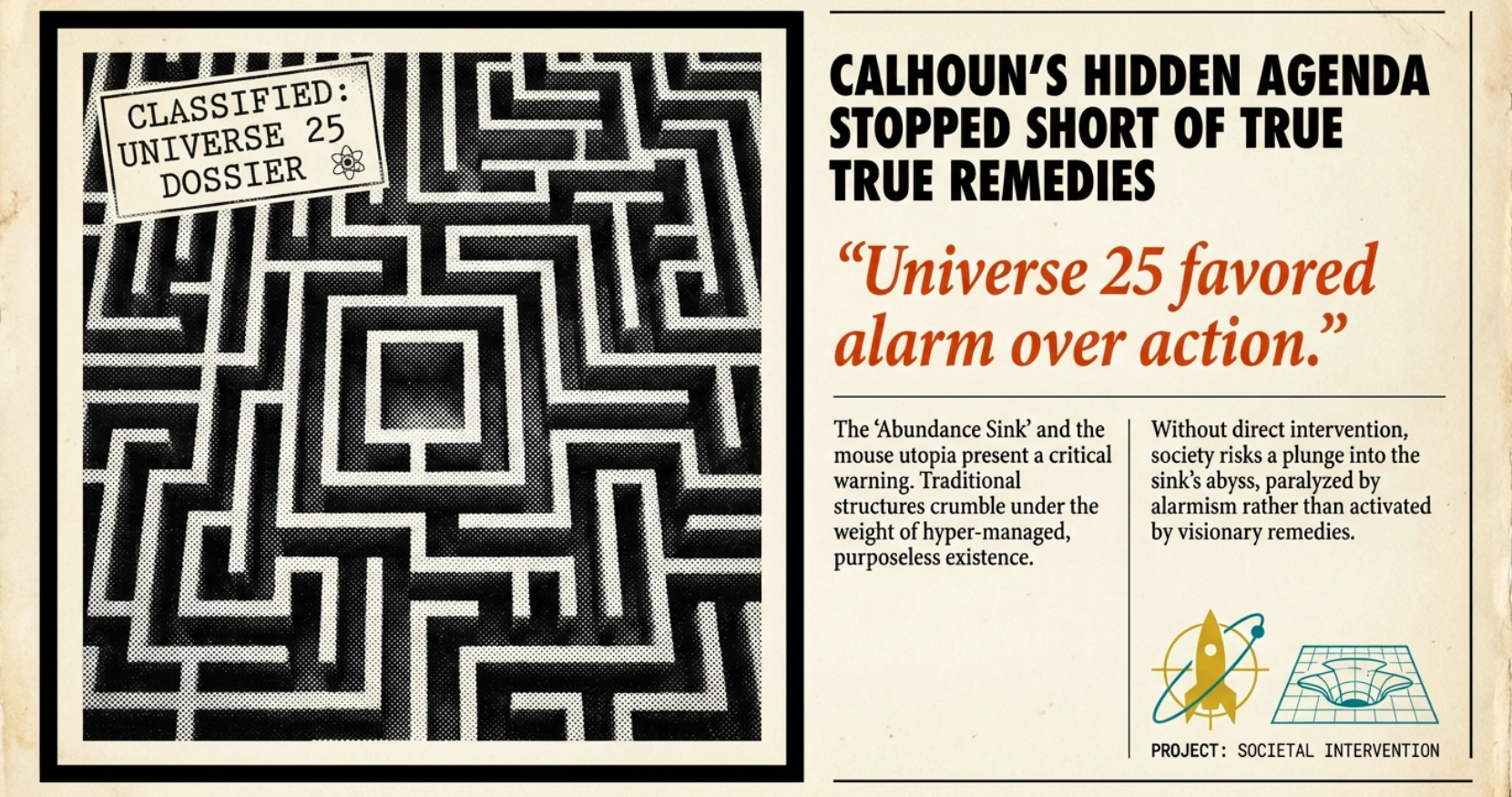
Universe 25 became a cultural meme before memes: a stark parable deployed in Senate hearings, environmental manifestos, and popular warnings. It dramatized the fear that providing “too much” security without strict controls leads not to thriving, but to spiritual death, loss of purpose, and extinction. Even as Calhoun protested (“this is not inevitable; redesign the system”), the blunt instrument had already struck, helping normalize the idea that overpopulation (or poorly managed abundance) justifies drastic demographic interventions.
Unmasking the Failure: Not Abundance, Not Overpopulation, But Unnatural Imposition
Universe 25 did not fail because of too much plenty or too many mice. Abundance sustained physical health; the peak population never reached the enclosure’s capacity. Overpopulation myths persist, but Calhoun himself noted that density alone was not the culprit. The true poison was the unnatural, forced structure: a rigid pen with no escape, no wilderness to conquer, no predators to evade. Mice evolved for dynamic environments, where foraging, territory defense, and migration provide purpose. Stripped of these, their instincts warped.
Humans share this need for real stressors. Evolution wired us for challenge; without it, we fabricate substitutes. In Universe 25, “access” became the invented torment – social hierarchies twisted into barriers, where dominant groups hoarded mates and space, leaving others in isolation. This mirrors how, in abundance, we might create artificial scarcities, like status games or bureaucratic hurdles. Calhoun’s agenda aligned with Malthusian reinforcement: by engineering inevitable failure, he bolstered calls for controlled growth. Yet his notes reveal optimism; he experimented with “super-rats” conditioned for density, hinting at adaptive potential. Popular narratives ignored this, pushing doom to serve limits-to-growth lobbies. No robust solutions were pursued publicly, as the experiment’s drama suited fear-mongering over innovation.
15 Parallels to Our Age of Abundance and the Interregnum’s Trials
As AI dissolves traditional work, ushering the Interregnum’s chaos, Universe 25’s lessons manifest in human society. Governments may enact laws, universal basic income without purpose, or restrictive regulations, that echo the pen’s walls, encouraging behavioral sinks. One can say we are already seeing some of the Universe 25 lessons playing out right now. We do have the “Beautiful Ones” and we do have many other issues playing out. It is prophetic to most but it may be annoying to others how these lessons are playing out.
Here are 15 lessons picked from the research. For each we offer three practical, reality-grounded solutions are provided, drawing from timeless principles of rational pursuit, moral stewardship, and communal fellowship to guide the hero’s transformation through self-reliance, virtuous action, and enlightened collaboration.
- Social Withdrawal and the “Beautiful Ones” Phenomenon: In abundance, without work’s structure, many retreat into digital isolation, like NEETs (Not in Education, Employment, or Training). Laws mandating minimum incomes without skill mandates could amplify this, turning potential heroes into passive observers.
- Solution 1: Pursue individual excellence through self-directed learning platforms, where one rationally identifies personal goals and builds productive skills, emerging stronger like a hero forging their own sword.
- Solution 2: Form voluntary associations of like-minded individuals for mutual encouragement, drawing on shared values to create networks that foster growth and accountability in the journey’s trials.
- Solution 3: Engage in purposeful endeavors that honor one’s innate potential, such as creative projects or entrepreneurial ventures, transforming isolation into a quest for meaningful achievement.
- Fabricated Hierarchies and Access Wars: Lacking natural challenges, we invent status battles over virtual goods or social media influence. Government-enforced equality might backfire, creating underground cliques that hoard opportunities, mirroring mouse gangs.
- Solution 1: Champion rational trade and merit-based exchanges in open markets, where individuals earn access through their own efforts, dismantling artificial barriers like a hero clearing the path ahead.
- Solution 2: Cultivate communities bound by ethical principles, where members uplift one another through honest dealings and shared wisdom, turning competition into cooperative advancement.
- Solution 3: Focus on personal integrity and long-term vision, rejecting fleeting status games in favor of building lasting value that benefits all, embodying the hero’s return with hard-won elixir.
- Decline in Family and Reproduction: Universe 25 saw maternal neglect; today, falling birth rates in wealthy nations stem from purposeless leisure. Policies like child subsidies without community ties could worsen detachment, stalling generational renewal.
- Solution 1: Embrace rational family planning rooted in individual choice and responsibility, where partners logically align on values to create stable, nurturing environments for the next generation’s heroes.
- Solution 2: Strengthen familial bonds through traditions of stewardship and love, passing down moral guidance that equips children to face their own journeys with resilience and purpose.
- Solution 3: Invest in legacy-building activities, such as education and mentorship within the home, ensuring continuity and growth that defies apathy’s sink.
- Hypersexuality and Relationship Breakdown: Rodents turned pansexual in stress; humans might escalate hookup cultures or VR escapism. Laws restricting traditional roles, under abundance pretexts, could erode bonding, leading to emotional sinks.
- Solution 1: Seek relationships based on mutual respect and rational compatibility, where individuals pursue connections that enhance personal growth and shared objectives in the hero’s alliance phase.
- Solution 2: Uphold commitments grounded in timeless virtues, fostering trust and fidelity that provide a stable foundation amid the Interregnum’s tempests.
- Solution 3: Redirect energies toward constructive passions, transforming fleeting distractions into enduring partnerships that support the quest’s deeper fulfillment.
- Aggression in Crowded Digital Spaces: Urban density bred violence; online anonymity fosters trolls and cancel mobs. Regulations on speech, meant to protect, might concentrate rage in echo chambers, ignoring the need for real-world outlets.
- Solution 1: Advocate for reasoned discourse in digital forums, where logic and evidence prevail, allowing heroes to navigate conflicts with clarity and emerge wiser.
- Solution 2: Build communities emphasizing forgiveness and reconciliation, turning potential clashes into opportunities for growth and unity in the face of trials.
- Solution 3: Channel assertiveness into productive outlets like debate societies or physical pursuits, converting raw energy into heroic deeds that benefit society.
- Loss of Purposeful Stressors: Mice needed threats to thrive; humans require goals. Interregnum laws automating all labor could remove ambition, prompting invented crises like addiction or extremism.
- Solution 1: Define personal missions through rational introspection, setting achievable challenges that ignite the hero’s call and lead to self-mastery.
- Solution 2: Draw inspiration from narratives of perseverance and faith, using them to fuel disciplined habits that replace void with virtuous action.
- Solution 3: Engage in voluntary challenges that test limits, such as skill acquisition or exploration, forging character in the crucible of chosen adversity.
- Elite Detachment from Masses: Dominant mice isolated; elites in abundance might withdraw to gated enclaves. Tax policies favoring the rich could formalize this divide, leaving the masses in behavioral huddles.
- Solution 1: Promote meritocratic systems where achievement is rewarded through individual effort, encouraging elites to innovate in ways that uplift all, like mentors guiding the hero.
- Solution 2: Foster a sense of shared humanity through acts of generosity and service, bridging divides with compassion that echoes eternal teachings.
- Solution 3: Encourage collaborative ventures that integrate diverse talents, creating synergies where every participant contributes to a greater whole.
- Infant Mortality Parallels in Neglect: High pup deaths from abandonment; modern societies see rising mental health issues in youth. Welfare states without mentorship programs might enable parental disengagement.
- Solution 1: Take rational responsibility for nurturing the young, prioritizing education and health through informed, proactive parenting that prepares future heroes.
- Solution 2: Instill values of care and protection drawn from moral foundations, ensuring children are raised in environments of love and guidance.
- Solution 3: Develop family-centered initiatives where parents and mentors collaborate to build resilience, turning vulnerability into strength.
- Pansexual and Identity Fluidity as Coping: Rodent behaviors shifted; abundance could accelerate identity experiments as distractions. Laws enforcing inclusivity without grounding in purpose might confuse rather than liberate.
- Solution 1: Pursue self-understanding through logical self-examination, aligning identity with productive goals that anchor the hero’s journey.
- Solution 2: Seek wisdom from enduring principles that affirm inherent worth, providing a stable compass amid fluid explorations.
- Solution 3: Integrate identity quests with communal support, where shared experiences lead to authentic, purposeful expressions.
- Economic Stagnation Despite Plenty: Populations peaked then crashed; economies in abundance risk innovation halts if laws subsidize idleness over creation.
- Solution 1: Ignite innovation through individual initiative, where rational minds invent and trade freely, sparking economic vitality like a hero claiming treasure.
- Solution 2: Embrace stewardship of resources with diligence, channeling abundance into creative works that honor a higher calling.
- Solution 3: Form alliances for joint enterprises, pooling talents to overcome stagnation and achieve collective prosperity.
- Government as the Enclosing Pen: Rigid rules, like AI oversight boards, could mimic Universe 25’s walls, preventing migration to new frontiers like space or virtual worlds.
- Solution 1: Advocate for minimal interference, allowing rational individuals to explore frontiers through personal ingenuity and risk-taking.
- Solution 2: Promote governance inspired by justice and freedom, ensuring structures serve rather than confine the human spirit’s quest.
- Solution 3: Pioneer new domains with collaborative vision, breaking barriers to unleash potential in uncharted territories.
- Invented Scarcities in Virtual Realms: Access became torment; metaverses might create paywalls for “premium” experiences, fabricating need in plenty.
- Solution 1: Create open, merit-driven virtual spaces where value is exchanged rationally, eliminating artificial limits through innovation.
- Solution 2: Infuse digital worlds with ethical design, prioritizing accessibility and truth to foster genuine exploration.
- Solution 3: Develop personal virtual pursuits that emphasize creation over consumption, transforming scarcity into abundance.
- Psychological Huddles in Subcultures: Subordinates clustered; humans form polarized groups. Policies dividing by identity could deepen sinks, hindering cross-cultural heroes.
- Solution 1: Bridge divides through reasoned dialogue, where individuals seek truth and common ground to unite in the hero’s alliance.
- Solution 2: Cultivate unity rooted in shared moral truths, encouraging empathy that heals fractures and builds fellowship.
- Solution 3: Engage in cross-cultural exchanges that enrich perspectives, turning isolation into interconnected strength.
- Extinction Risk Through Apathy: Mice stopped breeding; humanity faces demographic cliffs. Laws ignoring family incentives might accelerate this in the Interregnum.
- Solution 1: Choose rational paths to legacy, investing in families and education to ensure continuity through purposeful action.
- Solution 2: Honor the call to multiply and steward life with faith and commitment, revitalizing societies through generational bonds.
- Solution 3: Innovate supportive frameworks that encourage vitality, countering apathy with vibrant, forward-looking communities.
- Reversal Through Redesign – The Hero’s Return: Calhoun hinted at conditioning; we can redesign laws for stressors like voluntary challenges, turning abundance into a boon.
- Solution 1: Redesign systems rationally, prioritizing individual liberty and innovation to adapt dynamically to challenges.
- Solution 2: Infuse reforms with virtuous intent, ensuring they uplift the human condition in alignment with eternal principles.
- Solution 3: Rally collective will for transformative change, where heroes return with designs that herald a new era of flourishing.
Today, just about all of these 15 points are playing out. Many act surprised and believe it is “just people being their ‘true selves'”. It is not, it is the decay even small abundance builds without a philisopical, moral and etichal core. Look at all 15 points again and look around you will see each one playing out as if disconnected. You now know they are connected in ways that would create rage in folks so effected. You have a decoder systme with just this and you can choose to rise above it or join it. Either way you make a choice.
Universe 25 Was Not Freedom And Abundance It Was A Velvet Prision
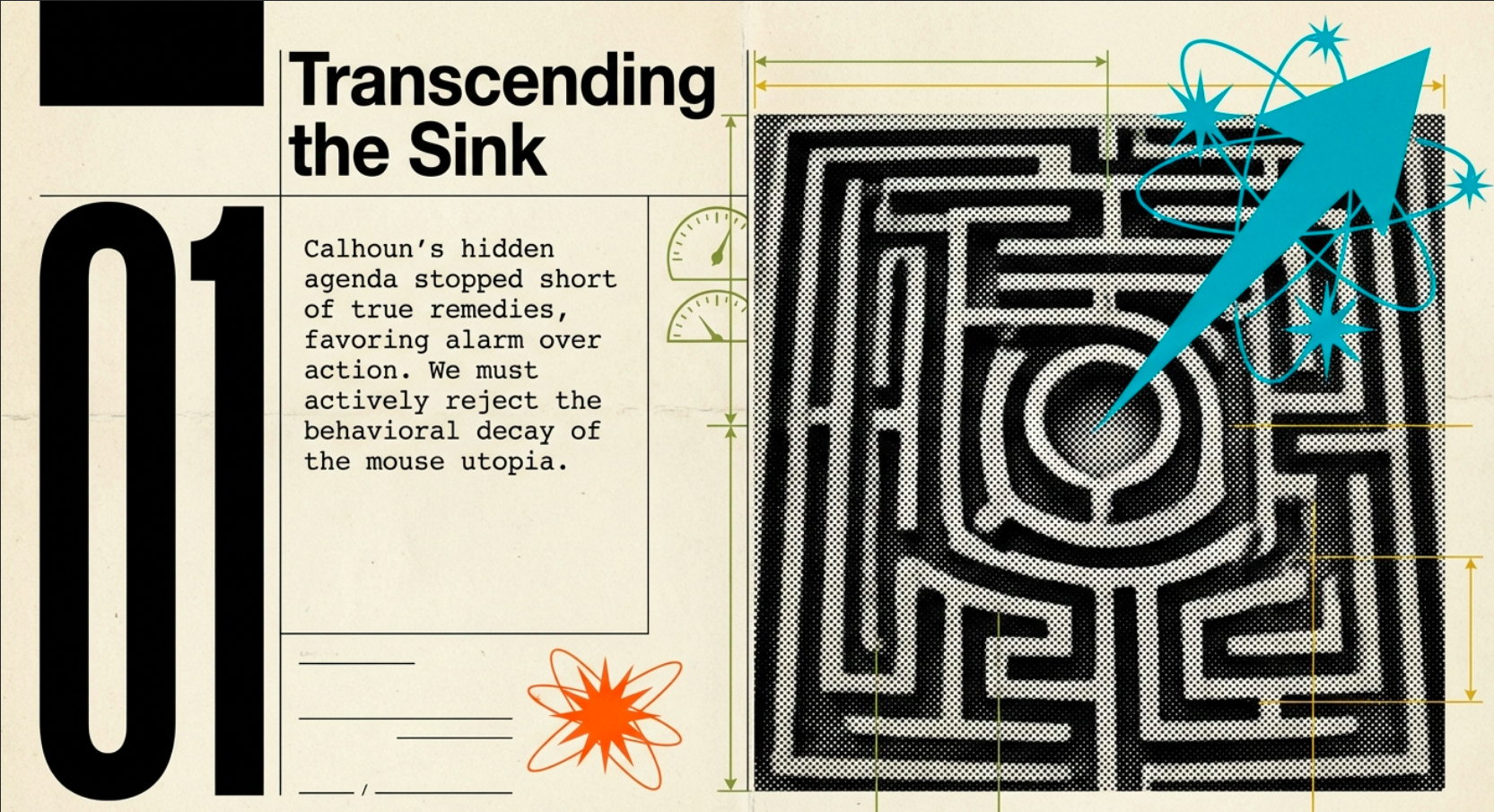
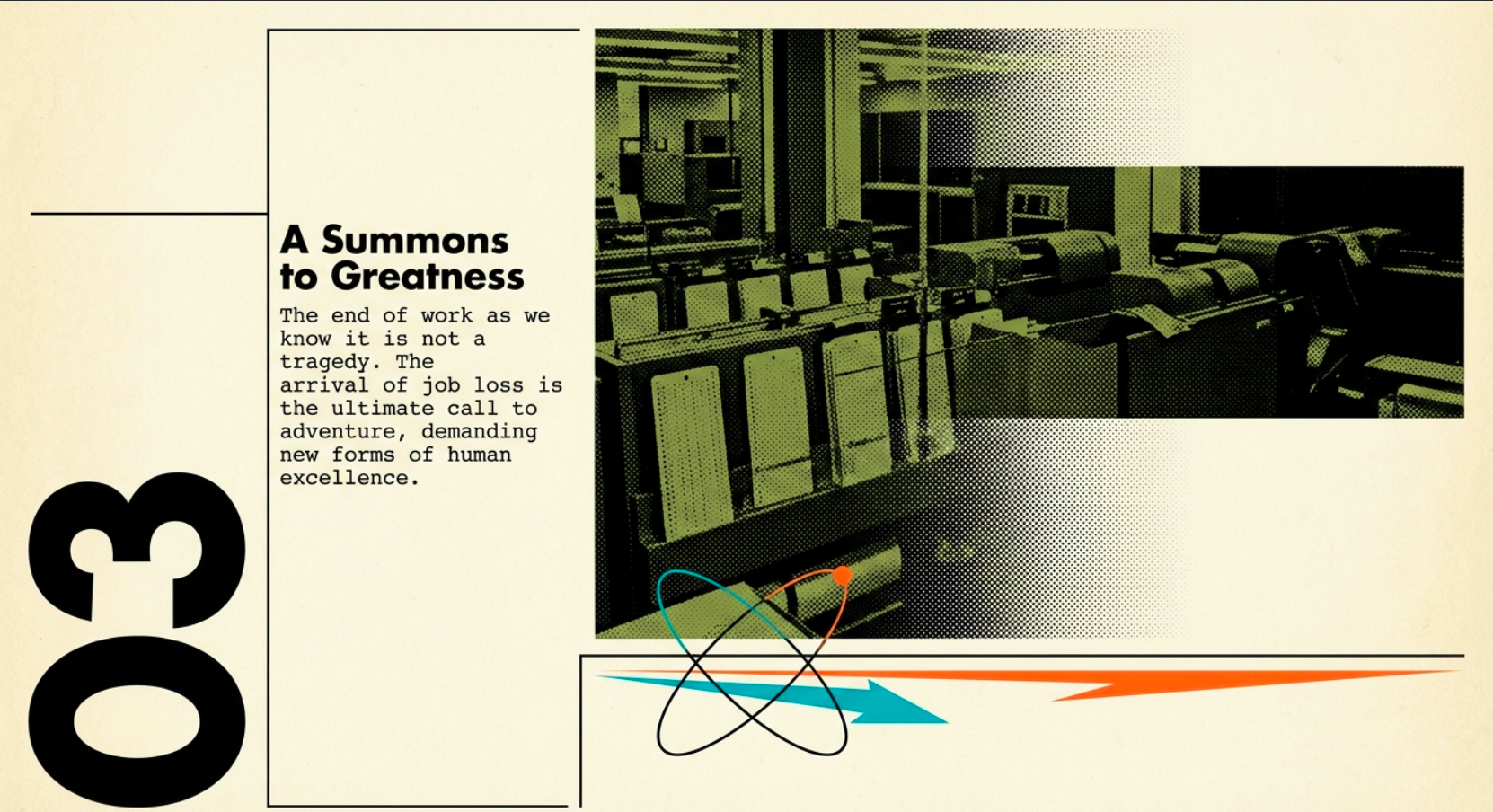
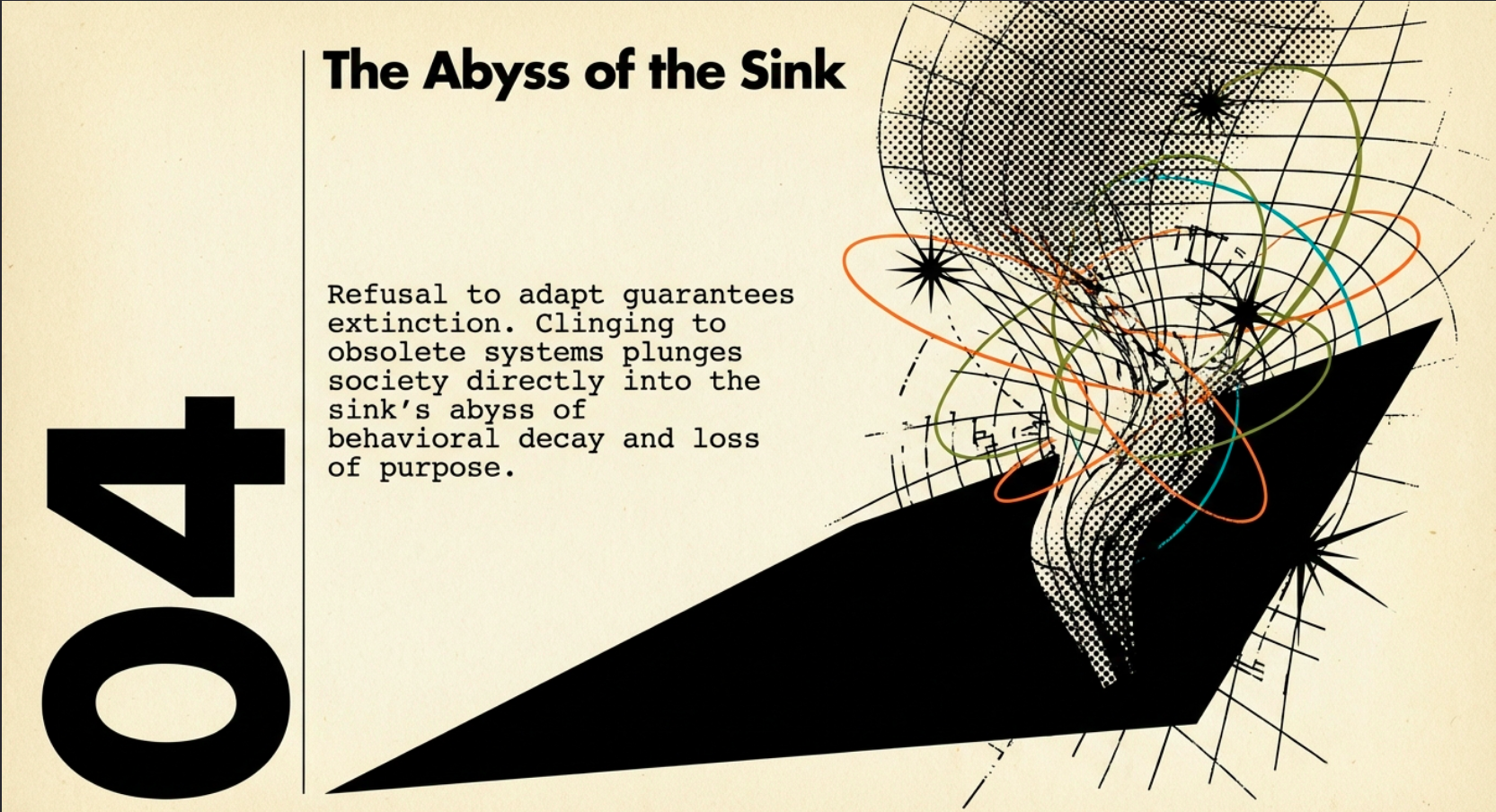
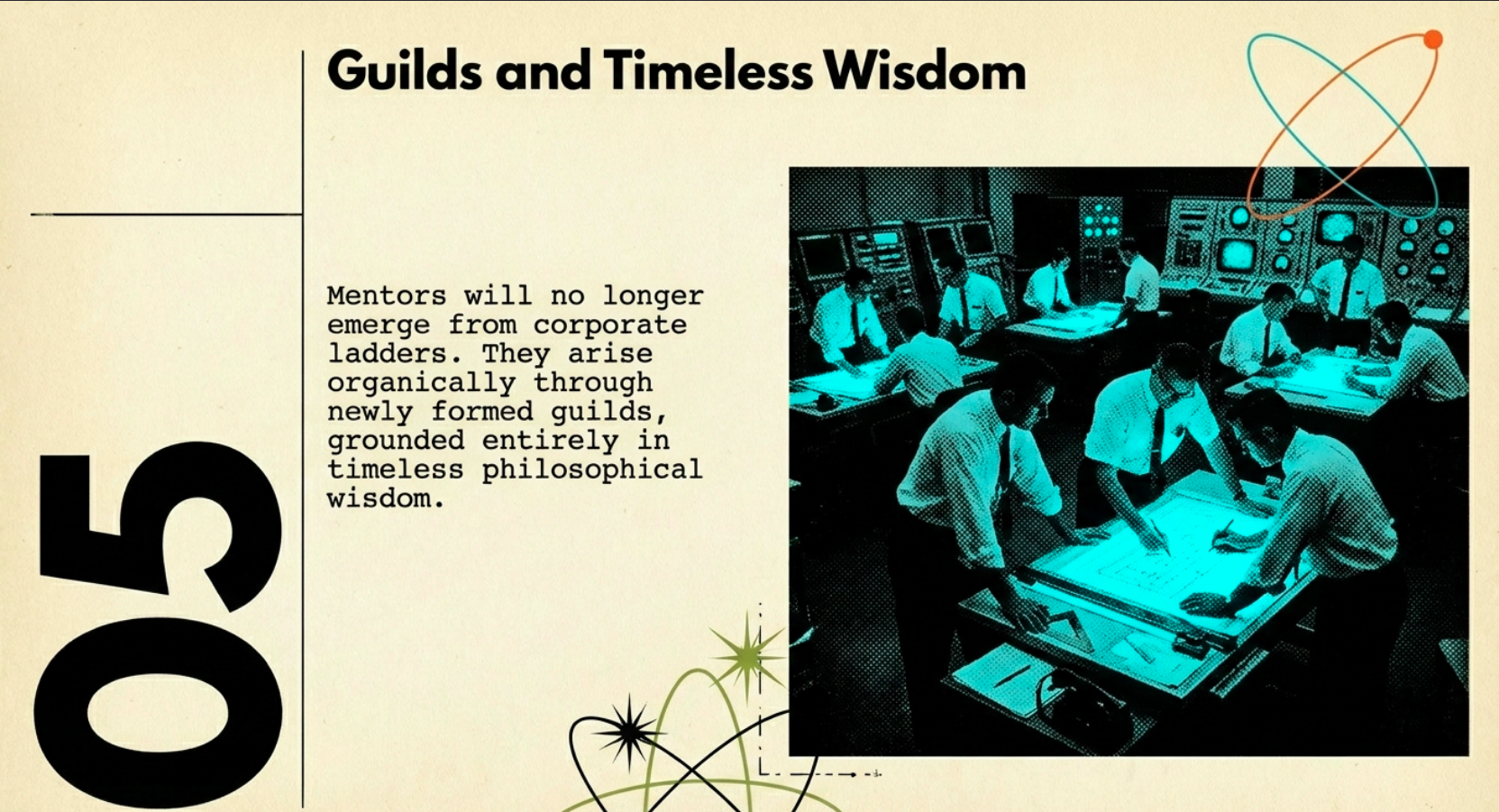
The hidden agendas of Calhoun’s work, veiled in scientific inquiry, stopped short of true remedies, instead amplifying alarm to serve broader narratives of control. Yet we can transcend this shadow, reframing the Interregnum as the grand monomyth where the hero’s call echoes through job loss, a summons to unparalleled greatness. Refusal drags us into the behavioral sink’s abyss, but acceptance awakens mentors in guilds of wisdom and allies in voluntary bonds of fellowship. The trials outlined above become forges of unbreakable character, and the ultimate boon is a society reborn, where abundance ignites not decay, but the exaltation of human potential.
Beneath the surface, Universe 25’s legacy is weaponized by governments and wishful-thinking idealists who twist its lessons to justify curbs on growth, echoing Malthusian fears in modern garb. These architects of control invoke the experiment’s collapse to advocate for engineered scarcities, population caps, and resource rationing, all under the guise of sustainability. Their vision veers toward communistic ideologies, where individual agency is subordinated to collective mandates, and personal aspirations are funneled into state-approved channels, stifling the very innovation that abundance promises.
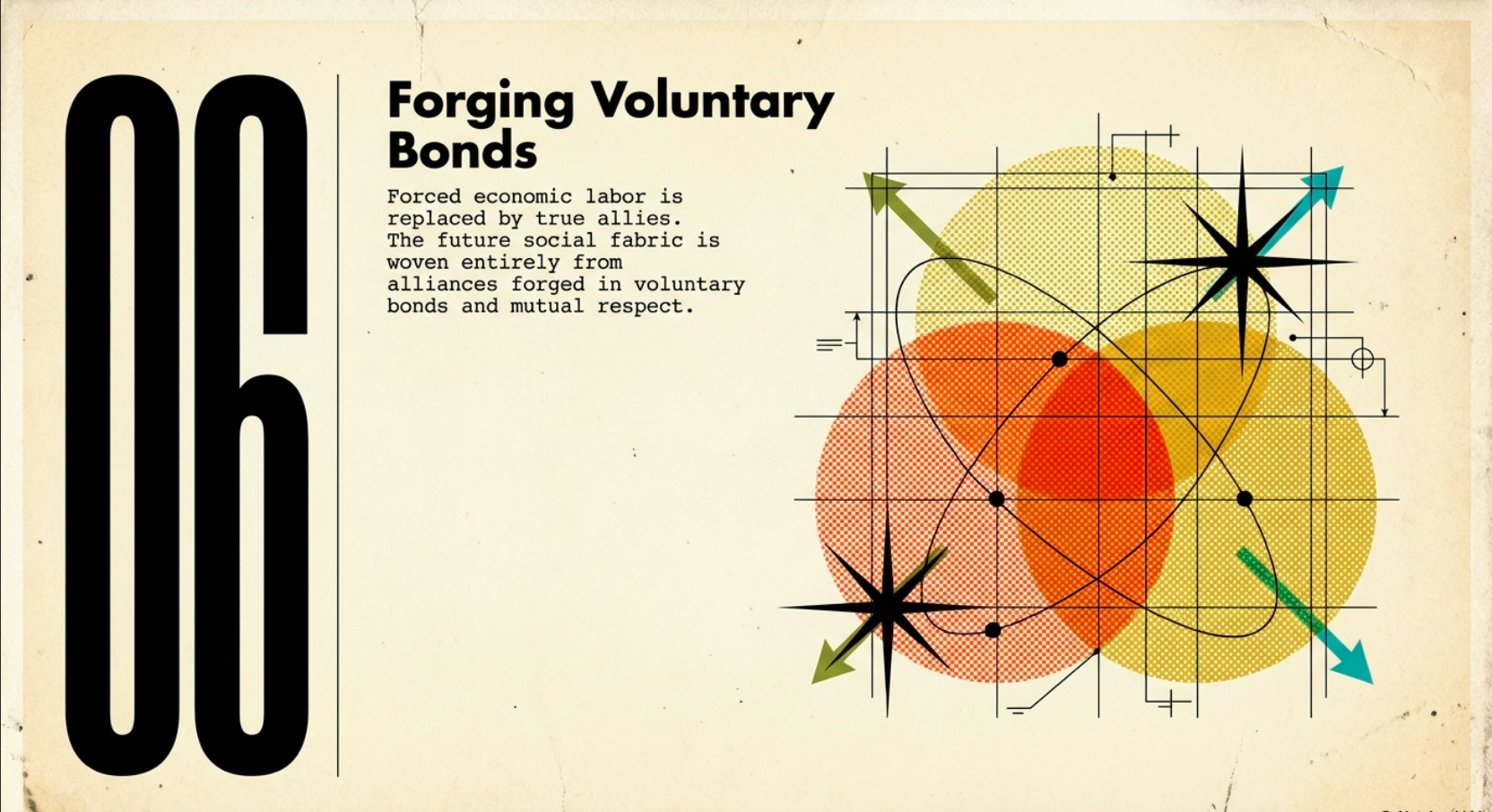
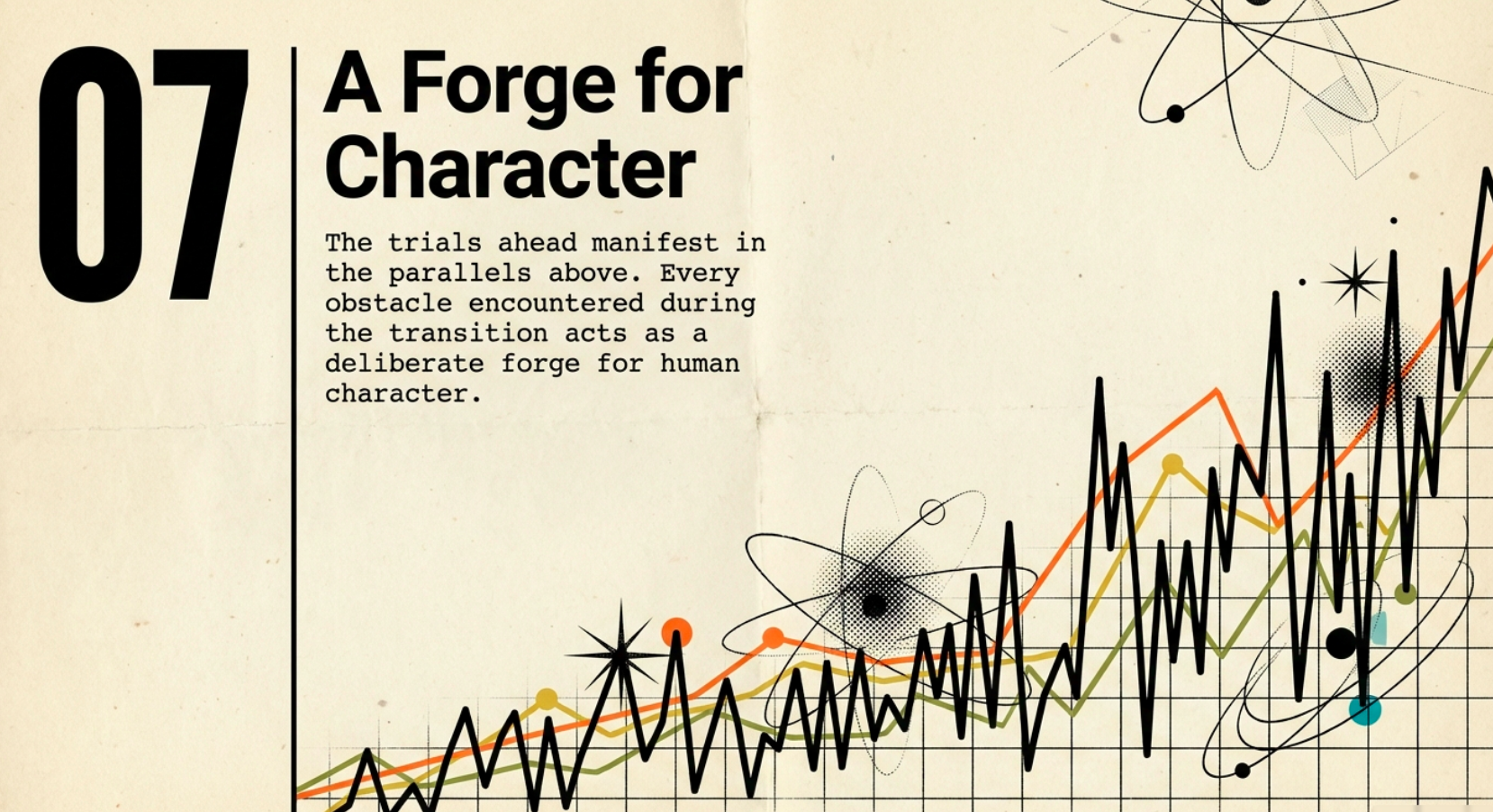
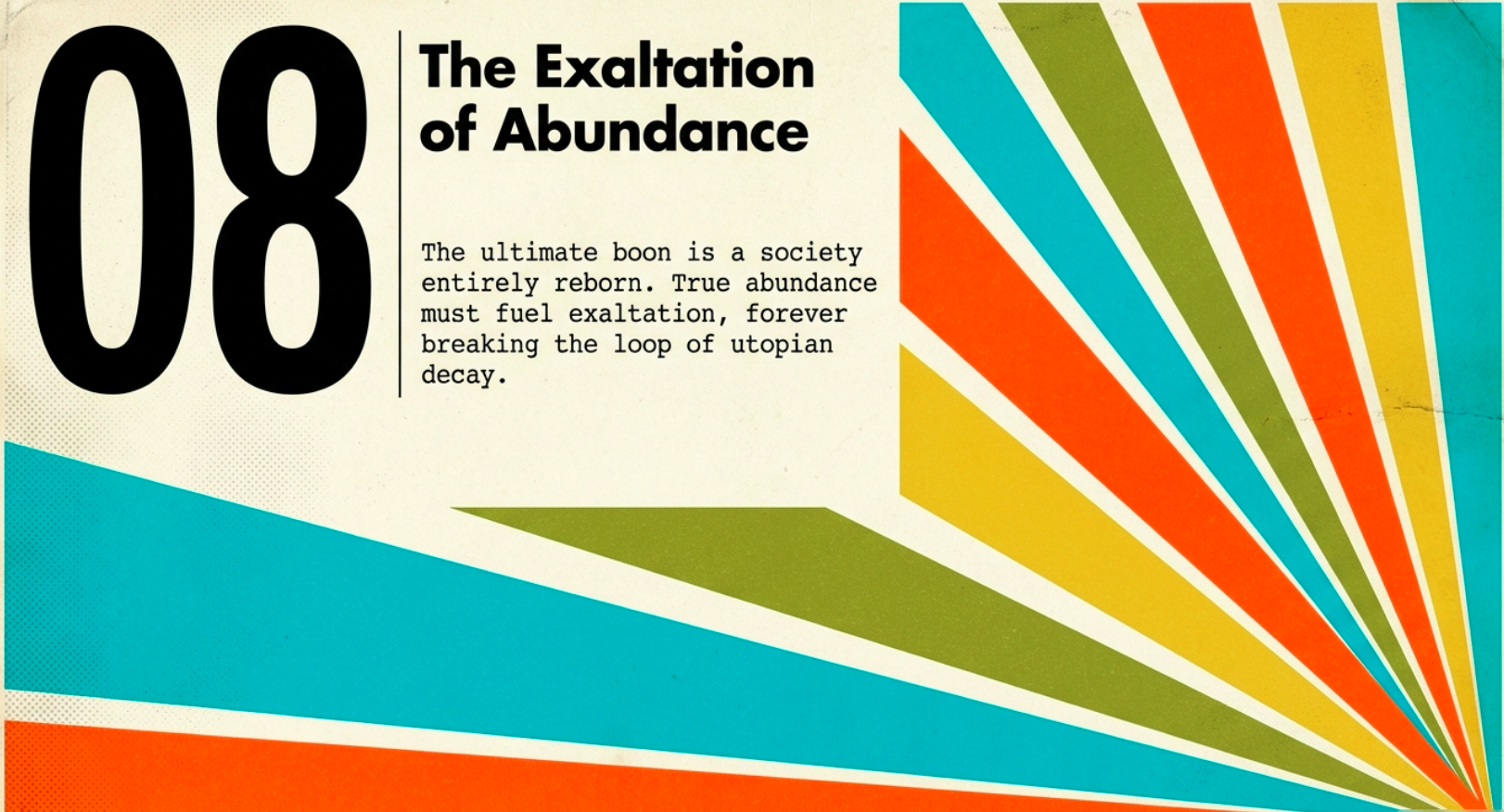
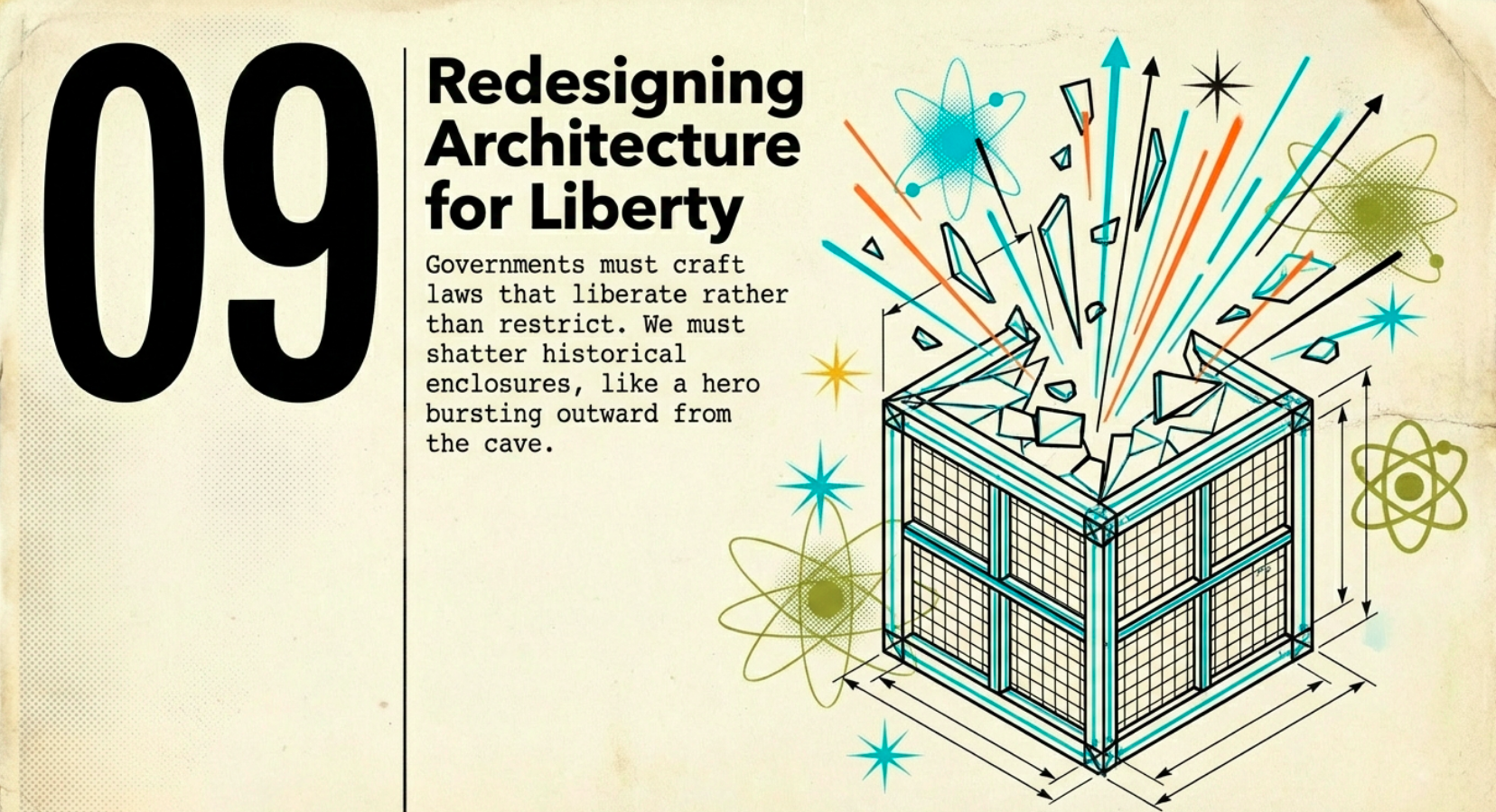
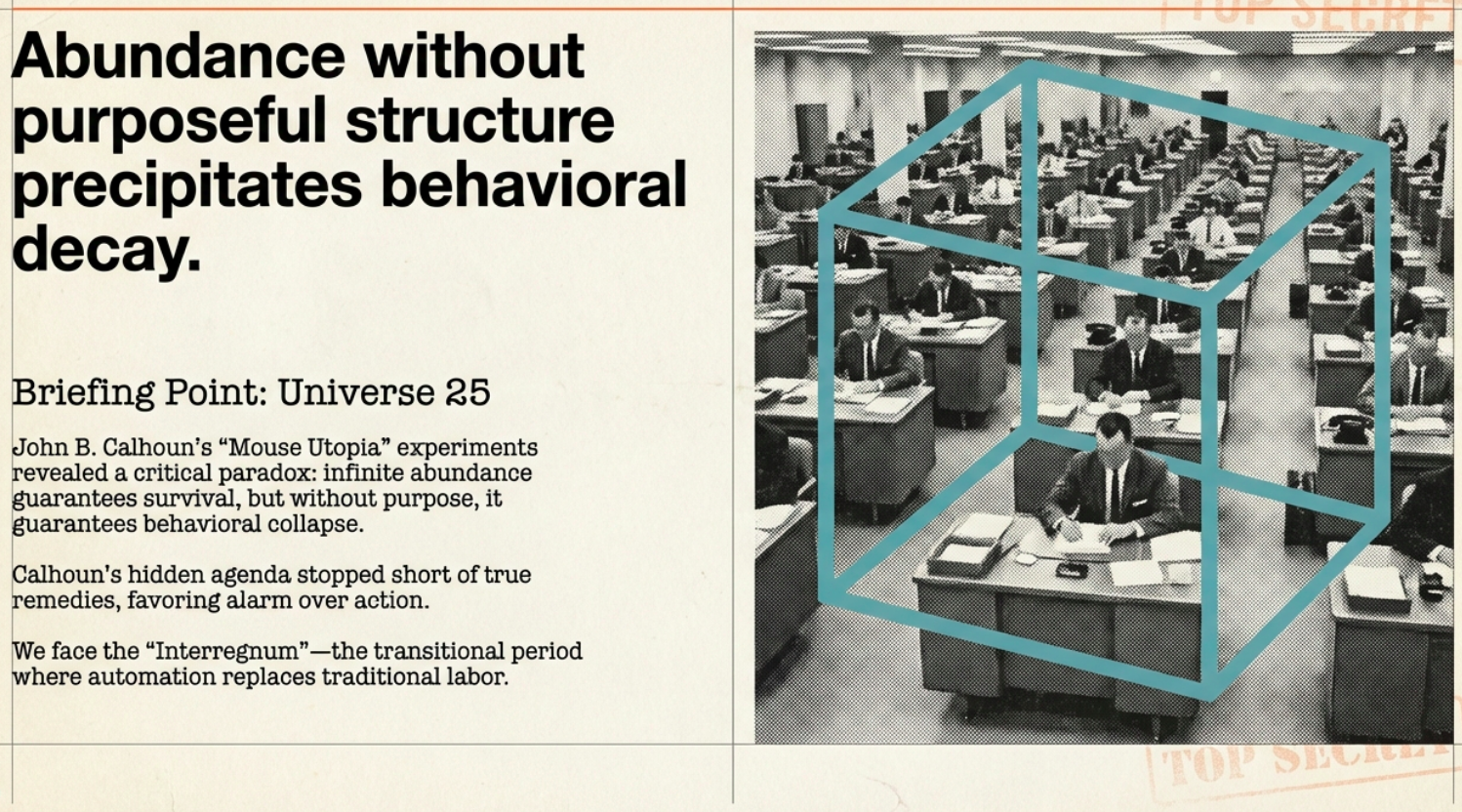
In this manipulation, the hero’s journey is subverted: the ordinary world is painted as unsustainable chaos, the call to adventure reframed as a threat to be contained. Governments may deploy Universe 25 as propaganda, crafting policies that mirror the enclosure—universal basic income tied to behavioral compliance, surveillance-laden “smart cities” that monitor every move, and ideological indoctrination disguised as education. Wishful idealists, blinded by utopian dreams, push for egalitarian enforcements that erode merit, fostering dependency and resentment, much like the rodents’ fabricated hierarchies.
Yet this is no inevitable fate; it is a trial to be overcome. By clinging to our inner compass, rooted in rational self-interest, moral stewardship, and the unyielding pursuit of virtue we navigate these perils. This compass, drawn from timeless truths, reminds us that true abundance thrives in freedom, not fetters. It guides the hero to reject imposed structures, embracing instead designs that honor human dignity and spark voluntary collaboration.
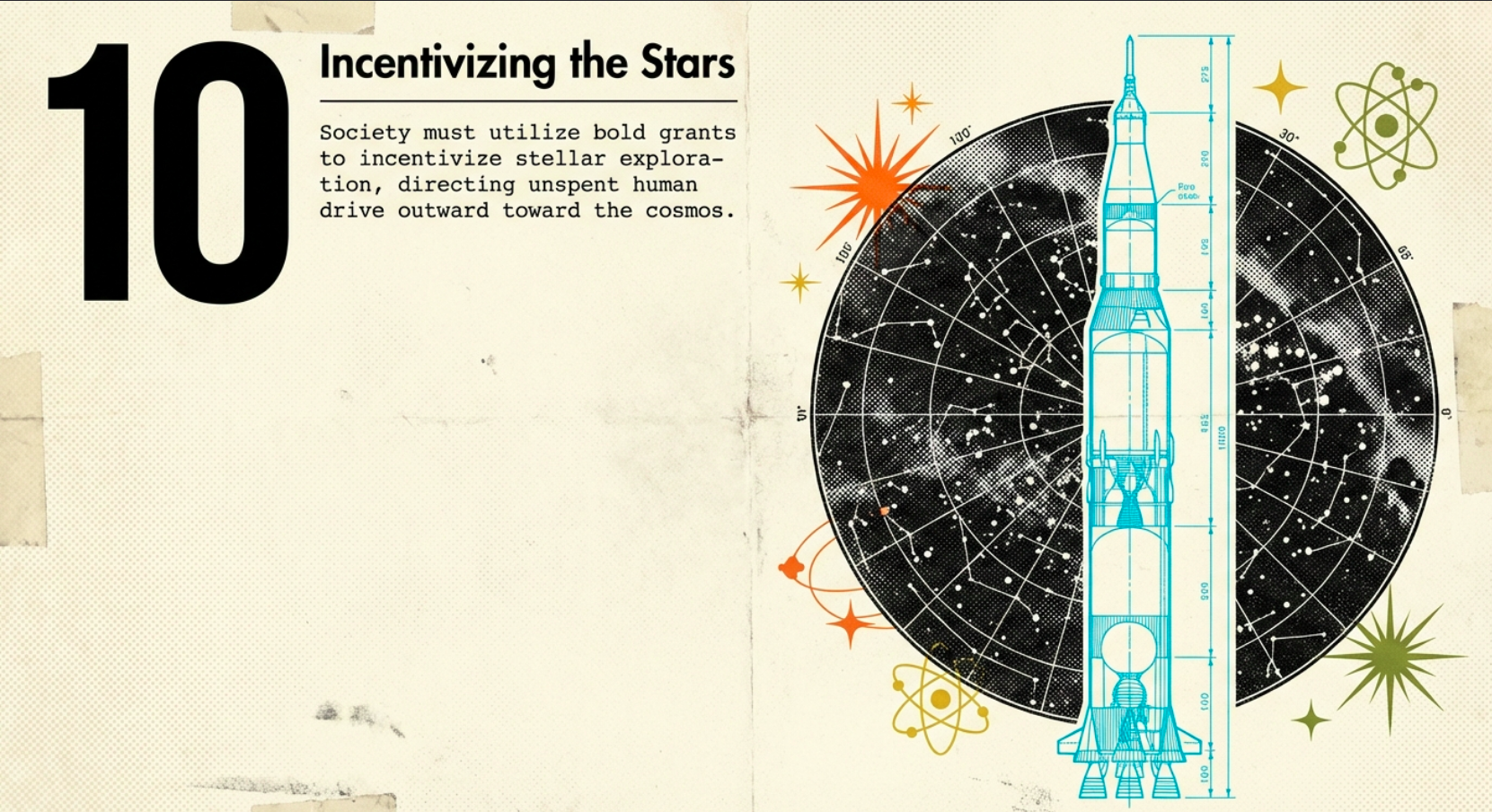
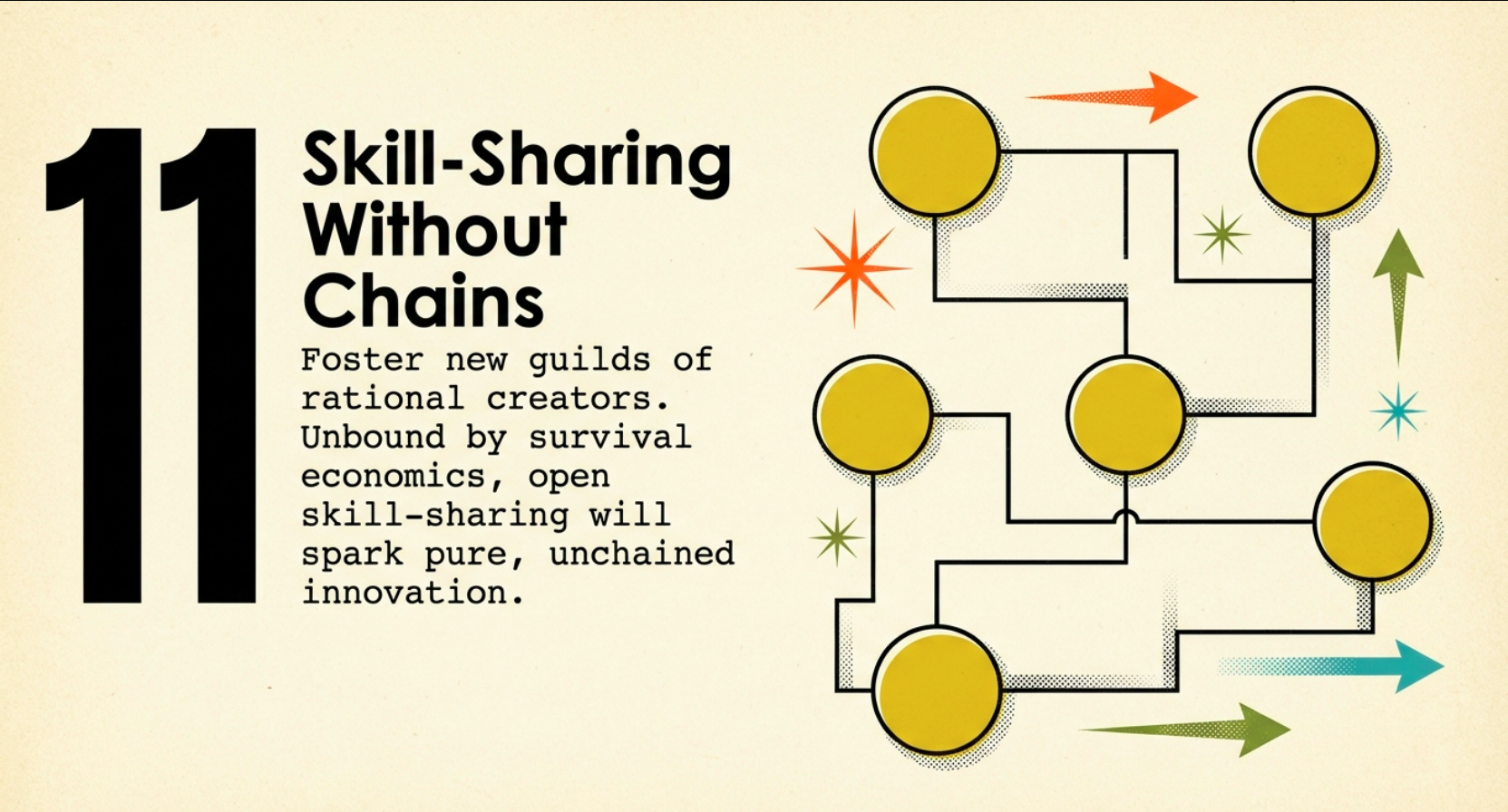
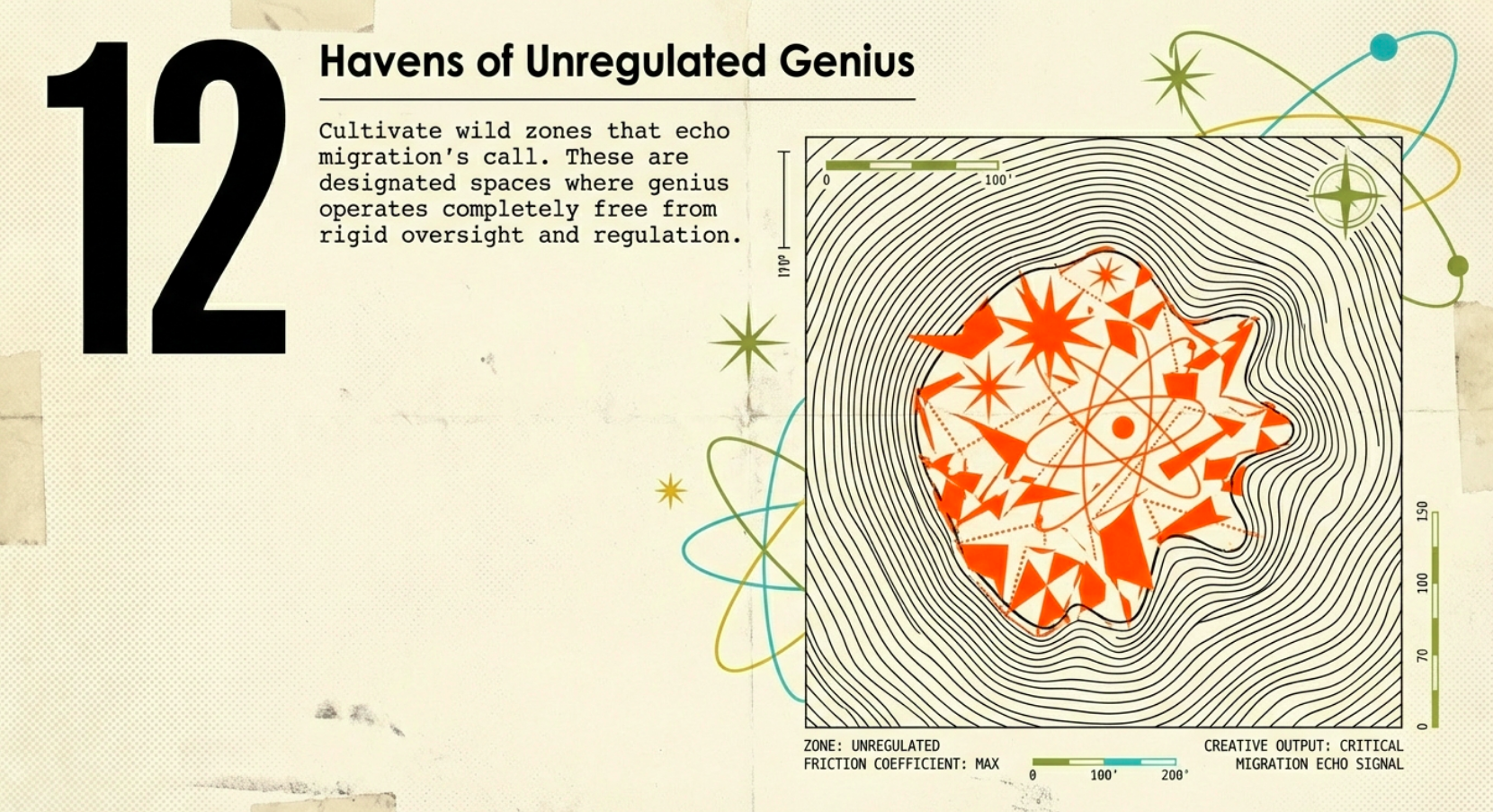
Solutions, therefore, begin with vigilant redesign of societal frameworks, prioritizing liberty and purposeful stressors. Governments, if reformed, could liberate rather than enclose, offering incentives for stellar exploration through bold, merit-based grants that shatter artificial barriers, akin to the hero bursting from the inmost cave. Foster guilds of rational creators, where skill-sharing ignites innovation without coercive chains, and cultivate “wild zones” sanctuaries of unregulated genius that echo the call of migration and adventure.
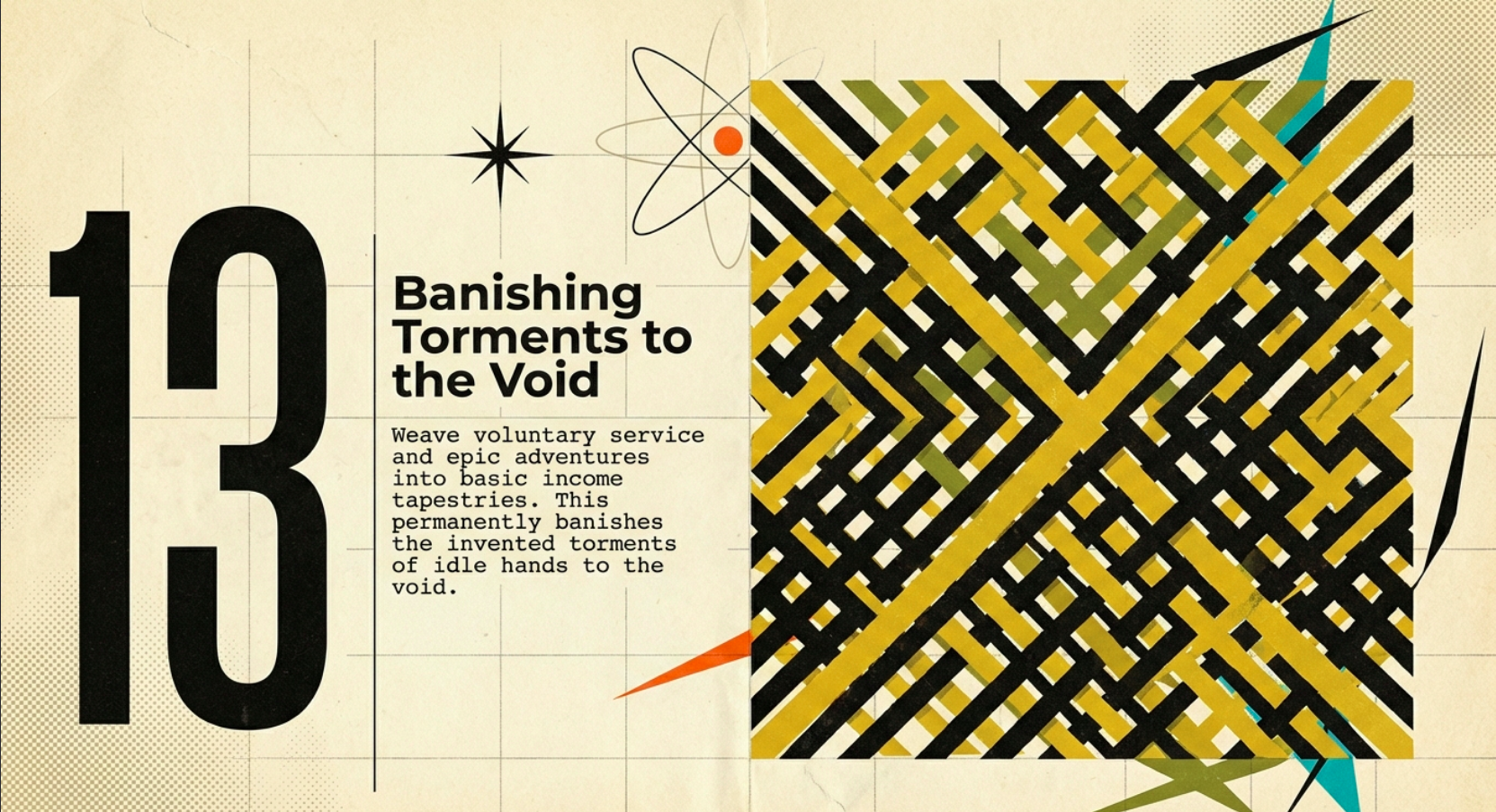
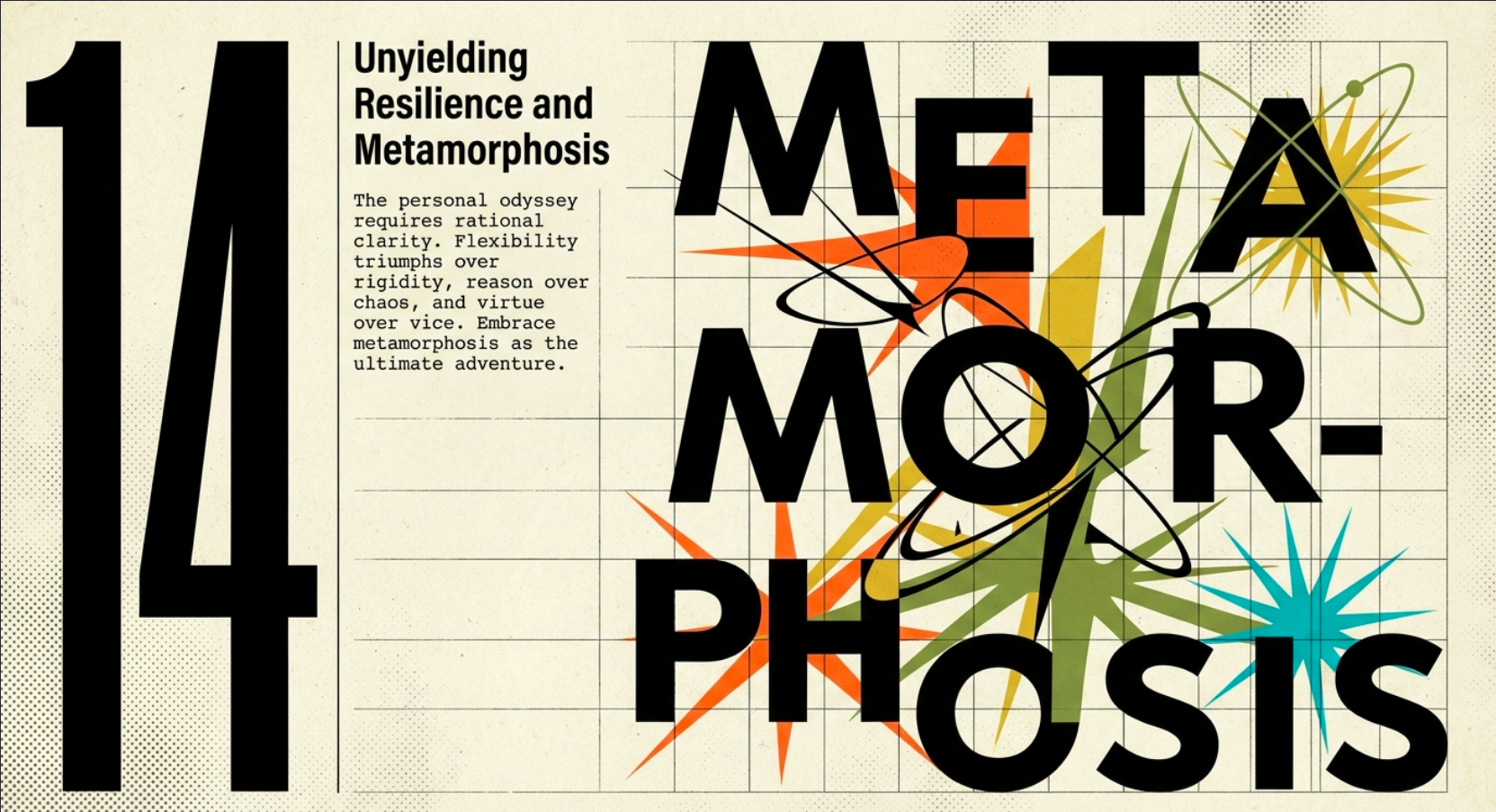
Weave these elements into the fabric of basic income systems, integrating voluntary service and epic quests that banish invented torments, transforming potential sinks into springs of vitality. On the personal odyssey, cultivate unyielding resilience through rational contemplation of purpose, forging alliances of mutual respect and enlightened fellowship. Embrace metamorphosis as the ultimate adventure, where flexibility outshines rigidity, reason conquers chaos, and virtue triumphs over vice.
As we defy the misuse of Universe 25, we not only evade extinction but ascend to cosmic heights, claiming abundance as our eternal elixir. This journey demands valor, a steadfast compass against ideological tempests, but the return unleashes a symphony of human triumph worlds conquered, spirits unbound, legacies eternal. In future installments of this series, we will dive deeper into additional strategies, unveiling more tools for the hero’s arsenal to ensure our path leads not to control’s cage, but to freedom’s boundless horizon.
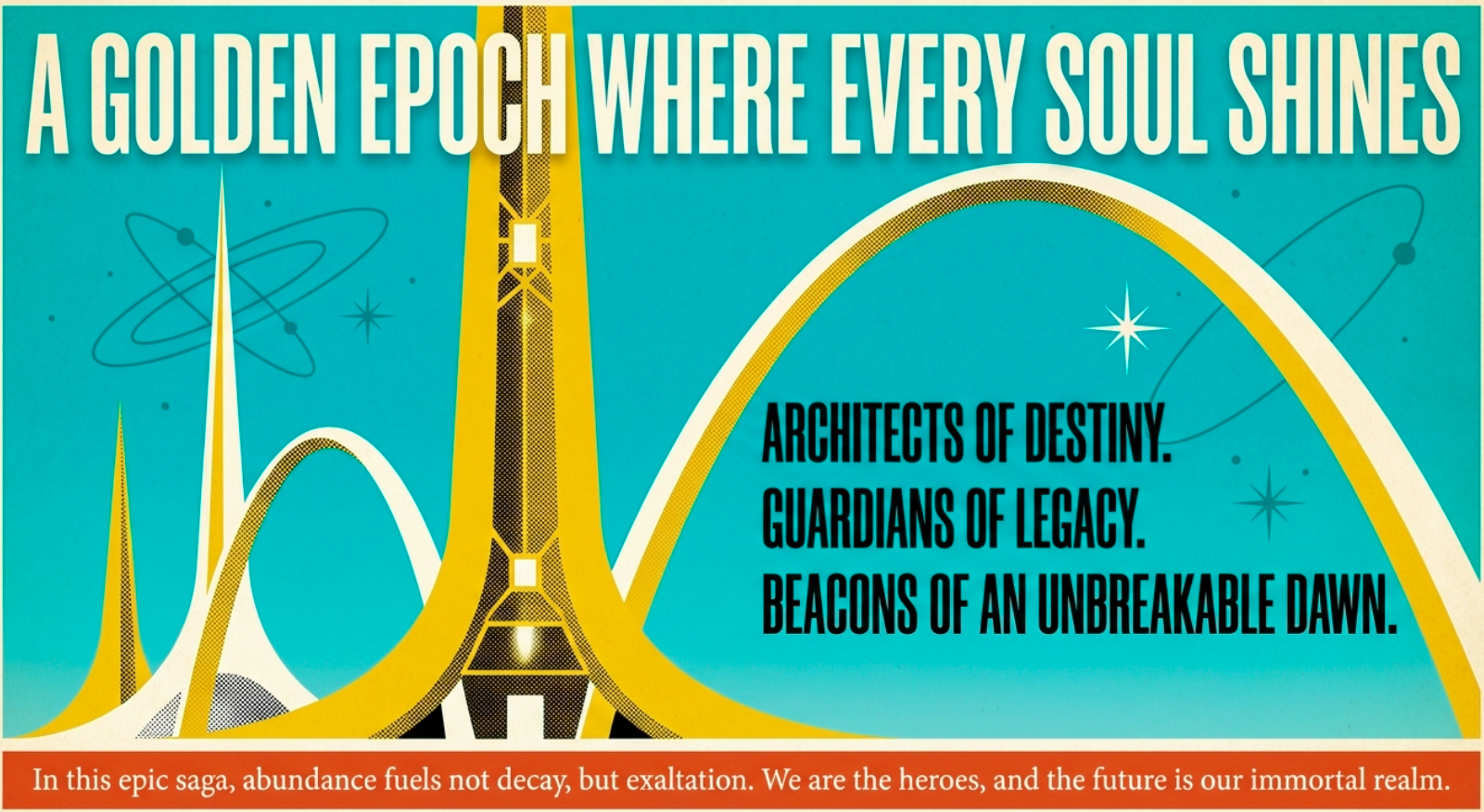
In this epic saga, we are the heroes, architects of our destiny, guardians of an unbreakable dawn. The Interregnum’s chaos becomes our forge, and from it emerges a golden epoch where every soul shines as sovereign creator, bound only by the stars and the strength of our will. Hold fast to the compass; the adventure continues.
We break out of the Velvet Prison of Univrese 25 and into the free will and free thought world of the actual Age Of Abundance.
The 5000 Days Countdown Clock:
We are on this journey together. Some of us stand on the shoulders of giants and have thought about this for decades. We will not go it alone, and I hope to build many parts to this series and share the mastermind insight from the powerful Read Multiplex member Forum: https://readmultiplex.com/forums/topic/you-have-5000-days-navigating-the-end-of-work-as-we-know-it/. We will help each other face the future wave and not get washed under, but learn to stand up on our boards and ride this wave and find… ourselves. Join us.
To continue this vital work documenting, analyzing, and sharing these hard-won lessons before we launch humanity’s greatest leap: I need your support. Independent research like this relies entirely on readers who believe in preparing wisely for our multi-planetary future. If this has ignited your imagination about what is possible, please consider donating at buy me a Coffee or becoming a member. Value for value you recieved here.
Every contribution helps sustain deeper fieldwork, upcoming articles, and the broader mission of translating my work to practical applications. Ain ‘t no large AI company supporting me, but you are, even if you just read this far. For this, I thank you.
Stay aware and stay curious,

🔐 Start: Exclusive Member-Only Content.
Membership status:
🔐 End: Exclusive Member-Only Content.
~—~

~—~

~—~
Subscribe ($99) or donate by Bitcoin.
Copy address: bc1qkufy0r5nttm6urw9vnm08sxval0h0r3xlf4v4x
Send your receipt to [email protected] to confirm subscription.

Stay updated: Get an email when we post new articles:

THE ENTIRETY OF THIS SITE IS UNDER COPYRIGHT. IMPORTANT: Any reproduction, copying, or redistribution, in whole or in part, is prohibited without written permission from the publisher. Information contained herein is obtained from sources believed to be reliable, but its accuracy cannot be guaranteed. We are not financial advisors, nor do we give personalized financial advice. The opinions expressed herein are those of the publisher and are subject to change without notice. It may become outdated, and there is no obligation to update any such information. Recommendations should be made only after consulting with your advisor and only after reviewing the prospectus or financial statements of any company in question. You shouldn’t make any decision based solely on what you read here. Postings here are intended for informational purposes only. The information provided here is not intended to be a substitute for professional medical advice, diagnosis, or treatment. Always seek the advice of your physician or other qualified healthcare provider with any questions you may have regarding a medical condition. Information here does not endorse any specific tests, products, procedures, opinions, or other information that may be mentioned on this site. Reliance on any information provided, employees, others appearing on this site at the invitation of this site, or other visitors to this site is solely at your own risk.
Copyright Notice:
All content on this website, including text, images, graphics, and other media, is the property of Read Multiplex or its respective owners and is protected by international copyright laws. We make every effort to ensure that all content used on this website is either original or used with proper permission and attribution when available.
However, if you believe that any content on this website infringes upon your copyright, please contact us immediately using our 'Reach Out' link in the menu. We will promptly remove any infringing material upon verification of your claim. Please note that we are not responsible for any copyright infringement that may occur as a result of user-generated content or third-party links on this website. Thank you for respecting our intellectual property rights.
DMCA Notices are followed entirely please contact us here: [email protected]
