
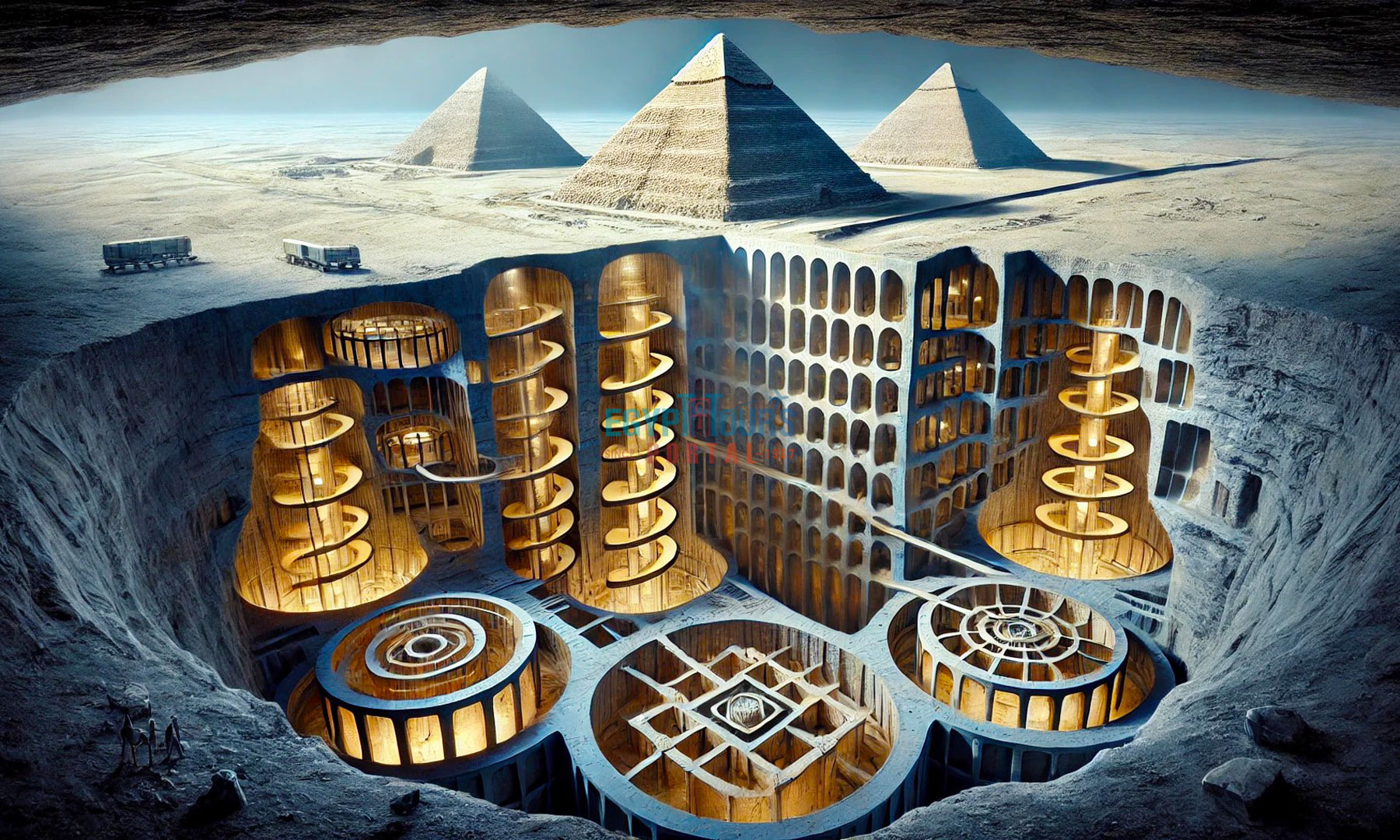
Hydraulic Elevators Below The Giza Pyramids That Lift Stones?
I made a new discovery by merging two radical insights made recently. It just may answer some of the questions. Imagine standing at the base of the Great Pyramid of Giza, its colossal limestone blocks towering overhead, a monument that has baffled humanity for millennia. We’ve long marveled at how ancient Egyptians hauled millions of tons of stone skyward without modern machinery. Ramps? Levers? Alien intervention? These ideas have swirled in debates, but a convergence of recent discoveries is pointing to a far more elegant and earthly solution: water. Not just as a transport medium, but as a dynamic force harnessed in ingenious hydraulic elevators hidden within the pyramids themselves.
This article is sponsored by Read Multiplex Members who subscribe here to support my work:
Link: https://readmultiplex.com/join-us-become-a-member/
It is also sponsored by many who have donated a “Cup of Coffee”. If you like this, help support my work:
Link: https://ko-fi.com/brianroemmele
This massive new insight emerges from my merging two groundbreaking lines of research. First, the hydraulic lift hypothesis for Egypt’s oldest pyramid, Djoser’s Step Pyramid at Saqqara, proposed in a 2024 study led by Xavier Landreau and published in PLOS ONE [1]. Second, cutting-edge Synthetic Aperture Radar (SAR) Doppler Tomography scans of the Giza complex, detailed in a 2022 peer-reviewed paper by Filippo Biondi and Corrado Malanga in Remote Sensing [2], and expanded in 2025 announcements revealing vast subterranean networks [3]. Together, they paint a picture of ancient engineering mastery where water wasn’t just a lifeline from the Nile; it was the muscle that built empires.
The Foundation: Water Power at Djoser’s Pyramid
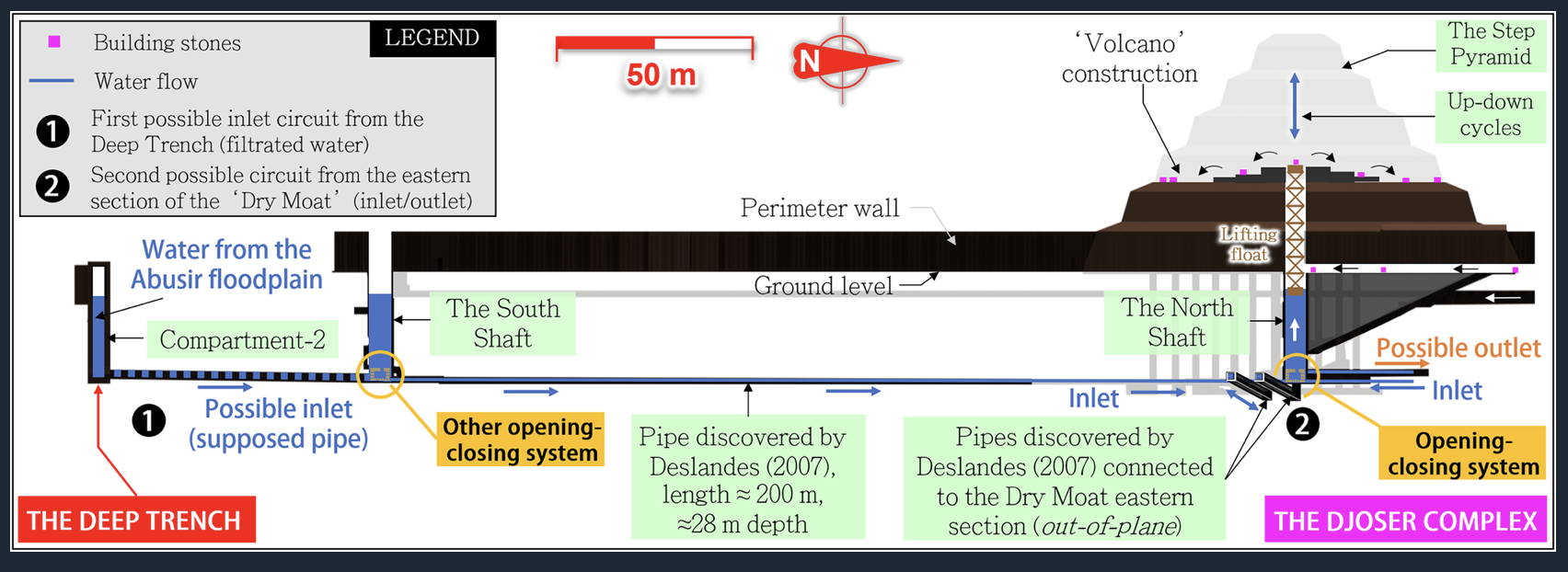
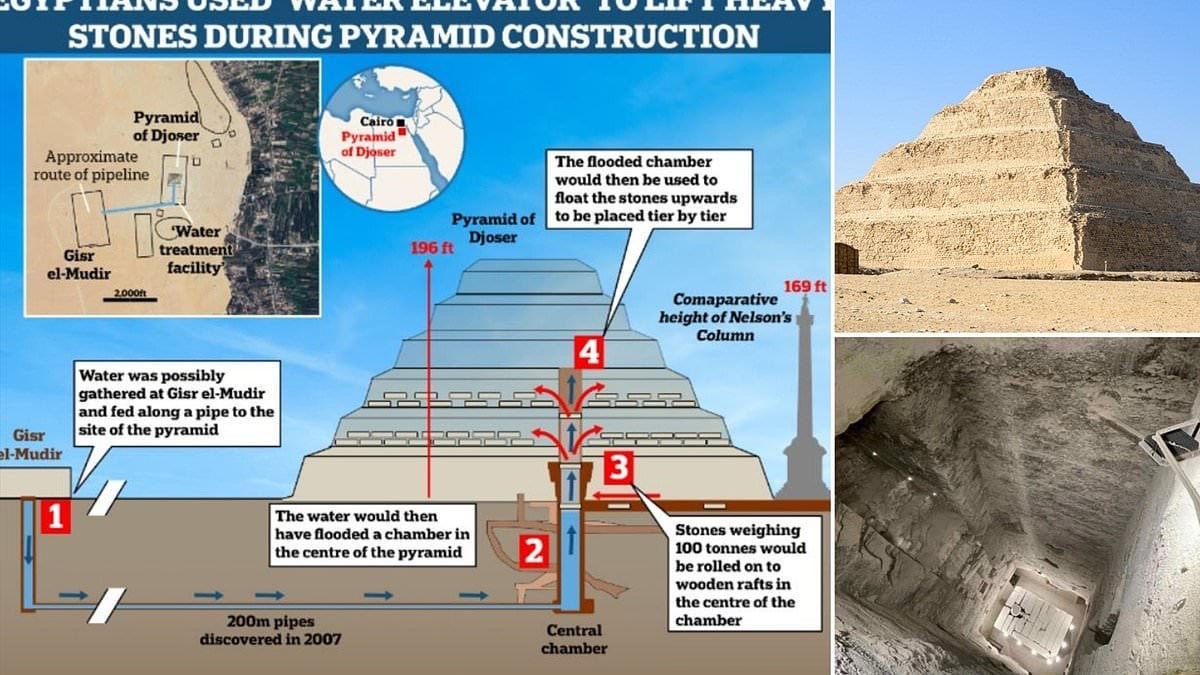
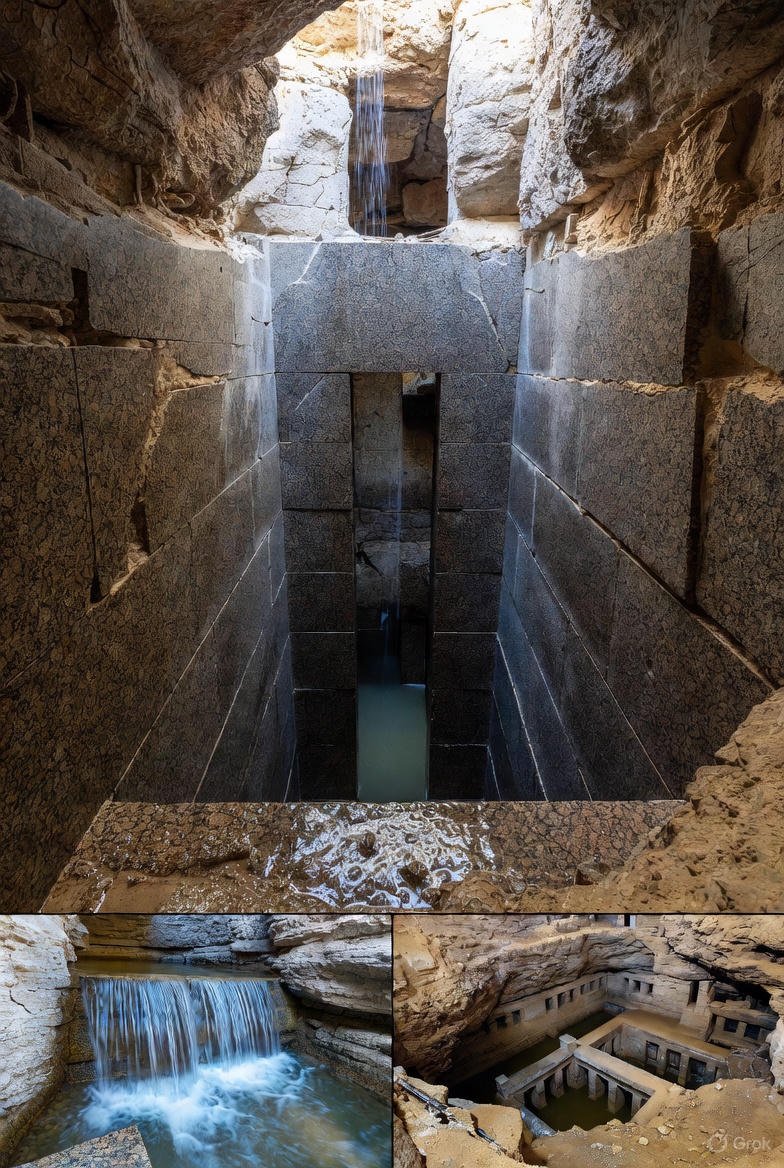
Let’s start with Djoser, the trailblazer. Built around 4,700 years ago, this stepped behemoth rises 62 meters, crafted from over a million stone blocks. Landreau’s team, drawing on computer models, satellite imagery, and site archaeology, argues that builders engineered a sophisticated hydraulic system. Picture this: Floodwaters from heavy rains or the Nile were captured in a distant enclosure called Gisr el-Mudir, then channeled through basins and trenches into a central shaft inside the pyramid.
Here’s the magic: Granite chambers at the shaft’s base acted as valves. When plugs were removed, water surged in, lifting a massive wooden float connected by ropes and pulleys to a stone-hauling platform. As water filled the shaft, the float rose, lowering the platform for loading. Drain the water, and the descending float yanked the platform upward, hoisting blocks to higher levels. It’s like a counterbalanced elevator powered by nature’s own hydraulics, no steam engines, just controlled flows turning potential energy into mechanical might.
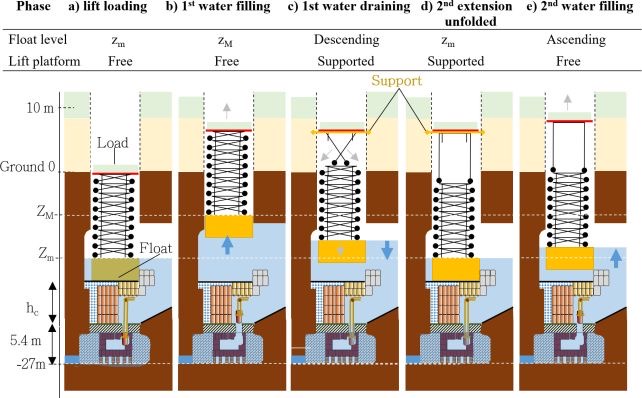
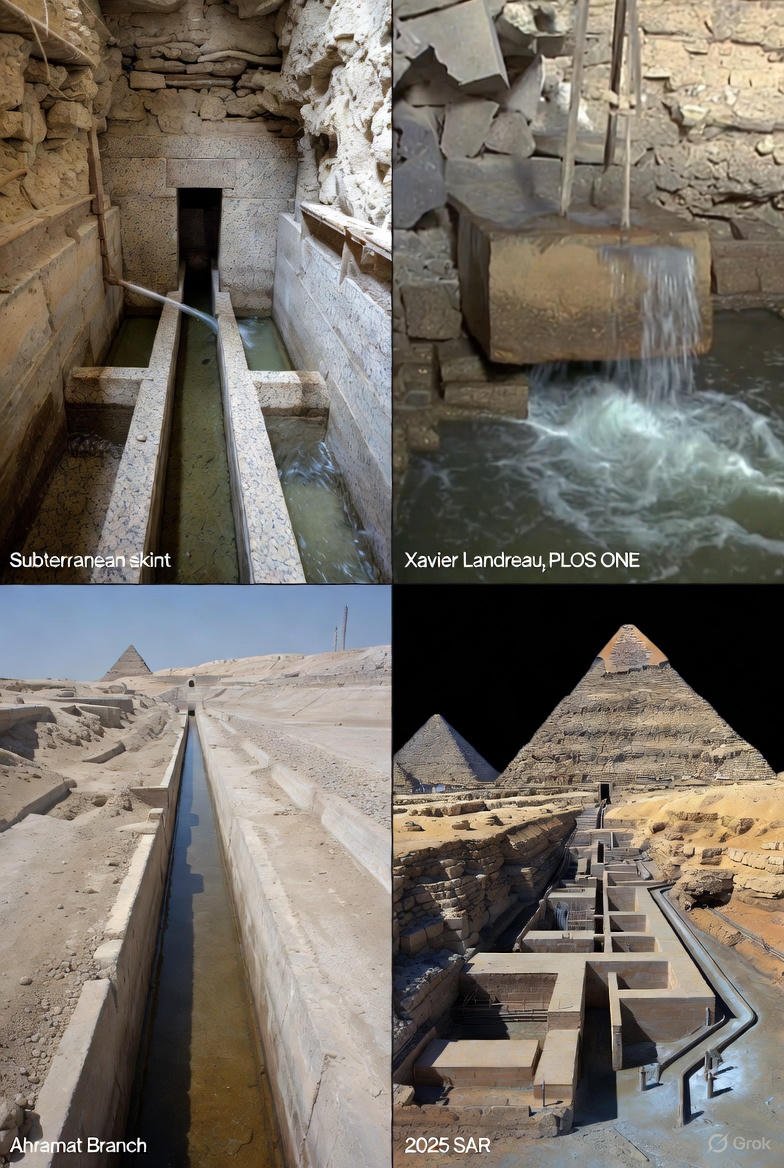
The model aligns with hints of water’s role, including a recently discovered Nile tributary (the Ahramat Branch) that once skirted 31 pyramids, ferrying materials right to the sites. This wasn’t crude labor; it was paleo-engineering, leveraging hydraulics to conquer gravity.
The Game-Changer: SAR Revelations at Giza
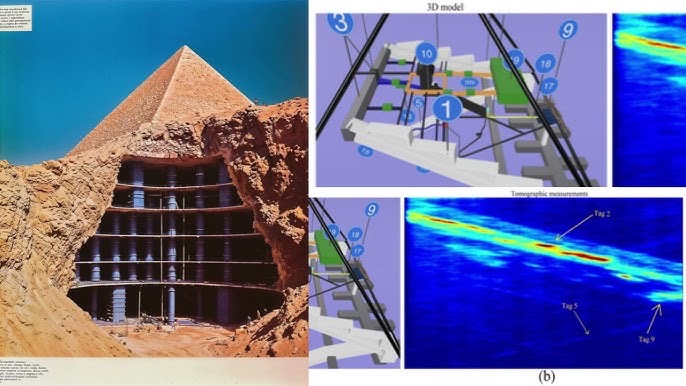
Now, fast-forward to Giza, home to the grander pyramids of Khufu, Khafre, and Menkaure. These aren’t just bigger; they’re enigmas wrapped in stone, with blocks up to 80 tons. How did they scale such heights? Enter SAR Doppler Tomography, a non-invasive tech that uses satellite radar (from systems like COSMO-SkyMed) to detect tiny vibrations, micro-movements from seismic waves, wind, or even Cairo’s urban hum. Unlike traditional radar, which bounces off surfaces, this method penetrates dense rock, reconstructing 3D “sonic images” of hidden interiors.
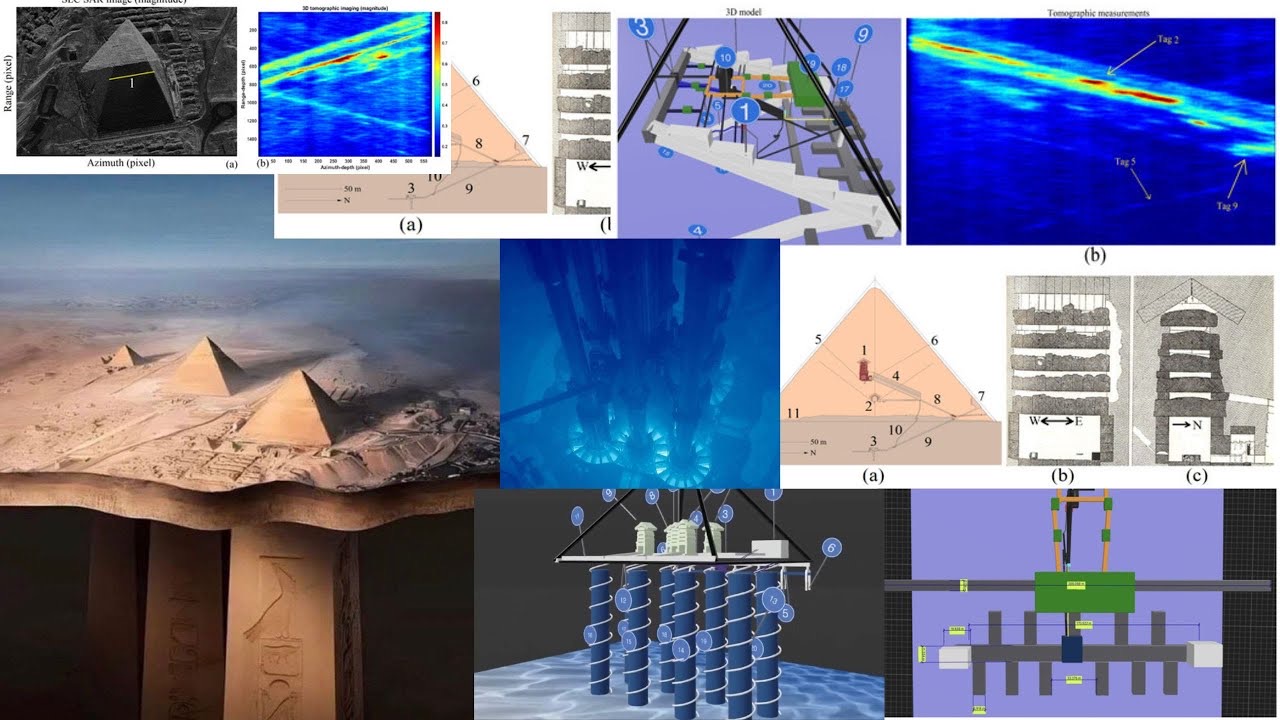
The 2022 Biondi-Malanga study on Khufu’s Great Pyramid was a bombshell. I wrote the first story about it here https://readmultiplex.com/2025/03/21/below-the-giza-pyramid-plateau-new-radar-discoveries-will-shock-the-world/ in March 2025. It unveiled previously unknown structures: ascending and descending ramps, underground corridors, voids, and interconnected chambers. But the real jaw-dropper? Their interpretation points to a hydraulic resonant system. The pyramid wasn’t a static tomb; it was designed to interact with water. Satellite data showed the Nile once filled a surrounding basin up to 20 meters high, allowing boats to deliver stones. Water then flooded internal shafts and chambers, creating air seals and closed circuits.
Key discoveries include:
- North and south shafts acting as water conveyors, with entrances at basin level for gravity-fed filling.
- The King’s Chamber as a hermetic seal, its granite “sarcophagus” basin holding water to create pressure.
- The Queen’s Chamber connected via hidden rooms, forming a “Quincke’s tube” for vibrating water, amplified by resonances tied to mathematical constants like π and the Golden Ratio.
- Erosion traces in the Grotto and Unfinished Chamber suggest water flow, with boulder plugs and Venturi-like pumps for draining back to the Nile.
This wasn’t just for construction; the team speculates ritual or curative uses, like sound therapy from water vibrations. But crucially, the shafts and ramps could double as elevator frameworks: Water levels rising and falling to lift platforms, much like Djoser’s model, but scaled for Giza’s enormity.
Building on this, 2025 scans (announced in March by Malanga, Biondi, and Armando Mei) probed deeper, revealing a mind-boggling subterranean complex beneath the entire plateau:
- Five chamber-like structures near Khafre’s base, each tens of meters wide with sloping roofs, linked by geometric passages, perfect for water distribution.
- Eight cylindrical shafts, like vertical wells with spiral pathways, plunging 648 meters deep in parallel rows.
- Two massive cubic cavities (80 meters per side) at the bottom, where shafts converge, potentially reservoirs or pressure chambers.
- A 2-kilometer network of tunnels spanning all three pyramids, multilevel and engineered with precision.
No explicit “water features” are named in the press releases, but the layout screams hydraulics: Cylindrical shafts for controlled flows, spirals for gradual descent (or ascent under pressure), and deep cavities for storing floodwater. These could channel Nile waters underground, powering elevators during construction and perhaps sustaining resonant functions post-build.
The Merged Insight: Water Elevators as the Universal Key
Here’s where it clicks: this may be the answer. Djoser’s system was the prototype: A single shaft elevator for a stepped structure. At Giza, it evolved into a networked masterpiece. SAR data shows internal shafts aligning with known (and new) ramps, suggesting multiple hydraulic lifts operating in tandem. Water from the Ahramat Branch or underground aquifers filled these systems, counterbalancing massive blocks via floats and pulleys. The deep shafts? Perhaps master valves, drawing water from aquifers or even geothermal sources for sustained pressure.

Think of it as an ancient hydraulic grid: Flood the base chambers, seal the shafts, and let physics do the work. Rising water lifts floats, pulling platforms laden with 2.5-ton blocks to the summit. Drain via erosion-carved outlets, and repeat. This explains the pyramids’ precision alignment, internal voids (as buffers), and even the Sphinx’s water-worn base, remnants of a wetter era.
Why does this feel like the solution? It unifies disparate clues:
- Archaeological harmony: Matches erosion patterns, granite plugs, and unexplained shafts in both Saqqara and Giza.
- Engineering feasibility: No need for mile-long ramps (which would require more material than the pyramids themselves). Water power scales effortlessly.
- Cultural context: Egyptians revered the Nile as life-giver; harnessing it for god-like feats fits their worldview.
- Modern validation: SAR’s 3D transparency reveals what ground probes missed, echoing Landreau’s models but with real data.
Of course, this is speculative; critics argue vibrations might misinterpret densities, and underground complexes could be natural or later additions. Excavation is needed, but Egypt’s authorities are cautious. Yet, if confirmed, it shatters the “primitive labor” myth, revealing ancients as hydraulic virtuosos.
Hidden in Plain Sight: Hydraulic Marvels in Other Egyptian Sites
The hydraulic ingenuity at Saqqara was not isolated; it echoed in other Egyptian sites, where features long viewed as architectural quirks or ceremonial elements reveal hidden hydraulic engineering upon reexamination. Take the Osirion at Abydos, a massive underground structure traditionally interpreted as a symbolic tomb for Osiris. Constructed around 1300 BCE but possibly incorporating older elements, the Osirion sits below ground level, surrounded by massive granite blocks and accessed via a sloping corridor. Hidden in plain sight is its potential as a water regulation device: channels and basins suggest it functioned as a hydraulic buffer against Nile floods, controlling water levels to protect nearby temples and agricultural lands. Archaeological evidence, including water-worn stones and sediment layers, supports this, implying the Egyptians disguised advanced engineering as religious architecture to integrate it seamlessly into their worldview.
Similarly, along the Nile’s banks, a 600-mile network of stone walls, known as groins, stretches from Aswan to the Delta. These low-lying barriers, often dismissed as boundary markers or erosion controls, hide a sophisticated water management system. Built over centuries starting around 3000 BCE, they directed floodwaters, trapped sediments for fertile soil, and prevented channel migration, ensuring stable agriculture. Hidden in plain sight, their angled designs and strategic placements reveal hydraulic engineering that manipulated river flow, a feat confirmed by recent LiDAR scans showing integrated canal systems.
At the Giza Plateau, the Sphinx enclosure’s deep trenches, long thought to be quarries, may conceal hydraulic functions. SAR and ground-penetrating radar have detected subsurface voids and channels, suggesting water diversion for erosion control or ceremonial pools, hidden as natural formations but engineered for flood mitigation.

Echoes in the Sands: Hydrology Unraveling Ancient Puzzles Across Civilizations
The hydraulic genius of Egypt was no isolated spark; it ignited a flame that illuminated other ancient enigmas, with hidden features revealing water’s central role. In Mesopotamia, the Tigris and Euphrates birthed civilization, but hydrology tamed them. Circa 6000 BCE, Sumerians built vast irrigation networks: canals, levees, and dikes to combat floods and droughts, transforming arid plains into fertile cradles. These systems, with feeder canals branching like veins, supported dense populations and surplus grains, enabling urban hubs like Ur and Eridu. Empirical traces include 3,300-year-old plow furrows near Ur, dotted with ancient water jars, proving organized labor under royal oversight. Hidden in plain sight, underground tunnels beneath ziggurats likely served as drainage to prevent structural collapse during rains, disguised as foundation elements. Cuneiform tablets detail water allocation laws, underscoring hydrology’s societal impact.
Hydrology also unravels the Hanging Gardens of Babylon puzzle, attributed to Sumerian-Babylonian engineering. Terraced wonders irrigated by screw pumps lifting Euphrates water, perhaps early Archimedean devices, created oases in the desert. Hydrological models suggest tidal influences, with canals harnessing flows for agriculture and transport. Hidden spiral ramps may have doubled as water conduits, blending aesthetics with function.
In the Indus Valley (3300-1300 BCE), hydrology solved planned cities like Mohenjo-Daro. Drainage systems with brick-lined sewers and baths managed stormwater, preventing floods. Wells and reservoirs ensured supply, with the Great Bath possibly fed by groundwater lifts. Paleohydrological studies show river diversions via embankments, hidden as urban infrastructure but essential for resilience. Mohenjo-Daro’s grid layout integrated catchments, disguising hydraulic planning as city design.
In ancient China (2000 BCE), hydrology tamed the Yellow River through canals and dikes attributed to Yu the Great. These solved agricultural puzzles, fostering Bronze Age advances. Oracle bones record flood management, with hidden spillways in dikes preventing breaches. The Grand Canal’s precursors, starting in the Zhou dynasty, extended this legacy, linking rivers for transport and irrigation.
Venturing to Greece, hydrology rose to art and science. In the 3rd century BCE, Archimedes invented the screw pump: a helical blade lifting water for irrigation. Powered by tread, it revolutionized farming. Greek cities like Athens had aqueducts and cisterns, with philosophical treatises underscoring water’s role. Inventions like siphons solved urban puzzles, hidden in plumbing as everyday features. The Tunnel of Eupalinos on Samos, a 1-km aqueduct bored from both ends, exemplifies precision engineering.
The Romans scaled hydrology to imperial heights. Aqueducts like the Pont du Gard spanned valleys, delivering millions of liters daily. With precise gradients, they supplied baths and sewers. Hidden in plain sight, maintenance shafts and settling tanks ensured longevity, disguised within the arches. The Cloaca Maxima sewer system in Rome integrated stormwater drainage, preventing urban flooding.
In Mesoamerica, the Maya harnessed hydrology in karst landscapes. Chultuns and aguadas captured rainwater, with lidar revealing networks underpinning pyramids. Hidden cenote accesses provided water, disguised as sacred sites. At Chichen Itza, the Sacred Cenote’s role in rituals masked its hydraulic significance for drought resilience.

Further Horizons: Hydrology in Angkor, Petra, and Machu Picchu
Expanding our vista, the Khmer empire’s Angkor (9th-15th century CE) showcases hydrology on a grand scale. Vast barays, artificial reservoirs covering square kilometers, stored monsoon waters for dry seasons. Hidden in plain sight, these were not mere lakes but hydraulic regulators, with underwater sluices controlling flow to rice fields and temples, sustaining a million people. Angkor Wat’s moat, often seen as defensive, doubled as a pressure system for fountains, integrating symbolism with engineering.
In Petra, the Nabateans (4th century BCE-2nd century CE) carved a desert city thriving on hidden water conduits. Channels etched into cliffs collected rare rains, funneling them to cisterns via terracotta pipes. Hidden in plain sight, these systems, invisible from afar, supplied pools and farms, solving the aridity puzzle for 20,000 residents. Flash flood dams protected the Siq entrance, blending natural rock with engineered barriers.
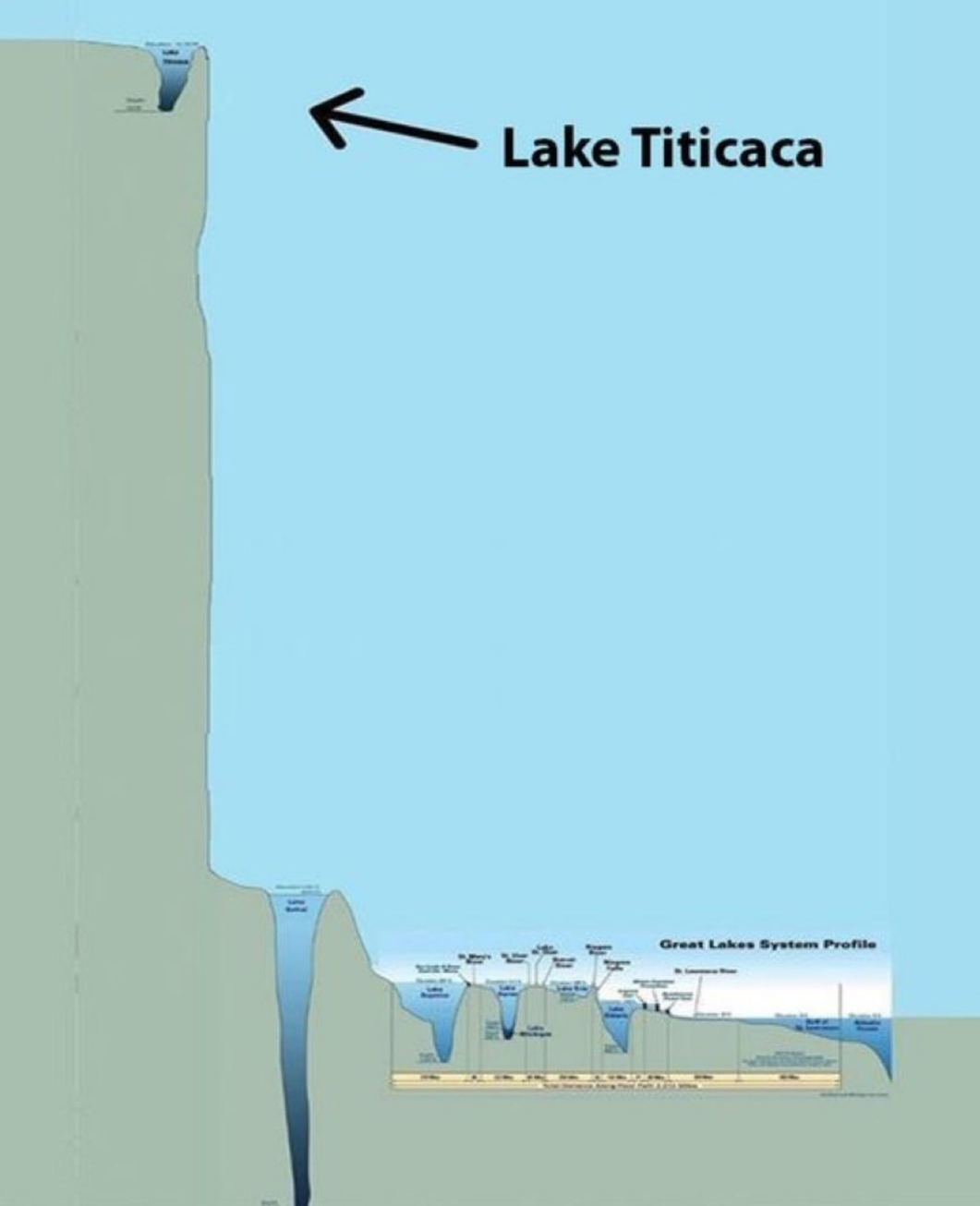
In Machu Picchu (15th century CE), Incan aqueducts channeled mountain springs through stone canals to fountains and terraces. Hidden in plain sight, these integrated with agriculture, irrigating crops via gravity while providing drinking water. The “Stairway of Fountains” exemplifies this, with 16 sequential basins regulating flow, preventing erosion on steep slopes.
The Eternal Flow of Innovation and Modern Reverberations
From Djoser’s hydraulic ascent to Incan fountains quenching Andean heights, hydrology emerges as antiquity’s paramount puzzle-solver: a force that solved insurmountable challenges, birthed civilizations, and propelled human ingenuity. This novel postulation, fortified by empirical pillars like SAR-derived watershed mappings, shaft erosion analyses, and simulation-validated mechanics, illuminates not just Egypt’s wonders but a global tapestry of water wisdom, with hidden details revealing engineering depths. In our climate-vexed epoch, these ancient blueprints beckon, urging sustainable harnessing of hydrology against droughts, floods, and urban sprawl. SAR and similar technologies continue this legacy, aiding modern water management in arid regions. As the Nile’s eternal murmur echoes through time, history implores us to reclaim this hydraulic heartbeat, forging futures from the wellsprings of the past.
We may some day learn the pyramids, symbols of eternity, were built on flowing water, the ultimate renewable force. As Biondi’s team puts it, the pyramid becomes “transparent like a crystal” under radar, but perhaps the real clarity is in seeing water as the elevator that lifted history’s greatest wonders.
To continue this vital work documenting, analyzing, and sharing this type of research: I need your support. Independent research like this relies entirely on readers who believe in preparing wisely for our multi-planetary future. If this has ignited your imagination about what is possible, please consider donating at buy me a Coffee or becoming a member.
Every contribution helps sustain deeper fieldwork, upcoming articles, and the broader mission of translating my work to practical applications.
Stay aware and stay curious,

References
[1] Landreau, X., et al. (2024). On the possible use of hydraulic force to assist with building the step pyramid of Saqqara. PLOS ONE. https://journals.plos.org/plosone/article?id=10.1371/journal.pone.0306690 [2] Biondi, F., & Malanga, C. (2022). Synthetic Aperture Radar Doppler Tomography Reveals Details of Undiscovered High-Resolution Internal Structure of the Great Pyramid of Giza. Remote Sensing, 14(20), 5231. https://www.mdpi.com/2072-4292/14/20/5231 [3] What Really Lies Beneath the Pyramids? (2025). ResearchGate. https://www.researchgate.net/publication/390267683_What_Really_Lies_Beneath_the_Pyramids🔐 Start: Exclusive Member-Only Content.
Membership status:
🔐 End: Exclusive Member-Only Content.
~—~
~—~

~—~
Subscribe ($99) or donate by Bitcoin.
Copy address: bc1qkufy0r5nttm6urw9vnm08sxval0h0r3xlf4v4x
Send your receipt to [email protected] to confirm subscription.

Stay updated: Get an email when we post new articles:

THE ENTIRETY OF THIS SITE IS UNDER COPYRIGHT. IMPORTANT: Any reproduction, copying, or redistribution, in whole or in part, is prohibited without written permission from the publisher. Information contained herein is obtained from sources believed to be reliable, but its accuracy cannot be guaranteed. We are not financial advisors, nor do we give personalized financial advice. The opinions expressed herein are those of the publisher and are subject to change without notice. It may become outdated, and there is no obligation to update any such information. Recommendations should be made only after consulting with your advisor and only after reviewing the prospectus or financial statements of any company in question. You shouldn’t make any decision based solely on what you read here. Postings here are intended for informational purposes only. The information provided here is not intended to be a substitute for professional medical advice, diagnosis, or treatment. Always seek the advice of your physician or other qualified healthcare provider with any questions you may have regarding a medical condition. Information here does not endorse any specific tests, products, procedures, opinions, or other information that may be mentioned on this site. Reliance on any information provided, employees, others appearing on this site at the invitation of this site, or other visitors to this site is solely at your own risk.
Copyright Notice:
All content on this website, including text, images, graphics, and other media, is the property of Read Multiplex or its respective owners and is protected by international copyright laws. We make every effort to ensure that all content used on this website is either original or used with proper permission and attribution when available.
However, if you believe that any content on this website infringes upon your copyright, please contact us immediately using our 'Reach Out' link in the menu. We will promptly remove any infringing material upon verification of your claim. Please note that we are not responsible for any copyright infringement that may occur as a result of user-generated content or third-party links on this website. Thank you for respecting our intellectual property rights.
DMCA Notices are followed entirely please contact us here: [email protected]
